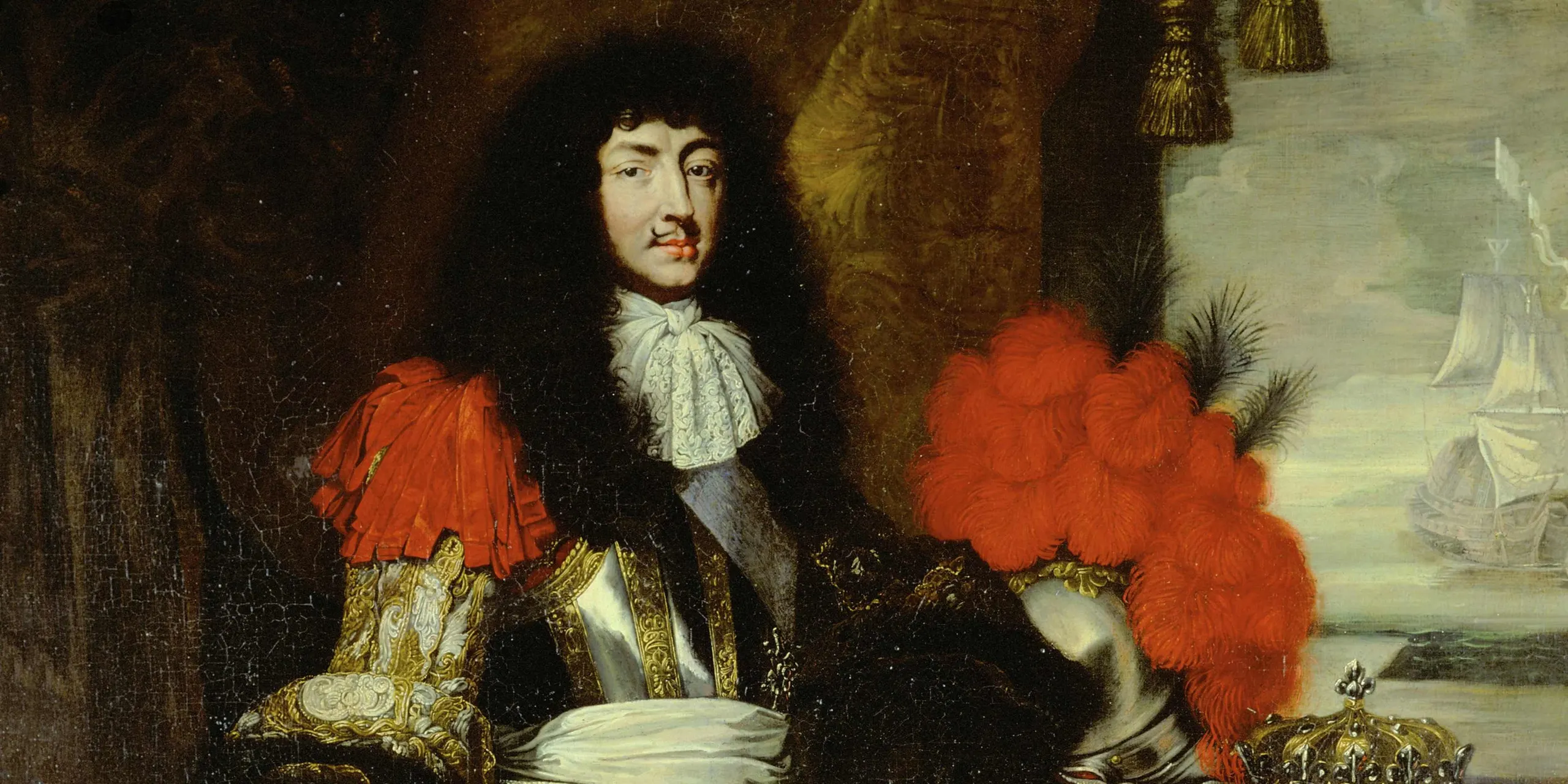
Louis XIV of France
monarch•statesman•patron of the arts
Also known as: The Sun King, Le Roi Soleil, Louis-Dieudonné
Birthday
September 5, 1638
Birth Sign
Virgo
Birthplace
Château de Saint-Germain-en-Laye
Age
Died at 76
Height
5 ft 4 in (163 cm)
About
Louis XIV, born Louis-Dieudonné, was the King of France and Navarre who reigned from 1643 until his death in 1715. Known universally as the Sun King, he holds the record for the longest reign of any sovereign in recorded history, ruling for 72 years and 110 days. His rule transformed France into the dominant European power and established the archetype of absolute monarchy. He centralized state authority, diminished the political power of the nobility, and made the Palace of Versailles the epicenter of Western culture and politics.
His reign, often called the Grand Siècle or Great Century, saw the flourishing of French art, literature, and science. He founded major institutions like the Académie Française and the Royal Academy of Dance, while personally patronizing legendary figures such as Molière, Racine, and Lully. Although he is remembered for his grandeur and the construction of Versailles, his later years were marked by costly wars that left the nation in deep debt, setting the stage for the financial crises that would eventually lead to the French Revolution.
Early Life & Background
Born on September 5, 1638, at the Château de Saint-Germain-en-Laye, Louis entered the world as the second son of King Louis XIII and Anne of Austria. His arrival was a matter of immense relief and celebration because his older brother had died in infancy, making him the new Dauphin and heir to the throne. A medal struck by Gian Lorenzo Bernini at the time depicted him as Apollo, foreshadowing his future moniker. As a child, he suffered from a weak constitution and underwent a painful operation for a rectal fistula at age seven, an experience that left him with a lifelong limp and chronic pain.
His early education was designed to forge him into an absolute ruler. He was tutored by Cardinal Mazarin, who served as his chief minister after his father's death when Louis ascended the throne at just four years old. The young king endured the Fronde, a series of civil wars between 1648 and 1653 where the nobility rebelled against royal authority. Witnessing the royal family flee Paris during these conflicts deeply traumatized him. This experience instilled a lifelong hatred of the aristocracy and a fierce determination to centralize power, leading him to declare upon reaching his majority in 1651 that he would rule without a chief minister.
Career Growth
Following the death of Cardinal Mazarin in 1661, Louis XIV assumed full personal control of the government, never appointing a successor prime minister. He spent the next decade reorganizing the military under Jean-Baptiste Colbert and Sébastien Le Prestre de Vauban, modernizing the army and fortifications to ensure French dominance. In 1664, he launched the construction of the Palace of Versailles, transforming a modest hunting lodge into the world's most opulent seat of power. By 1682, he physically moved the entire court there to keep the nobility under constant surveillance.
Culturally, his reign defined the era known as the Grand Siècle. He revitalized the Académie Française, founded the Académie des Sciences in 1666, and established the Royal Academy of Dance in 1669. His patronage supported the works of Molière, Racine, Lully, and Charles Le Brun, creating a golden age of French classicism. Militarily, he pursued glory through a series of major conflicts including the War of Devolution, the Franco-Dutch War, the Nine Years' War, and the War of the Spanish Succession. These campaigns expanded French territory temporarily but ultimately drained the treasury and left the kingdom in significant debt.
Career Timeline
Public Image & Style
Louis XIV cultivated an image of absolute power and divine right, famously declaring "L'état, c'est moi" (I am the state). His public persona was built on the metaphor of the Sun, representing him as the center of the universe around which all else revolved. This identity was reinforced through daily rituals like the lever (rising ceremony) and coucher (bedtime ceremony), which were theatrical events attended by the entire court. Modern media often portrays him as both a brilliant statesman and a tyrant obsessed with control, reflecting the dual nature of his legacy as a unifier and a conqueror.
Fame & Fandom (iFAMOUS Rankings)
iFANN has not yet collected fame data for this person. He is not featured on the September 2026 iFAMOUS Rankings flagship list. While no modern fandom exists for a historical figure, historians, reenactors, and enthusiasts of the Ancien Régime form a dedicated community that studies his life and reign. These groups often gather at sites like the Palace of Versailles to explore the history of his court and the cultural impact of his policies. The enduring fascination with Louis XIV stems from his unparalleled longevity in power and the dramatic transformation of France under his rule.
Interesting Facts and Legends
One of the most enduring legends about Louis XIV is his daily ritual of eating soup, which became a spectacle watched by the entire court. Spectators gathered every day to witness this meal, turning a simple act of nourishment into a display of royal presence. Another fascinating fact involves his dancing career; before focusing entirely on governance, he was an accomplished dancer who performed in ballets himself. He famously played the role of Apollo in Les Amours de Bacchus and appeared as the Sun in Le Ballet de la Nuit, cementing his persona as the Sun King.
His signature style included high red heels worn to appear taller, powdered wigs, lace cravats, and elaborate robes adorned with gold embroidery. He also popularized the use of canes and swords as fashion accessories rather than just weapons. Despite his reputation for vanity, historical accounts suggest he maintained a fit physique until his later years, even while suffering from chronic pain. The sheer scale of building Versailles involved tens of thousands of workers and cost a fortune, with the King personally overseeing the design of iconic features like the Hall of Mirrors.
Notable Quotes
“L'état, c'est moi.”
“We must be careful not to let our passions lead us astray.”
“The only thing that matters is the glory of the King.”
Family & Personal Life
Louis XIV was the son of King Louis XIII and Anne of Austria. His childhood was marked by the trauma of the Fronde rebellions, which shaped his view of the nobility. He married Maria Theresa of Spain in 1660, and they had six children together, though only two daughters survived to adulthood. After her death, he formed a long-term relationship with Madame de Montespan, with whom he had seven illegitimate children whom he legitimized and married into noble families.
In his later years, he secretly married Françoise d'Aubigné, known as Madame de Maintenon, around 1685. She served as his governess and confidante before becoming his wife. Their marriage was morganatic, meaning she never officially became Queen, but she exerted significant influence over the King and the court. He outlived all his wives and many of his children, leaving his great-grandson, Louis XV, as his successor.
Notable Connections
Relationships & Dating History
Louis XIV's romantic life was complex, balancing political necessity with personal passion. He legally married Maria Theresa of Spain on August 9, 1660, in a union arranged to seal peace between France and Spain. Though initially a political alliance, the couple developed genuine affection and had six children together. Maria Theresa died in 1683, leaving the King widowed.
Before his wife's death, Louis began a long-term relationship with Madame de Montespan around 1667. She became his primary mistress and bore him seven illegitimate children, whom he legitimized. Their relationship ended in 1691 due to her involvement in the Poison Affair scandal. Following Montespan's retirement, Louis formed a deep bond with Madame de Maintenon, who had served as a governess to his children. They entered into a secret morganatic marriage around 1685, which lasted until his death in 1715. She exerted significant influence over the King's religious policies and court affairs.
- MarriedMaria Theresa of Spain1660 - 1683Political alliance; had six children; died of illness.
- DatedFrançoise-Athénaïs de Rochechouart, Marquise de Montespan1667 - 1691Primary mistress; bore seven illegitimate children; retired to convent.
- MarriedFrançoise d'Aubigné, Marquise de Maintenon1685 - 1715Secret morganatic marriage; served as governess and confidante.
Death & Aftermath
Died
September 1, 1715 (aged 76)
Death Place
Palace of Versailles
Cause of Death
Gangrene and chronic pyelonephritis caused by diabetes
On September 1, 1715, Louis XIV passed away at the Palace of Versailles after a reign that had spanned over seventy-two years. The monarch, then seventy-six years old, died from complications of gangrene in his leg, a condition worsened by chronic kidney inflammation (pyelonephritis) and diabetes. Historical records indicate he refused amputation due to religious convictions regarding the sanctity of the body and the hope of resurrection. While contemporary accounts focused on the physical agony and spiritual preparations for death, modern scientific analysis conducted in December 2025 on his mummified heart confirmed the precise medical causes that authorities had long suspected.
The public reaction to his death was sharply divided. While the court mourned with theatrical solemnity, crowds in Paris erupted in spontaneous celebration, cheering the end of heavy taxation and endless warfare. His funeral was held at the Basilica of Saint-Denis, where his body was interred in the Royal Crypt. In a unique royal tradition, his heart was removed and placed in a separate urn at the Val-de-Grâce church. Following his death, the estate immediately fell under the regency of his great-nephew, Philippe II, Duke of Orléans, who inherited a kingdom burdened by massive debt and exhausted resources from decades of conflict.
Net Worth (Estate Value)
$0
iFANN Editorial Team estimate
As Louis XIV died in 1715, he does not possess a modern net worth. However, the value of his estate and the financial burden he left behind are historically documented. At his death, the French national debt was estimated at approximately 1.5 billion livres, a figure that required decades of austerity and reform to address. The personal assets of the Crown, including jewels, art, and the real estate of Versailles, were immense but largely illiquid.
The estate of Louis XIV continues to generate revenue today through tourism at the Palace of Versailles, which attracts millions of visitors annually. The museum generates hundreds of millions of euros each year through ticket sales, merchandise, and licensing deals for films and exhibitions. The estate is managed by the public institution Établissement public du château, du musée et du domaine national de Versailles, ensuring the preservation of his legacy while generating income for the French state.
Awards & Accolades
View 6 records, honours and achievementsKnown For
King of France
1643 · Monarch
Sun King
1660 · Cultural Icon
Keywords
Sources
Quick Facts
- Profession
- monarch, statesman, patron of the arts
- Born
- September 5, 1638
- Birthplace
- Château de Saint-Germain-en-Laye
- Died
- September 1, 1715
- Death Place
- Palace of Versailles
- Gender
- Male
- Spouse
- Maria Theresa of Spain, Françoise d'Aubigné, Marquise de Maintenon
- Birth Sign
- Virgo
Personal Details
- Full Name
- Louis-Dieudonné
- Height
- 5 ft 4 in (163 cm)
- Spouse
- Maria Theresa of Spain, Françoise d'Aubigné, Marquise de Maintenon
- Children
- Louis, Duke of Burgundy; Marie-Thérèse; Philippe, Duke of Anjou; Marie-Anne; Marie-Adélaïde; François-Xavier; Louis-Auguste, Duke of Maine; Louis-Alexandre, Count of Toulouse; Françoise-Marie; Louise-Françoise; Louis-César; Louise-Marie
- Education
- Tutored by Cardinal Mazarin; rigorous training in statecraft and military affairs
Frequently Asked Questions
Why was Louis XIV so famous?
How many times did Louis XIV marry?
What did Louis XIV actually look like?
How did Louis XIV die?
Is Taylor Swift related to Louis XIV?
Similar People
Join the community
fans discussing