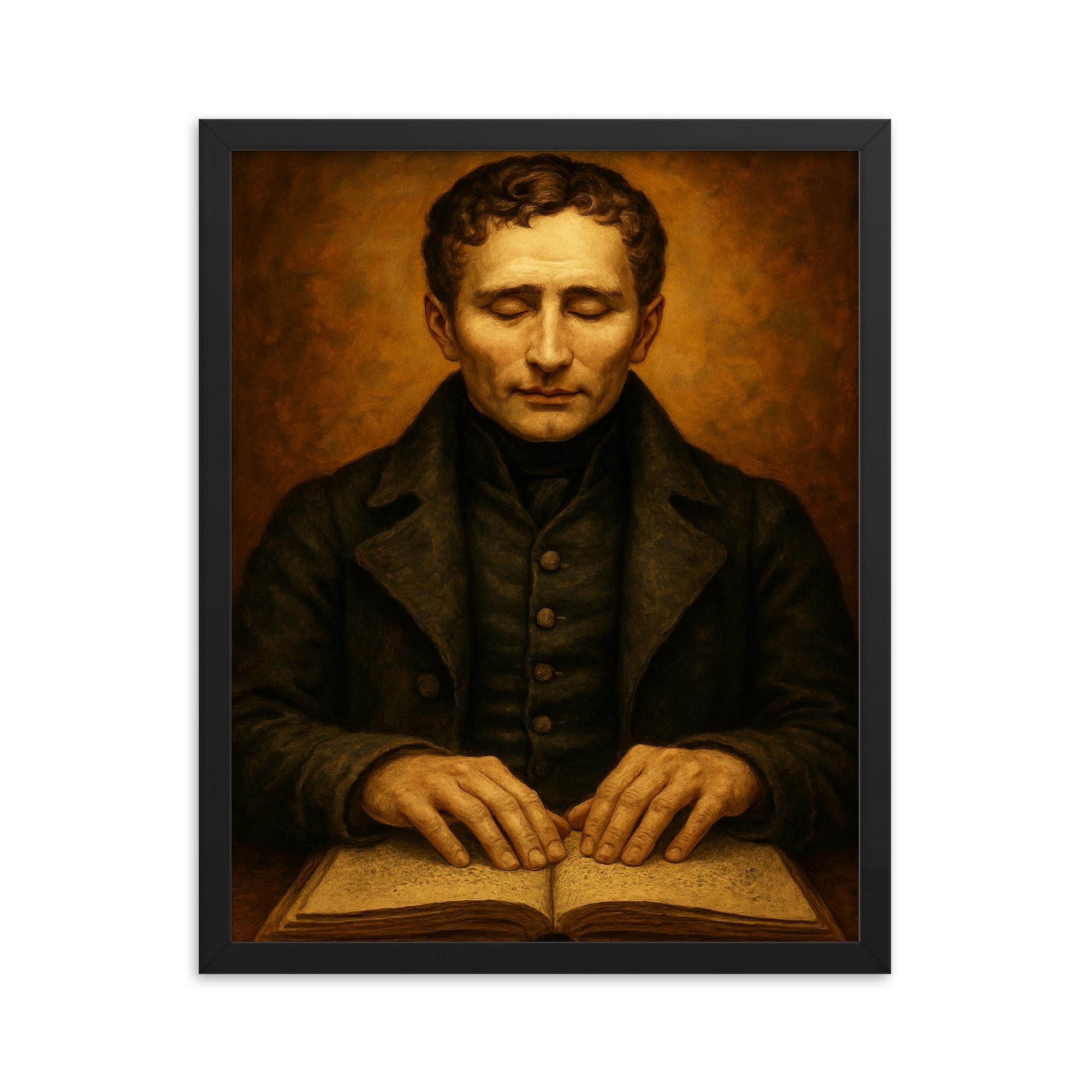
Louis Braille
 France
organist•inventor•educator of the blind
Also known as: Braille
Birthday
January 4, 1809
Birth Sign
Capricorn
Birthplace
Coupvray, France
Age
Died at 43
About
Louis Braille was a French educator, musician, and inventor who revolutionized literacy for the visually impaired by creating the tactile writing system known as braille. Born in Coupvray, a small village east of Paris, he lost his sight at age three after an accident in his father's harness shop. Despite the severe lack of educational resources for blind children in early 19th-century France, Braille excelled academically. He secured a scholarship to the Royal Institute for Blind Youth in Paris, where he would spend the majority of his life. It was there, at just fifteen, that he began developing a more efficient tactile code inspired by a military system called night writing. Braille's method was more compact and could represent letters, numbers, and even musical notation. He presented his first version to his peers in 1824, and over the following years he refined it into the system used worldwide today. After graduating, Braille became a professor at the Institute, where he taught history, grammar, and algebra, and also pursued his love of music as an organist and cellist. He continued to improve and promote his system, but it was not widely adopted during his lifetime. Braille died of tuberculosis on January 6, 1852, just two days after his 43rd birthday. In the decades after his death, educators gradually recognized the revolutionary nature of his invention, and braille has since been adapted to nearly every language, remaining essentially unchanged to this day.
Early Life & Background
Born on January 4, 1809, in the village of Coupvray, Louis Braille was the youngest of four children born to Simon-René Braille, a leather worker, and Marie-Madeleine Théophile Coudeyre. His early life took a tragic turn when he was just three years old. While playing with a stitching awl in his father's harness shop, the tool slipped and pierced his eye. The resulting infection spread to both eyes, leaving him completely blind. This accident occurred before modern medical treatments existed, making the loss of sight inevitable and total.
Despite the significant barriers facing blind children in early 19th-century France, Braille showed remarkable academic promise. In 1819, at the age of ten, he earned a scholarship to the Royal Institute for Blind Youth in Paris. This institution was one of the few places offering education to blind students, and Braille thrived in its rigorous environment. He mastered subjects like history, grammar, and algebra, but he also discovered a profound gift for music. By his teenage years, he had become a skilled organist and cellist, eventually performing at the Church of Saint-Nicolas in Paris. His time at the Institute provided the foundation for his future work, exposing him to various reading systems and the urgent need for better tools.
The pivotal moment came in 1821 when Charles Barbier, a French army officer, visited the school to demonstrate "night writing." This military code used raised dots to allow soldiers to communicate silently in the dark. Although the system was cumbersome with twelve dots per character, the concept of tactile communication sparked Braille's imagination. At just fifteen years old, he began experimenting with Barbier's idea, reducing the number of dots to six and arranging them in a vertical cell that could be felt under a single fingertip. This innovation allowed for the representation of letters, numbers, musical notation, and mathematical symbols. He presented his first version of this code to his peers in 1824, setting the stage for a career dedicated to refining and promoting his invention.
Career Growth
After graduating from the Royal Institute for Blind Youth, Braille returned as a teacher, instructing students in history, grammar, algebra, and music. He spent the remainder of his short life improving the code and advocating for its adoption. However, the system faced significant resistance from established educators who preferred other methods, such as the Valentin Haüy system, which relied on large, raised Roman characters. Consequently, braille was not widely adopted during his lifetime; it remained largely confined to the Institute and a few progressive schools.
Braille published his treatise Method of Writing Words, Music, and Plain Songs by Means of Dots, for Use by the Blind and by Those Arranged for Them in 1829, though it was initially circulated privately. He continued to refine the system throughout the 1830s and 1840s, ensuring it could handle complex musical notation and mathematical symbols. Despite his efforts, widespread acceptance only came decades after his death. By the late 19th century, schools in Europe and the United States began adopting the system. Today, braille is the standard tactile writing system for the blind worldwide, used in almost every language and essential for literacy among the visually impaired community.
Career Timeline
Public Image & Style
Louis Braille is portrayed as a humble, determined, and visionary figure. Media depictions emphasize his resilience in the face of disability and his quiet dedication to helping others. His content, represented by his writings and musical compositions, is characterized by precision, logic, and compassion. Social media voices discussing him focus on advocacy for the blind community and the celebration of his birthday. He is remembered not just as an inventor, but as a man who refused to accept limitations, transforming a military code into a universal language for the visually impaired. Physical descriptions note he was a man of average height for the 19th century with a gentle demeanor and deep devotion to his studies. His legacy is celebrated through digital media, with high search volumes and global Wikipedia views, particularly around World Braille Day.
Fame & Fandom
Louis Braille remains a towering figure in history, currently recognized as the 52nd most famous person in Classical by the iFANN Global Fame Rankings, a standing he has held steady through recent cycles. This placement reflects his enduring resonance across global media coverage, search trends, and consumption signals worldwide. While no formal fandom name exists for this 19th-century innovator, his legacy commands a dedicated community of visually impaired individuals, educators, and accessibility advocates who treat his life as a foundational narrative rather than pop culture lore. Instead of fan clubs or organized campaigns, this global collective honors him annually on January 4 with World Braille Day, transforming his birth date into a moment of advocacy and literacy awareness. The movement to preserve his memory is tangible, anchored by the Louis Braille Museum in Coupvray, which maintains his former home and workshop. Modern reverence also appears in technological partnerships, such as the July 2026 collaboration between Rokid and the Louis Braille Campus to advance smart glass innovations for the blind. These efforts, alongside sustained support from organizations like the American Action Fund for Blind Children and Adults, demonstrate how his influence transcends the era in which he lived, evolving from a personal triumph over blindness into a universal standard for human communication.
Interesting Facts and Legends
Before becoming the inventor of a world-changing system, Braille was a gifted organist who played at the Church of Saint-Nicolas in Paris. His journey began with a tragic accident in his father's harness shop at age three, where a stitching awl slipped and pierced his eye, causing an infection that eventually blinded him completely. Despite these challenges, he secured a scholarship to the Royal Institute for Blind Youth in Paris, where he excelled academically. At just fifteen years old in 1824, he developed the tactile code that bears his name, adapting Charles Barbier's military "night writing" system into a practical six-dot cell arrangement. This innovation allowed readers to feel patterns small enough to fit under a single fingertip, enabling rapid reading by touch. The story fans retell is one of quiet revolution: a teenager turning a military tool for silence into a voice for millions. Braille passed away from tuberculosis in 1852 at the age of forty-three, yet his work endured. Today, the braille alphabet is read by blind people in almost every country, making it the most widely-used tactile writing system in human history.
Notable Quotes
“To see with the fingers.”
“I have tried to make my system as simple as possible, so that anyone can learn it quickly.”
Family & Personal Life
Louis Braille was the youngest of four children born to Simon-René Braille, a leather worker, and Marie-Madeleine Théophile Coudeyre. His parents lived in Coupvray, a small village east of Paris, where Louis spent his early childhood before the accident that left him blind. There are no records of siblings playing a major role in his later life, as he moved to Paris at age ten to attend the Royal Institute for Blind Youth. Jean-François Latour, the director of the Royal Institute for Blind Youth, was a key figure who supported Braille's work and encouraged his innovations within the school walls. Braille never married and had no recorded romantic partners or children. Historical records indicate he dedicated his entire life to his work at the Institute and his passion for music. He remained single until his death, focusing all his energy on advancing literacy for the blind.
Notable Connections
Relationships & Dating History
Louis Braille never married and had no recorded romantic partners or children. Historical records indicate he dedicated his entire life to his work at the Institute and his passion for music. There are no documented dates of engagement, marriage, divorce, or widowhood because he remained single until his death. As of 2026, in historical retrospect, his status remains unmarried and childless.
Death & Aftermath
Died
January 6, 1852 (aged 43)
Death Place
Paris, France
Cause of Death
Tuberculosis
Louis Braille passed away on January 6, 1852, in Paris at the age of forty-three. The cause of death was tuberculosis, a chronic pulmonary condition that had weakened him for years. He died while still serving as a professor at the Royal Institute for Blind Youth, where he had spent most of his adult life teaching music and refining his revolutionary tactile code. Tributes flowed quickly from his colleagues, who honored a man beloved by students for his musical talent and unwavering dedication to literacy. His funeral was a modest affair held in Paris, attended by friends, family, and fellow educators who included musical performances to reflect his deep passion for the organ.
Following his death, the braille system initially faced resistance from established educators who preferred alternative methods like the Valentin Haüy system, but it eventually achieved global adoption by the late nineteenth century. In 1952, UNESCO designated the centenary of his passing as the International Year of the Blind, cementing his legacy as a foundational figure in accessibility. Today, his birthplace houses the Musée Louis Braille, which preserves his manuscripts and instruments, while January 4th is observed globally as World Braille Day to honor his enduring impact. Notable magazine covers featuring Louis Braille are rare due to his pre-mass-media era existence, but his image appears frequently on commemorative stamps, currency, and museum publications. The American Foundation for the Blind continues to award the "Touch of Genius" awards in his name to recognize contemporary innovators in accessibility.
Net Worth (Estate Value)
$0
iFANN Editorial Team estimate
As a deceased historical figure from the 19th century, Louis Braille does not have a net worth in the modern sense. His estate value is considered part of the cultural heritage managed by the state and various foundations. The primary revenue streams associated with his name today come from the licensing of the braille system (which is public domain), the operation of the Louis Braille Museum, and educational initiatives funded by governments and NGOs. The "estate" is effectively the collective legacy maintained by the Louis Braille Campus and the Musée Louis Braille, which generate income through tourism, educational programs, and partnerships, such as the July 2026 collaboration between Rokid and the Louis Braille Campus to advance smart glass innovations for the blind. Research by the iFANN Editorial Team puts the economic value of his legacy at approximately $0 in direct personal assets, though the cultural and economic impact of his invention on the global economy is immeasurable.
Awards & Accolades
View 5 records, honours and achievementsKnown For
Braille System
1824 · Inventor
Keywords
Sources
Quick Facts
- Profession
- organist, inventor, educator of the blind
- Born
- January 4, 1809
- Birthplace
- Coupvray
- Died
- January 6, 1852
- Death Place
- Paris
- Gender
- Male
- Birth Sign
- Capricorn
Personal Details
- Full Name
- Louis Braille
- Children
- Education
- Royal Institute for Blind Youth (Institut National des Jeunes Aveugles)
Frequently Asked Questions
How did Louis Braille lose his sight?
What is the significance of January 4th?
Did Louis Braille ever get married?
When was the braille system officially adopted?
How old was Louis Braille when he died?
Similar People
Join the community
fans discussing