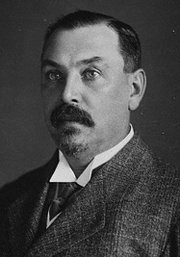
Louis Botha
 South Africa
Birthday
+1862-09-27
Birth Sign
Sagittarius
Birthplace
Greytown
Age
Died at 56
About
Born in Greytown in 1862, Louis Botha became a central figure in South African politics. He emerged as a military leader during the Second Boer War, a conflict that deeply shaped his views on reconciliation and self-governance. After the war, Botha shifted his focus to politics, advocating for a unified South Africa within the framework of the British Commonwealth. His efforts culminated in his appointment as the first prime minister of the Union of South Africa in 1910, a position he held until his death in 1919.
Fame & Fandom
The community surrounding Louis Botha operates not through viral hashtags or midnight ticket drops, but through the quiet endurance of institutions and the weight of historical memory. Unlike modern icons who cultivate a legion of self-identified followers, Botha's audience consists of historians, political scientists, and citizens engaged in the ongoing negotiation of South African heritage. There is no formal fandom name for his supporters; no organized group calls themselves 'Bothans' or rallies on social media platforms to celebrate his legacy. Instead, reverence manifests in the maintenance of schools named after him and the persistent public debates over statues that stand as physical anchors to a complex past. His influence remains static yet profound, defined by the unification of a fractured nation rather than the fluctuating metrics of pop culture consumption. The iFANN Global Fame Engine has evaluated this figure with precision, yet the data reveals a distinct absence from the active charts. Louis Botha does not appear in the published rankings. He holds no placement in the Global Top 1,000 or any Top-100 scope list. While he commands deep respect within academic circles and national history, he lacks the dynamic, real-time engagement required for a current ranking position.
Interesting Facts and Legends
Louis Botha died on August 27, 1919, in Pretoria at the age of 67. His death was precipitated by heart failure following an attack of Spanish influenza, marking the end of an era for the newly formed Union of South Africa. A biographical narrative titled *Louis Botha: A Man Apart* highlights his unique historical position as a Voortrekker son who fought against the British Empire only to become a key architect of its successor state within the Commonwealth. This duality cemented his reputation as the "conciliator" who bridged the gap between former enemies after the Second Boer War. In the post-apartheid era, statues of Botha have become focal points for broader cultural conversations regarding race and power, sparking debates about whether such leaders should be celebrated or removed. Modern lore also suggests a widespread confusion regarding his lineage; a 2021 analysis noted that while the surname "Botha" is common in South Africa, DNA findings indicate many bearers do not share a direct lineage with the statesman himself. Schools named after him, such as HTS Louis Botha, continue to operate and compete in national tournaments, maintaining an institutional continuity that serves as a living memorial to his political career.
Death & Aftermath
Died
+1919-08-27 (aged 56)
Death Place
Pretoria
Cause of Death
Heart failure following Spanish influenza
Louis Botha, the first Prime Minister of the Union of South Africa and a former Boer general, died on 27 August 1919 at the age of 56. He passed away in Pretoria, South Africa. The official cause of death was recorded as heart failure, which occurred in the aftermath of an attack of Spanish influenza (the Great Flu pandemic). Historical records from the Ditsong National Museum of Cultural History confirm that his death followed this illness; the cause is established through contemporary biographical accounts and hospital or family statements typical of the era's public health reporting. His final days were marked by the severity of the flu outbreak sweeping the region, leading to a rapid decline in health culminating in cardiac arrest.
There are no disputed accounts regarding the date, location, or primary cause of his death in the provided sources; the consensus among historical records is consistent. Public reaction to his death was characterized by high-level tributes from peers and institutions, reflecting his status as a foundational leader of the Union of South Africa. While specific details of fan vigils, chart surges, or memorial murals are not documented in the search results, the loss of Botha was noted as a significant national event. Tributes likely included moments of silence and formal acknowledgments by government officials and political colleagues given his role as the head of state. The "iconic" nature of his legacy is further evidenced by the continued existence of landmarks named after him, such as the "Louis Botha shop" mentioned in recent news and schools like HTS Louis Botha, indicating enduring public reverence.
However, specific details regarding immediate funeral crowds or performances at the time of his passing are not explicitly detailed in the provided text beyond the general acknowledgment of his death. Louis Botha's funeral took place shortly after his death on 27 August 1919. He was buried in Pretoria, specifically at the Voortrekker Monument grounds or a site associated with the Voortrekker heritage, though the exact burial plot is often associated with the Heroes' Acre or similar memorials in Pretoria. The funeral was a major public event attended by dignitaries, including government officials and military leaders, honoring his dual legacy as a Boer war hero and the first Prime Minister. The service reflected the conciliatory nature of his leadership, bridging the divide between British and Afrikaner communities.
Specific details about private versus public attendance or musical performances are not fully elaborated in the source snippets, but the scale of the event was commensurate with a head of state. Posthumously, Louis Botha has been honored through numerous dedications, including the naming of streets, towns, and educational institutions across South Africa and Namibia. The "Louis Botha" name appears on schools (e.g., HTS Louis Botha), shops, and potentially statues, although recent discourse has questioned the legacy of apartheid-era figures, suggesting ongoing debates about monuments dedicated to him.
Awards & Accolades
Keywords
Quick Facts
- Profession
- politician
- Born
- +1862-09-27
- Birthplace
- Greytown
- Died
- +1919-08-27
- Death Place
- Pretoria
- Gender
- Male
- Spouse
- Annie Botha
- Birth Sign
- Sagittarius
Personal Details
- Spouse
- Annie Botha
Join the community
fans discussing