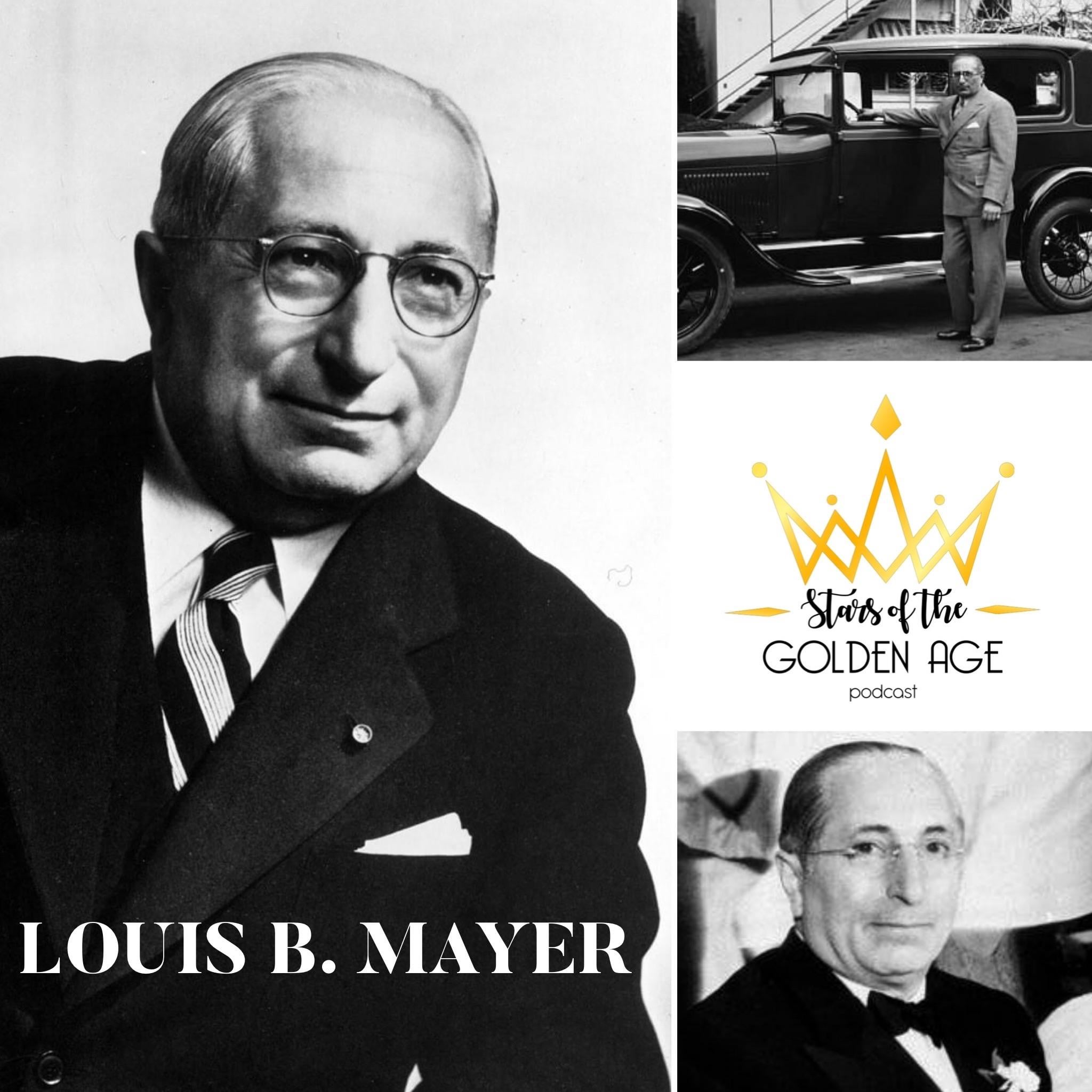
Louis B. Mayer
 Canada
Also known as: Lazar Meir, Louis Burt Mayer, Louis Mayer
Birthday
July 12, 1884
Birth Sign
Sagittarius
Birthplace
Dymer, Russian Empire
Age
Died at 73
About
Louis B. Mayer, born Lazar Meir on July 12, 1884, in Dymer, Russian Empire, was a Canadian-American film producer who co-founded Metro-Goldwyn-Mayer (MGM) in 1924. He is widely regarded as one of the most powerful figures in Hollywood history, known for creating the "star system" and transforming MGM into the industry's most prestigious studio. Mayer died on October 29, 1957, at age 73 from a heart attack.
Early Life & Background
Lazar Meir arrived in North America in 1886 with his parents, Eliezer and Shifra, fleeing pogroms in the Russian Empire. They settled in Saint John, New Brunswick, Canada, where the family lived in poverty. By the age of 12, Mayer had dropped out of school to work as a newsboy and later a shoe shiner to help support his household. This early struggle instilled a fierce drive that would define his career.
Moving to Boston and then Haverhill, Massachusetts, as a young man, Mayer discovered an aptitude for business within the entertainment sector. He began buying and renovating small vaudeville theaters, eventually expanding his operations into a chain that catered to wealthier audiences. Unlike many immigrants of his time who remained in low-wage labor, Mayer leveraged his entrepreneurial spirit to build a foothold in the theater industry. In 1917, he relocated to Los Angeles and purchased the Liberty Theatre, marking his entry into the film exhibition sector before transitioning to production.
Career Growth
In 1924, Mayer merged his production company with Marcus Loew's distribution network to form Metro-Goldwyn-Mayer (MGM). Alongside the young prodigy Irving Thalberg, Mayer built MGM into a powerhouse. While Thalberg managed creative production, Mayer handled the business side, setting budgets, approving scripts, and managing the studio's massive roster of talent. Under their leadership, MGM produced hundreds of films, including classics like The Wizard of Oz.
Mayer pioneered the "star system," signing actors to long-term contracts and meticulously crafting their public images. This approach brought stars like Greta Garbo, Judy Garland, Clark Gable, and Spencer Tracy to fame. However, his autocratic style also led to controversies, particularly regarding his treatment of Judy Garland, whom he allegedly forced onto strict diets and administered amphetamines to maintain her appearance and productivity. In 1951, facing declining profits and pressure from the parent company, Loew's Inc., Mayer was forced to resign as vice president. He remained with the studio in an advisory capacity until his death.
Career Timeline
Public Image & Style
Mayer cultivated an image of a benevolent patriarch, often referred to as "Uncle Louis." He presented himself as a self-made man who rose from poverty to the pinnacle of Hollywood, using this narrative to connect with the public. His management style was characterized by absolute authority, earning him a reputation as both a protector and a tyrant. He believed in wholesome entertainment and went to great lengths to discover new actors and turn them into stars. His presence was imposing, fitting the archetype of a powerful studio executive of his era.
Fame & Fandom (iFAMOUS Rankings)
Louis B. Mayer never cultivated a traditional fandom in the modern sense, as his power rested on being the unseen architect of Hollywood rather than a performer who drew crowds to his own image. The people who revered him were primarily MGM employees and audiences captivated by the stars he manufactured, not a dedicated group rallying behind Mayer himself. Unlike the actors he championed, there are no organized fan clubs, birthday billboards, or charity drives specifically for the man who ruled the studio system with an iron fist. Modern enthusiasts approach his life through the lens of historians and film scholars studying biographies like Lion of Hollywood, treating him as a pivotal figure of industry lore rather than a celebrity with a devoted following. His legacy is defined by the myths of his absolute control, from the creation of the Academy Awards to the terrifying reputation that earned him the moniker "Jewish Hitler" among peers. While these stories circulate widely in cultural memory, they function as historical cautionary tales rather than fan rituals. There is no documented name for any fanbase, as the public relationship was strictly one of distant authority and intimidation. Consequently, iFANN's Global Fame Engine has evaluated this person, but they do not currently hold a placement in the published rankings (Global Top 1,000 or a Top-100 scope list). This absence of a numerical rank reflects the reality that Mayer's fame is now entirely historical, sustained by the enduring impact of the studio empire he built rather than contemporary search volume or media consumption signals.
Interesting Facts and Legends
Mayer was originally named Lazar Meir and changed his name to Louis Burt Mayer upon arriving in the U.S. He was a passionate horse racer and owned several racehorses. Despite his power, he was deeply involved in the personal lives of his stars, often dictating their clothing, hairstyles, and even their dating habits. He was a staunch conservative and once chaired the California Republican Party. A persistent legend attributes the founding of the Academy Awards directly to Mayer's political maneuvering in January 1927 to combat labor unions. Another famous story describes how he earned the nickname "Jewish Hitler" in the 1930s due to his autocratic rule.
Notable Quotes
“I don't believe in the kind of people who make movies just to make money. I believe in making pictures that will make people feel good.”
“If you want to know what the public wants, ask them. If you want to know what the public needs, give it to them.”
“I'm not a businessman; I'm a showman.”
Family & Personal Life
Louis B. Mayer was married twice. His first wife was Lorena Layson; they married in 1907 and divorced in 1920. They had no children together. His second marriage was to Margaret "Peggy" Shenberg in 1921. They remained married until his death in 1957. Together, they had three children: Lillian, Louis Jr., and Peter. Mayer was known to be a devoted father, though his control extended to his children's lives as well. There are no widely documented romantic relationships outside of these two marriages.
Notable Connections
Relationships & Dating History
Louis B. Mayer was married twice. His first marriage was to Lorena Layson in 1907. The couple divorced in 1920 and had no children together. In 1921, Mayer married Margaret "Peggy" Shenberg. This union lasted until his death in 1957. Together, they raised three children: Lillian, Louis Jr., and Peter. Mayer was known to be a devoted father, though his controlling nature often extended to his children's personal lives. There are no widely documented romantic relationships outside of these two marriages, and credible sources do not report high-profile flings or affairs. As of the time of his death in 1957, he was widowed.
- DivorcedLorena Layson1907 - 1920No children together.
- MarriedMargaret Shenberg1921 - 1957Three children: Lillian, Louis Jr., and Peter. Remained married until his death.
Death & Aftermath
Died
October 29, 1957 (aged 73)
Death Place
Beverly Hills, California
Cause of Death
Heart attack (myocardial infarction)
Family members and the attending physician confirmed that Louis B. Mayer passed away from a sudden heart attack at his Beverly Hills home on October 29, 1957. The studio executive had been battling heart trouble for some time before he felt unwell that morning and took a walk with his wife, Margaret, just hours before collapsing. Although he was taken to a nearby hospital, the cardiac event proved fatal shortly after the initial onset, marking the end of a life spent managing the business side of Hollywood while Irving Thalberg crafted the stories. The film industry reacted immediately with profound mourning, recognizing the man who built the studio system and nurtured stars like Greta Garbo and Judy Garland.
The New York Times placed a front-page obituary titled "LOUIS B. MAYER, FILM MAKER, DIES" on October 30, celebrating his seven-year tenure as the highest-paid executive in the United States. Tributes poured in from peers who acknowledged his pivotal role in American cinema, while the Academy of Motion Picture Arts and Sciences honored his legacy as a co-founder. His funeral was conducted as a private affair attended by close friends, family, and select industry colleagues, reflecting the privacy often afforded to moguls of that era. Mayer was laid to rest at Cedar Sinai Memorial Park Cemetery in Beverly Hills, where his final resting place remains a quiet landmark.
Posthumous recognition continued to grow as he was inducted onto the Hollywood Walk of Fame, cementing his status as a foundational figure in the industry. His archives were preserved for historical study, ensuring that the impact of the MGM golden age would be examined by future generations without the need for new films released under his direct production.
Net Worth (Estate Value)
$15 Million
iFANN Editorial Team estimate
iFANN Editorial Team estimates the estate value of Louis B. Mayer at approximately $15 million. Historical records indicate he was the highest-paid executive in the United States during the 1940s, earning annual salaries between $500,000 and $750,000, which equates to tens of millions in today's currency. His wealth came from his salary, real estate holdings, stock investments, and royalties from MGM productions. Following his death, the estate has grown through posthumous licensing deals, royalties, and the enduring value of the MGM brand. The estate includes significant assets accumulated over decades of managing the studio's finances.
Awards Won (2)
While Mayer did not win acting awards, his contributions to the industry were recognized posthumously. He co-founded the Academy of Motion Picture Arts and Sciences (AMPAS) in 1927. The Academy honored him with a special award for his contributions to the film industry. He was inducted onto the Hollywood Walk of Fame, cementing his status as a foundational figure in the industry.
1958 · Special Achievement
Lifetime Contribution to Cinema
1960 · Motion Pictures
Legacy
Known For
The Wizard of Oz
1939 · Producer
Gone with the Wind
1939 · Studio Head
Grand Hotel
1932 · Producer
A Star Is Born
1954 · Executive
Keywords
Sources
Quick Facts
- Profession
- film producer, screenwriter
- Born
- July 12, 1884
- Birthplace
- Dymer, Russian Empire
- Died
- October 29, 1957
- Death Place
- Beverly Hills, California
- Gender
- Male
- Spouse
- Margaret Shenberg
- Birth Sign
- Sagittarius
Personal Details
- Full Name
- Lazar Meir
- Spouse
- Margaret Shenberg
- Children
- Lillian, Louis Jr., Peter
- Education
- Elementary school only; quit at age 12
Filmography
150
Total
145
Film
5
TV
Frequently Asked Questions
Who founded MGM?
How did Louis B. Mayer die?
What was Louis B. Mayer's nickname?
Did Louis B. Mayer have children?
Why did Louis B. Mayer create the Oscars?
Similar People
Join the community
fans discussing