 Germany
About
Lorsch Abbey, also known as the Imperial Abbey of Lorsch, stands as a quiet but powerful relic of the Carolingian Empire. Located in the small German town of Lorsch, roughly 10 kilometers east of Worms, this former monastery was once a spiritual and political heavyweight. Founded in 764, it grew into one of the most influential religious centers of its time, with ties to Charlemagne himself. Today, its ruins, though incomplete, are considered among the finest examples of pre-Romanesque architecture in Germany, drawing historians and travelers alike to ponder their medieval grandeur.
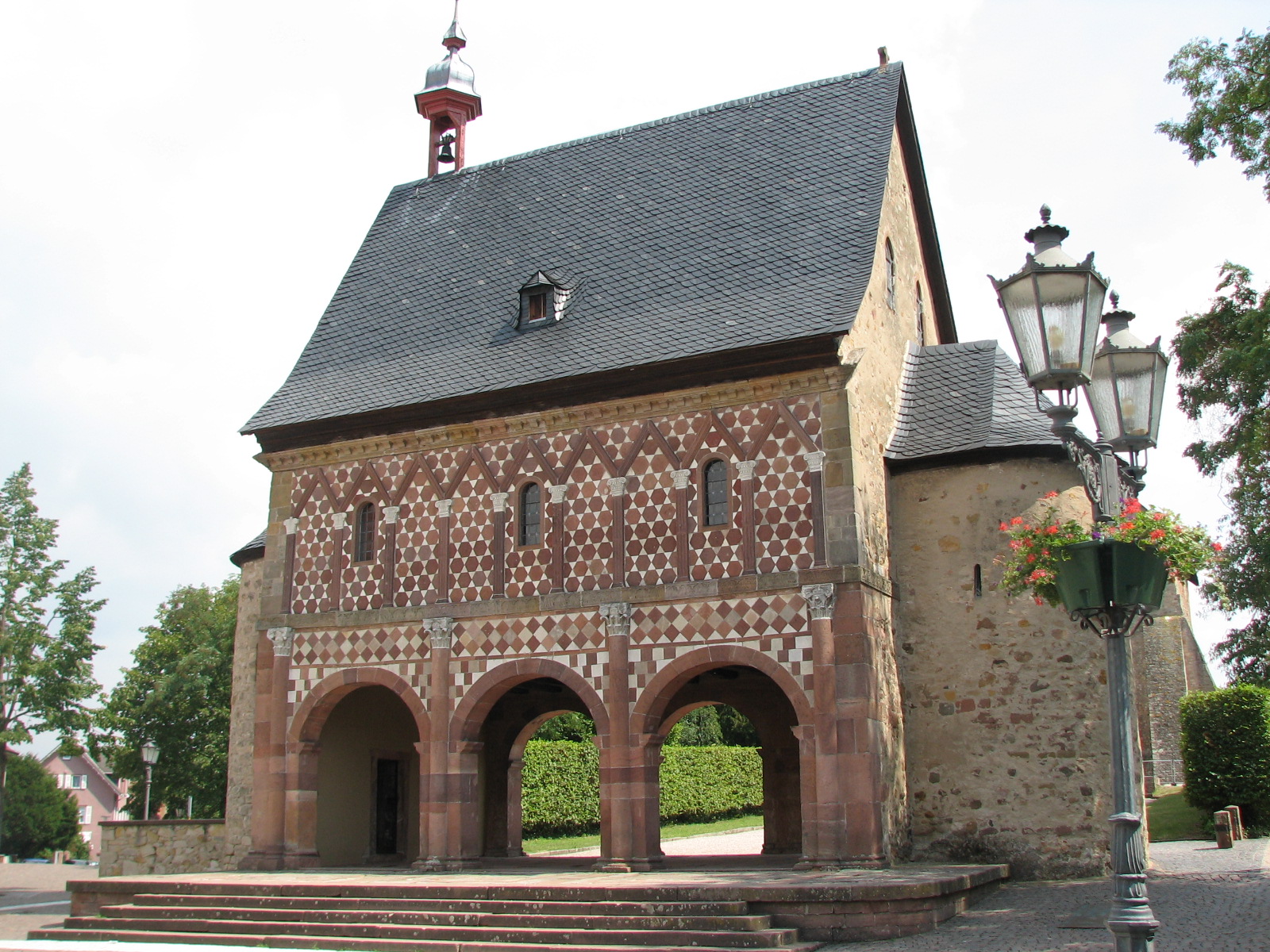
The abbey's story is preserved in the Lorscher Codex, a chronicle compiled in the 1170s that now rests in the state archive in Würzburg. This manuscript is a treasure trove of medieval life, recording over 3,800 charters and property deeds that detail the abbey's vast landholdings and political reach. The site itself, including the famous Torhalle or King's Hall, offers a rare glimpse into Carolingian building techniques, with its distinctive red-and-white masonry and ancient frescoes. While no blockbuster budget or box office applies here, the abbey's cultural currency is immense, earning it a spot on the UNESCO World Heritage list in 1991. For anyone fascinated by the early medieval world, Lorsch Abbey is not just a ruin; it's a gateway to understanding how faith, power, and art intertwined in the heart of Europe.
Mission
As a Benedictine monastery, Lorsch Abbey's original mission was the pursuit of a contemplative life centered on prayer, work, and study, following the Rule of Saint Benedict. As an Imperial Abbey, it also served a political and administrative role, acting as a regional power base for the Carolingian and later Ottonian emperors. Its purpose extended beyond the spiritual to include economic management of vast landholdings, political administration, and the preservation and transmission of knowledge through its library and scriptorium. Today, the site operates as a museum, cultural heritage site, and research center, with a mission to preserve and interpret its medieval heritage for the public and to advance scholarship on the early Middle Ages through projects like the Lauresham open-air laboratory.
History
Lorsch Abbey was founded in 764 by Count Cancor and his mother Williswinda, who established a monastery on their own land. The founding was part of the broader Carolingian effort to consolidate Christian authority and political control in the region. Shortly after its establishment, the abbey was placed under the protection of the Carolingian rulers, and by 772 it was granted imperial status as an Imperial Abbey, meaning it was directly subordinate to the emperor rather than to local lords. This status gave the abbey significant autonomy and political weight.
Its most famous connection is to Charlemagne, who visited the abbey and granted it extensive privileges and landholdings, making it a key center of the Carolingian Renaissance. The abbey's importance grew throughout the 9th and 10th centuries, and it became a major center for learning, manuscript production, and art, with its scriptorium producing works of exceptional quality. In 876, Louis the German, a grandson of Charlemagne, was buried at the abbey, further cementing its royal ties.
The abbey's wealth and influence continued into the High Middle Ages, but the Reformation brought its end as a monastery. It was dissolved in 1557, and its buildings gradually fell into ruin. The site's significance was not forgotten, however. In 1991, the abbey and the Altenmünster were inscribed on the UNESCO World Heritage List, recognizing the site's outstanding universal value. Since then, the State of Hesse has managed the site, and in recent years, the Lauresham open-air laboratory has been established as a living research center for experimental archaeology, ensuring that the abbey's legacy continues to inform and inspire.
Subdivisions
Museum and Visitor Center
Provides exhibitions, guided tours, and educational programming about the abbey's history and architecture.
Torhalle (King's Hall)
A monumental Carolingian entrance hall that houses a small museum and is a key architectural monument.
Lauresham Open-Air Laboratory
An experimental archaeology project that reconstructs an early medieval manor and conducts research on early medieval agriculture and daily life.
Notable People
Charlemagne
Patron · 8th-9th century
Granted extensive privileges and landholdings to the abbey, helping it become a key center of the Carolingian Renaissance.
Count Cancor
Co-founder · 764
Founded the abbey with his mother Williswinda on their own land.
Williswinda
Co-founder · 764
Co-founded the abbey with her son Count Cancor.
Richbod
Abbot · late 8th century
Served as abbot and also as Archbishop of Trier, reflecting the abbey's high political connections.
Louis the German
Burial site · 876
Grandson of Charlemagne, buried at the abbey, underscoring its royal associations.
Milestones
764
Lorsch Abbey is founded by Count Cancor and Williswinda.
772
The abbey is granted Imperial status, becoming directly subordinate to the Carolingian emperor.
876
Louis the German is buried at the abbey.
1170s
The Lorscher Codex is compiled, recording the abbey's extensive property holdings.
1557
The monastery is dissolved during the Reformation.
1991
The abbey and the Altenmünster are inscribed on the UNESCO World Heritage List.
2010
A facsimile of the Codex Aureus of Lorsch is given by Pope Benedict XVI to Queen Elizabeth II during his visit to the UK.
Departments
Sources
Organization Info
- Founded
- 764
- Headquarters
- Lorsch, Hesse, Germany
- Country
- Germany
- Type
- Religious
- UNESCO World Heritage Site
- 1991
- Original Order
- Benedictine
Official Website
www.kloster-lorsch.de/
Join the community
fans discussing