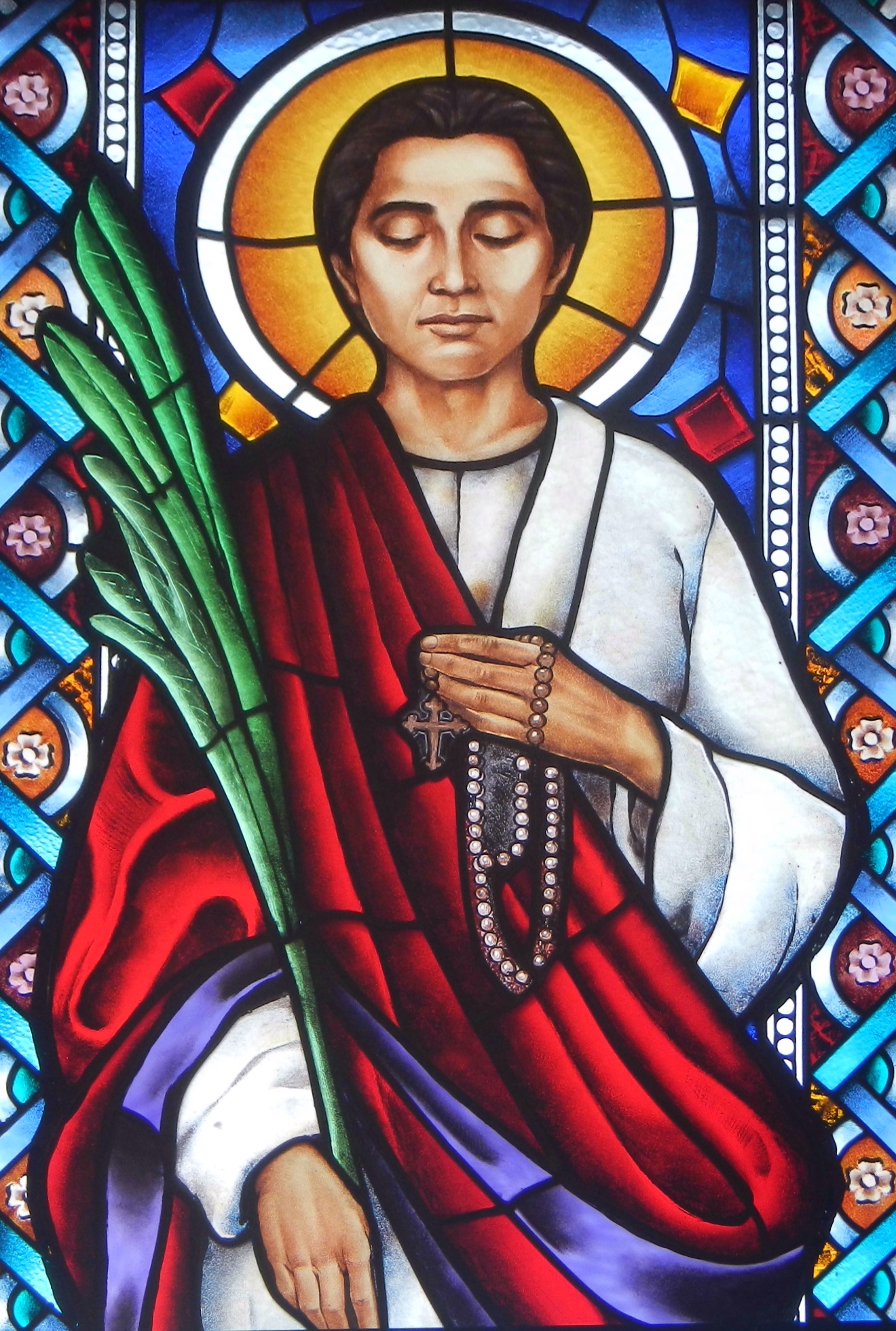
Lorenzo Ruiz
 Philippines
Birthday
+1594-11-28
Birth Sign
Sagittarius
Birthplace
Manila
Age
Died at 42
About
Lorenzo Ruiz, born in Manila on November 28, 1594, was a Filipino Catholic layman and a devoted member of the Third Order of Saint Dominic. He became the first canonized Filipino saint, known as the protomartyr of the Philippines. His life took a turn when he was forced to flee his homeland, eventually finding himself in Japan during a period of intense Christian persecution under the Tokugawa shogunate.
Fame & Fandom
Lorenzo Ruiz commands a profound, enduring presence that transcends modern celebrity metrics to anchor the spiritual identity of millions. Unlike contemporary figures whose fame fluctuates with trending cycles, his global attention is measured in centuries of devotion rather than daily search spikes. The iFANN Global Fame Engine evaluated this legacy in August 2026 and determined that Lorenzo Ruiz does not currently hold a placement in the published rankings, meaning he is not listed among the Global Top 1,000 or any specific Top-100 scope list. This absence from numerical charts reflects the unique nature of his influence; as a 17th-century martyr and the first canonized Filipino saint, his stature operates outside the commercial parameters used to rank living entertainers and public figures. While the engine tracks fame through consumption signals and media volume, Ruiz's impact remains rooted in liturgical observance and historical reverence rather than viral engagement. Consequently, no formal fandom name exists for his followers. His devotees are simply Catholics, members of the Filipino community, and those who venerate him as a patron saint. There are no fan clubs, unofficial nicknames, or organized campaigns driven by a pop-culture audience. Instead, his 'fanbase' gathers for feast days and religious rituals, united by faith rather than the mechanisms of celebrity worship.
Interesting Facts and Legends
Before his tragic end, Lorenzo Ruiz lived an unassuming life as a successful scribe and father in Binondo, Manila, which stands in stark contrast to his later status as a national icon. A recurring theme in his story is his reluctance toward martyrdom; he never sought death but was forced into it when he volunteered to accompany a priest friend to Japan to clear a false accusation against him. He intended to return home immediately after settling the matter, yet fate intervened during the Tokugawa shogunate's persecution. His execution in Nagasaki in 1637 involved being hanged upside down, a method reserved for traitors, cementing his place as the country's protomartyr. The most significant milestone in his modern legacy occurred on February 18, 1981, when Pope John Paul II beatified him at Luneta Park in Manila. This event marked the first time a beatification ceremony was held outside the Vatican, drawing massive crowds and igniting a wave of national pride. Later, on October 18, 1987, the Pope canonized him in Vatican City, officially making him the first Filipino saint. Today, stories of miraculous interventions continue to circulate among Overseas Filipino Workers, who view him as their primary protector against danger while working abroad.
Death & Aftermath
Died
+1637-09-29 (aged 42)
Death Place
Nagasaki, Japan
Cause of Death
Execution by crucifixion
In the final days of September 1637, Lorenzo Ruiz stood in Nagasaki, Japan, having already endured a harrowing journey from Manila and a period of imprisonment where he faced false accusations of murder. On September 28, he was compelled to publicly renounce his faith under threat of execution, yet he reportedly retracted that denial the following morning before the authorities. This act of defiance led directly to his execution by crucifixion, a method known as ebō, on September 29, 1637, alongside seven Japanese companions and two Spanish priests. The cause of death is established through historical ecclesiastical records and trial transcripts rather than modern medical investigation.
Following the execution, there was no formal funeral or recovery of remains, as bodies of executed heretics were typically left exposed or disposed of by the shogunate authorities. Immediate public reaction was confined to the underground Catholic community in Japan and the Spanish colonial administration, who viewed the event as a tragic loss of faith. For centuries, the legal aftermath remained limited to the ecclesiastical canonization process initiated long after his death, which functioned as an inquiry into his martyrdom rather than a civil review. His legacy has since been honored through the annual celebration of his feast day on September 28, with masses held at major locations like St.
Patrick's Cathedral in New York and churches in Chicago and New Jersey. Lorenzo Ruiz was officially canonized by Pope John Paul II on October 18, 1987, becoming the first Filipino saint and the protomartyr of the Philippines. His name now adorns numerous churches, schools, and organizations dedicated to Filipino youth and overseas workers globally.
Awards & Accolades
Keywords
Quick Facts
- Profession
- missionary
- Born
- +1594-11-28
- Birthplace
- Manila
- Died
- +1637-09-29
- Death Place
- Nagasaki
- Gender
- Male
- Birth Sign
- Sagittarius
Join the community
fans discussing