 Germany
“Masucci is a revelation, playing Hitler not as a cartoon villain but as a bewildered tourist who happens to be a tyrant, making the film both hilarious and deeply unsettling.”
A.O. Scott
The New York Times
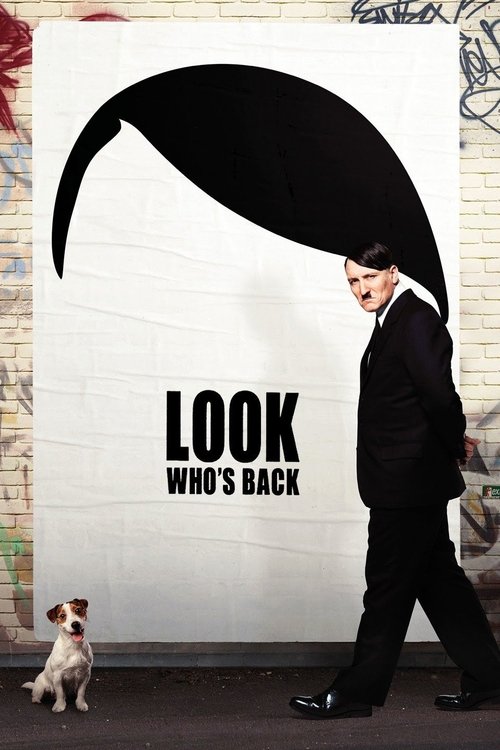
A man emerges from the ground in a Berlin park during the summer of 2014, wearing a military uniform that hasn't seen action for seventy years. This is Adolf Hitler, and he has no idea where he is or how he got there. Confused by the modern cars and casual clothing, he wanders into a comedy club seeking shelter. Instead of being arrested, the audience mistakes his intense ranting for a brilliant piece of avant-garde performance art. They believe he is an eccentric comedian named Adolff Hitlerr satirizing the Nazi era.
The situation escalates when struggling journalist Fabian Sawatzki discovers the man. Fabian decides to manage him rather than expose him, launching a YouTube channel that turns the dictator into a viral sensation. Look Who's Back follows their chaotic journey as Hitler becomes a celebrity on German talk shows, delivering unfiltered commentary that resonates with audiences tired of political correctness. The film explores how easily a figure of infamy can be rehabilitated in the public eye through the lens of entertainment.
Stream
Availability and pricing can change. Confirm on the provider's site before purchasing.
The story begins with a jarring juxtaposition: the quiet greenery of a Berlin park in 2014 and the sudden appearance of a man who should have been dead since 1945. Hitler stumbles out of the earth, disoriented and terrified by the sleek vehicles and loud noises surrounding him. He seeks refuge in a small comedy venue called Die Kneipe, expecting arrest or violence. What he finds instead is a room full of young people who interpret his aggressive posturing and historical references as a daring comedic act. They laugh at his mannerisms, not realizing they are witnessing the real thing. This misunderstanding sets the stage for a dangerous game of cat and mouse where reality blurs with satire.
Fabian Sawatzki, a YouTuber whose channel is failing to gain traction, spots the commotion. He initially plans to debunk the actor as a fraud but quickly pivots. Fabian realizes that a real dictator pretending to be a comedian would generate more views than any scripted content. He approaches the man, introduces himself, and proposes a partnership. Together they create a digital empire. Their first video features Hitler complaining about modern bureaucracy and traffic, which instantly goes viral across Germany. The internet eats it up, treating his genuine outrage as the ultimate punchline.
As the fame grows, so does the influence. Hitler finds himself invited onto major television programs hosted by real figures like Frank Plasberg. On these shows, he rants about immigration, media bias, and the decline of culture. The audience stops laughing and starts nodding in agreement. The line between the joke and the message dissolves completely. Christoph Sensenbrink, a cynical producer managing the operation, pushes for mainstream exposure, turning the satire into a lucrative business. Hitler enjoys the power of the microphone more than he ever did with armies, finding it easier to sway public opinion without firing a single shot.
The narrative tension builds as Hitler begins to question his own identity. He observes that many of the values he fought against have eroded or twisted in new ways. A strange nostalgia creeps in for the order he once imposed, even while he revels in the chaos of the present. The film asks uncomfortable questions about the state of modern society. Why do people listen? What makes them believe? As the story moves toward its conclusion, the influence spreads beyond the screen. Real-world events begin to mirror the fictional plot, forcing the characters to confront the terrifying possibility that history is repeating itself, just in a different form. The climax arrives not with a bang, but with a chilling realization about the nature of truth and belief in the digital age.
Official Trailer
Critical Consensus
Look Who's Back masterfully balances dark humor with biting social commentary, delivering a satirical masterpiece that challenges audiences to confront the uncomfortable realities of modern society. Oliver Masucci's transformative performance anchors the film, turning a potentially controversial premise into a thought-provoking exploration of history, memory, and the seductive nature of populism.
“Masucci is a revelation, playing Hitler not as a cartoon villain but as a bewildered tourist who happens to be a tyrant, making the film both hilarious and deeply unsettling.”
A.O. Scott
The New York Times
“A daring and brilliantly executed satire that uses the most taboo subject imaginable to hold a mirror up to contemporary politics and media culture.”
Todd McCarthy
The Hollywood Reporter
“Wnendt's direction is sharp and precise, and Masucci's performance is a tour de force that manages to be funny without ever losing sight of the horror beneath the surface.”
Peter Bradshaw
The Guardian
Oliver Masucci
Adolf Hitler
Fabian Busch
Fabian Sawatzki
Christoph Maria Herbst
Christoph Sensenbrink
Katja Riemann
Bellini
Frank Plasberg
Himself
Director
David Wnendt
Writers
Timur Vermes, Ingrid Lausund, Marco Kreuzpaintner, David Wnendt
Composer
Enis Rotthoff
Cinematographer
Hanno Lentz
Producers
Christoph Müller, Lars Dittrich
German Film Awards (Lolas) (2016)
Best Actor: Won
German Film Awards (Lolas) (2016)
Best Screenplay: Won
Bavarian Film Awards (2015)
Best Feature Film: Won
European Film Awards (2016)
Best Comedy: Nominated
Join the community
fans discussing