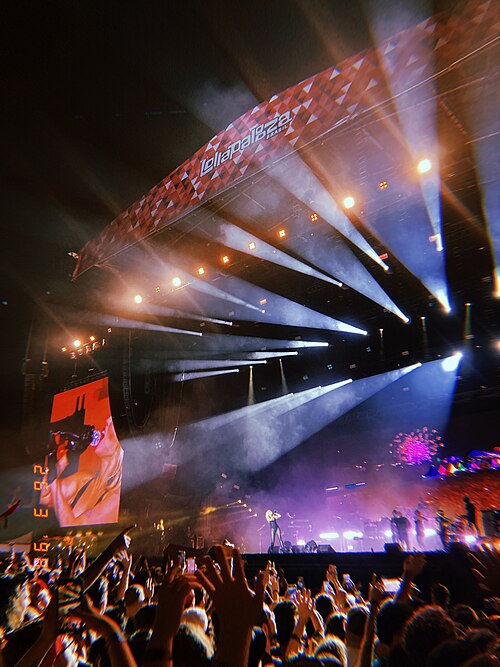
Lollapalooza
"The original multi-genre music festival"
8+
Editions
400000
Peak Attendance
About
Lollapalooza started as a farewell tour for Jane's Addiction in 1991 and grew into one of the most influential music festivals in the world. Founder Perry Farrell, inspired by the Reading Festival, wanted something subversive, a traveling carnival of alternative rock, art, and activism. The first tour hit 26 cities with seven bands, but also featured henna tattoos, art galleries, and booths for Greenpeace and Rock the Vote. That blend of music and counterculture became the festival's DNA.
Today, the Chicago edition is a four-day destination in Grant Park, drawing over 400,000 people each summer. More than 170 bands play across eight stages, covering rock, hip-hop, electronic, and pop. The festival pioneered carbon offsetting, put electronic artists on the main stage, and created Kidzapalooza for families. It also expanded to eight international editions, from Santiago to Mumbai, making it a truly global brand.
Lollapalooza is credited with laying the blueprint for modern multi-genre festivals like Bonnaroo. It survived the decline of alternative rock in the late 90s, a canceled tour in 1998, and a pandemic pivot to digital in 2020. Each iteration has kept Farrell's original mission: bring underground music to the mainstream without losing its edge.
History
Perry Farrell missed the 1990 Reading Festival because he lost his voice partying the night before. His drummer Stephen Perkins and future co-founder Marc Geiger went anyway and came back buzzing about the cornucopia of artists and scenes. Geiger told Farrell, "We have to do it." Along with manager Ted Gardner and agent Don Muller, they started building a traveling festival that would bring that energy to the US. The name came from an old slang term meaning an extraordinary thing, and also a giant lollipop from the 1800s, a gimmick organizers sometimes use at venues.
The first tour launched in Phoenix on July 18, 1991, with Jane's Addiction headlining. It was a hit, drawing huge crowds in every city. Over the next few years, Lollapalooza became the defining tour of the alternative rock boom, featuring Pearl Jam, Soundgarden, Red Hot Chili Peppers, and Ice Cube. But by 1997, the music landscape had shifted. The festival struggled to find sponsors, and in 1998 it canceled entirely because no headliner would sign on. It looked like Lollapalooza was done.
Farrell revived it as a touring event in 2003 with a reunited Jane's Addiction. Then in 2005, he partnered with C3 Presents to turn it into a destination festival in Chicago's Grant Park. That move saved it. The Chicago edition grew from two days to three, then four in 2016. International editions followed: Chile in 2011, Brazil in 2012, Argentina in 2014, Germany in 2015, France in 2017, Sweden in 2019, and India in 2023. The festival has run continuously since 2005, with a digital-only edition in 2020.
Notable Editions
1991: Jane's Addiction
Large crowds across 26 cities attendeesInaugural tour with Jane's Addiction, Nine Inch Nails, Ice-T, and Violent Femmes; introduced art and activism booths
1992: Pearl Jam, Soundgarden, Red Hot Chili Peppers
High attendeesFeatured Pearl Jam, Soundgarden, Red Hot Chili Peppers, and Ministry; considered one of the best lineups ever
1994: Smashing Pumpkins, Beastie Boys
High attendeesSmashing Pumpkins and Beastie Boys headlined; included the first Lollapalooza side stage for emerging artists
1996: Metallica, Soundgarden
Moderate attendeesMetallica headlined; the festival leaned heavier with Soundgarden and Ramones
2003: Jane's Addiction, Audioslave
Moderate attendeesRevival tour after five-year hiatus; Jane's Addiction reunited as headliners
Notable Moments
1991
First Lollapalooza Tour
Jane's Addiction's farewell tour launches in Phoenix, setting the template for multi-genre festivals.
1992
Alternative Rock's Peak
Pearl Jam, Soundgarden, and Red Hot Chili Peppers share a bill, cementing the festival as the voice of a generation.
1997
Sponsorship Crisis
Lollapalooza struggles to find sponsors as alternative rock wanes, leading to a scaled-back tour.
1998
Cancellation
Unable to book a headliner, the festival cancels entirely, marking the end of the original touring era.
2005
Chicago Transformation
Lollapalooza becomes a destination festival in Grant Park, saving it from extinction.
2011
First International Edition
Lollapalooza Chile launches in Santiago, starting the global expansion.
2020
Digital Edition
The pandemic forces a virtual festival, with archived performances and live streams.
Cultural Impact
Lollapalooza changed how festivals work. Before it, tours were single-genre, metal bands toured with metal bands, indie bands with indie bands. Farrell's idea to mix alternative rock, hip-hop, and electronic music on the same bill was radical. It also brought activism into the festival space: voter registration drives, environmental booths, and art installations became standard. The festival's carbon offset program, started in the early 2000s, was a first for large-scale events. Kidzapalooza, launched in 2005, opened festivals to families. And the international editions proved that the model could work anywhere, from Berlin to Mumbai. The 2023 Paramount+ documentary Lolla: The Story of Lollapalooza traced how the festival "laid the blueprint" for the modern festival landscape, influencing everything from Bonnaroo to Coachella.
Controversies
In the late 1990s, Lollapalooza faced a steep decline. The 1997 tour struggled to secure sponsors as alternative rock lost commercial momentum. The following year, the festival couldn't book a single headliner and canceled entirely. Many saw it as a sign that the genre had burned out. There were also complaints about commercialization after the 2005 Chicago relaunch, with some longtime fans arguing that corporate partnerships diluted the original counterculture spirit. The 2021 edition drew criticism for proceeding during the COVID-19 pandemic, with public health experts warning about the risk of superspreader events. Organizers required proof of vaccination or a negative test, and the festival went ahead with no major outbreak reported.
Broadcast Partners
Sponsors
Related Events
Keywords
Sources
Event Info
- First Edition
- July 18, 1991
- Founder
- Perry Farrell
- Flagship Location
- Grant Park, Chicago
- Average Annual Attendance (Chicago)
- 400,000
- Number of International Editions
- 8
Social Media
Join the community
fans discussing