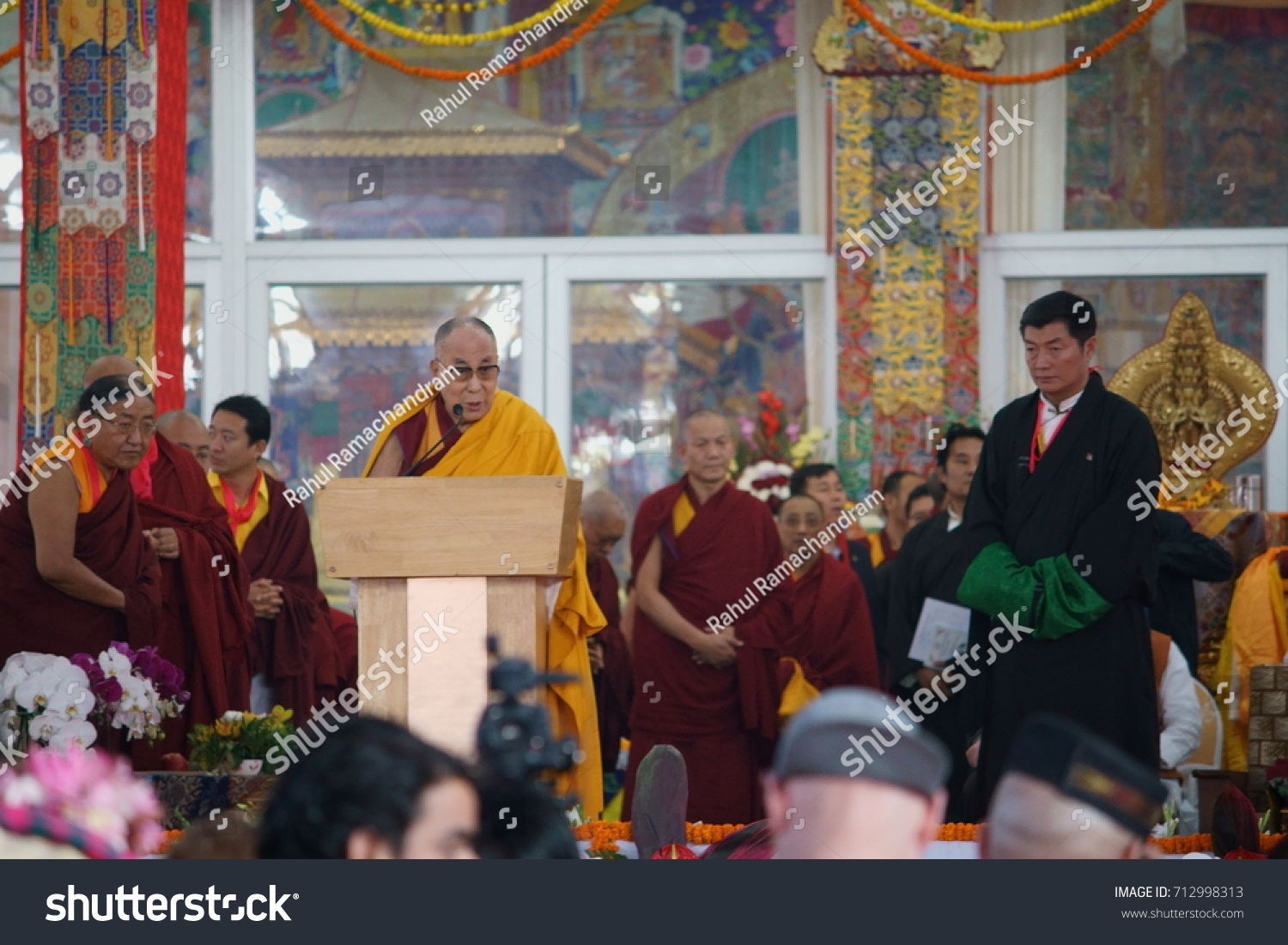
Lobsang Sangay
 India
IndiaAlso known as: Sikyong Lobsang Sangay, Kalon Tripa Lobsang Sangay
Birthday
September 5, 1968
Birth Sign
Virgo
Birthplace
Darjeeling, India
Age
57 years old
About
Lobsang Sangay is a Tibetan-American politician and lawyer who served as the first democratically elected secular leader of the Tibetan government-in-exile. From 2011 to 2021, he held the title of Kalon Tripa, later renamed Sikyong, leading the Central Tibetan Administration through a historic transition when the 14th Dalai Lama relinquished his political role. Sangay's leadership was defined by his legal expertise and commitment to democratic governance for Tibetans worldwide.
Today, he remains active as a scholar and advocate, serving as a senior visiting fellow at Harvard Law School, where he lectures on law and continues to champion Tibetan self-determination. He is recognized as a measured, intellectual statesman who bridges Tibetan political aspirations with Western academic and legal institutions.
Early Life & Background
Lobsang Sangay was born on September 5, 1968, in Darjeeling, India, and grew up in a Tibetan settlement near the town. His family were part of the Tibetan exile community, having fled their homeland after the 1959 uprising. Despite leading the Tibetan government-in-exile decades later, Sangay has never set foot in Tibet itself.
His early life was shaped by the exile experience and the Tibetan independence movement. He pursued higher education in India, earning a master's degree in law from Delhi University. He then moved to the United States, where he attended Harvard Law School, obtaining a Doctor of Juridical Science (S.J.D.) degree with a focus on international law and democracy. This academic background, combined with his legal training, positioned him as a natural candidate for political leadership within the Tibetan exile administration.
Before his political career, Sangay served as a lecturer on law at Harvard Law School and as a senior visiting fellow in its East Asian Legal Studies Program. His expertise in international law made him a respected figure in legal circles, and he became known for his scholarly work on Tibetan law and politics. He also holds American citizenship, having been raised in India and educated in the US.
Career Growth
Sangay's breakthrough came in 2011 when he was elected the third Kalon Tripa (Prime Minister) of the Tibetan Government-in-Exile. This was a historic moment: he became the first secular leader of the Tibetan administration and the first to take office after the Dalai Lama stripped himself of political power. In August 2011, he formally took over the political duties relinquished by the Dalai Lama.
In 2012, a revised Charter of Tibetans in Exile changed his title to Sikyong (President), and Sangay served in this capacity for two terms, from 2011 to 2021. His tenure was marked by efforts to strengthen democratic institutions within the exile community and to advocate for Tibetan rights on the international stage.
After completing his two terms, Sangay returned to Harvard Law School as a senior visiting fellow in the East Asian Legal Studies Program, where he also lectures on law. He continues to speak publicly on Tibetan democracy and human rights, with engagements at the Oslo Freedom Forum, Asia Society, and the Harvard Club of France.
Career Timeline
Public Image & Style
Sangay is portrayed in media as a scholarly, legal-minded leader who brought democratic governance and international law expertise to the Tibetan exile movement. He is framed as a bridge between Tibetan political aspirations and Western legal and academic institutions. His public persona is serious, measured, and diplomatic, consistent with his legal training.
His public appearances are typically formal, in suits or traditional Tibetan attire for ceremonial occasions. His communications focus on Tibetan democracy, human rights, and the exile community's political future, with an earnest, legalistic tone. Within the Tibetan exile community, support for Sangay intersects with broader nationalist and democratic movements, and his Facebook page serves as a hub for community engagement.
Fame & Fandom
Lobsang Sangay's public profile is substantial within political and academic circles, yet his global fame does not translate into mainstream celebrity rankings. As of August 2026, iFANN's Global Fame Engine evaluated his status as unranked, meaning he does not currently hold a placement in the published Global Top 1,000 or any Top-100 scope list. This reflects a following that is niche, comprised of Tibetan diaspora members, human rights advocates, and international policy observers, rather than a mass audience.
His fanbase, if it can be called that, has no formal name. There is no documented fan club, no organized 'stans' group, and no collective label akin to those of musicians or actors. His supporters are better described as political constituents, drawn to his leadership of the Central Tibetan Administration and his advocacy for Tibetan self-determination. They engage through official channels, speaking engagements, policy statements, and social media platforms where his posts focus on political commentary rather than personal interaction. No fan-driven campaigns, rituals, or inside jokes exist in the documented record; his public appearances are formal and policy-oriented, consistent with his legal and academic background.
Interesting Facts and Legends
Lobsang Sangay's Tibetan name translates to 'kind-hearted lion.' He was the political successor to the 14th Dalai Lama, who stepped back from political roles in 2011. He earned his S.J.D. from Harvard Law School, making him one of the few Tibetan leaders with a doctoral-level legal education from an elite American institution. He is the first secular leader of the Tibetan administration, a historic break from the Dalai Lama's dual spiritual-political role. He has never visited Tibet despite leading the Tibetan government-in-exile.
A story often retold among Tibetans is his rise from refugee origins, born in Darjiling, India, to Tibetan refugee parents, to become the democratically elected leader of his people, a narrative of perseverance that resonates deeply within the community. His election in 2011, following the Dalai Lama's political retirement, marked a historic first and is remembered as a cornerstone of his legacy. More recently, his blunt warnings about Chinese interference in the Dalai Lama's succession and allegations of 'elite capture' of politicians have become part of his public mythology as a truth-teller on China's tactics, though these are documented statements rather than folklore.
Family & Personal Life
Lobsang Sangay is married and has children, though details about his family are not widely publicized. His wife has occasionally appeared alongside him at official functions, but her name has not been disclosed in English-language sources. As a public figure, Sangay has kept his personal life largely private, focusing public attention on his political and academic work. He is a practicing Buddhist, and his family life reflects the values of the Tibetan exile community.
Notable Connections
Lobsang Sangay is closely associated with the 14th Dalai Lama, whose decision to step back from politics in 2011 created the role Sangay filled. He is also linked with Harvard Law School, where he has held academic positions, and with the Tibetan exile community and the Central Tibetan Administration.
Relationships & Dating History
Lobsang Sangay is married, though his wife's name and details are not publicly documented. There is no public record of a dating history or previous relationships. As a political figure, he has kept his personal life private, and his marriage appears to be stable, with his wife occasionally appearing at official functions. As of 2026, he remains married.
- MarriedCurrentMarried, but spouse's name not publicly disclosed.
Salary, Net Worth In 2026
$1 Million
iFANN Editorial Team estimate
As a political figure and academic, Lobsang Sangay's income primarily derives from his positions at Harvard Law School, where he serves as a senior visiting fellow and lecturer, and from speaking engagements at forums such as the Oslo Freedom Forum and Asia Society. Exact figures are not publicly documented, but iFANN's editorial analysis currently estimates his net worth at $1 million as of 2026, reflecting his academic salary and honoraria rather than commercial ventures.
Awards & Accolades
View 4 records, honours and achievementsKnown For
Tibetan Government-in-Exile
2011 · Kalon Tripa (Prime Minister)
Central Tibetan Administration
2012 · Sikyong (President)
Keywords
Sources
Quick Facts
- Profession
- politician, lawyer, jurist
- Born
- September 5, 1968
- Birthplace
- Darjeeling, India
- Gender
- Male
- Birth Sign
- Virgo
- Nationality
- Tibetan-American
- Education
- Delhi University (LL.M.), Harvard Law School (S.J.D.)
Personal Details
- Full Name
- Lobsang Sangay
- Education
- Delhi University (LL.M.), Harvard Law School (S.J.D.)
Frequently Asked Questions
What is Lobsang Sangay's age?
Is Lobsang Sangay related to the Dalai Lama?
What did Lobsang Sangay do after being Sikyong?
Has Lobsang Sangay ever been to Tibet?
What is Lobsang Sangay's nationality?
Similar People
Join the community
fans discussing