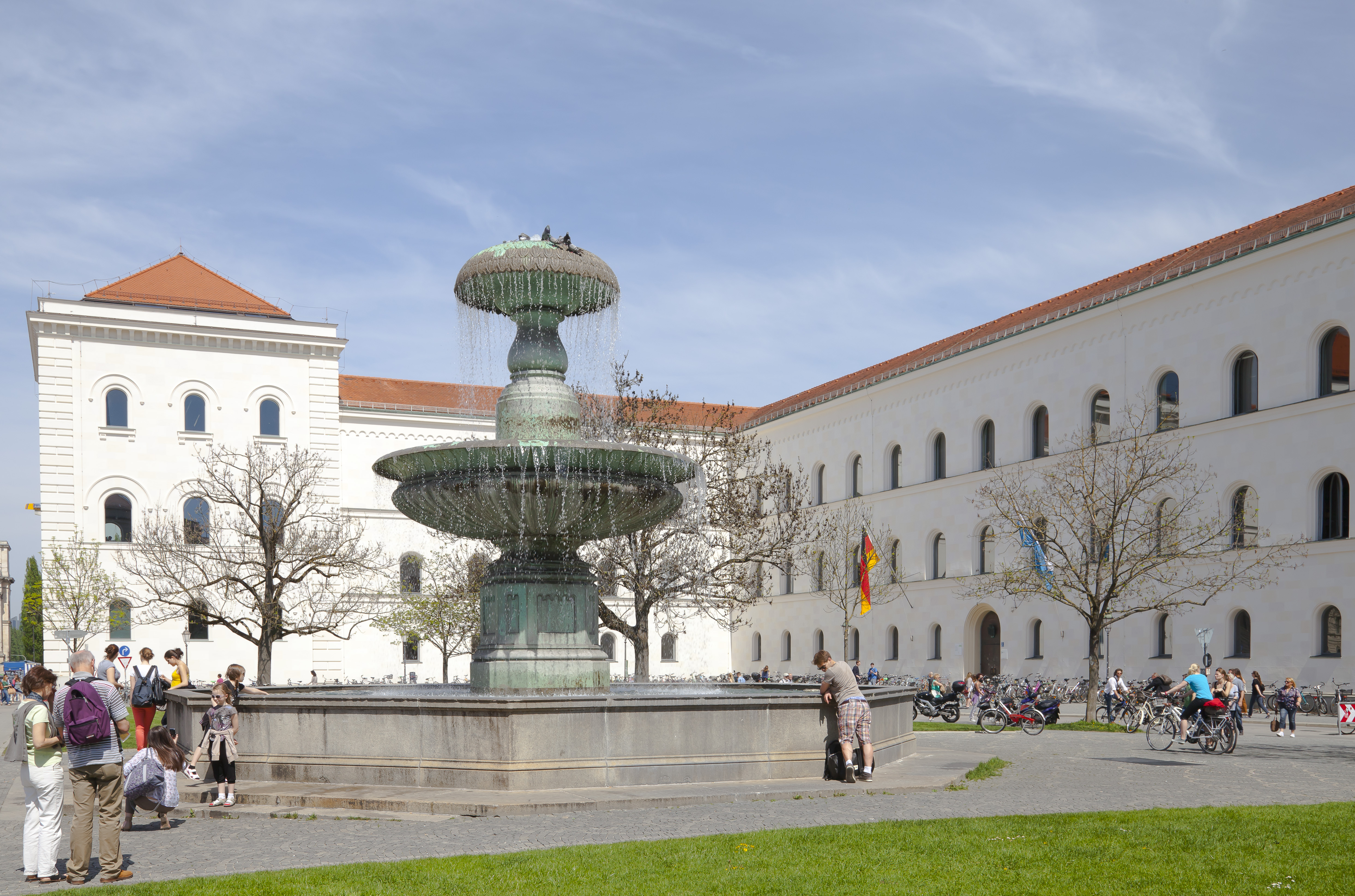
LMU Munich
 Germany
"Ludwig-Maximilians-Universität München"
About
LMU Munich, officially the Ludwig-Maximilians-Universität München, is one of Germany's oldest and most prestigious public research universities. Founded in 1472 as the University of Ingolstadt by Duke Ludwig IX of Bavaria-Landshut, it holds the distinction of being the sixth-oldest continuously operating university in the country. The university's journey began in the small town of Ingolstadt, where it remained for over three centuries. However, in 1800, King Maximilian I Joseph of Bavaria ordered the institution to relocate to Landshut, fearing the advancing French armies. This move was temporary; by 1826, the university found its permanent home in Munich, the Bavarian capital, where it has thrived ever since.
Today, LMU Munich is a powerhouse of research and teaching, enrolling over 50,000 students and employing more than 700 professors. Its faculty and alumni include 43 Nobel laureates, among them Wilhelm Röntgen, Max Planck, and Werner Heisenberg, underscoring its global impact. The university is organized into 18 faculties, spanning the humanities, law, economics, social sciences, natural sciences, and medicine. Its main campus, located in the historic district of Munich's Schwabing neighborhood, is complemented by a modern research campus in Großhadern, home to the university hospital and numerous scientific institutes.
LMU consistently ranks among the top universities in Europe, often appearing in the upper echelons of global rankings such as the Times Higher Education and QS World University Rankings. Its reputation for cutting-edge research is bolstered by its membership in the German Excellence Initiative, which has funded several of its graduate schools and research clusters. With a rich history that spans over five centuries, LMU remains a magnet for scholars and students from around the world, blending tradition with innovation in the heart of Bavaria.
Mission
LMU Munich is dedicated to advancing knowledge through research and teaching of the highest international standard. The university aims to foster critical thinking, interdisciplinary collaboration, and social responsibility among its students and faculty. By combining a broad range of academic disciplines with a strong emphasis on research excellence, LMU seeks to contribute solutions to the pressing challenges of our time, from climate change to global health.
History
The university began as the University of Ingolstadt in 1472, founded by Duke Ludwig IX of Bavaria-Landshut, who sought to create a center of learning in his duchy. For over three centuries, it operated in Ingolstadt, becoming a hub for Catholic theology and Jesuit scholarship. In 1800, King Maximilian I Joseph of Bavaria, concerned about the advancing French armies, ordered the university to move to Landshut. This relocation proved short-lived, as the institution was transferred to Munich in 1826, where it found its permanent home in the Bavarian capital.
Once in Munich, the university expanded rapidly. It adopted the name Ludwig-Maximilians-Universität in honor of its two principal patrons: Duke Ludwig IX, the founder, and King Maximilian I Joseph, who brought it to Munich. During the 19th century, LMU became a leading center for natural sciences, with figures like Justus von Liebig pioneering organic chemistry. In the 20th century, the university weathered two world wars and the Nazi era, during which several faculty members, including the White Rose resistance group, paid with their lives.
After World War II, LMU rebuilt and grew into a modern research university. It played a key role in the German Excellence Initiative, securing funding for graduate schools and clusters such as the Munich Center for Quantum Science and Technology. In 2026, the university appointed a new Board of Trustees and launched campusLMU, a digital platform to streamline academic administration. Today, LMU stands as a global leader in research, with ongoing projects in climate science, medicine, and artificial intelligence.
Subdivisions
Faculty of Physics
One of the largest and most renowned physics faculties in Germany, with research in quantum optics, cosmology, and condensed matter.
Faculty of Medicine
Comprises the university hospital and numerous research institutes, known for breakthroughs in immunology and neuroscience.
Faculty of Law
A leading law school in Germany, offering programs in civil law, criminal law, and public law, with strong ties to European institutions.
Faculty of Economics
Focuses on quantitative economics and public policy, with research centers in econometrics and economic history.
Notable People
Wilhelm Röntgen
Professor of Physics · 1888-1900
Discovered X-rays, for which he received the first Nobel Prize in Physics in 1901.
Max Planck
Professor of Theoretical Physics · 1889-1928
Founded quantum theory and won the Nobel Prize in Physics in 1918.
Werner Heisenberg
Professor of Theoretical Physics · 1927-1958
Formulated the uncertainty principle and received the Nobel Prize in Physics in 1932.
Bernd Huber
Chairman · 2002-2026
Served as President of LMU Munich for over two decades, overseeing its expansion and internationalization.
Matthias H. Tschöp
President · 2026-present
Won the 2026 Broermann Medical Innovation Award for his work on metabolic research.
Milestones
1472
Founded as the University of Ingolstadt by Duke Ludwig IX of Bavaria-Landshut.
1800
Relocated to Landshut by King Maximilian I Joseph of Bavaria.
1826
Moved to Munich, becoming the Ludwig-Maximilians-Universität.
1901
Wilhelm Röntgen receives the first Nobel Prize in Physics for his discovery of X-rays.
1943
White Rose resistance group, led by students Hans and Sophie Scholl, is active at LMU.
2006
LMU is awarded funding under the German Excellence Initiative.
2026
Matthias H. Tschöp becomes President and wins the Broermann Medical Innovation Award.
Departments
Sources
Organization Info
- Founded
- 1472
- Headquarters
- Hauptgebäude der Ludwig-Maximilians-Universität München
- Country
- Germany
- President
- Matthias H. Tschöp
- Type
- University
- Employees
- 14083
- Students
- Around 50,000
- Faculties
- 18
Financials
- Employees
- 14083
Official Website
www.lmu.de/
Join the community
fans discussing