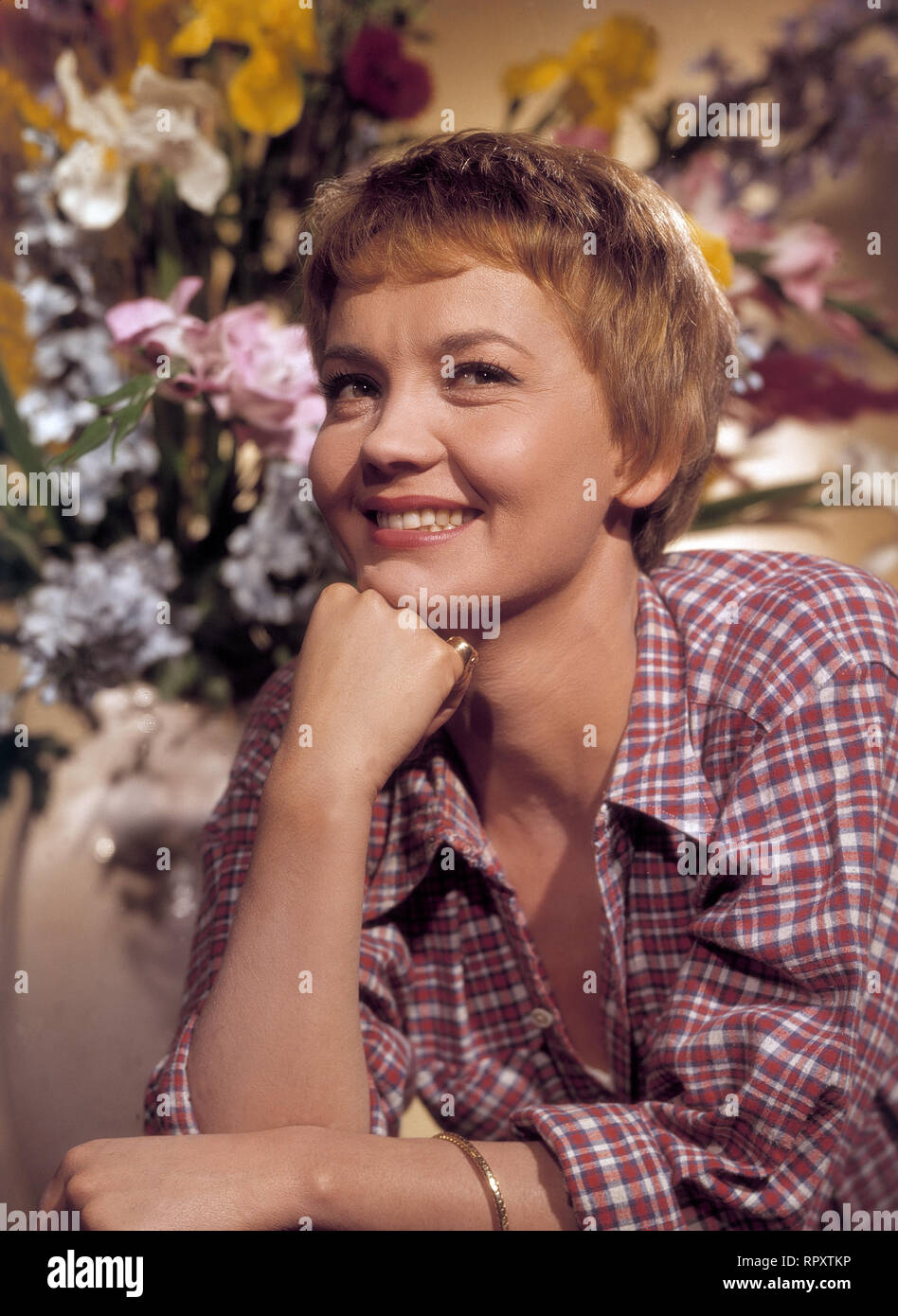
Liselotte Pulver
 Switzerland
Also known as: Lilo Pulver
Birthday
October 11, 1929
Birth Sign
Libra
Birthplace
Bern, Switzerland
Age
96 years old
About
Liselotte Pulver is a Swiss actress and voice actor, widely recognized for her dynamic contributions to European cinema. She became a prominent figure, particularly in German films during the 1950s and 1960s, where her energetic performances and distinctive, hearty laughter became a signature. Pulver often embodied spirited, tomboyish characters, a persona that resonated with audiences. Her career includes significant roles in both German-language productions, where she was a leading lady, and international films, showcasing her versatility.
Her work has taken her from celebrated German comedies to major Hollywood productions, including Douglas Sirk's A Time to Love and a Time to Die and Billy Wilder's One, Two, Three. She also appeared in Jacques Rivette's French drama The Nun. Beyond her on-screen presence, Pulver has lent her voice to various projects, further extending her artistic reach. She maintains a lasting presence in the industry, with her performances continuing to be appreciated for their warmth and engaging quality.
Early Life & Background
Liselotte Pulver spent her early years in Bern, Switzerland, where she was born in 1929. The city, known for its medieval architecture and position along the Aare River, provided the backdrop for her childhood. Her initial educational path led her to business school, a practical choice that seemed to set a different trajectory than the one she would ultimately pursue. However, a strong inclination toward the performing arts began to emerge during her youth, signaling a different calling than the world of commerce.
This interest soon prompted a shift in focus from business to the stage. She made the decision to pursue acting professionally, a move that quickly bore fruit. After committing to her artistic passion, Pulver rapidly secured significant roles in various theatrical productions. These early stage appearances provided her with valuable experience, allowing her to hone her craft and develop the expressive style that would later define her screen presence. This period of intense theatrical work laid a solid foundation for her eventual breakthrough into the film industry, preparing her for the demanding schedule and public visibility that would follow. Her dedication during these formative years set the stage for a career that would soon captivate audiences across Europe, particularly as the German film industry began its post-war resurgence.
Career Growth
Liselotte Pulver's rise to prominence in German cinema began in the mid-1950s, quickly establishing her as a leading actress. Her engaging screen presence made her a popular choice for a range of roles, often portraying characters with a distinct vivacity. She starred in several highly successful German-language films, including Ich denke oft an Piroschka, a romantic comedy released in 1955, and Das Wirtshaus im Spessart, a fantasy comedy from 1958. Another notable German success was Züricher Verlobung. These roles cemented her status as one of the era's most recognizable stars in her home country.
Her talent soon attracted international attention, leading to significant roles in major productions. She worked with acclaimed director Douglas Sirk in the 1958 drama A Time to Love and a Time to Die, a poignant story set during World War II. A few years later, in 1961, she appeared in Billy Wilder's fast-paced Cold War comedy, One, Two, Three, playing the spirited Miss Scarlett Hazeltine. Pulver also ventured into French cinema, taking a role in Jacques Rivette's 1966 drama The Nun (La Religieuse). Beyond feature films, she contributed her voice to various animated projects and, notably, portrayed the character Lilo on Sesamstrasse, the German version of Sesame Street, from 1978 to 1983. Her career has continued into later years, with her attendance at the 70th Bambi Awards in 2018 marking a more recent public appearance, following her last listed film role in Die Verzauberung in 2007.
Career Timeline
Public Image & Style
Liselotte Pulver cultivated a public image centered on authenticity and a spirited demeanor. She became particularly known for portraying tomboyish characters, infusing them with a natural energy and vivacity that audiences found refreshing. This on-screen persona was often complemented by her distinctive, hearty, and joyful laughter, which became a memorable trademark, adding a layer of genuine warmth to her performances. Both media and fans consistently perceived her as a beloved and instantly recognizable figure in Swiss-German cinema during the mid-20th century.
Her appeal stemmed from an ability to deliver captivating performances that felt grounded and relatable, avoiding overly dramatic or artificial portrayals. She projected an image of approachable charm and sincerity, making her a relatable presence to many. Even decades after her most prolific period, her work continues to resonate, celebrated for its engaging quality and the unique blend of strength and lightheartedness she brought to her roles.
Fame & Fandom
Liselotte Pulver's audience has never coalesced around a single, branded identity. Unlike modern stars with organized fan clubs or specific nicknames for their supporters, her following was built on the sheer ubiquity of her presence in German-speaking households. She became one of the most beloved and instantly recognizable Swiss-German actresses, a status earned through decades of consistent excellence rather than viral campaigns or digital rituals. Her fans are best described as a generation that grew up watching her transition from the spirited tomboys of 1950s cinema to the iconic Lilo on Sesamstrasse. This broad, intergenerational appreciation remains rooted in her work as a cultural touchstone rather than any formalized movement. While she commanded significant attention during her peak years, particularly after her Golden Globe nomination for One, Two, Three, the public engagement remained standard for a celebrity of her era, characterized by public appearances and broadcast reach rather than the structured fandoms seen today. There is no documented sub-fandom name separate from general viewership, nor are there records of fan-funded projects or specific rituals dedicated solely to her. The iFANN Global Fame Engine evaluated her profile in August 2026 and determined that Liselotte Pulver is currently not ranked within the Global Top 1,000 or any Top-100 scope list. Consequently, she does not hold a placement in the published rankings.
Interesting Facts and Legends
Liselotte Pulver possesses a truly distinctive trait: her hearty and joyful laughter. This characteristic became so recognizable that it often functioned as a signature element in her film performances, distinguishing her from many of her contemporaries. Her laugh was not merely a sound but an expression of the vibrant energy she brought to the screen. Another unique aspect of her career involves her work on children's television. She was one of the first two human characters to appear on Sesamstrasse, the German adaptation of Sesame Street, portraying the character Lilo from 1978 to 1983. This role introduced her to a new generation of viewers, expanding her audience beyond her well-known film work. Her involvement marked a pioneering step for the beloved educational program in Germany. A widely cited professional milestone is her role in Billy Wilder's 1961 film One, Two, Three, for which she received a Golden Globe nomination in 1963. This film remains her most internationally recognized work, often referenced as her breakout moment in Hollywood cinema. Another frequently mentioned iconic performance is her debut leading role in the 1950 classic The White Hell of Pitz Palu (Die weiße Hölle vom Piz Palü), which established her early fame in German-speaking Europe. On October 11, 2024, she celebrated her 95th birthday, an event covered by major outlets like Krone.at and Bluewin, which highlighted her infectious laugh and her continued vitality at age 95.
Family & Personal Life
Liselotte Pulver was born and raised in Bern, Switzerland, where she spent her formative years. While specific details about her parents are not widely publicized, she emerged from a family background that supported her eventual career path, even if it initially diverged into business studies. Her personal life became publicly intertwined with that of actor Helmut Schmid. They married in 1961, establishing a household together that lasted until Schmid's passing in 1992. This long-standing union formed the core of her personal family life for over three decades. There is no public record of Pulver having children. She has generally kept her private family matters out of the public spotlight, preferring to focus attention on her professional endeavors.
Notable Connections
Relationships & Dating History
Liselotte Pulver's most significant public relationship was her marriage to fellow actor Helmut Schmid. They married in 1961, forming a partnership that became a fixture in the European film community. Both active in the German film industry during its flourishing post-war period, their careers often ran in parallel, though they maintained distinct professional paths. Schmid was a recognized face in German cinema, known for his versatile performances, and their union brought together two prominent figures of the era. Their marriage endured for over three decades, providing a foundation amidst the often-turbulent world of filmmaking.
The couple shared a life that, while public due to their professions, largely remained private in its intimate details. They navigated the demands of their respective careers together, a common bond for many actors. Their long-standing marriage was a testament to their commitment, lasting until Helmut Schmid's death in 1992. This event left Pulver a widow after 31 years of marriage. Since that time, she has maintained a very private personal life, with no further public relationships reported. As of 2026, Liselotte Pulver is widowed, continuing to live a life shaped by her profound professional achievements and personal experiences.
- MarriedHelmut Schmid1961 - 1992Married to the German actor until his death in 1992.
Salary, Net Worth In 2026
$5 Million
iFANN Editorial Team estimate
Per iFANN's editorial analysis, the estimated net worth for Liselotte Pulver stands at approximately $5 million as of 2026. This figure represents an accumulation of earnings from her extensive career, which spans over six decades in film, television, and voice acting. A significant portion of her wealth derives from her peak years in the 1950s and 1960s, when she was a leading star in German cinema, commanding considerable salaries for her roles in popular productions like Ich denke oft an Piroschka. Her transition into international films, including collaborations with directors such as Douglas Sirk and Billy Wilder, further boosted her earning potential, placing her in a higher tier of compensation for European actors of her time. Even after her most active period in front of the camera, Pulver's income streams have persisted. Royalties from her vast filmography continue to provide residual income, as her classic films are still broadcast and made available through various media platforms. Her work as a voice artist, a field known for its consistent demand, also contributed steadily to her finances. Additionally, her role as Lilo on Sesamstrasse for five years would have provided stable television earnings. Like many performers with long careers, it is reasonable to assume that careful management of these earnings, potentially through investments or real estate, has allowed her to maintain a comfortable financial position throughout her retirement years, contributing to her overall net worth in 2026.
Awards Won (1)
Liselotte Pulver has received recognition for her extensive contributions to film and television throughout her career. Notably, she was honored at the 70th Bambi Awards in 2018. This particular award celebrated her lasting impact and distinguished career within the entertainment industry, acknowledging her enduring legacy as a significant figure in European cinema.
2018 · Lifetime Achievement Award
Career
Known For
One, Two, Three
1961 · Miss Scarlett Hazeltine
A Time to Love and a Time to Die
1958 · Elisabeth Kruse
Ich denke oft an Piroschka
1955 · Piroschka
Sesamstrasse
1978 · Lilo
Keywords
Sources
Quick Facts
- Profession
- actress, voice actor
- Born
- October 11, 1929
- Birthplace
- Bern, Switzerland
- Gender
- Female
- Spouse
- Helmut Schmid
- Birth Sign
- Libra
- Nationality
- Swiss
Personal Details
- Spouse
- Helmut Schmid
- Children
- Education
Frequently Asked Questions
Who is Liselotte Pulver?
When was Liselotte Pulver born?
What is Liselotte Pulver known for?
Where is Liselotte Pulver from?
Is Liselotte Pulver still alive in 2026?
Social Media
Join the community
fans discussing