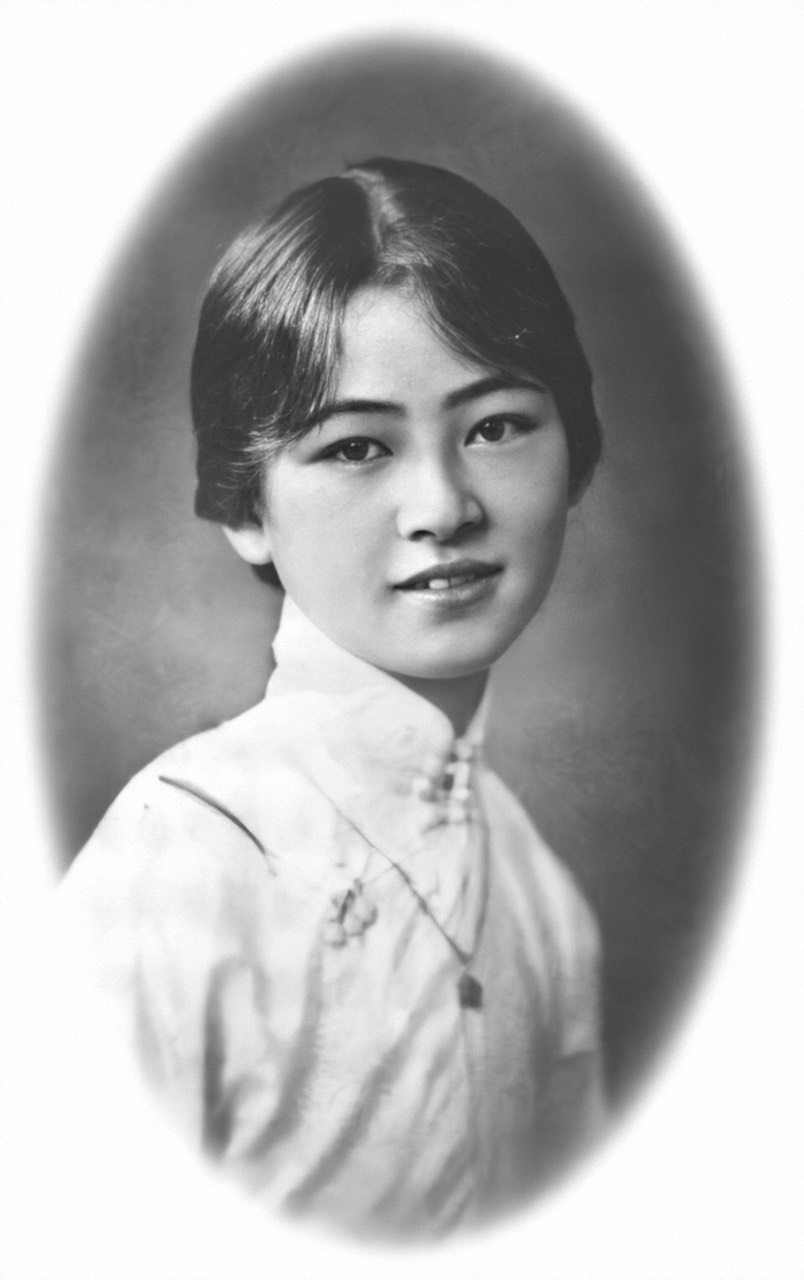
Lin Huiyin
 China
ChinaBirthday
+1904-06-10
Birth Sign
Gemini
Birthplace
Hangzhou
Age
Died at 50
About
Lin Huiyin, born in Hangzhou in 1904 and known as Phyllis Whei Yin Lin during her time in the United States, was a pioneering Chinese architect, poet, and translator. She is celebrated as the first female architect in modern China, a trailblazer who helped shape the nation's architectural heritage. Her husband, Liang Sicheng, is often called the father of modern Chinese architecture, and together they formed a formidable partnership in the field. Lin's journey into architecture began in 1920 when she traveled to Europe with her father, Lin Changmin. By 1924, she was studying at the University of Pennsylvania's School of Fine Arts, where she took courses in the Department of Architecture and earned a Bachelor of Arts degree. In a fitting tribute, she was posthumously awarded a Bachelor of Architecture degree in 2024. She later studied stage art at Yale University's School of Drama. In 1928, alongside Liang, she joined the Department of Northeastern University, and together they annotated the Great Tang Records on the Western Regions, a monumental task that led to the discovery of the Tang Dynasty's Foguang Temple on Mount Wutai. After 1949, Lin and Liang became professors at Tsinghua University in Beijing, dedicating themselves to restoring China's cultural heritage sites. Lin's contributions extended beyond architecture; she played a key role in designing the emblem of the People's Republic of China, the Monument to the People's Heroes, and innovating cloisonné craftsmanship. Her literary works include the Poetry Collection of Lin Huiyin and Essays of Lin Huiyin. Lin passed away in 1955 at the age of 50, leaving behind a legacy that includes her niece, artist Maya Lin, and nephew, poet Tan Lin.
Fame & Fandom
Lin Huiyin commands a global attention defined by academic reverence and historical correction rather than the frenetic cycles of modern celebrity. Her name resonates within architecture schools, literary circles, and museums across three continents, yet her reach operates through the slow burn of scholarly citation instead of viral spikes. iFANN's Global Fame Engine evaluated her profile in August 2026 and confirmed that she does not currently hold a placement in the published rankings for the Global Top 1,000 or any Top-100 scope list. This absence reflects a unique position where her fame is too deep-rooted to be captured by standard pop-culture metrics; she exists outside the hierarchy of trending figures while maintaining an enduring influence on her fields. The fanbase surrounding Lin Huiyin has no formal name documented in available records. Unlike contemporary icons who rally behind specific hashtags or organized campaigns, her admirers are students, historians, and preservationists who engage with her legacy through research and institutional study rather than fan rituals. There are no recorded instances of birthday billboards, subway ad drives, or streaming pushes dedicated solely to her work. Her audience manifests as a collective of professionals and enthusiasts who honor her memory through the continuation of her life's work in preserving Beijing's heritage and advancing women in design.
Interesting Facts and Legends
For nearly a century, Lin Huiyin remained one of the first female students formally trained in architecture at the University of Pennsylvania without receiving a degree due to gender discrimination policies. On May 18, 2024, nearly seventy years after her death, the Weitzman School of Design posthumously awarded her a Bachelor of Science in Architecture, marking a significant moment of historical correction that sparked renewed global interest. Another defining legend involves her tireless lobbying efforts alongside her husband Liang Sicheng to save historic structures in Old Beijing from demolition during the early years of the People's Republic of China. While much of the city was ultimately lost to urbanization, her fight to protect the city walls and traditional hutongs remains a central part of her narrative as a preservationist. A museum dedicated to her life began trial operations in Fuzhou on February 13, 2026, further institutionalizing her history in southeast China. Her personal relationships with poets Xu Zhimo and Wen Yiduo have been dramatized in films and television series, cementing her status as a romantic icon in Chinese culture, though these stories often blur the line between historical fact and fictionalized drama.
Death & Aftermath
Died
+1955-04-01 (aged 50)
Death Place
Beijing
Cause of Death
Tuberculosis
Inside the quiet wards of Peking Union Medical College Hospital, Lin Huiyin spent her final months bedridden, her body worn down by a long struggle with tuberculosis. Her husband Liang Sicheng and their children remained at her bedside as the illness deepened, silencing the woman who had once championed the preservation of Old Beijing's ancient structures. She passed away on April 1, 1955, leaving behind a legacy that bridged poetry and architectural history. The cause was established through medical observation by attending physicians, confirming the natural progression of the chronic disease that had defined her later years. Tributes flowed immediately from the intellectual circles of the People's Republic of China, with fellow architects and scholars honoring her dual contributions to literature and design.
While formal public memorials were initially muted due to political sensitivities surrounding intellectuals during the early Communist era, the respect she commanded among students and colleagues remained evident in private gatherings. Her funeral was a private affair held shortly after her death in Beijing, attended by close family members and peers before she was laid to rest in Babaoshan Revolutionary Cemetery alongside Liang Sicheng. Decades later, her reputation has surged, culminating in the University of Pennsylvania's Weitzman School of Design posthumously awarding her a Bachelor of Architecture degree on May 18, 2024. A museum dedicated to her life began trial operations in Fuzhou in February 2026, while her daughter Liang Congjie ensured her papers and writings were preserved for future generations.
Awards & Accolades
Keywords
Quick Facts
- Profession
- architect, poet, translator
- Born
- +1904-06-10
- Birthplace
- Hangzhou
- Died
- +1955-04-01
- Death Place
- Beijing Tongren Hospital
- Gender
- Female
- Spouse
- Liang Sicheng
- Birth Sign
- Gemini
Personal Details
- Spouse
- Liang Sicheng
Join the community
fans discussing