“In film after film, for year after year, Paul Schrader has been telling this story in one way or another, but never with more humanity than this time.”
Roger Ebert
Chicago Sun-Times
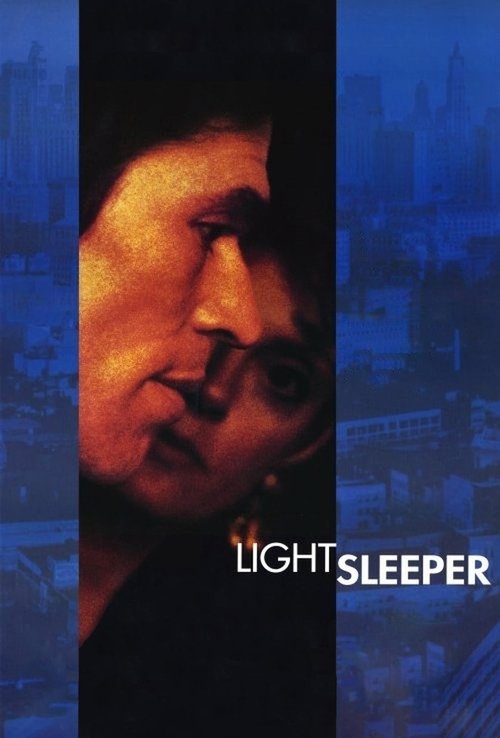
 United States
"Sleepless nights in a city that never forgets."
Paul Schrader's 1992 drama Light Sleeper plunges into the nocturnal world of John LeTour, a man grappling with addiction and a career in New York City's high-end drug trade. Willem Dafoe embodies LeTour, a man caught between his past as a dealer and a desperate desire for redemption. The film, with its $5 million budget, paints a vivid picture of a city that never sleeps, mirroring LeTour's own persistent insomnia.
As LeTour navigates his existential crisis, his path crosses with Ann, played by Susan Sarandon, an old flame who represents a potential escape from his self-destructive lifestyle. Their reunion, however, coincides with a series of violent murders that send shockwaves through the city's elite circles, blurring the lines between LeTour's personal struggles and the dangerous realities of his profession. Schrader, known for his intense character studies, crafts a moody, introspective film that explores themes of addiction, alienation, and the search for meaning in a morally ambiguous world. Despite a modest box office return of just over $1 million, the film has garnered a dedicated following for its raw portrayal of urban decay and its complex central performance.
Availability and pricing can change. Confirm on the provider's site before purchasing.
John LeTour, a forty-year-old courier for a high-end cocaine operation, moves through Manhattan's wealthy enclaves with a practiced anonymity. He delivers to bankers and lawyers who treat him as a ghost, a necessary but invisible presence in their lives. His boss, Ann, a sophisticated supplier, has decided to leave the drug trade for the cosmetics business, an industry she notes operates on the same principles of supply and demand. The announcement unsettles LeTour, who has saved little and lives in a modest apartment, a stark contrast to the penthouses he visits nightly.
LeTour's insomnia has become chronic, and he has taken to keeping a diary, a habit a fellow dealer once warned him means it's time to quit. His entries are filled with a longing for goodness, a desire to break free from the cycle of his life. The city itself is in a state of decay, with a sanitation strike leaving garbage piled on the streets, a visual metaphor for the moral rot that surrounds him. He is also losing clients to the crack epidemic, which has shifted the drug economy and made his niche increasingly irrelevant.
One night, LeTour spots his ex-wife Marianne on the street. She is sober now, having rebuilt her life after their destructive marriage. Their reunion is tense; Marianne is wary, but agrees to see him again. They spend a night together, and LeTour feels a flicker of hope. But the next morning, Marianne learns that her mother died while she was with him, and she blames him for the missed call. She tells him to stay away, and LeTour's fragile optimism shatters.
Meanwhile, a young woman is found dead with cocaine in her system, and the police begin investigating the city's drug trade. LeTour's German client, Tis Brüg, becomes a person of interest. A psychic, Teresa Aranow, delivers a chilling prediction to LeTour, telling him he's in danger and that he's being followed. LeTour's paranoia grows, and he becomes increasingly isolated, unable to confide in Ann, who is focused on her own transition. He struggles to find a way out, but every path seems blocked.
Light Sleeper (1992) Original Trailer [HD]
Critical Consensus
Paul Schrader's moody meditation on addiction and grace is a quiet triumph, anchored by Willem Dafoe's haunting performance. It rewards patient viewers with a profound sense of redemption.
“In film after film, for year after year, Paul Schrader has been telling this story in one way or another, but never with more humanity than this time.”
Roger Ebert
Chicago Sun-Times
“Buoyed by his questing spirit and Dafoe's mesmerizing performance, Light Sleeper might just keep you up nights.”
Peter Travers
Rolling Stone
“For me, LIGHT SLEEPER comes the closest to capturing on film the ethos of Lou Reed's musical opus 'Street Hassle,' one of the most eloquent urban visions of our time.”
Marjorie Baumgarten
Austin Chronicle
“There's a feeling of spiritual sobriety that carries Light Sleeper to the sort of transcendent ending that Schrader so admired in Bresson. John has passed through.”
Scout Tafoya
The Reveal
Director
Paul Schrader
Writer
Paul Schrader
Composer
Michael Been
Cinematographer
Edward Lachman
Producers
G. Mac Brown, Linda Reisman
Berlin International Film Festival (1993)
Golden Bear: Nominee
Independent Spirit Awards (1993)
Best Screenplay: Nominee
Independent Spirit Awards (1993)
Best Cinematography: Nominee
Join the community
fans discussing