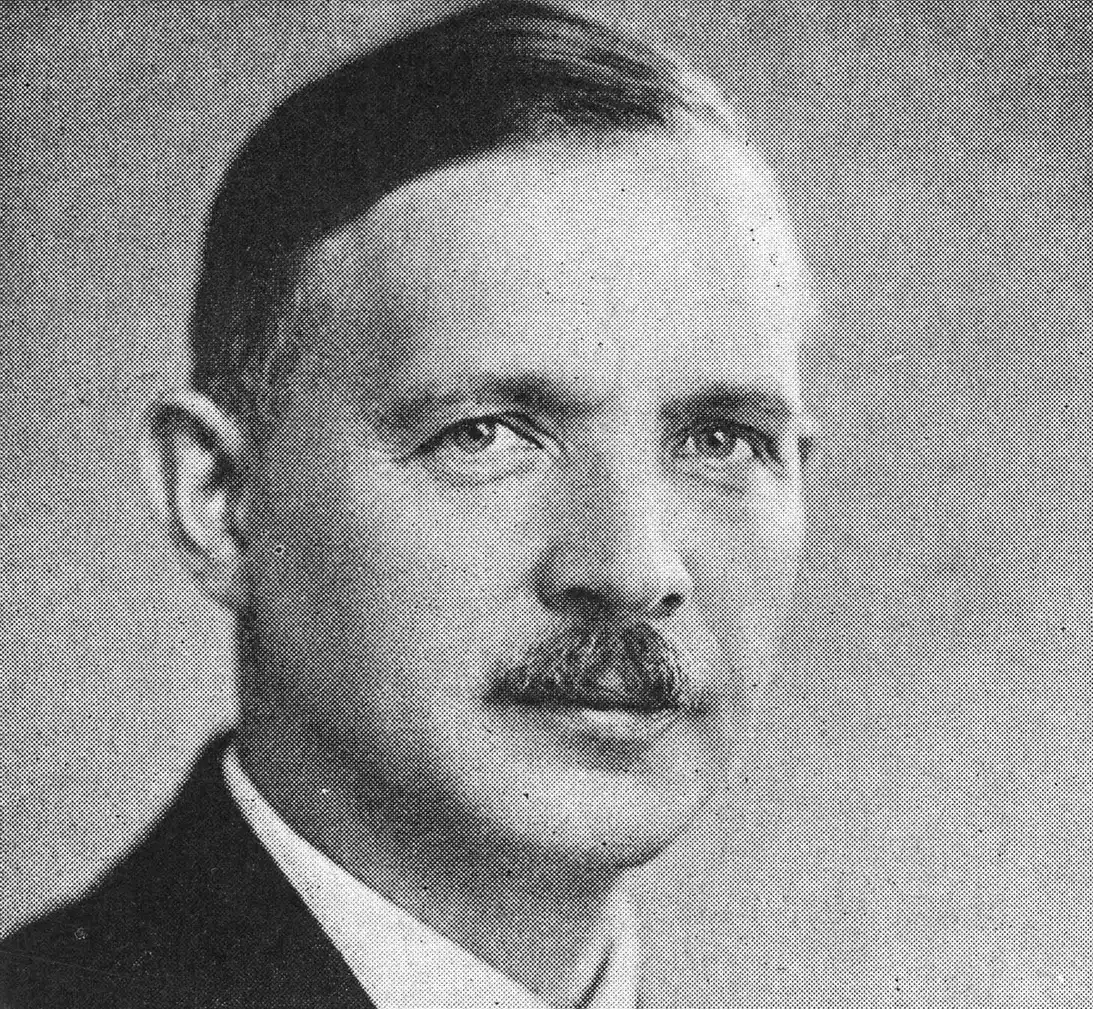
Lewi Pethrus
 Sweden
Christian minister•hymnwriter•pastor
Also known as: Pethrus Lewi Johansson
Birthday
March 11, 1884
Birth Sign
Pisces
Birthplace
Vargön, Sweden
Age
Died at 90
About
Lewi Pethrus was a Swedish Pentecostal minister, hymnwriter, and political founder who led the Pentecostal movement in Sweden for over six decades. Born Pethrus Lewi Johansson on March 11, 1884, in Vargön, he died on September 4, 1974, in Stockholm at age 90. He is best remembered for founding the Christian Democrats party in 1964, a move that bridged his spiritual leadership with civic engagement.
Pethrus pastored the Filadelfia Church in Stockholm, which grew into one of Europe's largest Pentecostal congregations. He wrote the enduring hymn "Löftena kunna ej svika" in 1913 and founded the newspaper Dagen. His model of local church autonomy became the standard for Scandinavian Pentecostalism and influenced churches across the Atlantic.
Today, Pethrus is studied as a figure who created a Christian counterculture within a secularizing Sweden. His legacy lives on through the institutions he built and the hymn still sung in Swedish churches.
Early Life & Background
Lewi Pethrus grew up in Vargön, an industrial town in western Sweden, where his father Johan worked as a factory laborer. The family lived in modest circumstances, and the young Pethrus was shaped by the working-class environment of the early industrial era.
His path toward ministry began early. At age 18, in 1902, he became an evangelist, and from 1905 to 1906 he attended Bethel Seminary in Stockholm, a Baptist institution that gave him his theological foundation. It was during these years that he encountered the Pentecostal movement, which had erupted in the early 20th century with its emphasis on the baptism of the Holy Spirit and speaking in tongues.
That experience proved pivotal. Although he was ordained as a Baptist pastor, his Pentecostal convictions soon put him at odds with the Baptist denomination. He left to join the fledgling Pentecostal movement, a decision that set him on the course to become the leader of Swedish Pentecostalism. The moment just before his breakthrough saw him preaching in small congregations, carrying a message that would soon transform Swedish religious life.
Career Growth
Pethrus's breakthrough came when he became pastor of the Filadelfia Church in Stockholm in the 1910s. Under his leadership, the congregation grew to become one of the largest Pentecostal churches in Europe, and he emerged as the central figure of the Swedish Pentecostal Movement, a position he held for decades.
In 1913, he wrote the hymn "Löftena kunna ej svika" ("The Promises Cannot Fail"), which became a staple of Swedish worship. He also founded the newspaper Dagen, which became a vehicle for his theological views and his engagement with society.
Through the 1930s and 1950s, Pethrus built what scholars describe as a Christian counterculture in secularizing Sweden. He created schools, media, and social networks that allowed Pentecostals to maintain their identity while engaging with the broader culture. His ecclesiological thought, emphasizing local church autonomy, influenced Pentecostal congregations across Scandinavia and among Scandinavian-Americans.
His most consequential act came in 1964, when at age 80 he founded the Christian Democrats party (Kristdemokraterna). The party grew to become a significant force in Swedish politics. Pethrus remained active until his death in 1974.
Career Timeline
Public Image & Style
Lewi Pethrus is remembered as a monumental figure in Swedish religious history, a charismatic leader who built institutions and engaged boldly with politics. Christianity Today's 2024 profile describes him as someone who "preached his countercultural values to whomever would listen." His image is that of a countercultural pioneer who created a Christian subculture within a rapidly secularizing Sweden.
Within Swedish Pentecostal communities, his legacy is honored through hymn singing and institutional memory. Historians of religion study him as a case study in how religious movements adapt to secularization. There is no modern fandom in the entertainment sense, but his influence is felt in the continued presence of the Pentecostal movement and the Christian Democrats party.
Fame & Fandom (iFAMOUS Rankings)
The collective veneration of Lewi Pethrus operates through ecclesiastical and political structures rather than the ephemeral campaigns typical of modern celebrity culture. His followers, primarily members of the Free Church of Sweden and the Christian Democrats, engage with his legacy via institutional liturgy, hymn singing, and sustained political adherence rather than social media trends or fan-funded projects. There is no formal name for this group, as reverence is expressed through active participation in the organizations he founded rather than a distinct subculture identifier. The rituals associated with him remain standard Pentecostal practices, such as faith healing and speaking in tongues, which he championed during massive open-air preaching tours that drew tens of thousands across Scandinavia. While no viral incidents or chart-pushing campaigns define his posthumous presence, his influence persists through enduring media like the newspaper Dagen and the theological frameworks established in the early 20th century. These historical achievements serve as the primary focus of his enduring reputation, distinguishing his status from figures whose fame relies on contemporary pop-culture consumption. Despite his monumental role in Swedish history, iFANN's Global Fame Engine has evaluated this person, but they do not currently hold a placement in the published rankings (Global Top 1,000 or a Top-100 scope list).
Interesting Facts and Legends
Lewi Pethrus was born Pethrus Lewi Johansson and later reversed his given names to form his public identity. Before his conversion to Pentecostalism, he served as a Baptist pastor. He composed the hymn Löftena kunna ej svika at age 29, a work that remained in use for over a century. In 1964, he co-founded the Christian Democrats party at the age of 80, demonstrating significant civic engagement late in life. A widely retold story from his ministry describes his refusal of special treatment; accounts note that he often walked long distances to preach rather than utilizing automobiles, reinforcing his image as a humble man of the people. Another iconic moment involves his leadership during the Great Awakening in 1914, when he unified various small groups into the United Pentecostal Mission, transforming the movement from a fringe sect into a major societal force. Historical records also document his successful defiance of state restrictions regarding outdoor services and adult baptisms in the 1930s, an act that became a symbol of religious freedom in Sweden. Scholar Joel Halldorf has argued that Sweden's secularism was only on the surface and that Pethrus's legacy addresses enduring human spiritual needs.
Family & Personal Life
Details about Lewi Pethrus's family life are scarce in the historical record. His father, Johan, worked as a factory laborer in Vargön, and his upbringing was modest. The Swedish National Archives biographical entry identifies his father but does not detail his mother or siblings. Pethrus's personal life appears to have been centered on his ministerial work, and his marriage and children, if any, are not documented in the available sources. His public legacy as a religious leader far outweighs what is known about his private household.
Notable Connections
Lewi Pethrus's legacy is closely tied to historian Joel Halldorf, who has written extensively on his life and leadership, including a 2020 scholarly biography. Scholar Tommy H. Davidsson studied Pethrus's ecclesiological thought, and his work is referenced in academic circles. The musicians Frank Ådahl and Malcolm Chambers led the 2023 centennial concert for the Swedish Pentecostal Movement, the institution Pethrus founded.
Relationships & Dating History
Lewi Pethrus's personal romantic life is not documented in the available sources. As a Swedish Pentecostal minister born in 1884 who died in 1974, his private life was not a subject of public record. Swedish Pentecostal culture of his era emphasized modesty and privacy regarding personal matters. No information about a spouse, children, or dating history appears in any of the retrieved sources.
At the time of his death on September 4, 1974, Pethrus was a widower, though details about his late wife are unknown. His public legacy as a religious leader and political founder far outweighs what is known about his personal relationships.
Death & Aftermath
Died
September 4, 1974 (aged 90)
Death Place
Unknown
Cause of Death
Unknown
Net Worth (Estate Value)
$1 Million
iFANN Editorial Team estimate
Lewi Pethrus was a minister and hymnwriter in 20th-century Sweden, not a wealthy celebrity. His estate would have consisted of modest personal property. The institutions he founded, such as the Filadelfia Church, the Dagen newspaper, and the Christian Democrats party, are enduring legacies but not personally owned by his estate. His hymn Löftena kunna ej svika remains under copyright in Sweden until 2044, potentially generating royalties for his heirs, but no figures are available. Per iFANN's editorial analysis, as of 2026, the estimated net worth of his estate is around $1 Million.
Awards & Accolades
View 2 records, honours and achievementsKnown For
Christian Democrats party (founding)
1964 · Founder
Dagen newspaper (founding)
1940 · Founder
Hymn 'Löftena kunna ej svika'
1913 · Writer
Filadelfia Church, Stockholm
1913 · Pastor
Keywords
Sources
Quick Facts
- Profession
- Christian minister, hymnwriter, pastor
- Born
- +1884-03-11
- Birthplace
- Vargön
- Died
- +1974-09-04
- Death Place
- Stockholm
- Gender
- Male
- Birth Sign
- Pisces
Personal Details
- Full Name
- Pethrus Lewi Johansson
- Education
- Bethel Seminary, Stockholm (1905–1906)
Frequently Asked Questions
Who was Lewi Pethrus?
What did Lewi Pethrus do?
When did Lewi Pethrus die?
What is the Christian Democrats party in Sweden?
What hymns did Lewi Pethrus write?
Similar People
Join the community
fans discussing