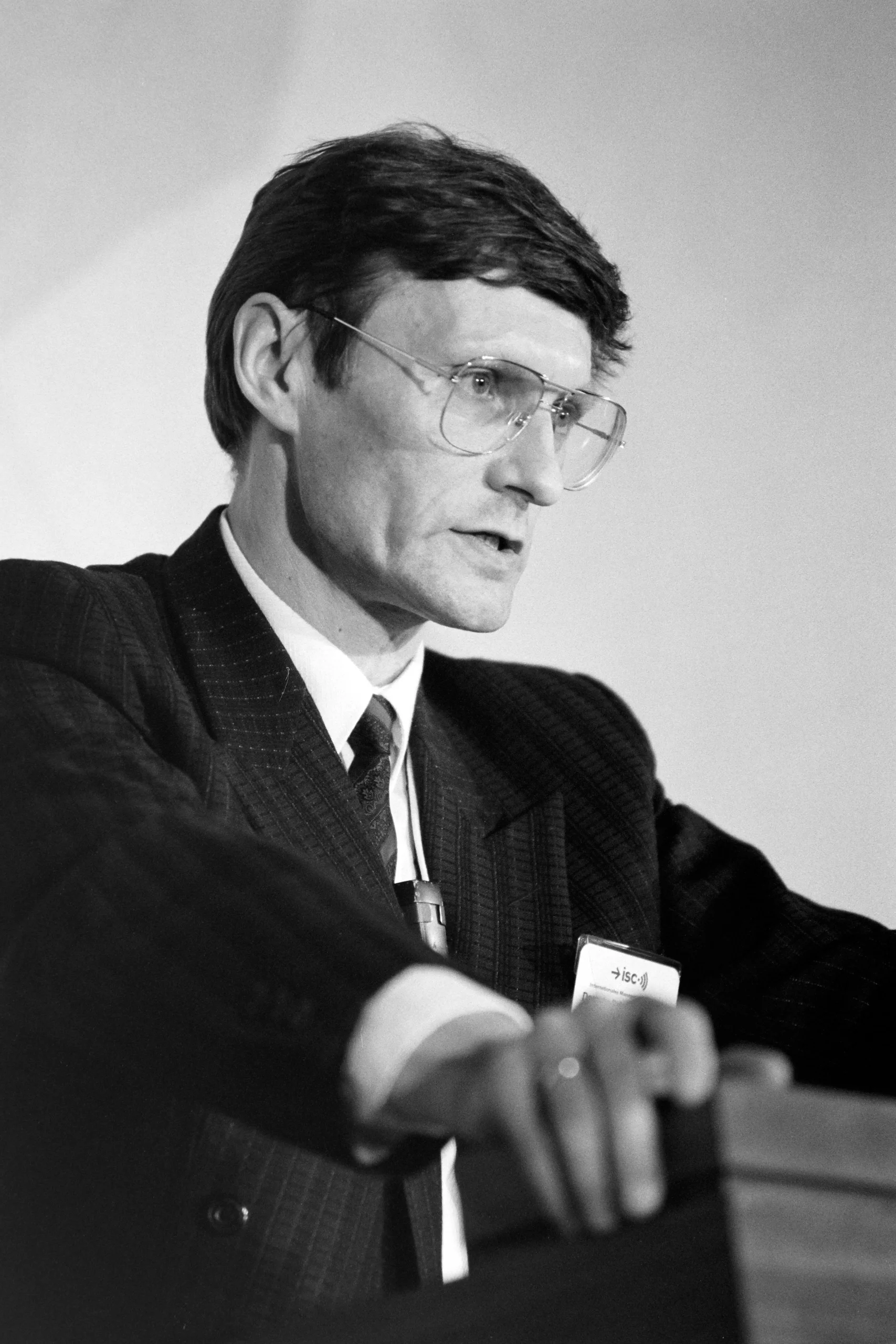
Leszek Balcerowicz
 Poland
economist•university teacher•banker
Also known as: Architect of Polish shock therapy
Birthday
January 19, 1947
Birth Sign
Capricorn
Birthplace
Lipno, Poland
Age
79 years old
About
Leszek Balcerowicz is a Polish economist, statesman, and academic best known as the architect of Poland's 1989 "shock therapy" reforms that transitioned the country from a communist command economy to a free-market system. He served twice as Deputy Prime Minister and Minister of Finance (1989–1991, 1997–2001) and as Chairman of the National Bank of Poland from 2001 to 2007. His reforms are widely credited with taming hyperinflation and laying the groundwork for Poland's subsequent decades of growth, making him one of the most influential economic policymakers in post-Cold War Europe.
Balcerowicz remains active in public life as the chairman of the Civic Development Forum (Forum Obywatelskiego Rozwoju), a think tank he founded in 2007. He continues to write for international outlets like Project Syndicate and the Journal of Democracy, and his commentary on populism, monetary policy, and economic reform draws on decades of hands-on experience. His work has earned him international recognition, including the 2014 Milton Friedman Prize for Advancing Liberty from the Cato Institute.
Early Life & Background
Leszek Henryk Balcerowicz was born on January 19, 1947, in Lipno, a small town in north-central Poland. His childhood unfolded in the aftermath of World War II and under the establishment of communist rule, a context that would later shape his economic convictions. He pursued economics at the University of Warsaw, earning a master's degree and then a doctorate. A pivotal period came during his graduate studies at Columbia University in New York, where he was exposed to Western economic thought, particularly the ideas of the Chicago School and Milton Friedman. This experience gave him a theoretical framework he would later apply in practice.
Returning to Poland, Balcerowicz joined the faculty of the Warsaw School of Economics (SGH), where he earned his habilitation and became a professor. During the 1980s, he became involved with the Solidarity movement, serving as an economic advisor and participating in the underground intellectual circles that opposed communist rule. He was a participant in the Round Table talks of 1989, which paved the way for semi-free elections and the end of communist rule. His academic reputation and reformist ideas positioned him as the natural choice for finance minister in the first non-communist government.
Career Growth
Balcerowicz's breakthrough came in August 1989 when he was appointed Minister of Finance in Tadeusz Mazowiecki's government. He immediately introduced the "Balcerowicz Plan," a package of radical reforms that included price liberalization, currency stabilization, strict fiscal discipline, and rapid privatization. The plan successfully cut hyperinflation from over 500% annually to manageable levels within months, though it also triggered a sharp rise in unemployment and a temporary drop in living standards. He continued as Deputy Prime Minister and Finance Minister under Jan Krzysztof Bielecki until 1993.
After a period out of government, he returned in 1997 as Deputy Prime Minister and Finance Minister under Jerzy Buzek, focusing on accelerating privatization and preparing Poland for EU accession. From 2001 to 2007, he served as Chairman of the National Bank of Poland, overseeing monetary policy and maintaining inflation targets while remaining skeptical of immediate euro adoption. In 2007, he founded the Civic Development Forum, a think tank promoting free-market policies, and has remained its chairman. In 2014, he received the Milton Friedman Prize for Advancing Liberty from the Cato Institute. He continues to write and speak on economic policy, including recent work on the dangers of populism.
Career Timeline
Public Image & Style
Balcerowicz is perceived as a determined, intellectually rigorous reformer, often described as the "father of Polish capitalism." His public persona is that of a serious academic and statesman, typically seen in formal attire suitable for diplomatic and academic settings. He is known for his unwavering belief in free markets and his willingness to defend controversial reforms against critics. Among economists and policy observers, he is respected for his consistency and clarity, though his policies have also drawn criticism for their social costs. He maintains an active presence on X (Twitter) under @LBalcerowicz, where he shares insights on economic policy and engages with current events.
Fame & Fandom (iFAMOUS Rankings)
Leszek Balcerowicz commands a global stage not through celebrity adoration but through the weight of historical consequence. His audience consists of students, policy analysts, and political observers who engage with his economic theories rather than fans organizing birthday campaigns or streaming pushes. There is no official fandom name for this architect of Poland's transition from communism to a market economy. The individuals following his work are defined by their professional interest in the radical reforms he executed, not by cultural worship typical of entertainers. While pop culture lore often centers on viral incidents, Balcerowicz's legacy is built on verified historical mythology regarding his 1989 shock therapy program. These stories are retold in academic and journalistic contexts as pivotal moments that stabilized the Polish economy and integrated it into the global market. His tenure as President of the National Bank of Poland further cements his status as a key figure in post-communist transitions, featured in major platforms like PBS's Commanding Heights. Despite his immense influence on European history, he does not hold a placement in the published rankings of the iFANN Global Fame Engine. As of August 2026, Leszek Balcerowicz is currently evaluated but holds no rank in the Global Top 1,000 or any Top-100 scope list.
Interesting Facts and Legends
Leszek Balcerowicz's time at Columbia University was instrumental in shaping his economic worldview, exposing him to the works of Milton Friedman and other free-market economists before he could implement them in Poland. In 2012, some commentators dubbed him "The Anti-Bernanke" due to his strong belief in market mechanisms over the interventionist approaches associated with Federal Reserve Chair Ben Bernanke. His "shock therapy" model has been frequently discussed as a potential template for Ukraine's economic reforms, particularly during times of crisis. He is an avid supporter of the concept of flat taxes, and his think tank has advocated for their introduction in Poland. He speaks English fluently, a skill honed during his studies in the United States. Beyond these facts, the legend surrounding his 1989 reforms remains the defining story of his career. As Deputy Prime Minister and Finance Minister, he oversaw a sweeping program that rapidly transitioned Poland from a centrally planned economy to a free-market system. This event is documented as a verified, pivotal moment in modern European history. Another iconic aspect of his career is his tenure as the President of the National Bank of Poland, where he solidified the institutional framework for the country's monetary policy during its critical early years of independence.
Notable Quotes
“It is important to move quickly when citizens are willing to embrace change.”
“This idea that markets tend to fall into self-perpetuating crises and only wise government can extract the country out of this crisis... is wrong.”
“The transformation required a radical break with the past, even if it meant short-term pain.”
Family & Personal Life
Leszek Balcerowicz is married to Ewa Balcerowicz, and the couple has been together for decades. Ewa has occasionally appeared alongside him at public events, supporting his initiatives. They have children, though details about their names and professions are not widely publicized, reflecting the family's preference for privacy. Balcerowicz was born in Lipno to a family whose background is not extensively documented in public sources. He has kept his family life largely out of the public eye, focusing attention on his professional work.
Notable Connections
Tadeusz Mazowiecki appointed Balcerowicz as Finance Minister in 1989. Lech Wałęsa, the Solidarity leader and former president, collaborated with him during the democratic transition. Jerzy Buzek served as Prime Minister during Balcerowicz's second term as Deputy PM. Milton Friedman's ideas heavily influenced Balcerowicz's policies. Jan Krzysztof Bielecki was Prime Minister during Balcerowicz's first term.
Relationships & Dating History
Leszek Balcerowicz has been married to Ewa Balcerowicz for decades, and the couple has remained together throughout his public career. There is no public record of any other romantic relationships, divorces, or separations. Ewa has occasionally appeared alongside him at public events, supporting his initiatives. As of 2026, he is still married to Ewa, and they have children, though details about their family life are kept private.
- MarriedEwa Balcerowicz1970 - presentCurrentMarried for decades, they have children together and have maintained a private family life.
Salary, Net Worth In 2026
$3 Million
iFANN Editorial Team estimate
As of 2026, iFANN currently estimates Leszek Balcerowicz's net worth at $3 Million. This figure reflects the modest earnings typical of a career in academia and public service, rather than commercial ventures. His income sources include his professorship at the Warsaw School of Economics, fees from international speaking engagements (such as through the London Speaker Bureau), and royalties from his numerous books and articles. He has also held advisory roles and think tank leadership positions. Balcerowicz's financial situation has remained relatively stable over the years, with no major windfalls or business ventures reported. His net worth is consistent with other prominent economists and former central bankers in Europe. Given his ongoing writing and speaking activities, his income likely continues in the low six figures annually, contributing to a steady accumulation of wealth over his long career.
Awards Won (3)
Leszek Balcerowicz has received several prestigious awards recognizing his contributions to economics and liberty. In 2014, he was awarded the Milton Friedman Prize for Advancing Liberty by the Cato Institute, one of the highest honors for advocates of free markets. He also holds honorary doctorates from Columbia University and other institutions, and has been decorated with Poland's Order of the White Eagle and the Order of Merit of the Republic of Poland.
2014 · Economics
Advancing liberty through economic reforms in Poland
2005 · State honor
Lifetime achievement
Known For
Balcerowicz Plan
1989 · Architect
Deputy Prime Minister of Poland
1989 · Two terms
Chairman of the National Bank of Poland
2001 · Chairman
Keywords
Sources
Quick Facts
- Profession
- economist, university teacher, banker
- Born
- January 19, 1947
- Birthplace
- Lipno, Poland
- Gender
- Male
- Spouse
- Ewa Balcerowicz
- Birth Sign
- Capricorn
- Net Worth
- $3 Million
Personal Details
- Full Name
- Leszek Henryk Balcerowicz
- Spouse
- Ewa Balcerowicz
- Education
- University of Warsaw (PhD), Columbia University (graduate studies), habilitation at Warsaw School of Economics
Frequently Asked Questions
What is Leszek Balcerowicz known for?
How old is Leszek Balcerowicz in 2026?
Is Leszek Balcerowicz still alive in 2026?
Who is Leszek Balcerowicz married to?
What awards has Leszek Balcerowicz won?
Social Media
Similar People
Join the community
fans discussing