Les Variations
 France
Pioneers of Moroccan Roll and the first French rock band to conquer America.
2
Members
About
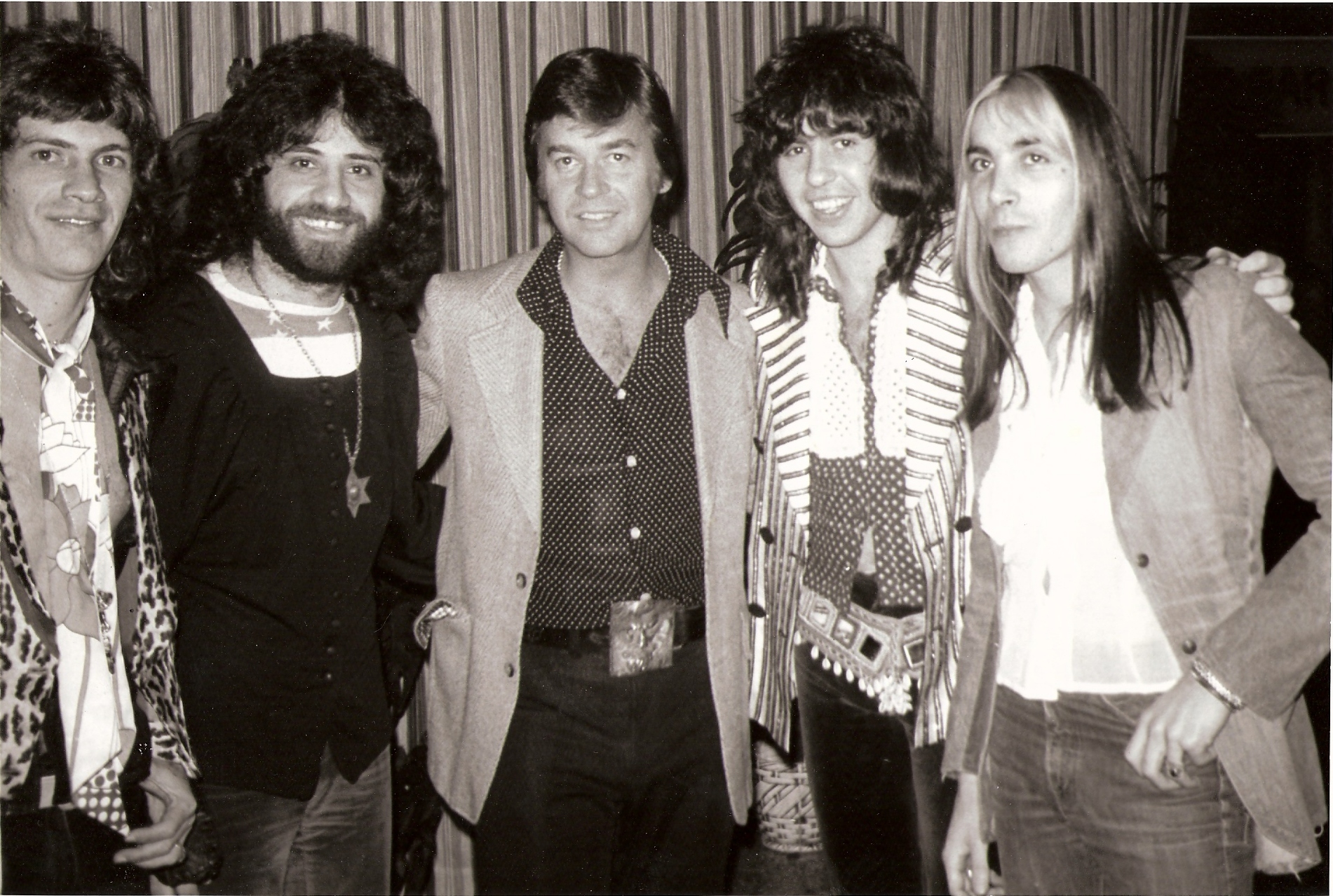
Active primarily between 1968 and 1975, Les Variations operated as a collective of musicians born in Morocco who migrated to France. The core duo of Jo Leb and F. R. David formed the creative nucleus of the band, though live performances often included additional session musicians to fill out the rhythm section. Their identity was rooted in a multicultural upbringing that exposed them to Berber, Arabic, and Sephardic Jewish traditions alongside the rock music popular in Europe at the time.
The group is best remembered for shattering barriers for French acts abroad. Before Les Variations, no French rock band had successfully toured the United States or signed with a major American record label. Their partnership with Buddah Records in New York allowed them to release English-language material that reached American audiences, proving that non-English speaking bands could find commercial success without compromising their artistic vision.
While they started with a standard hard rock sound reminiscent of Led Zeppelin, their later work became a cultural archive of North African life. Albums like Moroccan Roll and Café de Paris featured original Hebrew songs and instruments like the guembri, creating a sonic landscape that anticipated the world music boom of the 1980s. Today, they are recognized not just as a rock band, but as pioneers of a specific fusion genre that remains influential in the Maghreb region.
Formation Story
The origins of Les Variations trace back to the late 1960s when a group of young men from Nador, Morocco, relocated to France. Unlike modern pop groups that rely on agency auditions, these musicians connected through personal networks within the Moroccan expatriate community in Paris. Born into families with deep roots in the Sephardic Jewish tradition of North Africa, they grew up listening to a blend of local folk music, religious chants, and imported American rock records. This diverse soundscape became the foundation for their unique musical approach.
By 1968, the members had begun collaborating seriously, honing their craft in the vibrant underground scene of Paris. Their debut album, Nador, released in 1969, marked their official entry into the industry. The album showcased a raw, guitar-driven sound that paid homage to British blues-rock while hinting at the exotic influences that would define their future. The name Les Variations itself reflected their philosophy of adaptation, signaling an intent to mix different cultural elements rather than sticking to one rigid style.
Their rise was rapid and historic. They quickly became the first French rock band to headline the Olympia Theatre, a venue that had previously been the domain of established French chanson singers and international stars. This achievement paved the way for their expansion into the United States. In the mid-1970s, they secured a deal with Buddah Records, a major label based in New York. This partnership allowed them to tour America and release albums that introduced American listeners to a new kind of rock music infused with Middle Eastern rhythms. The transition from a local Parisian act to an international touring band happened within a few short years, driven by the energy of their live performances and the novelty of their cross-cultural sound.
Members

Musical Style
Les Variations underwent a significant evolution in their sound over their seven-year career. Their early period, spanning from 1969 to 1973, was characterized by a hard rock and blues aesthetic. Albums like Nador and Take It or Leave It featured heavy guitar riffs and driving rhythms that drew direct inspiration from bands like Cream and Led Zeppelin. During this phase, the band performed almost exclusively in English, aiming for an international market that appreciated the universal language of rock and roll.
A shift occurred around 1973 as the members began to lean more heavily into their heritage. The album Moroccan Roll (1974) served as a turning point, integrating traditional North African instruments such as the bendir and guembri into the rock framework. This era also saw the introduction of psychedelic elements, creating a textured sound that felt both ancient and modern. The lyrics began to explore themes of North African life, migration, and cultural identity.
The final phase of the band, culminating in the 1975 album Café de Paris, fully embraced what is now called Moroccan Roll. This sub-genre fused rock and reggae with Sephardic Jewish melodies and Hebrew vocals. The band did not simply overlay ethnic sounds onto rock tracks; they wove them together so thoroughly that the result was a cohesive new style. This approach influenced countless artists in Morocco, Algeria, and Tunisia who followed in their footsteps, establishing a template for world music fusion that persists today.
Discography
| Title | Year |
|---|---|
| Nador | 1969 |
| Take It or Leave It | 1971 |
| Les Variations | 1972 |
| Moroccan Roll | 1974 |
| Café de Paris | 1975 |
Tours
US Tour
1974 · Multiple cities shows
Olympia Theatre Headlining Run
1970 · Multiple nights shows
Cultural Impact
Les Variations played a pivotal role in expanding the definition of rock music beyond its Anglo-American roots. By successfully blending Western rock structures with North African and Jewish musical traditions, they demonstrated that rock could be a vessel for diverse cultural expressions. Their work anticipated the global interest in world music that would explode in the 1980s and 1990s, making them true forerunners of the genre.
Their success in the United States challenged the notion that only English-speaking acts could achieve mainstream popularity abroad. By signing with Buddah Records and touring America, they opened doors for future French and European rock bands seeking international recognition. Their story remains a key reference point in discussions about the globalization of rock music and the importance of diaspora communities in shaping cultural trends.
In North Africa specifically, the band's legacy is profound. The Moroccan Roll style they pioneered continues to be performed and celebrated by contemporary artists across the Maghreb. Their albums serve as historical documents of the Sephardic Jewish culture in Morocco during the mid-20th century, preserving sounds and stories that might otherwise have been lost to time. This dual impact, on the global rock scene and on the preservation of North African heritage, cements their status as cultural ambassadors.
Fandom Culture
As a band active in the late 1960s and 1970s, Les Variations did not have a formally organized fandom with names, lightsticks, or fan clubs, as these concepts were not yet prevalent in the rock genre of that era. However, the appreciation for their music has grown steadily over the decades. Today, fans of retro French rock and world music enthusiasts often organize tributes and share reissues of their rare vinyl records.
Digital communities have emerged online where collectors discuss the rarity of original pressings of Moroccan Roll and Café de Paris. These groups function as a modern extension of the band's legacy, keeping the music alive for new generations. While there are no specific fan colors or rituals associated with the original group, the shared passion for their unique sound creates a dedicated, albeit informal, community of listeners who value their contribution to music history.
Awards & Accolades
View 9 records, honours and achievementsMilestones
Debut album Nador released.
First French rock band to headline the Olympia Theatre in Paris.
Signed with Buddah Records and toured the United States.
Released Moroccan Roll, establishing the "Moroccan Roll" genre.
Disbanded after the release of Café de Paris.
Trivia
Keywords
Sources
Quick Facts
- Type
- Rock Band
- Formed
- 1968
- Origin
- France
- Genres
- Hard Rock, Blues Rock, World Music
- Status
- Disbanded
Group Info
- Formed
- 1968
- Debut
- 1969-01-01
- Debut Song
- Nador
- Origin
- France
- Company
- Independent
- Label
- Pathé-Marconi, Polydor, Buddah Records
- Status
- Disbanded (1975)
Also Known As
Join the community
fans discussing