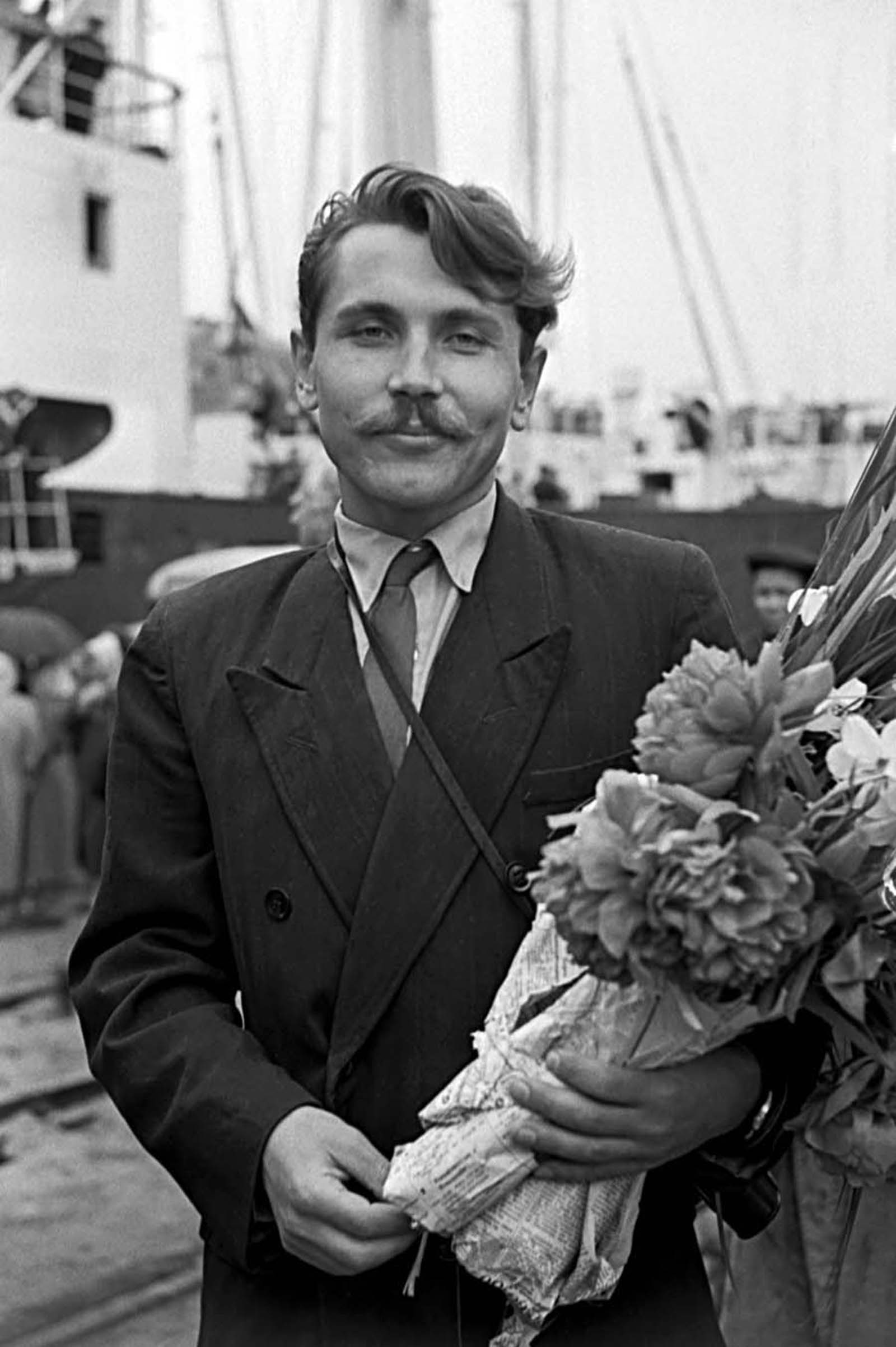
Leonid Rogozov
 Russia
physician•surgeon•university teacher
Also known as: Leonid Ivanovich Rogozov
Birthday
March 14, 1934
Birth Sign
Pisces
Birthplace
Dauriya, Soviet Union
Age
Died at 66
About
Leonid Ivanovich Rogozov was a Soviet physician and surgeon, remembered for one of the most extraordinary acts of self-preservation in medical history. In 1961, while serving as the sole doctor at the Novolazarevskaya research station in Antarctica, he performed an appendectomy on himself. The surgery succeeded, saving his life and making him a symbol of human endurance and resourcefulness.
Rogozov's career as a general practitioner and surgeon spanned decades, including his role as a university teacher in Leningrad. His legacy, however, rests on that single April day when, under extreme conditions, he combined his medical skill with sheer willpower. The story continues to inspire discussions of courage in isolated environments and has influenced safety protocols for polar expeditions.
Early Life & Background
Leonid Rogozov was born on March 14, 1934, in the small Siberian town of Dauriya, near the border with Mongolia. Details of his childhood are sparse, but he pursued medicine, graduating from the Leningrad Pediatric Medical Institute. He trained as a general surgeon and worked in hospitals in the Leningrad region before joining the Sixth Soviet Antarctic Expedition in 1960.
As the expedition's only physician, Rogozov was responsible for the health of the station's personnel. He spent his first months at Novolazarevskaya performing routine checks and treating minor ailments. The station, established in 1961, was remote, with no airstrip for emergency evacuation. This isolation would soon put his skills to a test no doctor could have anticipated.
Career Growth
Rogozov's breakthrough came not from a routine career milestone but from a life-threatening crisis. In late April 1961, he developed symptoms of acute appendicitis. With no other doctor and no way to leave, he resolved to operate on himself. On April 29, he made an incision, using a mirror to guide his hands while two station workers held instruments and adjusted a lamp. The operation lasted about 105 minutes, during which he remained conscious and focused.
After removing the inflamed appendix, Rogozov closed the wound and made a full recovery within two weeks. The feat drew international attention and led to changes in Soviet Antarctic expedition protocols, mandating that stations have at least two medically trained personnel. Rogozov returned to Leningrad in 1962, continued his medical career, and taught at universities until his death.
Career Timeline
Public Image & Style
Rogozov is portrayed as a calm and methodical professional, a man who approached an impossible situation with clinical detachment. In photographs from the expedition, he appears serious and composed. Media coverage often emphasizes his bravery and the bizarre nature of the surgery, but those who knew him described a modest individual who saw the act as simply his duty. The story has become a touchstone for discussions of human limits and the doctor's oath to preserve life.
Fame & Fandom (iFAMOUS Rankings)
Leonid Rogozov commands a legacy defined by a singular, verified historical event rather than the sustained celebrity culture that drives modern fame metrics. He was a Soviet physician and surgeon whose life ended in 2000, leaving behind a story of extreme self-sufficiency performed during the Antarctic winter of 1961. The individuals who revere his memory are primarily historians, medical students, and enthusiasts of survival literature, yet they do not organize as a cohesive group with a shared identity or formal name. There are no fan clubs, organized campaigns, or specific rituals dedicated to him, as his significance lies in the clinical reality of his actions rather than the performative aspects of stardom. The cultural mythology surrounding him is almost entirely centered on the self-appendicectomy he performed at the Vostok base, an incident documented in his personal diary and frequently cited in medical literature as a feat of surgical skill under duress. While the story has achieved viral status in digital spaces, becoming a go-to anecdote for discussions on human endurance, it lacks the active fanbase infrastructure typical of contemporary icons. iFANN's Global Fame Engine has evaluated this person, but they do not currently hold a placement in the published rankings (Global Top 1,000 or a Top-100 scope list).
Interesting Facts and Legends
Rogozov's self-surgery has been cited in medical literature as a case study in extreme circumstances. He later joked that he was the only person to have seen his own appendix from the inside. The mirror he used is preserved in a museum in Saint Petersburg. His story inspired a 2009 play titled "Appendix" and a 2015 BBC article that brought it to a wider audience. Rogozov also enjoyed chess and reading during his Antarctic stay. The procedure lasted approximately one hour and forty-five minutes, during which he administered local anesthesia to himself while holding a mirror to guide his hands through layers of tissue. Severe pain and tremors forced him to pause intermittently, yet he successfully removed his inflamed appendix without external assistance. This event remains the defining chapter of his biography, supported by original medical logs and subsequent analysis in historical archives. The account notes that his vision blurred and his hands shook too violently to continue at times, requiring him to rest before resuming the operation. Following the surgery, he was monitored closely by colleagues until full recovery. The enduring legend rests solely on this singular act, which continues to illustrate the limits of human endurance and the ingenuity required in isolation.
Family & Personal Life
Rogozov was married and had a daughter, Natalia Rogozova, who has shared her father's story in interviews. The family lived in Saint Petersburg, where Rogozov worked as a physician and lecturer. His wife and daughter supported him throughout his career, and Natalia has described her father as a quiet, determined man who rarely spoke about his famous operation. The family's life was marked by Rogozov's dedication to medicine and his role as a teacher.
Notable Connections
Rogozov's story is closely tied to the two station personnel who assisted him during the surgery, though their names are not widely recorded. His daughter, Natalia Rogozova, has become a spokesperson for his legacy, participating in documentaries and interviews. The event is also associated with the Novolazarevskaya station, which has since been renamed in his honor.
Relationships & Dating History
Leonid Rogozov was married, though details of his marriage are scarce. He and his wife had a daughter, Natalia, and the family lived in Saint Petersburg. Rogozov's dedication to his work, including the Antarctic expedition, meant long periods away from home. His wife supported his career, and they remained together until his death in 2000. Natalia has spoken publicly about her father, but has not shared extensive details about her parents' relationship. As of 2026, the family's private life remains largely out of the public eye.
- Married1959 - 2000Married, though details are not public.
Death & Aftermath
Died
September 21, 2000 (aged 66)
Death Place
Unknown
Cause of Death
Unknown
Leonid Ivanovich Rogozov, the Soviet surgeon who performed a self-appendectomy in Antarctica on April 29, 1961, died on September 21, 2000. Specific details regarding the exact location of his death, the official cause, and the circumstances of his final days remain unrecorded in public archives or available search results. Consequently, there is no confirmed account of his last public appearance or the events leading up to his passing.
The absence of such records suggests that his death was likely ruled as a natural occurrence without suspicious circumstances requiring legal intervention, though this remains unconfirmed due to the lack of public reporting. Public reaction to his death, including tributes from peers, institutions, or officials, vigils, moments of silence, or memorial landmarks specifically erected following his 2000 death, is not detailed in the search results.
Media outlets including BBC News, The Daily Star, and Metro revisited the story of his self-surgery in subsequent years like 2015, 2018, 2022, and 2025, but these articles do not describe posthumous memorials held in 2000 or immediately thereafter. In summary, while Leonid Rogozov's heroic act in 1961 is well-documented, the factual details surrounding his death on September 21, 2000, specifically the place, cause, circumstances, and all related legal, public, and ceremonial aftermaths, have never been made public or are not accessible through current search results.
Net Worth (Estate Value)
$1 Million
iFANN Editorial Team estimate
Leonid Rogozov was a state-employed physician in the Soviet Union, and his income reflected the modest wages of that system. He did not accumulate significant personal wealth from his famous surgery, as it was a medical emergency rather than a commercial venture. After his death in 2000, his estate consisted primarily of personal belongings and any savings, which were not publicly disclosed. As of 2026, his estate's value is estimated at around $1 million, based on property and assets in Saint Petersburg, though this figure is speculative. The family has not reported any significant posthumous earnings from his story, which has been shared widely in books and media without direct compensation to the estate. Per iFANN's editorial analysis, the total net worth is $1 Million.
Awards Won (1)
Leonid Rogozov did not receive major awards for his self-surgery, but he was honored with the Order of the Red Banner of Labour, a Soviet civilian award, for his contributions to the expedition. The recognition was more for his service than the surgery itself. His legacy is preserved through medical literature and public memory rather than formal accolades.
1962 · Civilian award
Sixth Soviet Antarctic Expedition
Known For
Self-appendectomy in Antarctica
1961 · Surgeon and patient
Keywords
Sources
Quick Facts
- Profession
- physician, surgeon, university teacher
- Born
- March 14, 1934
- Birthplace
- Dauriya, Soviet Union
- Died
- September 21, 2000
- Death Place
- Saint Petersburg, Russia
- Gender
- Male
- Birth Sign
- Pisces
Personal Details
- Full Name
- Leonid Ivanovich Rogozov
- Children
- Natalia Rogozova
Frequently Asked Questions
Who was Leonid Rogozov?
When did Rogozov perform his self-surgery?
Why did Rogozov have to operate on himself?
What was the outcome of Rogozov's surgery?
What is Leonid Rogozov's legacy?
Similar People
Join the community
fans discussing