 Russia
About
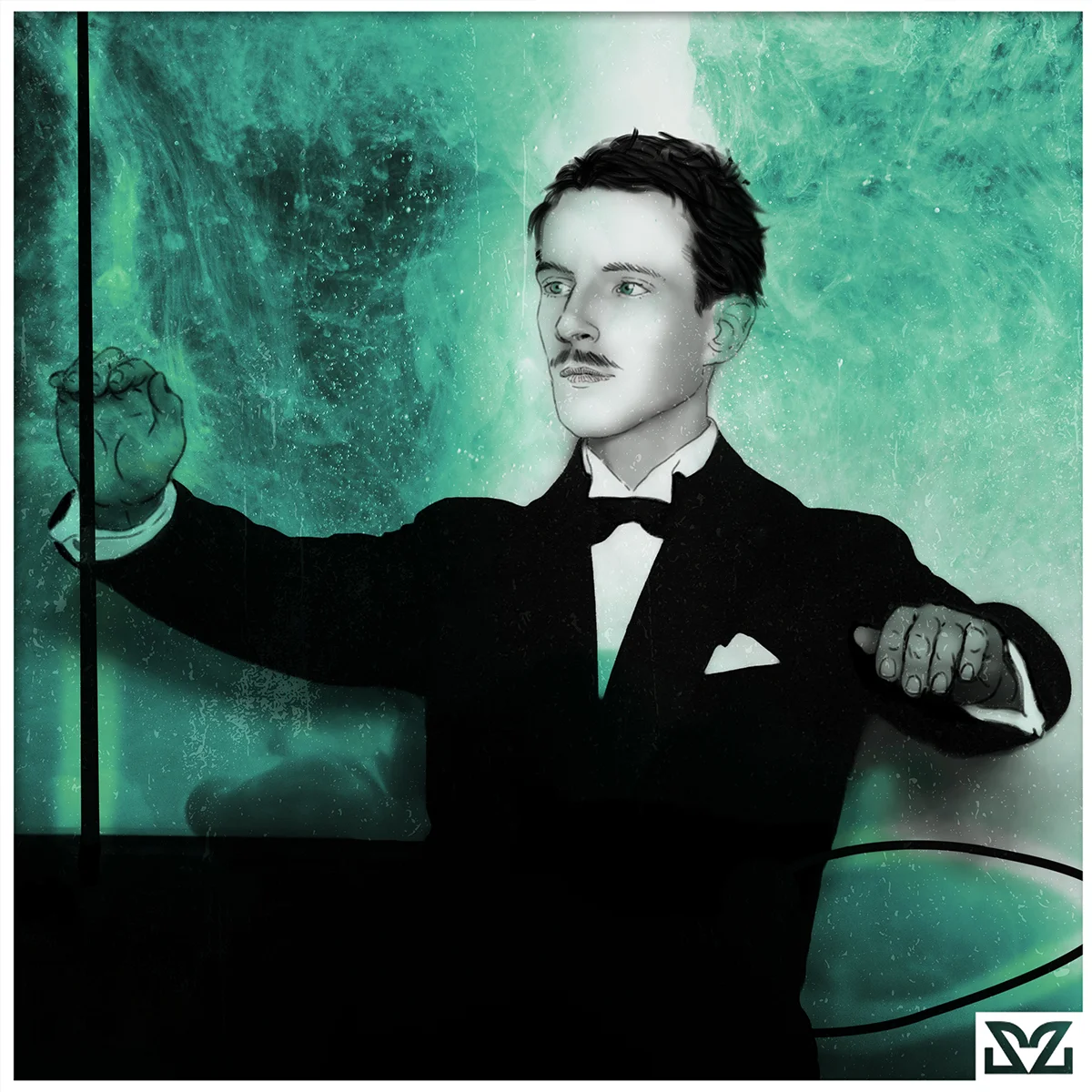
Leon Theremin, born Lev Sergeyevich Termen on August 15, 1896, in Saint Petersburg, Russia, was a pioneering physicist, inventor, and musician renowned for creating the theremin, one of the world's first electronic musical instruments. His innovations also extended into espionage with the development of covert listening devices. Theremin passed away on November 3, 1993, in Moscow at the age of 97, leaving a legacy that continues to influence electronic music and sound design. He is celebrated for creating the theremin, a significant milestone in the development of electronic musical instruments. His most notable work from this period was "The Thing," a covert listening device that remained undetected for years. A concert celebrating the theremin's 100th birthday was held in Boston in 2019. In 2020, the Smithsonian Magazine highlighted his dual role as inventor and potential spy on the theremin's 100th anniversary. Physics Today discussed the science behind the theremin in 2025.
Early Life & Background
Born into a family of German and Russian descent in Saint Petersburg, Russia, Theremin grew up surrounded by both science and music. His father was a lawyer and his mother had a deep appreciation for the arts, which shaped his early interests. As a child, he was fascinated by physics and electricity, often conducting small experiments at home. He also studied cello, which gave him a musician's ear that would later prove essential. He attended the Saint Petersburg Physico-Mathematical Institute and later the Saint Petersburg Conservatory, where he studied physics and music simultaneously. During World War I, he worked on radio technology for the Russian military, which sharpened his skills in electronics. Theremin's journey toward his famous invention began in the early 1920s. As a Soviet radio engineer, he was experimenting with proximity sensors and electromagnetic fields when he stumbled upon the principles that would lead to the theremin. He demonstrated his revolutionary electronic instrument, which could be played without physical contact, to audiences in the early 1920s, astonishing them with its novel sound production. He was known to call his instrument the "thereminvox" at one point.
Career Growth
Theremin's breakthrough came around 1920 with the invention of the theremin, initially called the "aetherphone." This instrument, which produced sound by manipulating the electromagnetic field around its antennae, was one of the first electronic musical instruments and the first to be mass-produced. He toured Europe with the instrument, captivating audiences with its eerie, otherworldly sound. In 1927, he traveled to the United States, where he patented the device in 1928 and gave a series of high-profile demonstrations, including one at Carnegie Hall. The theremin's sound became a staple of 1950s science fiction films, earning it the nickname "the spooky instrument." During his time in the U.S., Theremin also worked on early television systems and developed a rhythm machine. In 1938, he returned to the Soviet Union, where he continued his research. His most notable work from this period was "The Thing," a sophisticated eavesdropping device disguised within a carved wooden replica of the Great Seal of the United States. This device was placed in the U.S. ambassador's Moscow office and remained undetected for seven years, allowing Soviet agents to gather intelligence. In 1991, he reunited with Clara Rockmore, the virtuoso theremin player who had helped popularize the instrument, and they performed together one last time. Bob Moog, creator of the Moog synthesizer, considered Theremin a "virtual mentor" and credited him as a major influence. The New York Times published an article on the theremin instrument in 2025.
Career Timeline
Public Image & Style
Leon Theremin is remembered as a brilliant and enigmatic figure who straddled the worlds of art and espionage. His signature creation, the theremin, is often associated with ethereal, otherworldly sounds, frequently appearing in science fiction film scores. While there isn't a formal "fandom name" for Theremin himself, enthusiasts of the theremin instrument and electronic music keep his legacy alive through performances and online communities. His mysterious life story, including his work as a spy, has made him a cult figure among technology and music enthusiasts. The theremin offers "freedom" due to its unique playing style. Demonstrations of the theremin, including footage from 1954, continue to be shared.
Fame & Fandom
Leon Theremin occupies a unique space in cultural history where scientific achievement and espionage intrigue intersect, though he does not currently hold a placement in the iFANN Global Top 1,000 rankings. While his invention remains a staple of electronic music lore, the iFANN Global Fame Engine has evaluated his standing and determined that he is not ranked among the world's most famous individuals at this time. This absence from the published lists reflects his status as a historical figure rather than a contemporary celebrity, with his legacy sustained by academic communities and niche enthusiasts rather than a mass fanbase. There is no formal fandom name documented for Theremin, distinguishing him from modern icons who command organized groups with specific titles or rituals. His audience consists primarily of music historians, electronic instrument collectors, and those interested in Cold War history, engaging through institutional commemorations rather than grassroots campaigns or social media movements. The only significant recent cultural development involves an opera regarding his romance with dancer Lavinia Williams, announced in 2026, which represents a form of artistic appreciation rather than traditional fandom activity. Unlike pop stars who drive commercial trends, Theremin's influence is measured by the enduring utility of his inventions and the persistent curiosity surrounding his life as a Soviet spy-inventor. The narrative of his imprisonment and subsequent return to public life adds a dramatic dimension to his biography, yet it has not translated into a global ranking position comparable to living entertainers. His connection to figures like Clara Rockmore and Bob Moog serves as a bridge between generations of musical innovation, but these relationships remain professional legacies rather than fan-driven phenomena. Consequently, while his name is instantly recognizable within specific circles, he lacks the broad, active following required for inclusion in the current global fame metrics.
Interesting Facts and Legends
Leon Theremin once demonstrated the theremin to Vladimir Lenin, who was reportedly so impressed that he commissioned 600 instruments for the Red Army. He was known to be a skilled cellist, which influenced his approach to the theremin's expressive capabilities. The theremin's invention in 1920 marked one of the earliest ventures into electronic musical instruments. His work with the theremin predated the incorporation of electronic synthesizers into mainstream music by decades. Theremin also developed a security system for the Soviet government, though details remain classified. A widely retold story suggests he taught Lenin to play the instrument shortly after its invention, a tale that persists as a central pillar of his mythos despite some historians treating it as folklore due to Lenin's declining health at the time. Perhaps the most famous documented incident involves his role as the inventor of "The Thing," a passive listening device hidden in a wooden seal presented to the U.S. Ambassador in Moscow, which utilized radio frequency resonance to transmit sound without a power source. Another defining chapter of his legend is his 1938 arrest by the NKVD, where he was accused of spying and forced to work in a secret prison laboratory, continuing to invent burglar alarms and early CCTV systems while the world believed he had been executed. The collaboration with violinist Clara Rockmore is also a staple of electronic music lore, as she perfected the playing technique of the theremin, transforming it from a novelty into a serious concert instrument. Finally, the anecdote of Bob Moog meeting Theremin in 1991 and calling him his "virtual mentor" serves as a bridge between generations of electronic music history.
Family & Personal Life
Theremin's personal life was as unconventional as his inventions. He was born into a family of German and Russian descent. His father was a lawyer and his mother had a deep appreciation for the arts. He later married a Soviet woman, with whom he had a daughter, but details about his second family are scarce. His relationship with Lavinia has recently been the subject of an opera.
Notable Connections
Leon Theremin is closely associated with Clara Rockmore, the virtuoso theremin player who helped popularize the instrument and worked with Theremin on its development. He also influenced Bob Moog, the synthesizer pioneer who considered Theremin a "virtual mentor." His wife, Lavinia Williams, was a notable dancer, and their relationship has been the subject of an opera.
Relationships & Dating History
Theremin's most famous relationship was with Lavinia Williams, a young Black dancer from Harlem. They married in the 1930s, a union that was groundbreaking for its time and attracted significant attention. Their interracial marriage was unusual for the era. The marriage ended when Theremin returned to the Soviet Union in 1938, leaving Lavinia behind. He later remarried in the Soviet Union and had a daughter. As of 2026, the estate acknowledges Lavinia as his spouse in historical records, but his second marriage is also recognized. The love story between Theremin and Lavinia has inspired an opera.
- MarriedLavinia Williams1930 - 1938Married in the 1930s; separated when Theremin returned to the Soviet Union.
Death & Aftermath
Died
November 3, 1993 (aged 97)
Death Place
Unknown
Cause of Death
Unknown
Net Worth (Estate Value)
$2 Million
iFANN Editorial Team estimate
Per iFANN's editorial analysis, Leon Theremin's estate is valued at $2 Million as of 2026. This figure reflects the ongoing royalties from the theremin's patents, which have been renewed and licensed over the years. The estate also earns from the sale of theremin kits and instruments, as well as from licensing the use of the theremin sound in films and music. The estate is managed by his descendants, who have worked to preserve his legacy through exhibitions and performances.
Awards & Accolades
View 2 records, honours and achievementsKnown For
Theremin
1920 · Inventor
The Thing
1945 · Inventor
Keywords
Sources
Quick Facts
- Profession
- inventor, physicist, musician
- Born
- August 15, 1896
- Birthplace
- Saint Petersburg, Russia
- Died
- November 3, 1993
- Death Place
- Moscow, Russia
- Gender
- Male
- Spouse
- Lavinia Williams
- Birth Sign
- Leo
Personal Details
- Full Name
- Lev Sergeyevich Termen
- Spouse
- Lavinia Williams
Frequently Asked Questions
Who was Leon Theremin?
When was the theremin invented?
How does a theremin work?
Did Leon Theremin work as a spy?
Who was Lavinia Williams?
Similar People
Join the community
fans discussing