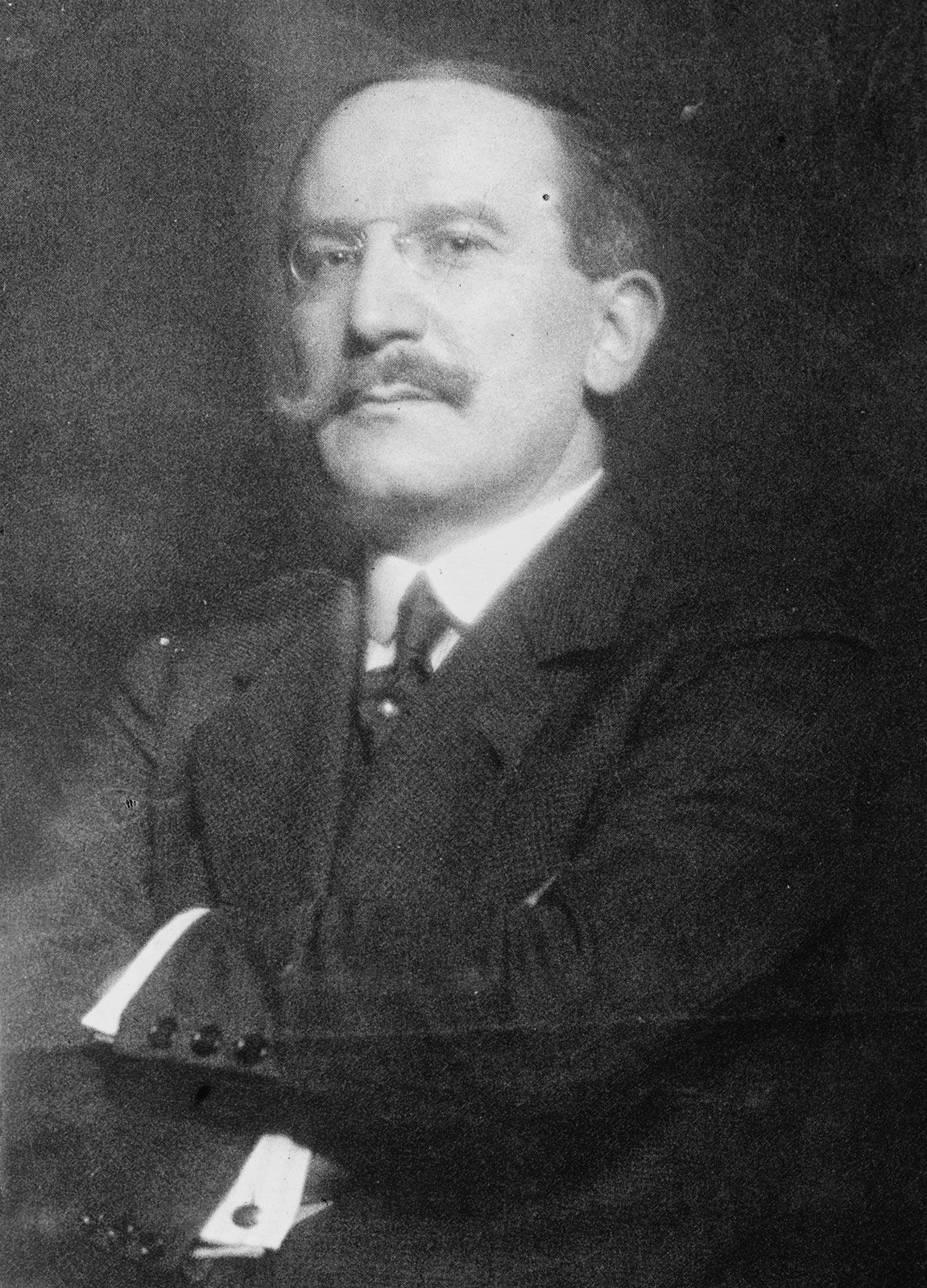
Léon Bakst
 Russia
painter•scene and costume designer
Also known as: Leyb-Khaim Izrailevich Rosenberg
Birthday
January 27, 1866
Birth Sign
Aquarius
Birthplace
Grodno, Russian Empire (now Belarus)
Age
Died at 58
About
Léon Bakst was a Russian painter and scene and costume designer whose work injected a potent dose of color and exoticism into early 20th-century performing arts. Born Leyb-Khaim Izrailevich Rosenberg in Grodno in 1866, he is best remembered for his groundbreaking designs for Sergei Diaghilev's Ballets Russes, which transformed the look of ballet and influenced fashion, interior design, and the broader visual culture of the era.
Bakst's signature style combined bold, saturated hues with intricate ornamentation and a dynamic, sensuous line. His stage designs for productions like Schéhérazade and Le Spectre de la rose captivated audiences and set a new standard for theatrical spectacle. Beyond the stage, he collaborated with Parisian couturiers and designed interiors for wealthy patrons, spreading his aesthetic far beyond the theater.
Today, Bakst's legacy endures in the continued study and exhibition of his work. His influence can be seen in the Art Deco movement and in the ongoing fascination with the Ballets Russes. For fans of early modern design, Bakst remains a towering figure whose vision reshaped how we think about color, costume, and the immersive power of the stage.
Early Life & Background
Léon Bakst was born into a middle-class Jewish family in Grodno, then part of the Russian Empire. His maternal grandfather, an exceptionally skilled tailor, held a significant position with the Tsar and owned a grand house in Saint Petersburg. As a boy, Bakst was deeply impressed by this house and visited it regularly, an early exposure to luxury that would later inform his opulent designs.
His artistic talent emerged early. At age twelve, he won a drawing contest, and from that moment he was determined to become a painter, despite his parents' initial disapproval. In 1883, he was accepted into the Imperial Academy of Arts in St. Petersburg, where he formed a lasting friendship with fellow painter Valentin Serov. During his time at the Academy, he also began using the surname Bakst, believed to be derived from his mother's maiden name, Baxter.
Bakst continued his studies in Paris at the Académie Julian, where he absorbed the latest trends in European art. Returning to St. Petersburg, he worked as a magazine illustrator and book designer, achieving early success with his portraits and graphic work. In 1898, he co-founded the influential World of Art group with Alexandre Benois and Sergei Diaghilev, contributing to their journal of the same name. This circle would become the breeding ground for the Ballets Russes, and Bakst's early collaborations with Diaghilev set the stage for his later breakthroughs.
Career Growth
Bakst's career took a decisive turn in 1909 when he began collaborating with Sergei Diaghilev's Ballets Russes. His designs for Michel Fokine's Cléopâtre that year were groundbreaking, establishing him as the company's main set designer. He rebelled against the prevailing stage realism, infusing his designs with bold colors, opulence, and sensuality, which energized the ballet's subject matter and captivated audiences.
Over the next several years, Bakst created some of the most iconic stage designs in history. Carnaval (1910) was a riot of color and movement, while Schéhérazade (1910) became a sensation with its harem scenes and jewel-toned costumes. Le Spectre de la rose (1911) captured a sense of romanticism and fantasy, and Daphnis and Chloe (1912) featured lush, Grecian-inspired scenery. His work on Tchaikovsky's The Sleeping Princess in 1921 brought a lavish, fairytale quality to the classic ballet.
Beyond the stage, Bakst's aesthetic significantly influenced contemporary fashion and interior design. He collaborated with European fashion houses like Paquin, Poiret, and Chanel, and designed costumes for grand balls, influencing trends like Russian-style fur trims. Exhibitions of his work traveled to various cities in the United States in the 1910s, further increasing his recognition. In 1914, he became a member of the Imperial Academy of Arts. His work continued to be exhibited and studied long after his death, with his influence on design remaining significant.
Career Timeline
Public Image & Style
Léon Bakst is remembered as a revolutionary artist who injected vibrant color, exoticism, and sensuality into the performing arts. His bold designs and distinctive aesthetic defined an era and continue to be admired for their visual impact. He was known for his rejection of stage realism, instead creating dreamlike, opulent worlds that transported audiences.
His public persona was that of a sophisticated, cosmopolitan artist, equally at home in the salons of Paris and the theaters of St. Petersburg. He collaborated with some of the most influential figures of his time, including Diaghilev, Fokine, and fashion designers like Poiret and Chanel. His work influenced not only theater but also fashion and interior design, making him a tastemaker of the early 20th century.
Fans of Bakst today appreciate his ability to blend different cultural influences, from Orientalist fantasies to ancient Greek themes, into a cohesive and mesmerizing visual language. His legacy is one of pure visual invention, and his designs continue to inspire contemporary artists and designers.
Fame & Fandom
Léon Bakst stands as a monumental figure in the annals of early 20th-century art, yet his specific standing in modern global celebrity metrics remains distinct from living icons. As of August 2026, iFANN's Global Fame Engine has evaluated this person, but they do not currently hold a placement in the published rankings (Global Top 1,000 or a Top-100 scope list). While he lacks a formal fanbase name or organized campaigns typical of contemporary stars, his legacy thrives within a dedicated community of art historians, ballet enthusiasts, and fashion students who treat his work as academic scripture rather than pop culture fuel. This audience engages through institutional exhibitions and commercial reproductions, such as needlepoint kits featuring his vibrant designs, proving that his influence persists without the machinery of modern fandom rituals. The absence of a viral following or grassroots movement does not diminish his stature; instead, it highlights a transition from celebrity to canonical master. His impact on the visual culture of the era, shattering Victorian realism with dreamlike, opulent worlds, created a mythos that endures in museums like the V&A and the Tretyakov Gallery. These institutions serve as the de facto temples for his admirers, where the story of his revolutionary color palettes and exoticism is retold annually. Unlike figures driven by social media trends, Bakst's fame rests on the tangible, physical survival of his costumes and sketches, which continue to fetch high prices at auction houses. The narrative around him is one of a visionary who turned the stage into a living canvas, a story consistently referenced in curatorial efforts marking anniversaries of his death. His work with the Ballets Russes cemented a reputation that transcends mere historical interest, embedding itself into the DNA of design history.
Interesting Facts and Legends
Léon Bakst had a deep-seated fear of samovars, stemming from the childhood death of his elder sister, who died from burns after accidentally overturning one. Despite facing anti-Semitism in Russia, he remained proud of his Jewish heritage. He was compelled to nominally convert to Lutheranism to marry a Christian woman between 1903 and 1910. His signature style was characterized by a distinctive curved, tense, emotional, yet harmonious line, which became a hallmark of the Moderne style. He taught at Yelizaveta Zvantseva's private art school, where one of his students was Marc Chagall. In 1887, he was dismissed from a school competition for his depiction of a Pietà as impoverished Jews, an early sign of his willingness to challenge convention. A widely retold legend concerns the premiere of Stravinsky's *The Firebird* in 1911, where his vibrant, stylized costumes for the title character shocked audiences accustomed to muted realism. This production cemented his reputation as the greatest theatre designer of his time, merging painting with performance in a way that defined the aesthetic of the Ballets Russes. Another enduring story involves his influence on high society fashion, where his exotic palettes led couturiers like Paul Poiret to adopt 'Bakstian' styles, bringing Eastern motifs and bold patterns into mainstream European clothing.
Notable Quotes
“There are no hot spots. Only some gray mud. A seeking, 'hungry' eye has nothing to admire with delight… Yet you strive for joys, glee of colors not only in pictures, but also in clothes, in all human ways.”
Family & Personal Life
Léon Bakst married Lyubov Pavlovna Gritsenko in 1903, and they had a son named André Bakst. The marriage was short-lived, and they separated in 1907. Due to anti-Semitic laws in Russia, Bakst had to nominally convert to Lutheranism to marry, a compromise that weighed on him.
His family background included a maternal grandfather who was a tailor to the Tsar, and his mother's maiden name, Baxter, is believed to be the source of his adopted surname. Bakst's early life in Grodno and St. Petersburg was shaped by his Jewish identity and the social restrictions of the time. After his separation, he remained close to his son, who later became a writer and artist in his own right.
Notable Connections
Relationships & Dating History
Léon Bakst married Lyubov Pavlovna Gritsenko in 1903. The marriage was relatively short, and they separated in 1907. They had one son together, André Bakst. Due to anti-Semitic laws in Russia, Bakst had to nominally convert to Lutheranism to marry, a fact that added strain to the relationship.
After their separation, Bakst focused on his career and did not remarry. He remained on amicable terms with Lyubov, and they both maintained a close relationship with their son. Bakst's later years were spent in Paris, where he was surrounded by a circle of artists and collaborators, but he did not have any other public romantic relationships documented.
At the time of his death in 1924, Bakst was divorced and single.
- MarriedLyubov Pavlovna Gritsenko1903 - 1907Married in 1903, separated in 1907, had one son together.
Death & Aftermath
Died
December 27, 1924 (aged 58)
Death Place
Paris, France
Cause of Death
Heart failure
Léon Bakst spent his final days in Paris, working on stage designs and painting despite the political upheaval that had forced him into exile after the 1917 Revolution. He died naturally on December 27, 1924, at the age of fifty-eight, succumbing to heart failure within the French capital where he had lived since fleeing Russia. While immediate tributes from 1924 remain undocumented in available records, his legacy has been consistently honored by major institutions over the following century. The Victoria and Albert Museum and the Metropolitan Museum of Art have dedicated significant exhibitions to his work, acknowledging him as a revolutionary figure who transformed ballet and theatre design. Historical accounts suggest he was buried in the Russian Orthodox cemetery in Sainte-Geneviève-des-Bois near Paris, serving as a resting place for the Russian émigré community at the time. His name remains permanently associated with the distinctive 'Bakst' style of design, with his works held in permanent collections globally.
Net Worth (Estate Value)
$5 Million
iFANN Editorial Team estimate
Léon Bakst's financial legacy is tied to his prolific career as a designer for the Ballets Russes and his influence on fashion and interior design. During his lifetime, he earned substantial fees for his stage designs and also took on lucrative commissions from wealthy patrons and fashion houses. His work with Paquin, Poiret, and Chanel brought in significant income, and his designs for grand balls and private clients were highly sought after. After his death in 1924, his estate continued to generate revenue through the licensing of his designs, posthumous exhibitions, and the sale of his original artworks. His pieces have appeared at major auction houses, with some fetching high prices. The estate is managed by his heirs, and his work remains in demand among collectors and museums. Per iFANN's editorial analysis, as of 2026, the estimated net worth of Léon Bakst's estate is $5 Million, reflecting the enduring value of his artistic output and the continued interest in his work.
Awards & Accolades
View 2 records, honours and achievementsKnown For
Schéhérazade
1910 · Set and costume designer
Le Spectre de la rose
1911 · Set and costume designer
Daphnis and Chloe
1912 · Set and costume designer
The Sleeping Princess
1921 · Set and costume designer
Keywords
Sources
Quick Facts
- Profession
- painter, scene and costume designer
- Born
- January 27, 1866
- Birthplace
- Grodno, Russian Empire (now Belarus)
- Died
- December 27, 1924
- Death Place
- Rueil-Malmaison, France
- Gender
- Male
- Spouse
- Lyubov Pavlovna Gritsenko
- Children
- André Bakst
- Birth Sign
- Aquarius
Personal Details
- Full Name
- Leyb-Khaim Izrailevich Rosenberg
- Spouse
- Lyubov Pavlovna Gritsenko
- Children
- André Bakst
- Education
- Imperial Academy of Arts, St. Petersburg; Académie Julian, Paris
Frequently Asked Questions
Who was Léon Bakst?
When and where was Léon Bakst born?
What is Léon Bakst most famous for?
What was Léon Bakst's artistic style?
When did Léon Bakst die and where?
Similar People
Join the community
fans discussing