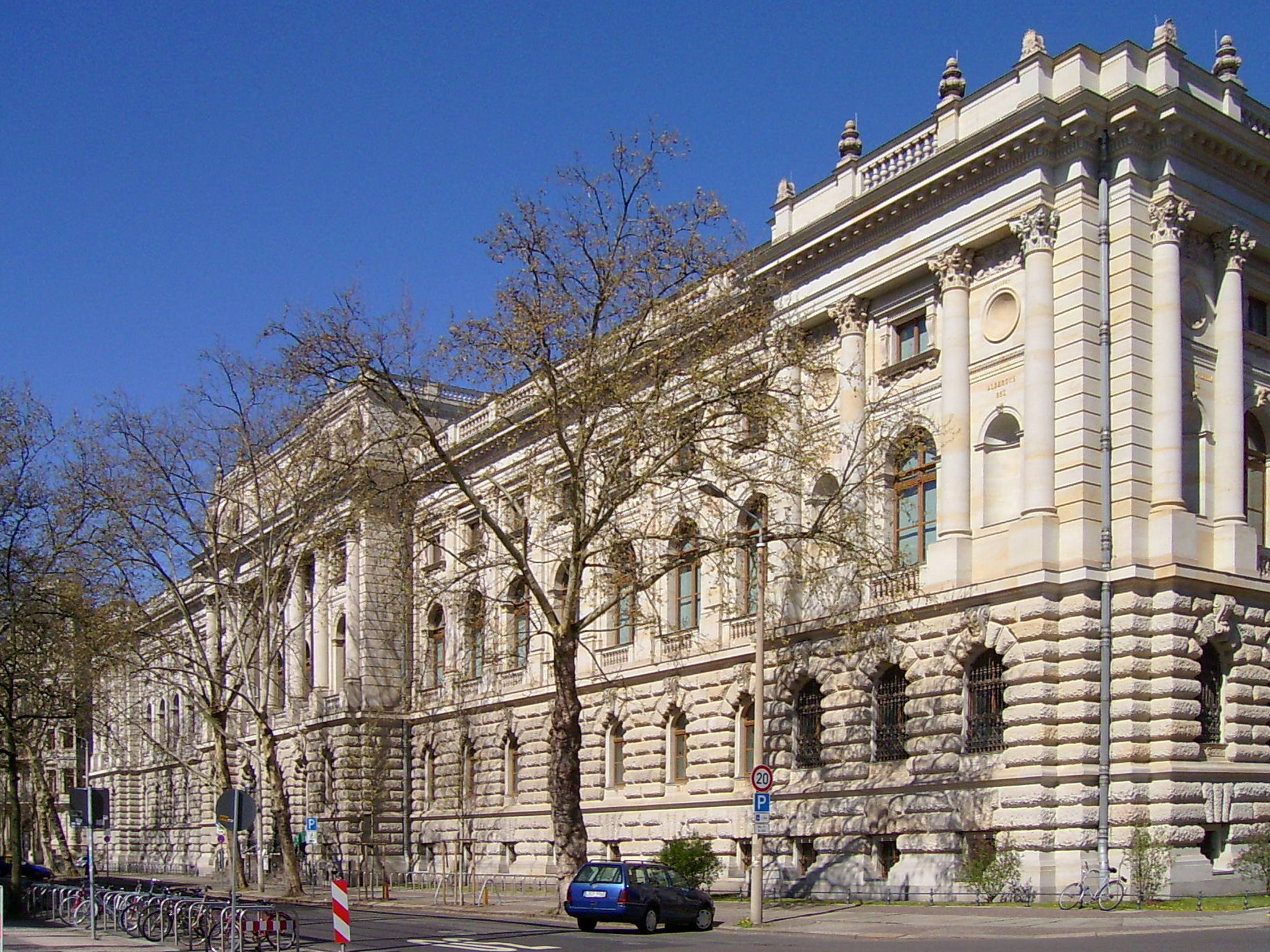
Leipzig University
 Germany
"One of the world's oldest universities, founded in 1409"
About
Leipzig University, known in German as Universität Leipzig, is a public research university in Leipzig, Saxony, Germany. Founded on 2 December 1409, it ranks among the oldest universities in the world and is the second-oldest in Germany, after Heidelberg. The institution was established by Frederick I, Elector of Saxony, and his brother William II, Margrave of Meissen, who modelled it on the University of Prague after German-speaking scholars left that institution. From the outset, it offered the four traditional faculties: theology, law, medicine, and the arts. For over six centuries it has operated without interruption, a record few institutions can match.
Today, Leipzig University is a 'classical' full university, comprising fourteen schools and roughly 150 institutes. It covers a wide spectrum of disciplines, from the humanities and social sciences to natural sciences and medicine. The university is recognised as a research-strong and medicine-leading institution in Germany, with a reputation built on both its historical depth and modern scientific output. The main campus sits in the city centre, blending modern facilities with centuries-old buildings, reflecting its long academic tradition.
The university has been home to numerous intellectual figures, including philosopher Gottfried Wilhelm Leibniz and writer Johann Wolfgang von Goethe, both of whom studied there. Its alumni and faculty include several Nobel laureates, composers, and physicists. Leipzig University remains an active and prominent force in European higher education, with an annual report published for 2025 and a vibrant web presence.
Mission
Leipzig University's mission is to serve as a research-intensive and medical leadership university in Germany, offering a unique breadth of academic programs. It aims to foster cutting-edge research, provide excellent teaching, and contribute to the cultural and intellectual life of the region and beyond. The university is committed to international collaboration and to maintaining its historic role as a centre of learning.
History
The university was founded on 2 December 1409 by Frederick I, Elector of Saxony, and his brother William II, Margrave of Meissen. The impetus came after a group of German-speaking scholars left the University of Prague amid the Western Schism, seeking a new home. The founders modelled the new institution on Prague, and it quickly established the four faculties of theology, law, medicine, and the arts. Leipzig thus became a centre of learning in the Holy Roman Empire, attracting students from across Europe.
Over the centuries, the university weathered wars, religious upheaval, and political change. During the Reformation, it aligned with Lutheranism, and in the 19th century it became a hub for the natural sciences and humanities. In 1953, under the German Democratic Republic, the university was renamed Karl Marx University, a name it bore until 1991, when it reverted to Leipzig University after German reunification. Despite the ideological pressures of the socialist era, the institution maintained its academic functions, albeit with political constraints.
In 2009, the university celebrated its 600th anniversary, a testament to its resilience and continuity. Today, it operates as a modern research university, with a strong emphasis on international cooperation and interdisciplinary study. Its long history is visible in the architecture of its campus, which mixes historic buildings with contemporary structures.
Subdivisions
Faculty of Theology
One of the four original faculties, offering programs in Protestant theology and religious studies.
Faculty of Law
Provides legal education and research, with a focus on German and European law.
Faculty of Medicine
Includes the university hospital and conducts medical research and training.
Faculty of Arts, Humanities and Social Sciences
The largest faculty, covering a wide range of subjects from history to linguistics.
Notable People
Gottfried Wilhelm Leibniz
Student · 1661–1666
Philosopher and mathematician who developed calculus independently of Newton.
Johann Wolfgang von Goethe
Student · 1765–1768
Poet, playwright, and novelist; author of Faust.
Friedrich Nietzsche
Student · 1865–1869
Philosopher and cultural critic, known for works like Thus Spoke Zarathustra.
Richard Wagner
Student · 1831–1832
Composer of operas such as the Ring Cycle.
Werner Heisenberg
Professor · 1927–1942
Physicist, pioneer of quantum mechanics, Nobel Prize in Physics 1932.
Milestones
1409
Founded by Frederick I and William II
1810
The university library was established, becoming one of the largest in Germany.
1953
Renamed Karl Marx University
1991
Reverted to Leipzig University after reunification
2009
Celebrated its 600th anniversary
Departments
Sources
Organization Info
- Founded
- December 2, 1409
- Headquarters
- Leipzig, Königliches Palais
- Country
- Germany
- Type
- University
- Employees
- 5300
- Founder
- William II, Margrave of Meissen
Financials
- Employees
- 5300
Official Website
www.uni-leipzig.de
Join the community
fans discussing