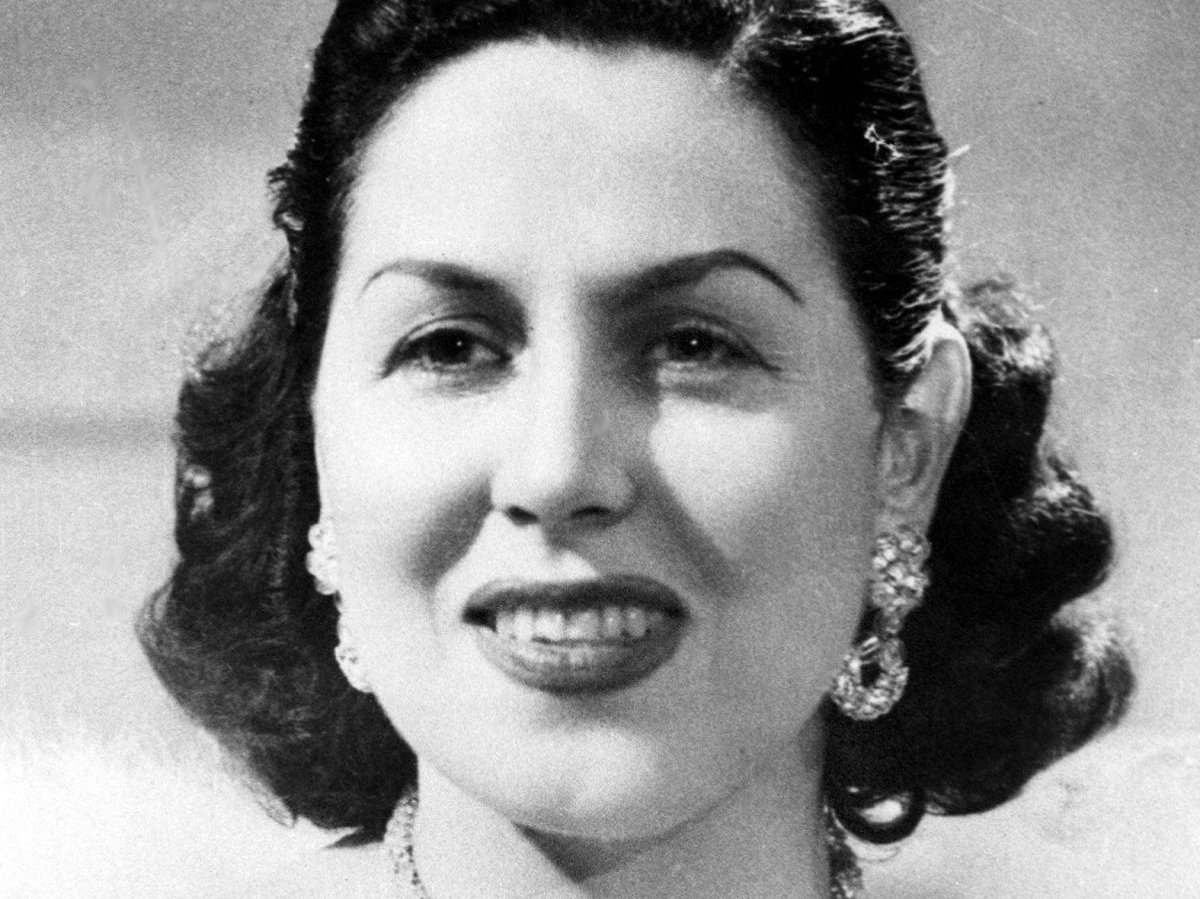
Leila Mourad
 Egypt
EgyptAlso known as: Layla Murad, Leila Murad, Laila Mourad, Lilyan Morad
Birthday
February 17, 1918
Birth Sign
Aquarius
Birthplace
Cairo, Egypt
Age
Died at 77
About
Leila Mourad was an Egyptian singer and actress who became the first female box-office star in Egyptian cinema. Born Lilian Zaki Ibrahim Mourad in Cairo, she rose to prominence in the 1940s with a string of musical films that made her a household name across the Arab world. Her warm, expressive voice and graceful screen presence set her apart, and her recordings remain classics of Egyptian music.
Mourad's career spanned nearly two decades, from her film debut in 1938 to her retirement in the mid-1950s. She converted from Judaism to Islam during her rise, a decision that has drawn lasting scholarly attention. After withdrawing from public life, she lived quietly in Cairo until her death in 1995 at age 77. Today she is remembered as a cultural icon whose story continues to resonate, with a definitive biography published in 2022 and ongoing tributes in Egyptian media.
Early Life & Background
Leila Mourad was born into a Jewish-Egyptian family in the El Daher district of Cairo. Her father, Zaki Ibrahim Mourad, was a respected singer, composer, and cantor who led Jewish liturgical music in the city. He became her first musical mentor, teaching her both classical Arabic maqam and the melodies of her heritage. Her brother, Mounir Mourad, also pursued music, later becoming a composer in Egypt's entertainment industry.
Growing up in such a musical household, Mourad began performing as a child, singing at private gatherings under her father's guidance. She received a mix of traditional schooling and intensive musical training. In the early 1930s, she started recording songs for Egyptian radio and record labels, quickly gaining attention for her distinct voice. Her early recordings, issued on 78 RPM records, showcased a blend of technical skill and emotional depth that set the stage for her future stardom.
Career Growth
Mourad's film debut came in 1938 with Yahya el hub (Long Live Love), launching a prolific career. Throughout the 1940s, she starred in a series of musical films that made her the highest-grossing female star in Egyptian cinema. Her collaboration with director and actor Anwar Wagdi proved pivotal; he directed and co-starred in several of her most successful films, including Laila bint el-fuqara (1945), and their professional partnership blossomed into marriage.
Key films of the late 1940s and early 1950s included El-Kalb (1947), Gharam wa intiqam (1949), Shate el-Gharam (1950), and Lady of the Train (1952). Her recording career also flourished; the album Layla Mourad was released in 1953. By the mid-1950s, political pressures and personal upheavals led her to withdraw from the limelight. Her final film, Dahab (Gold), appeared in 1955, after which she retired from public performance.
Career Timeline
Public Image & Style
Leila Mourad's public image was that of an elegant, refined performer, known for her graceful screen presence and sophisticated musical delivery. She was often described as having an "authentic Egyptian elegance" that resonated with audiences. Media portrayed her as a tragic figure who navigated immense societal pressures as a Jewish woman in a Muslim country, a superstar who withdrew from public life at the height of her fame.
Her story has been framed as an "Arab Cinderella" narrative, a fairytale with a bittersweet ending. Fan culture around Mourad is expressed through annual commemorations of her birth and death anniversaries in Egyptian media, and her songs continue to be celebrated as classics of the Egyptian repertoire. Her legacy is kept alive by scholars and fans alike, ensuring her place in cultural memory.
Fame & Fandom
Leila Mourad stands as the 77th most famous person in Egypt, a position noted in August 2026 rankings that place her down from 73rd last cycle. This placement within the iFANN Global Fame Rankings reflects a sustained cultural resonance that has endured for decades since her retirement. Her legacy is not merely historical but active, with global attention tracking her impact across media coverage and consumption signals worldwide. Unlike modern stars who cultivate digital armies, Mourad's audience was defined by an organic, overwhelming adoration where fans simply called themselves admirers of the "Divine Voice." There was no formal club or organized campaign; instead, her popularity manifested in streets closing down and crowds fainting from sheer excitement during premieres like that of *Yahya el Hub*. The narrative of her life, often framed as the story of the "First Arab Cinderella," remains a verified historical account rather than mere folklore. Her conversion to Islam transformed her into a national icon, bridging religious divides while she starred in 28 top-grossing films. Even after withdrawing from public life in 1955 to focus on marriage, the sense of loss among her fans marked the end of an era. Recent commemorations and scholarly works continue to retell these stories, ensuring her status as a pioneer who broke barriers for women in cinema and music remains vivid for new generations.
Interesting Facts and Legends
Mourad was renowned for her elegant style, frequently appearing in glamorous gowns and carefully coiffed hair that set trends for Egyptian women of her era. Her song *Ana albi dalili* ("My heart is my guide") remains one of her most enduring hits, still performed by contemporary artists like Laura Mekhail at the Pyramids of Giza. She was posthumously dubbed "the first Arab Cinderella" by media, reflecting her fairytale rise from a cantor's daughter to a superstar. Mourad's conversion to Islam was a topic of public discussion; she famously rejected Israel and affirmed her Egyptian identity, a stance that has been analyzed by historians. Her Spotify artist profile continues to attract about 26,000 monthly listeners, keeping her music alive for new generations. A legendary incident from 1938 describes how her presence at the premiere of *Yahya el Hub* caused fans to faint and paralyzed traffic in Cairo due to the sheer volume of attendees screaming her name. This reaction established her as a living legend before she even reached her mid-20s. Another enduring tale involves her retirement in 1955, which was treated as a major cultural event marking the end of an era for many fans who felt a profound sense of loss. Institutions like the Qatar Philharmonic Orchestra have recently performed her classics, keeping the lore of her life alive for new generations.
Family & Personal Life
Leila Mourad's father, Zaki Ibrahim Mourad, was a celebrated singer, composer, and cantor in Cairo's Jewish community, and he played a central role in her musical upbringing. Her mother, of Egyptian Jewish heritage, supported the family's artistic environment. Mourad's brother, Mounir Mourad, became a musician and composer, contributing to the Egyptian entertainment scene.
Mourad married three times, each ending in divorce. Her first husband, Anwar Wagdi, was a leading actor-director; they had two children together. Her second husband, Fatin Abdelwehab, was an actor and screenwriter; the couple had at least one child. A third marriage, less documented, also ended in divorce. After retiring, Mourad lived quietly in Cairo with her family, away from the public eye.
Notable Connections
Leila Mourad was closely associated with several key figures in Egyptian entertainment. Her father, Zaki Ibrahim Mourad, was her first mentor. Her brother, Mounir Mourad, was a composer. Her first husband, Anwar Wagdi, directed and co-starred in her most famous films. Producer Togo Mizrahy collaborated with her on multiple projects. Historian Hanan Hammad authored her definitive biography, 'Unknown Past'.
Relationships & Dating History
Leila Mourad married three times, each union ending in divorce. Her first marriage was to Anwar Wagdi, a prominent actor and director, around 1945. Wagdi directed and co-starred in several of her most successful films, and their professional collaboration evolved into a personal relationship. They had two children together before divorcing in the early 1950s, a split widely covered in the Egyptian press.
Her second marriage, to actor and screenwriter Fatin Abdelwehab, began in the mid-1950s and also ended in divorce. They had at least one child. Mourad's third marriage, later in life, is less documented but also ended in divorce. At the time of her death in 1995, she was divorced and living in retirement in Cairo.
- MarriedAnwar Wagdi1945 - 1953Director and co-star; they had two children; divorced.
- MarriedFatin Abdelwehab1954 - 1960Actor and screenwriter; they had at least one child; divorced.
Death & Aftermath
Died
November 21, 1995 (aged 77)
Death Place
Unknown
Cause of Death
Unknown
Net Worth (Estate Value)
$5 Million
iFANN Editorial Team estimate
Leila Mourad's estate continues to generate income from her extensive recording catalog, which remains available on streaming platforms. Her songs from the 1930s to the 1950s still attract listeners, with her Spotify profile drawing around 26,000 monthly listeners as of 2026. Royalties from these streams, along with licensing for films and compilations, contribute to the estate's ongoing revenue. Her film catalog, including classics like *Shate el-Gharam* and *Lady of the Train*, is periodically screened and restored, adding to the estate's value. While specific financial figures are not publicly documented, the sustained cultural interest in her work, evidenced by scholarly publications and media commemorations, suggests a stable and valuable legacy. Per iFANN's editorial analysis, the estate is estimated to be worth $5 Million, reflecting the enduring appeal of her music and films.
Awards & Accolades
View 3 records, honours and achievementsKnown For
Laila bint el-fuqara
1945 · Lead actress
Shate el-Gharam
1950 · Lead actress
Lady of the Train
1952 · Lead actress
Yahya el hub
1938 · Lead actress
Keywords
Sources
Quick Facts
- Profession
- actor, singer
- Born
- February 17, 1918
- Birthplace
- Cairo, Egypt
- Died
- November 21, 1995
- Death Place
- Cairo, Egypt
- Gender
- Female
- Spouse
- Anwar Wagdi, Fatin Abdelwehab
- Birth Sign
- Aquarius
Personal Details
- Full Name
- Lilian Zaki Ibrahim Mourad
- Spouse
- Anwar Wagdi, Fatin Abdelwehab
Frequently Asked Questions
Who was Leila Mourad?
Was Leila Mourad Jewish?
Why did Leila Mourad retire?
Who was Leila Mourad married to?
What is Leila Mourad's most famous song?
Join the community
fans discussing