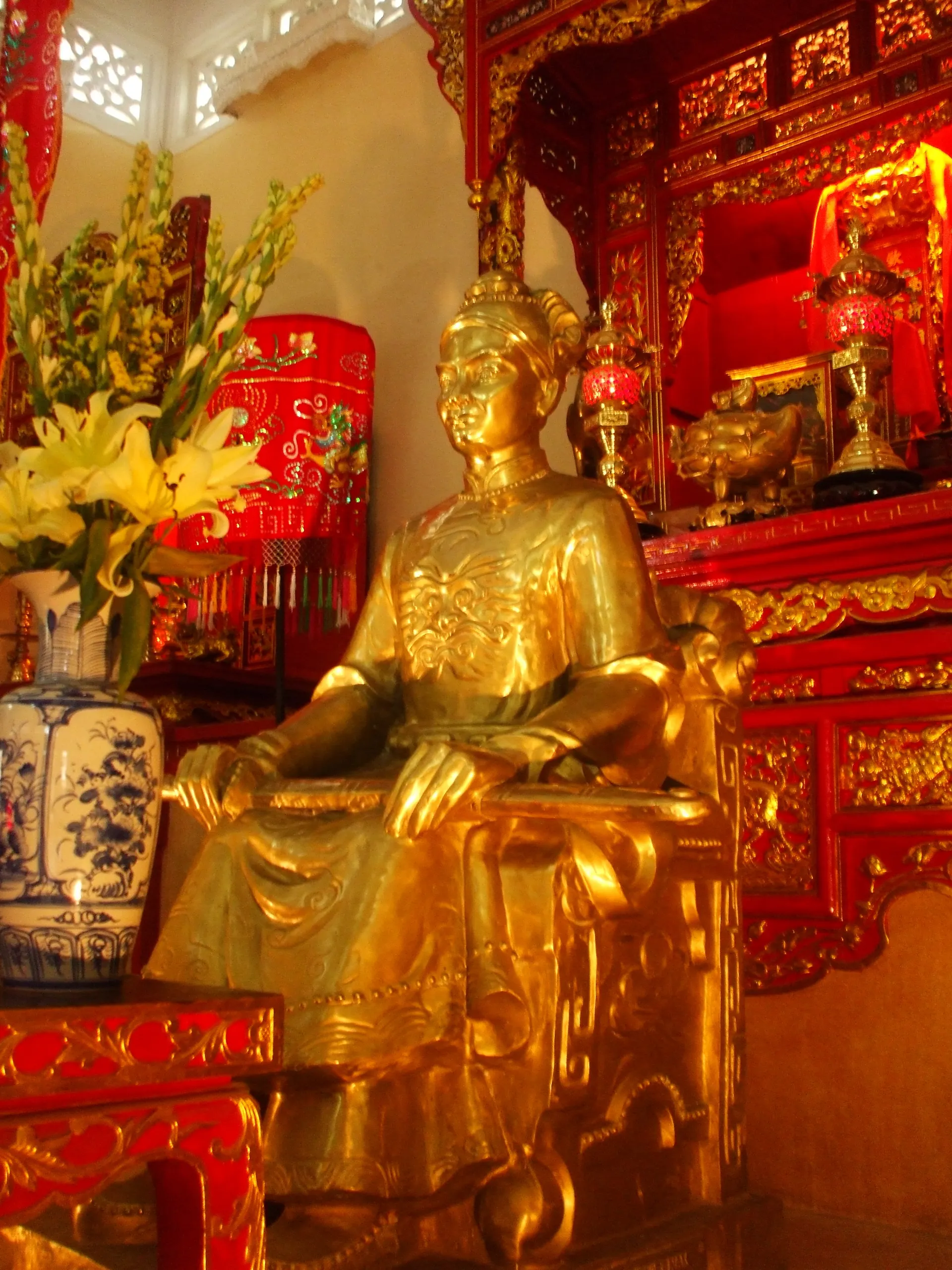
Lê Văn Duyệt
 Vietnam
Birthday
January 1, 1763
Birth Sign
Capricorn
Birthplace
Định Tường, Vietnam
Age
Died at 69
About
Lê Văn Duyệt was a Vietnamese general and viceroy who played a pivotal role in the late 18th and early 19th centuries. He was instrumental in the unification of Vietnam under the Nguyễn dynasty and served as a high-ranking mandarin, most notably as the viceroy of southern Vietnam. His governance of Gia Định, which is modern-day Ho Chi Minh City, transformed the region into a stable and prosperous area during his tenure. He was recognized for his military acumen and administrative skills, which were crucial in the early years of the dynasty.
His later years were marked by principled opposition to Emperor Minh Mạng's isolationist and Confucian policies, particularly his defense of Christian missionaries and converts. This stance led to posthumous conflict, including the desecration of his tomb. Despite this, his legacy was eventually restored by later emperors, Thiệu Trị and Tự Đức, who acknowledged his profound contributions. Lê Văn Duyệt remains a significant figure in Vietnamese history, commemorated through various historical sites and place names, reflecting his enduring importance to the nation's development.
Early Life & Background
Lê Văn Duyệt was born in Định Tường, Vietnam, either in 1763 or 1764, into a peasant family. His early life unfolded during a turbulent period in Vietnamese history, characterized by the Tây Sơn rebellion and widespread conflict. He began his career by aligning himself with Prince Nguyễn Ánh, who was then fighting to reclaim power and unify the country against the Tây Sơn forces. Duyệt's natural military aptitude quickly became evident as he participated in these campaigns.
His strategic insights and leadership on the battlefield were instrumental in many of Nguyễn Ánh's successes. He demonstrated remarkable skill in combat and logistics, steadily rising through the ranks. This period of intense military engagement honed his abilities and established his reputation as a formidable commander. His dedication and effectiveness were key factors in Nguyễn Ánh's eventual triumph, paving the way for the establishment of a new imperial order. Duyệt's pre-dynasty service culminated in his promotion to marshal once the extensive conflicts of the Tây Sơn wars subsided, marking him as a trusted and capable leader in the new political landscape.
Career Growth
After Nguyễn Ánh successfully unified Vietnam and ascended the throne as Emperor Gia Long in 1802, Lê Văn Duyệt transitioned from a military commander to a high-ranking mandarin within the newly formed Nguyễn dynasty. He held significant governmental positions under both Emperor Gia Long and his successor, Emperor Minh Mạng, wielding considerable influence over national policy and administration. His most prominent administrative role was as the viceroy of southern Vietnam, governing from the strategic region of Gia Định, which is now Ho Chi Minh City.
During his tenure as viceroy, Duyệt focused intensely on developing southern Vietnam, implementing policies that fostered stability and promoted economic growth. He worked to transform the region into a prosperous and well-managed area, which contributed significantly to the overall strength of the new empire. His administrative efforts were marked by pragmatism and a commitment to regional welfare. In his later years, however, Duyệt found himself in increasing opposition to Emperor Minh Mạng's more isolationist and strictly Confucian policies. He notably defended Christian missionaries and their converts, a stance that brought him into direct conflict with the imperial court. This disagreement led to the unfortunate posthumous desecration of his tomb following his death in 1832. Nevertheless, his contributions were eventually recognized and his honor restored by later emperors, Thiệu Trị and Tự Đức, who ordered the repair of his tomb and the rehabilitation of his name.
Career Timeline
Public Image & Style
Lê Văn Duyệt is widely regarded as a significant historical figure in Vietnam, revered for his pivotal role in national unification and his effective governance. His public image is that of a strong military leader and a capable administrator who contributed substantially to the early Nguyễn dynasty. Despite the controversies that arose in his later years, particularly his clashes with Emperor Minh Mạng regarding Christian converts, his legacy was ultimately rehabilitated.
The enduring public perception of Duyệt emphasizes his strategic acumen, loyalty to Emperor Gia Long, and his efforts to bring prosperity to southern Vietnam. His name is honored through historical sites, such as his tomb in Ho Chi Minh City, and through various streets named after him. These commemorations, along with annual death anniversaries, reflect a collective memory that recognizes his profound and lasting impact on Vietnamese history.
Fame & Fandom (iFAMOUS Rankings)
Lê Văn Duyệt commands a unique form of reverence that transcends the modern mechanics of celebrity fandom. As Tả Quân, he is not the subject of fan clubs or viral trends but rather the focal point of historical veneration in southern Vietnam. His legacy lives on through the Ông Bà Chiểu Mausoleum, a site where citizens and historians gather to honor his role as the architect of Gia Định, and through the enduring presence of streets bearing his name in Ho Chi Minh City. The narrative surrounding him is defined by deep cultural resonance rather than organized campaigns; the story of the Lê Văn Khôi Rebellion serves as the primary folklore, cementing his status as a symbol of Southern defiance against central authority. This complex history has sparked recent public discourse, with local authorities stepping in to correct misinformation and ensure the accuracy of his portrayal in contemporary education. While there is no formal fandom name documented for such a historical figure, the community of those who revere him acts as a living archive of his contributions to national unification and regional stability. iFANN has evaluated his standing within the global consciousness, noting that while his influence remains profound locally, he does not currently hold a placement in the published rankings (Global Top 1,000 or a Top-100 scope list). Lê Văn Duyệt is currently the EVALUATED_UNRANKED person in the world according to the Global Fame Engine.
Interesting Facts and Legends
The tomb complex of Lê Văn Duyệt in Bình Thạnh District stands as a striking example of traditional Vietnamese architecture, blending classical Chinese and local styles into a lasting monument. An unusual incident at this historic site involved the reported theft of a precious jewel from the roof of the stele house, a detail that underscores the site's perceived value and the legends attached to it. In 2025, the Department of Culture and Sports of Ho Chi Minh City launched an investigation into a TikToker accused of spreading false information about the general, highlighting how his legacy continues to shape public discourse. Beyond these recorded events, the most enduring legend concerns the dramatic aftermath of his death in 1832. Following his passing, Emperor Minh Mạng ordered his tomb desecrated and remains mutilated due to religious disputes, a decision that ignited the massive Lê Văn Khôi Rebellion. This uprising, which besieged Saigon for nearly two years, transformed the general into a mythic figure of resistance, a story still retold by locals who view him as a guardian of their region's identity.
Family & Personal Life
Lê Văn Duyệt was born into a peasant family in Định Tường around 1763 or 1764. Historical records offer limited details concerning his direct parents or any siblings he might have had. He adopted a son named Lê Văn Khôi, who later became a central figure in a revolt that took place in 1833, shortly after Duyệt's death. This uprising was partly a reaction to the posthumous dishonor inflicted upon his adoptive father.
Beyond the mention of his adopted son, specific information regarding Duyệt's immediate household, marital status, or biological children is largely absent from accessible historical accounts. The personal domestic lives of high-ranking mandarins during his era were not typically the primary focus of historical chroniclers, who tended to concentrate on their military and administrative achievements. Consequently, many intimate details about his family and home life remain unrecorded.
Notable Connections
Lê Văn Duyệt's career was closely tied to several key figures of the Nguyễn dynasty. He served under Nguyễn Ánh, who later became Emperor Gia Long, playing a pivotal role in his successful campaign against the Tây Sơn rebellion. Duyệt continued his service under Gia Long's successor, Emperor Minh Mạng, though their relationship grew strained due to policy differences. His adopted son, Lê Văn Khôi, became a significant, albeit tragic, figure in his legacy, leading a revolt in response to his father's posthumous dishonor. Later emperors, Thiệu Trị and Tự Đức, both contributed to rehabilitating Duyệt's reputation, acknowledging his foundational contributions to the dynasty.
Relationships & Dating History
Historical accounts of Lê Văn Duyệt primarily focus on his extensive military and administrative career, with very little information available regarding his personal romantic relationships or marital status. Details about any wives, partners, or significant romantic engagements are not readily documented in accessible historical records. It was common for high-ranking mandarins of his period to have multiple wives or concubines, but specific individuals associated with Duyệt in this capacity are not detailed.
The historical emphasis remains firmly on his public service, his military achievements, and his governmental roles within the Nguyễn dynasty. Therefore, his relationship status at the time of his death in 1832 remains largely unknown to modern historians, as private life details were often not deemed relevant for official historical chronicles of such prominent figures.
Death & Aftermath
Died
July 30, 1832 (aged 69)
Death Place
Saigon
Cause of Death
Reported natural causes, undetermined
By the summer of 1832, Lê Văn Duyệt remained the sitting Viceroy of Gia Định Thành, deeply embedded in the daily governance of southern Vietnam while managing the region's stability after years of military service and suppressing recent rebellions. He passed away on July 30, 1832, at the age of approximately sixty-eight or sixty-nine within Saigon, though historical records do not preserve a specific medical diagnosis or autopsy report for this era. The circumstances surrounding his final days reflect a long career of leadership rather than a documented illness, as modern forensic protocols were absent from the Nguyễn Dynasty during that time. Immediately following his death, Emperor Minh Mạng initiated a severe political campaign against Duyệt's legacy, viewing the late viceroy as a threat due to his popularity and perceived defiance of central authority.
This reaction quickly turned from initial reverence to persecution, leading to the posthumous desecration of his tomb and the execution of many supporters during the Lê Văn Khôi revolt of 1833, 1835. While the original funeral likely honored his status as a founding hero, the state subsequently ordered the exhumation and scattering of his remains, effectively erasing his physical presence from his burial site. Today, he is frequently revered by locals in the South as a patron saint or deity, a tradition celebrated through cultural productions like the historical show Tả Quân Lê Văn Duyệt, Người Mang 9 Án Tử.
Net Worth (Estate Value)
$0
iFANN Editorial Team estimate
Lê Văn Duyệt held immense power and influence as a general and later as viceroy of southern Vietnam during the late 18th and early 19th centuries. While he undoubtedly commanded significant resources and lived a life commensurate with his high station, the concept of 'net worth' as applied to modern public figures, with quantifiable assets and liabilities, does not directly translate to historical mandarins of his era. Records detailing his personal wealth, landholdings, or specific income streams are not available in contemporary historical accounts. His remuneration would have come from the imperial court in the form of stipends, grants, and control over regional revenues, rather than a calculable salary or investment portfolio. Therefore, any attempt to assign a specific monetary value to his 'net worth' in 2026 would be speculative and historically inaccurate. Per iFANN's editorial analysis, his estimated net worth is $0. His true 'wealth' lay in his political authority, military command, and the lasting impact of his governance on southern Vietnam, rather than a personal fortune that could be estimated today. He did not accumulate an estate that could be valued in contemporary financial terms.
Awards & Accolades
Known For
Unification of Vietnam
1802 · General
Viceroy of Southern Vietnam
· Administrator
Development of Gia Định
· Governor
Keywords
Sources
Quick Facts
- Profession
- Vietnamese general, viceroy
- Born
- January 1, 1763
- Birthplace
- Định Tường, Vietnam
- Died
- July 30, 1832
- Death Place
- Ho Chi Minh City
- Age at Death
- 69
- Zodiac Sign
- Capricorn
Personal Details
- Children
Frequently Asked Questions
Who was Lê Văn Duyệt?
When and where was Lê Văn Duyệt born?
What was Lê Văn Duyệt's most significant role?
Why was Lê Văn Duyệt's tomb desecrated?
Is Lê Văn Duyệt remembered today?
Join the community
fans discussing