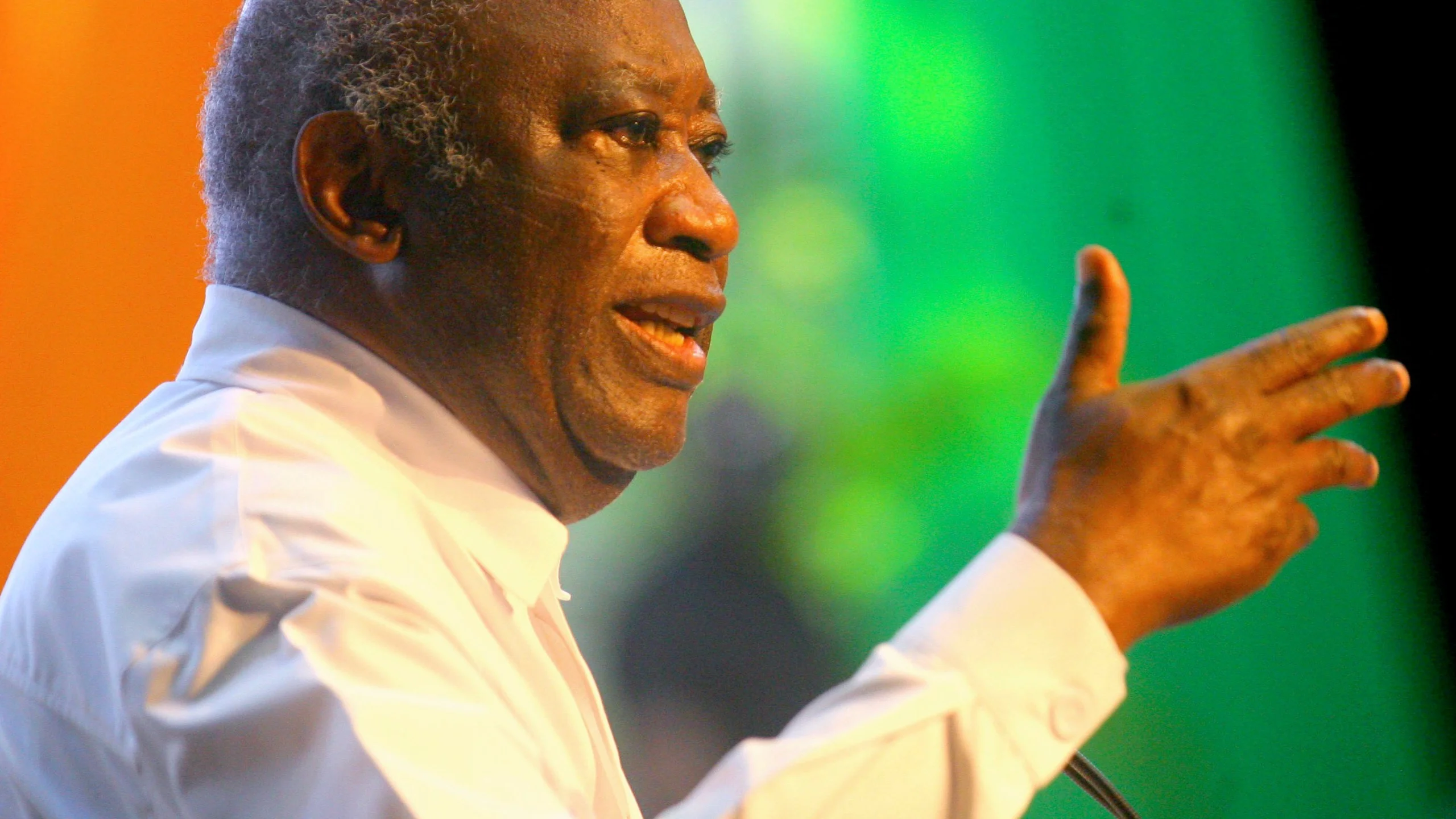
Laurent Gbagbo
politician•writer•university teacher
Also known as: Koudou Laurent Gbagbo, Le Professeur
Birthday
May 31, 1945
Birth Sign
Sagittarius
Birthplace
Gagnoa, Côte d'Ivoire
Age
81 years old
About
Koudou Laurent Gbagbo is a former President of Côte d'Ivoire who served as the head of state from December 2000 until his arrest in April 2011. A trained historian and university teacher by profession, he founded the Ivorian Popular Front (FPI) in 1982 and became the nation's first center-left president. His career has been defined by a long struggle against authoritarian rule, marked by periods of imprisonment and exile in France before he returned to lead his country through a turbulent democratic transition. Following a disputed presidential election in 2010, he refused to cede power to rival Alassane Ouattara, triggering a violent civil conflict that claimed thousands of lives. He was subsequently arrested at the presidential palace and extradited to The Hague to face trial at the International Criminal Court for crimes against humanity. After years of legal proceedings, he was fully acquitted in January 2019, with the decision upheld on appeal in March 2021. He returned to Côte d'Ivoire in June 2021 and continues to lead the opposition party known as the Party of African Peoples – Côte d'Ivoire (PPA-CI). As of 2026, he remains a pivotal figure in Ivorian politics, advocating for national reconciliation while navigating a complex relationship with the current administration.
Early Life & Background
Koudou Laurent Gbagbo entered the world on May 31, 1945, in the western town of Gagnoa, Côte d'Ivoire. Raised in a family that placed a high value on education, he pursued academic excellence early in life, attending secondary school in the economic capital of Abidjan. His intellectual ambitions took him across the Atlantic to France, where he earned a degree in history followed by a doctorate in political science. This academic foundation deeply shaped his worldview, grounding his future political ideology in historical analysis and anti-colonial thought. Before stepping into the spotlight of national politics, Gbagbo worked as a university lecturer, teaching history and political science in Abidjan. His entry into public life began with activism within the trade union movement during the late 1960s. By the early 1970s, his vocal opposition to the single-party state led to his imprisonment. Arrested in 1970, he spent several years behind bars, an experience that solidified his resolve against dictatorship. Facing increasing persecution in the 1980s, he fled into exile in France, where he continued his political organizing and academic work while founding the Ivorian Popular Front in 1982. He returned to Côte d'Ivoire in the early 1990s after the introduction of multi-party politics, running unsuccessfully against the incumbent Félix Houphouët-Boigny in 1990 but securing a seat in the National Assembly.
Career Growth
Gbagbo's political trajectory reached its zenith following the death of Félix Houphouët-Boigny in 1993 and the subsequent rise of Robert Guéï. In the 2000 presidential election, the military junta led by Guéï attempted to disqualify Gbagbo from running. When this failed, they manipulated the results to favor Guéï. Gbagbo refused to accept the outcome, and his supporters took to the streets in massive protests known as the March 2000 crisis. These demonstrations forced the military to step down, allowing Gbagbo to assume the presidency in October 2000 as the country's first center-left leader. His rule was defined by efforts to consolidate power and address deep ethnic and regional divisions, though it was also marred by allegations of human rights abuses and delays in holding new elections. The 2010 presidential election marked the beginning of his downfall. Gbagbo lost the election to Alassane Ouattara, who received approximately 54% of the vote. Despite international recognition of Ouattara's victory, Gbagbo claimed the results were fraudulent. This refusal to cede power triggered a violent civil conflict between forces loyal to Gbagbo and those supporting Ouattara, resulting in an estimated 3,000 deaths. In April 2011, after a final offensive backed by French troops, Gbagbo was arrested at the presidential palace in Abidjan and extradited to The Hague. The subsequent trial at the International Criminal Court became one of the most high-profile cases in the institution's history. On January 15, 2019, the Trial Chamber I acquitted Gbagbo and his co-defendant Charles Blé Goudé of all charges due to insufficient evidence. The prosecution appealed, but on March 31, 2021, the Appeals Chamber upheld the acquittal. Following this legal victory, Gbagbo returned to Côte d'Ivoire on June 17, 2021, greeted by thousands of supporters. Since his return, he has remained active in national politics, leading the reconstituted Party of African Peoples – Côte d'Ivoire (PPA-CI) and advocating for national reconciliation. In May 2026, news reports indicate that Gbagbo was re-elected as the President of the PPA-CI. In June 2026, he proposed a new social pact aimed at addressing social inequalities in the country. In August 2026, the ICC announced that it would soften restrictions on Gbagbo, likely referring to travel or communication limitations imposed during his time under investigation or house arrest.
Career Timeline
Public Image & Style
Gbagbo remains a polarizing figure in Côte d'Ivoire. To his supporters, he is a hero of democracy and a victim of political persecution, a champion who stood up to dictatorship and fought for the rights of the common people. To his detractors, he is a divisive leader responsible for years of instability and violence. His public persona is often characterized by a dignified demeanor, particularly noted during his time at the ICC trial. He is known for wearing traditional Ivorian attire or formal Western suits during political appearances, projecting an image of statesmanship and cultural pride. Known affectionately by some supporters as Le Professeur, or The Professor, this nickname reflects his background as a historian and university lecturer. His distinctive style and unwavering stance during the 2010 election standoff have cemented his legacy as a symbol of resistance, regardless of one's political alignment.
Fame & Fandom
iFANN has not yet collected fame data for this person. As of September 2026, there is no official global ranking available in the iFANN database. The fanbase, often referred to as 'Gbagboists' or supporters of the PPA-CI, is highly organized and passionate. They engage in regular rallies, street demonstrations, and social media campaigns to support his political agenda. Notable fan rituals include the annual commemoration of his return to the country and the display of his portrait in homes and public spaces. The fandom is deeply integrated into the political structure of the opposition, acting as a mobilization force for the party. His supporters view his acquittal as a vindication of his innocence and a blow to the narrative of 'victor's justice,' maintaining strong loyalty despite the controversies surrounding his tenure. The group actively participates in social media campaigns to defend his reputation and promote his recent proposals for a new social pact.
Interesting Facts and Legends
Laurent Gbagbo holds the distinction of being the first former head of state to be tried by the International Criminal Court. He is a published author who has written several books on African politics and history. Despite living in exile in France for a decade, he never held a position in the executive branch of the French government. His return to Côte d'Ivoire in 2021 was marked by a massive welcome from his supporters, who viewed his acquittal as a vindication of his innocence. He is generally described as a man of average height, typical for his demographic and age group. Specific measurements are not recorded in official biographies. Born on May 31, 1945, Laurent Gbagbo is 81 years old as of 2026. He remains alive and active in Ivorian politics. One of his most iconic moments was the mass protest in October 2000 that toppled the military junta of Robert Guéï, an event legendary among his supporters as the day 'the people spoke.' Another defining moment was his refusal to leave the presidential palace in 2010, which created a tense standoff that became a defining moment in modern African political history.
Notable Quotes
“We will not allow anyone to steal our victory.”
“The truth will prevail.”
“Democracy is not a gift; it is a conquest.”
Family & Personal Life
Laurent Gbagbo is married to Simone Gbagbo, a former First Lady of Côte d'Ivoire and a prominent politician in her own right. They have been together since their early political days in the 1980s. The couple has several children, though specific details regarding their names and current status are less frequently publicized compared to their parents' political lives. There are no widely documented public romantic relationships outside of his marriage to Simone Gbagbo. Simone Gbagbo has faced her own legal challenges, including arrest and trial in Côte d'Ivoire on charges related to the 2010–2011 violence, though she was eventually released. Their shared history spans decades of political struggle, from their early activism in the student movements to their leadership roles during the turbulent post-independence era of Côte d'Ivoire.
Notable Connections
Relationships & Dating History
Laurent Gbagbo is married to Simone Gbagbo (née Gbagbo), a former First Lady of Côte d'Ivoire. They have been married since their early political days together in the 1980s. Simone Gbagbo is also a politician and has faced her own legal challenges, including arrest and trial in Côte d'Ivoire on charges of crimes against humanity related to the 2010–2011 violence, though she was eventually released. The couple has several children, though specific details regarding their names and current status are less frequently publicized compared to their parents' political lives. There are no widely documented public romantic relationships outside of his marriage to Simone Gbagbo. As of 2026, Laurent Gbagbo remains married to Simone Gbagbo. Their relationship has been a central pillar of his political life, surviving exile, imprisonment, and intense public scrutiny. They are often seen together at major political events, representing a unified front for the opposition.
- MarriedSimone Gbagbo1980s - presentCurrentMet during early political activism; both are prominent politicians.
Salary, Net Worth In 2026
$1 Million
iFANN Editorial Team estimate
Specific net worth figures for Laurent Gbagbo as of 2026 are not publicly available in standard financial databases, as he is a politician whose wealth is not typically disclosed in the same manner as celebrities or business tycoons. His income sources have historically included his salary as a university professor, earnings from his political activities, and potential book royalties. Following his presidency and subsequent legal battles, his financial situation has been subject to scrutiny, particularly regarding accusations of embezzlement made by his opponents, which were never proven in a court of law prior to his ICC acquittal. There are no credible reports of significant real estate holdings, business ventures, or endorsement deals that would generate a high net worth estimate. Any estimates found online are speculative and lack verification. Therefore, no consensus average can be computed, and no specific dollar figure can be reliably reported for his net worth in 2026. His financial status remains opaque due to the nature of his political career and the lack of transparency in Ivorian public finance records.
Awards & Accolades
View 3 records, honours and achievementsKnown For
President of Côte d'Ivoire
2000-2011 · Head of State
International Criminal Court Trial
2011-2021 · Defendant
Leader of PPA-CI
2021-Present · Political Leader
Keywords
Sources
Quick Facts
- Profession
- politician, writer, university teacher
- Born
- May 31, 1945
- Birthplace
- Gagnoa, Côte d'Ivoire
- Gender
- Male
- Spouse
- Simone Gbagbo
- Birth Sign
- Sagittarius
Personal Details
- Full Name
- Koudou Laurent Gbagbo
- Spouse
- Simone Gbagbo
- Children
- Multiple children (names not widely publicized)
- Education
- Doctorate in Political Science, University of Paris; Secondary school in Abidjan
Frequently Asked Questions
How old is Laurent Gbagbo?
Is Laurent Gbagbo still alive?
Why was Laurent Gbagbo arrested?
What happened to the charges against Laurent Gbagbo at the ICC?
Who is Laurent Gbagbo's wife?
Similar People
Join the community
fans discussing