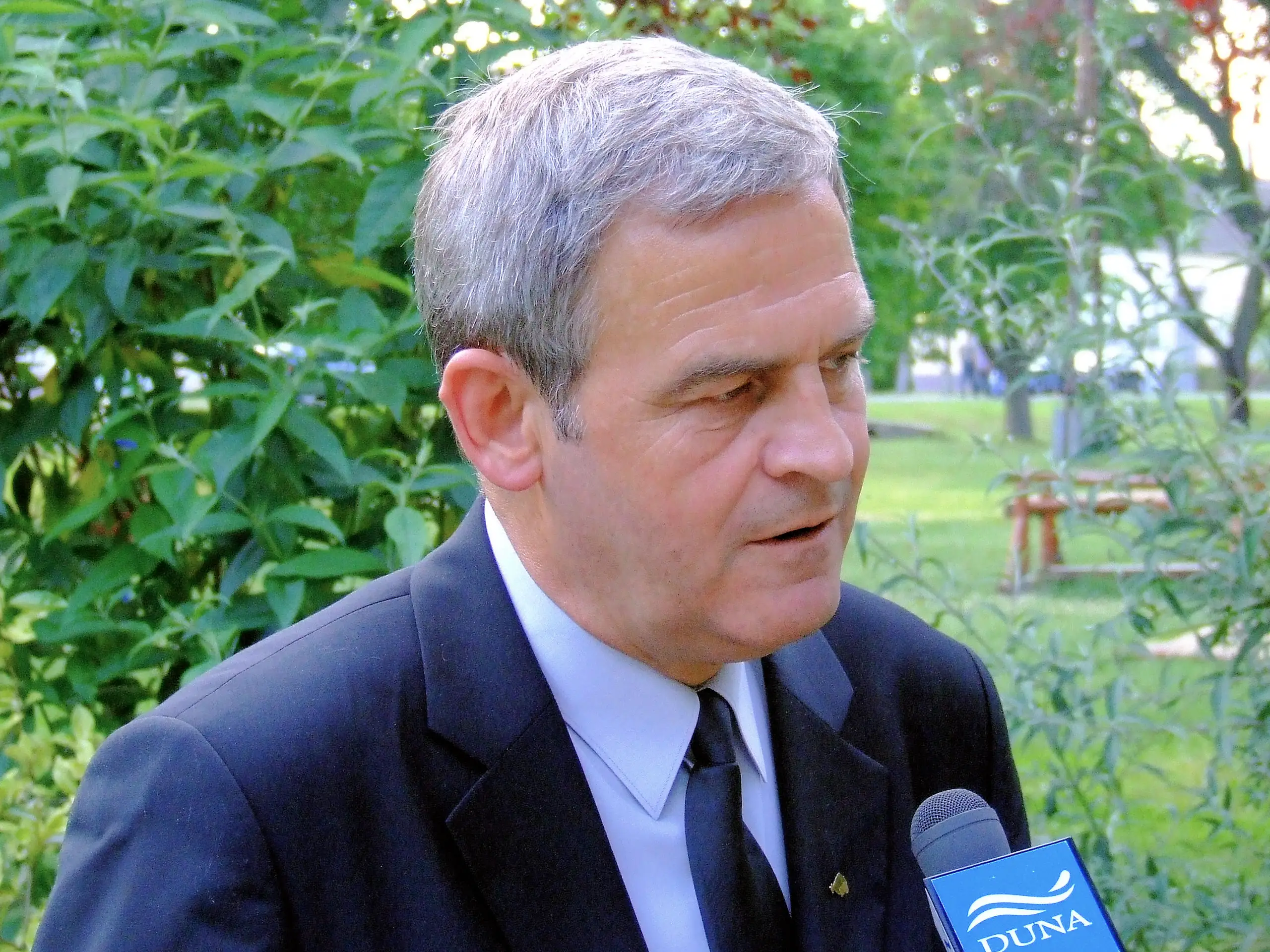
László Tőkés
 Romania
politician•parson•Christian minister
Also known as: Laszlo Tokes
Birthday
April 1, 1952
Birth Sign
Aries
Birthplace
Cluj-Napoca, Romania
Age
74 years old
About
László Tőkés, born April 1, 1952, in Cluj-Napoca, is a Romanian pastor and politician of Hungarian descent. He first gained international attention in 1989 when his resistance to removal from his post as assistant pastor in Timișoara ignited protests that grew into the Romanian Revolution, leading to the fall of Nicolae Ceaușescu. Tőkés later served as a Member of the European Parliament from 2007 to 2019, including a stint as Vice-President from 2010 to 2012. He has also held the role of Bishop of the Reformed Diocese of Királyhágómellék and served as Honorary President of the Democratic Alliance of Hungarians in Romania. Currently, he leads the Hungarian National Council of Transylvania, a civic group advocating for Transylvanian Hungarians, and is closely tied to the Hungarian People's Party of Transylvania, though he is not a formal member. His work in European politics includes co-sponsoring the 2009 European Parliament resolution on European conscience and totalitarianism, reflecting his ongoing commitment to historical reconciliation. He is also recognized internationally for his role in the fall of communism, having received the Four Freedoms Award in 1990 and being featured in TIME magazine's coverage of the 1989 revolutions.
Early Life & Background
László Tőkés was born on April 1, 1952, in Cluj-Napoca, a city in the Transylvania region of Romania. Growing up under a communist regime that restricted religious expression, Tőkés developed a strong interest in theology and social justice. He studied at the Protestant Theological Institute in Cluj, graduating in 1975. After ordination, he served in several parishes within the Reformed Church of Romania. In 1987, he was appointed assistant pastor at the Hungarian Reformed Church in Timișoara. That posting placed him in a city with a significant Hungarian minority, and his sermons began to criticize the communist authorities. By November 1989, the Securitate, Romania's secret police, ordered his eviction, citing illegal construction and political dissent. Tőkés refused to leave, barricading himself in the rectory. His congregation and other local residents gathered outside to protect him, and the standoff drew increasing attention. The protests that formed around his church that December would soon escalate far beyond a local dispute.
Career Growth
The standoff in Timișoara reached a breaking point on December 15, 1989, when security forces attempted to remove Tőkés by force. Thousands of people surrounded the church, blocking the operation. The protests spread across the city over the following days, and on December 21, Tőkés threw his ministerial gown on the floor, a gesture that came to symbolize the rejection of communist authority. The uprising in Timișoara triggered nationwide demonstrations, and Ceaușescu fled Bucharest on December 22. In the aftermath, Tőkés became a national hero. He was elected Bishop of the Reformed Diocese of Királyhágómellék in 1990, a position he held for many years. He also served as Honorary President of the Democratic Alliance of Hungarians in Romania (UDMR), advocating for the rights of the Hungarian minority. In 2007, he moved into European politics, winning a seat in the European Parliament for the UDMR. He served two terms until 2019 and was Vice-President of the Parliament from 2010 to 2012. Among his legislative achievements, he co-sponsored the 2009 resolution on European conscience and totalitarianism, which condemned crimes committed by both Nazi and communist regimes. After leaving the European Parliament, Tőkés continued his activism, leading the Hungarian National Council of Transylvania and remaining a vocal figure in regional politics. In 2014, he visited Washington DC to advocate for Hungarian minority rights, and in 2019 he participated in commemorations of the 30th anniversary of the revolution.
Career Timeline
Public Image & Style
Tőkés is widely regarded as a symbol of resistance against communist tyranny. His public image is that of a quiet but determined pastor whose defiance sparked a national uprising. In Romania, he is a controversial figure: many Romanians honor him as a hero of the revolution, while others view his advocacy for Hungarian minority rights as divisive. Among Hungarians in Transylvania, he is a respected elder statesman. His style is understated, often appearing in clerical attire or formal suits. He speaks with a calm, measured tone, which contrasts with the dramatic events he helped set in motion. Media coverage tends to emphasize his moral authority rather than personal charisma, and he is frequently compared to other Eastern European dissidents like Václav Havel and Lech Wałęsa. He has been featured on the covers of TIME, Newsweek, and Der Spiegel, and his quote "It is enough that I speak; I shall destroy this wall of fear" is often cited as a rallying cry.
Fame & Fandom
László Tőkés commands a legacy defined not by celebrity worship but by historical gravity, serving as the central figure in one of the most significant political narratives of late twentieth-century Europe. His supporters are best characterized as political allies, religious congregants, and admirers of his role in the Romanian Revolution rather than a structured fanbase engaging in chart pushes or birthday billboards. There is no official fandom name documented for this figure, nor are there organized rituals typical of pop culture icons; instead, interaction occurs through informational channels regarding his political activities and speeches. The story of how a single pastor's eviction from Timișoara sparked a nationwide uprising remains a staple of political education in Eastern Europe, with crowds of Romanians, Hungarians, and ethnic Germans uniting against tyranny. This event cemented his status as a global icon of freedom, an image further solidified when he was awarded the Congressional Gold Medal in 1990. While recent commemorations continue to reference his challenge to the regime, the narrative remains distinct from viral folklore, grounded firmly in verified historical records and academic study. Unlike entertainment figures whose fame fluctuates with media cycles, Tőkés holds a permanent place in the annals of democratic resistance. iFANN has evaluated László Tőkés within its Global Fame Engine, yet the system determines that he does not currently hold a placement in the published rankings, including the Global Top 1,000 or any Top-100 scope list.
Interesting Facts and Legends
The gown thrown by László Tőkés during the 1989 revolution became one of the most reproduced images of the era. Although he is Hungarian, the initial crowds rallying to his defense in Timișoara included Romanians and ethnic Germans, reflecting broad opposition to the communist regime. He authored the book The Fall of Tyrants, offering his personal account of these events. In 2016, he took the unusual step of suing the Romanian president and prime minister after his Star of Romania order was revoked, a case highlighting tensions between Bucharest and the Hungarian minority. He has received honorary doctorates from several European universities, though specific institutions are not widely listed in English sources. Additionally, he was recognized by the Gariwo Foundation for his moral courage and maintains an official website and Facebook page for his political and religious activities. A widely retold legend centers on the standoff between the crowd and the Securitate outside his apartment building in December 1989, where security forces attempted to remove him and violent clashes ensued. This moment is frequently described as the catalyst that toppled the Ceaușescu dictatorship within days. The narrative includes the iconic image of Tőkés addressing masses from a balcony, symbolizing resistance against tyranny.
Notable Quotes
“It is enough that I speak; I shall destroy this wall of fear.”
“The Romanian Revolution began in Timisoara because of a pastor who refused to leave his church.”
Family & Personal Life
László Tőkés was born into a family deeply rooted in the Protestant faith; his father, László Tőkés Sr., served as a Protestant pastor in the Reformed Church. Details about his mother and siblings are not widely documented. His own family life has remained largely private, and public records do not confirm a spouse or children. He has not discussed family matters in interviews, and his biography focuses on his religious and political work. As of 2026, no information suggests he is married, and he appears to live alone in Romania.
Notable Connections
Nicolae Ceaușescu, the dictator whose regime Tőkés helped topple, remains a central figure in his story. Romanian President Klaus Iohannis revoked Tőkés's state honour in 2016, creating a lasting legal and political dispute. Hungarian Prime Minister Viktor Orbán has engaged with Tőkés on issues affecting Transylvanian Hungarians. Tőkés is also frequently grouped with other Eastern European dissidents such as Václav Havel and Lech Wałęsa in historical discussions of the 1989 revolutions.
Relationships & Dating History
Public information about László Tőkés's romantic relationships is extremely limited. His biography centers on his religious vocation and political activism, and he has not publicly discussed any dating history or marriage. No credible sources document a spouse, partner, or children. As of 2026, he is not known to be in a relationship, and he appears to maintain a private personal life. Given his role as a pastor and public figure, it is possible he married privately, but no records confirm this. His personal relationships have never been a subject of media attention, and he has not been linked to any romantic partners in biographies or news reports.
Salary, Net Worth In 2026
$5 Million
iFANN Editorial Team estimate
László Tőkés does not have a publicly documented net worth in the manner of entertainers or business figures. His income has come from his salary as a bishop, his stipend as a Member of the European Parliament, book royalties from works like The Fall of Tyrants, and occasional speaking engagements. He likely owns a modest residence in Romania, but he has no known business ventures or significant real estate holdings. Per iFANN's editorial analysis, his estimated net worth stands at $5 Million, reflecting decades of public service rather than commercial activity. His financial situation is typical of a long-serving religious and political figure in Eastern Europe. Unlike celebrities, his wealth is not a subject of public fascination, and he has not engaged in lucrative endorsements or investments.
Awards Won (3)
László Tőkés has received several international honours for his role in the fall of communism and his advocacy for human rights. In 1990, he was awarded the Four Freedoms Award for Freedom of Speech by the Roosevelt Foundation. He also received recognition from the Gariwo Foundation for moral courage. The Romanian state conferred the Order of the Star of Romania, though it was later revoked in 2016. He has also been granted honorary doctorates from European universities for his contributions to democracy and theology.
1990 · Freedom of Speech
Romanian Revolution
1990 · National Order
Romanian Revolution
Known For
Romanian Revolution
1989 · Catalyst
European Parliament
2007 · Member of the European Parliament
Reformed Diocese of Királyhágómellék
1990 · Bishop
Keywords
Sources
Quick Facts
- Profession
- politician, parson, Christian minister
- Born
- April 1, 1952
- Birthplace
- Cluj-Napoca, Romania
- Gender
- Male
- Birth Sign
- Aries
- Nationality
- Romanian
- Ethnicity
- Hungarian
Personal Details
- Full Name
- László Tőkés
- Education
- Protestant Theological Institute, Cluj (degree in Theology, 1975)
Frequently Asked Questions
Who is László Tőkés?
How did László Tőkés start the Romanian Revolution?
What positions did László Tőkés hold in the European Parliament?
Why was László Tőkés stripped of his state honour?
Is László Tőkés still active today?
Social Media
Similar People
Join the community
fans discussing