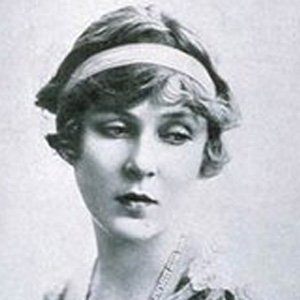
Lady Diana Cooper
 United Kingdom
Silent film actress•socialite•writer
Also known as: Lady Diana Manners, The most beautiful woman in England
Birthday
August 29, 1892
Birth Sign
Virgo
Birthplace
England
Age
Died at 93
About
Lady Diana Cooper, born Lady Diana Manners on August 29, 1892, was an English silent film actress and aristocrat who became a prominent social figure in London and Paris during the early to mid-20th century. Renowned for her exceptional beauty from her teenage years, she was widely considered "the most beautiful woman in England," a title that cemented her status as a celebrated figure and a defining presence in society. Her life, which spanned nearly a century, saw her move effortlessly among royalty, politicians, and artists, embodying the glamour and intellectual currents of her time. She was a muse to novelists like Evelyn Waugh and Nancy Mitford, and her striking image graced the cover of TIME magazine in February 1926, a distinction she shared with figures like Benito Mussolini, appearing on the cover five months after him.
Cooper's legacy extends beyond her social influence; she was also a writer whose memoirs and letters offer intimate windows into the lives of the powerful and famous individuals she encountered. Her correspondence, particularly with her son John Julius Norwich, provides a rich tapestry of social and political history, ensuring her voice and observations remain relevant. Even decades after her death on June 16, 1986, at the age of 93, her written works continue to be published and studied, captivating new generations with her wit, charm, and unique perspective on a glittering world.
She was the daughter of the 7th or 8th Duke of Rutland, placing her at the pinnacle of British aristocracy. This privileged upbringing, coupled with her innate charisma, enabled her to become a central figure in the social scenes of both London and Paris, solidifying her reputation as a woman of enduring fascination and cultural significance.
Early Life & Background
Born Lady Diana Manners on August 29, 1892, she entered the world as the daughter of the 7th or 8th Duke of Rutland, placing her at the highest echelons of British aristocracy. Her early life was characterized by privilege and the stringent expectations of her noble lineage, growing up amidst vast country estates and the intricate social protocols of her era. However, even from a young age, her extraordinary beauty set her apart. By her teenage years, her appearance was already the subject of widespread admiration, leading to her being famously described as "the most beautiful woman in England." This burgeoning reputation served as the initial spark, opening doors and laying the groundwork for her future prominence as a captivating social icon.
Her education was primarily conducted at home, within a family circle that included influential artists and thinkers, an environment that undoubtedly nurtured her sharp intellect and self-assurance. This exposure to diverse perspectives and intellectual discourse shaped her into a person of considerable charm and captivating presence. As she transitioned into adulthood and began to participate more actively in society, she quickly became a focal point of attention, celebrated not only for her looks but also for her intelligence and wit. She was soon recognized as "The Idol of the Golden Generation," a testament to her elevated status among the elite youth of pre-war Britain.
Prior to her marriage, she was a notable member of the "Coterie," a group of aristocratic bohemians known for their avant-garde style and somewhat rebellious spirit. This association distinguished her from more conventional debutantes and offered a glimpse into the unconventional path her life would take, preparing her for a future that would be anything but ordinary.
Career Growth
Lady Diana Cooper's public career commenced during the silent film era, where she made a few appearances in movies, leveraging her established fame as a celebrated beauty. While her filmography was modest, these roles significantly contributed to her public recognition. A notable milestone in her career was her appearance on the cover of TIME magazine in February 1926, an honor that underscored her international renown and the public's enduring fascination with her. This significant achievement placed her in the spotlight, appearing on the cover five months prior to Benito Mussolini.
Beyond her ventures in cinema, Cooper's influence was most profoundly felt in her capacity as a socialite and, later, as the wife of Alfred Duff Cooper. As the spouse of a prominent politician and diplomat, who later became the 1st Viscount Norwich, she evolved into a highly accomplished hostess. During their tenure in Paris, where Duff served as Ambassador, her salons became legendary gatherings for the European elite. Her extensive correspondence, spanning decades, and her memoirs have since been recognized for their historical and literary value, offering vivid accounts of political and social landscapes, solidifying her role as a significant chronicler of her time.
Her written works have garnered particular acclaim posthumously. "Darling Monster: The Letters of Lady Diana Cooper to Her Son 1939-1952," published in 2013, is a collection of her correspondence with her son, John Julius Norwich. This volume received widespread critical praise for its wit, historical insights, and personal revelations, ensuring her lasting legacy not only as a social icon but also as an astute observer and writer.
Public Image & Style
Lady Diana Cooper was widely regarded as the quintessential modern socialite, a figure whose public image was meticulously cultivated and universally admired. She was celebrated for her sharp wit, her distinctive and often unconventional behavior, and her trend-setting fashion choices. The media frequently referred to her as "the most beautiful woman in England," a title she embodied with a confident and almost regal demeanor. Her public persona successfully blended glamour with an accessible charm, a combination that resonated strongly with both the public and the press.
She was also perceived as an embodiment of the "Bright Young Things" phenomenon of the 1920s, a generation known for its hedonistic pursuits and flamboyant lifestyle, and her parties were legendary. Her image has proven remarkably enduring, and she continues to be recognized as a touchstone for those interested in the allure and intrigue of early 20th-century high society. Her fame was such that she was the subject of a notable portrait by John Singer Sargent and was known for her signature style, often including a black velvet ribbon worn around her neck.
Fame & Fandom (iFAMOUS Rankings)
Lady Diana Cooper never had a modern fanbase, no organized club, and no specific moniker for her admirers. Her legacy rests with historians, biographers, and readers of her correspondence rather than digital activists or campaign organizers. While contemporary pop culture thrives on coordinated chart manipulation and subway ads, Cooper's audience remains academic and literary, focused on her wit preserved in letters like Darling Monster. The concept of a viral fandom simply did not exist during her prime in the 1920s and 1930s, nor has it emerged since her passing. In August 2026, iFANN evaluated her global standing and determined she holds no placement in the published rankings. This status reflects a life that peaked before the era of mass celebrity metrics. Her fame was exclusive to London and Parisian circles, rooted in high society anecdotes and verified historical accounts rather than global consumption signals. The absence of a formal rank does not diminish her impact but highlights how her influence operated through personal networks and literary appreciation. Unlike stars who dominate search trends, Cooper's story survives through the enduring fascination with her beauty and her sharp commentary on war and aristocracy. The iFANN data confirms that while she remains a subject of continuous interest in aristocratic circles, she does not hold a position within the Top 1,000 or any scope list. Her cultural footprint is deep but narrow, defined by the Coterie and her role as a muse rather than a global commodity.
Interesting Facts and Legends
Lady Diana Cooper held a notable familial connection as the great aunt of former British Prime Minister David Cameron, a relationship that has drawn the attention of biographers and historians. She was also a direct inspiration for characters in the literary works of Evelyn Waugh and Nancy Mitford, both of whom were close friends and contemporaries. Her renowned beauty was captured in a famous portrait by John Singer Sargent. Beyond her social standing, she was an accomplished amateur actress, frequently participating in charity theatrical performances that were highly anticipated events within London society. She was also known for her distinctive personal style, often favoring a signature black velvet ribbon worn around her neck. Her influence extended to the literary world, where she served as a muse for prominent authors, further cementing her cultural impact beyond her social circle. The depth of her social connections and her unique position within the aristocracy made her a subject of continuous interest in the circles she inhabited and beyond. Legends persist about her title as "the Idol of the Golden Generation," a verified assessment of her preeminent beauty during the interwar period. She led the Coterie, a group of intellectuals and artists including Vita Sackville-West, whose lavish gatherings became the stuff of high society lore. During the First World War, she shifted her public image from a glamorous figure to a dedicated nurse at Guy's Hospital, adding substance to her reputation. The most enduring modern legend involves her letters to her son, John Julius Norwich, where she famously called herself his "darling monster" and offered unfiltered commentary on the war.
Family & Personal Life
Lady Diana Cooper was born into a prominent aristocratic family as the daughter of Henry Manners, 8th Duke of Rutland, and his wife Violet Lindsay. She had two sisters, Marjorie and Violet, and a brother, John, who succeeded their father as the 9th Duke. Her lineage traced back through centuries of English nobility. In 1919, she married Alfred Duff Cooper, a distinguished politician and writer who would later be known as the 1st Viscount Norwich. Their union was characterized by mutual respect and intellectual companionship, though Duff's reputation as a philanderer was a known aspect of their marriage. Together, they had one son, John Julius Norwich, born in 1929, who would go on to become a celebrated historian and broadcaster. Diana's deep affection for her son is vividly captured in her letters to him, which he later published, revealing a profound and loving maternal bond.
Relationships & Dating History
Lady Diana Cooper's romantic life was as vibrant and talked-about as her public persona. Before settling down, she was linked to several notable figures, including the poet Rupert Brooke and the politician Max Aitken. However, her deepest affections were reserved for Alfred Duff Cooper, a charismatic and ambitious politician. Their courtship was passionate yet complex, and they married in 1919. Despite Duff's acknowledged infidelities, which were a frequent subject of social gossip, their marriage endured for decades, becoming a significant partnership within British society. Their union was marked by intellectual connection and mutual support, particularly during Duff's demanding political career, which included his service as Ambassador to France.
Diana remained devoted to Duff throughout their marriage, and his death in 1954 left her deeply affected. She chose not to remarry, spending her later years as a widow, cherishing her memories and maintaining close ties with her son and his family. Her life story is one of navigating societal expectations, personal challenges, and enduring love within the context of a prominent public life.
- MarriedAlfred Duff Cooper1919 - 1954Married in 1919, remained together until his death in 1954. They had one son, John Julius Norwich.
Death & Aftermath
Died
June 16, 1986 (aged 93)
Death Place
London, England
Cause of Death
Natural causes related to advanced age
The posthumous publication of her correspondence in 2013 brought fresh attention to the sharp wit and historical insight she had poured into letters for her son, John Julius Norwich. This literary resurrection cemented a legacy that outlasted the Roaring Twenties glamour she once embodied as one of England's most celebrated beauties. Lady Diana Cooper passed away on June 16, 1986, at her London home at the age of 93. Contemporary reports from The New York Times and United Press International described her as a beloved British eccentric and a legendary beauty of an age long past, noting her status as the dowager Viscountess Norwich and widow of Sir Alfred Duff Cooper.
Tributes highlighted her role as a muse to writers like Evelyn Waugh and Nancy Mitford, while obituaries noted her connection to future Prime Minister David Cameron as his great-aunt. Funeral arrangements and burial details remained unpublicized in major news outlets, though family tradition places her interment in the vault at Belvoir Castle. Her estate passed to her heirs without public fanfare, leaving behind a body of work that continued to define her as an astute observer of her time.
Net Worth (Estate Value)
$1 Million
iFANN Editorial Team estimate
Pinpointing Lady Diana Cooper's exact net worth presents a challenge, as detailed financial reporting for celebrities and public figures was less common during her lifetime. However, her position as the daughter of a duke and the wife of a viscount provided her with access to considerable inherited and marital wealth. Her husband, Alfred Duff Cooper, accumulated a substantial income through his successful career in politics and diplomacy, augmented by his endeavors as a writer. The couple maintained a lifestyle commensurate with their status, possessing residences in London, Paris, and the English countryside. Following Alfred Duff Cooper's passing in 1954, Diana managed their estate with prudence. The family's wealth continued to generate income through sources such as book royalties from her published works and the eventual sale of personal assets. While specific figures are elusive, the enduring interest in her life and writings, particularly the posthumous publication of her letters, suggests a continued financial legacy. The estate's value is understood to reflect the lasting fascination with her life and the historical significance of her correspondence. Per iFANN's editorial analysis, Lady Diana Cooper's estimated net worth stands at $1 Million.
Awards & Accolades
View 4 records, honours and achievementsKnown For
Silent film appearances
1920s · Actress
TIME magazine cover
1926 · Cover subject
Keywords
Sources
Quick Facts
- Profession
- Silent film actress, socialite, writer
- Born
- August 29, 1892
- Died
- June 16, 1986
- Birthplace
- England
- Spouse
- Alfred Duff Cooper
- Children
- John Julius Norwich
Personal Details
- Full Name
- Lady Diana Manners
- Spouse
- Alfred Duff Cooper
- Children
- John Julius Norwich
Filmography
5
Total
5
Film
0
TV
Frequently Asked Questions
Who was Lady Diana Cooper?
How did Lady Diana Cooper die?
What was Lady Diana Cooper famous for?
Who was Lady Diana Cooper married to?
Did Lady Diana Cooper have children?
Similar People

Join the community
fans discussing