 Cuba
About
Today La Sonora Matancera continues to perform globally while preserving the legacy of its founder. Led for more than five decades by Rogelio Martínez until his death in 2016, the group now operates under the stewardship of the Martínez family. The current roster features young Cuban musicians trained in the traditional son style, ensuring the band's survival as a living archive of Cuban music.
The ensemble is renowned for its massive sound and the powerful vocals of its rotating lead singers. While the instrumentalists change frequently, the core identity remains rooted in the rhythmic complexity of Afro-Cuban traditions blended with jazz influences. Fans worldwide gather for their live performances, which often sell out major venues in New York, Miami, and throughout Latin America.
Formation Story
The story begins in 1924 when a group of young musicians gathered in Matanzas, Cuba. They started as a small sextet performing local folk styles before expanding into a full orchestra. There was no formal audition process; members joined through word-of-mouth and local talent networks in Havana and Matanzas. The band made its debut at the Teatro Principal in Matanzas, playing a mix of son, danzón, and bolero that would soon captivate audiences.
Rogelio Martínez joined the group in the 1930s and eventually took the reins as leader in 1947. He transformed the ensemble into a powerhouse big band, adding multiple trumpets, trombones, and percussion sections. The name "Sonora Matancera" stuck shortly after formation to distinguish them from other regional groups. Their rise was fueled by radio broadcasts and live tours that spread their sound across the Caribbean and beyond.
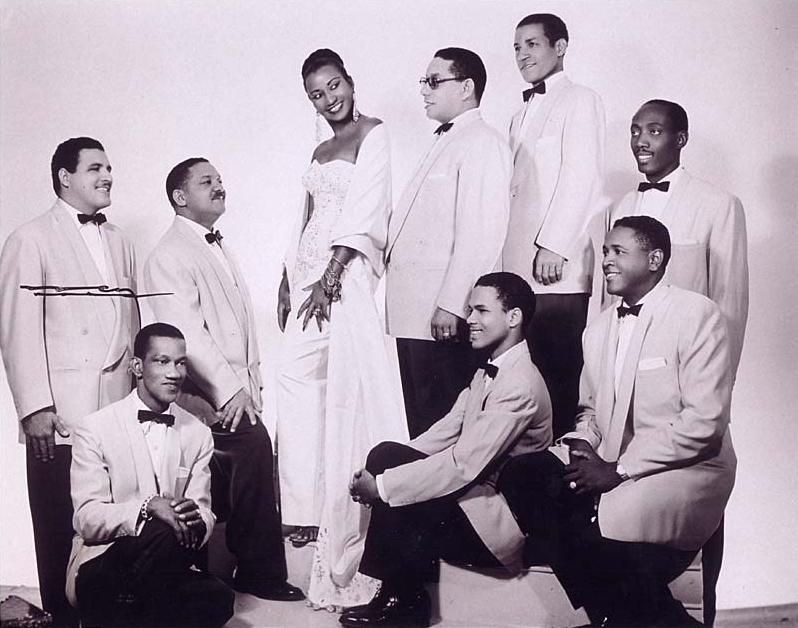
The golden era arrived in the late 1940s with the addition of legendary vocalists like Miguelito Valdés and Myrta Silva. By 1950, Celia Cruz joined the fold, marking the beginning of the band's most famous period. The group navigated political upheaval following the Cuban Revolution, relocating to New York City in 1965. Despite the exile and changing musical trends, they maintained their integrity and continued recording for labels like RCA Victor and later Fonovisa.
Former Members

Celia Cruz (Úrsula Hilaria Celia de la Caridad Cruz Alfonso)
Lead Vocalist · 1950–1965
Miguelito Valdés (Miguel Valdés)
Lead Vocalist · 1940s
Daniel Santos (Daniel Santos Rivera)
Lead Vocalist · Late 1940s–Early 1950s
Myrta Silva (Myrta Silva)
Lead Vocalist · 1940s
Rogelio Martínez (Rogelio Martínez)
Leader, Guitarist, Composer · 1930s–2016
Musical Style
La Sonora Matancera evolved through distinct eras that mirror the history of Cuban music itself. The early years focused on son and danzón with smaller instrumentation. The 1940s brought a shift toward the mambo and cha-cha-chá, utilizing a full brass section that defined the big band sound. This period established their signature style: a driving rhythm section paired with soaring melodies.
The 1950s and 60s saw the refinement of the salsa sound. Celia Cruz's powerful voice became the centerpiece, blending Afro-Cuban rhythms with jazz harmonies. After moving to the United States, the band adapted to the Latin Boogaloo movement while retaining their traditional roots. Modern performances balance classic repertoire with contemporary arrangements, keeping the music fresh for new audiences without losing its historical essence.
Discography
| Title | Year |
|---|---|
| La Sonora Matancera | 1940 |
| Celia Cruz con La Sonora Matancera | 1960 |
| El Rey de la Música | 1965 |
| Viva la Sonora | 1975 |
| La Sonora Matancera: 75 Años | 1999 |
| Caramelos | 2023 |
Tours
Global Anniversary Tour
2024 · 15 shows
Latin Heritage Festival Circuit
2023 · 20 shows
Cultural Impact
This group served as a cultural bridge between Cuba and the world during a time of intense political isolation. They were instrumental in popularizing Cuban music globally, introducing the mambo and cha-cha-chá to international audiences who had never heard these rhythms before. Their work helped establish salsa as a dominant force in Latin music.
Celia Cruz's tenure with the band cemented her status as a symbol of Cuban exile and resilience. Her catchphrase "¡Azúcar!" became synonymous with the group's energetic spirit. The band also functioned as a training ground for countless Latin American musicians, many of whom went on to form their own successful ensembles. Their longevity proves the enduring appeal of traditional Cuban dance music.
Fandom Culture
La Sonora Matancera does not have a formal fandom with a specific name or lightstick. Their audience consists of global fans of Latin music, salsa enthusiasts, and the Cuban diaspora. Fan traditions center on attending live concerts, sharing classic recordings on social media, and participating in cultural festivals dedicated to Cuban heritage. The community celebrates the band's anniversaries and honors the legacy of their legendary vocalists through tribute events.
Awards Won (16)
La Sonora Matancera and its members have won numerous prestigious awards. Celia Cruz received induction into the Rock & Roll Hall of Fame in 2026 as an Early Influence. The band has secured multiple Grammy Awards including Best Tropical Latin Album. They also earned the Latin Grammy Lifetime Achievement Award for their contributions to Latin music.
Best Tropical Latin Album
for: Various Releases
Lifetime Achievement
for: Career Contribution
Legacy Award
for: Career Contribution
Early Influence
for: Celia Cruz with La Sonora Matancera
Milestones
Formation in Matanzas, Cuba
Rogelio Martínez becomes leader
Celia Cruz joins the band
Relocation to New York City
75th Anniversary celebration
Celia Cruz inducted into Rock & Roll Hall of Fame
Trivia
The band has recorded over 4,000 songs, making it one of the most prolific recording acts in history., Rogelio Martínez led the group for more than 50 years, from the 1930s until his death in 2016., Celia Cruz joined the band in 1950 and left in 1965, a period considered the golden era of their career., The group was one of the first to sign with RCA Victor, releasing thousands of records over several decades., They are recognized by Guinness World Records for being one of the longest-running musical groups in history.
Keywords
Sources
Quick Facts
- Formed
- +1924
- Origin
- Matanzas
- Label
- RCA
- Status
- Active
Group Info
- Formed
- +1924
- Debut
- 1924
- Debut Song
- Traditional Son repertoire (Live at Teatro Principal)
- Origin
- Matanzas, Cuba
- Company
- Independent / Martínez Family
- Label
- RCA Victor, Fonovisa, Sony Music Latin, EGREM
- Status
- Active
Social Media
Also Known As
Join the community
fans discussing