 France
“An unflinching, beautiful testament to the endurance of love against the ravages of history. La Bola Negra is a triumph of cinema.”
Manohla Dargis
The New York Times

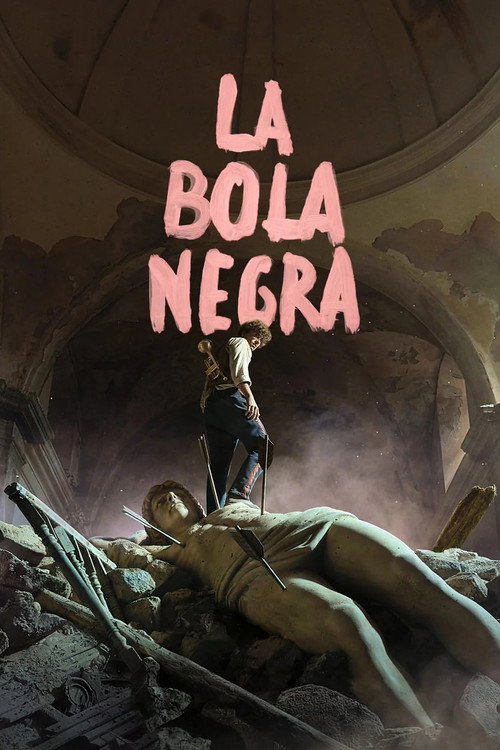
Set against the volatile backdrop of 1930s Spain, La bola negra unfolds as a triptych of lives entangled by history and desire. The film traces the arcs of three gay men across distinct eras: the intellectual fervor of the Second Republic in 1932, the brutal trench warfare of the Civil War in 1937, and the quiet reckoning of modern-day Madrid. Director Javier Ambrossi and co-director Javier Calvo, known collectively as Los Javis, construct a narrative where personal intimacy becomes an act of political defiance.
The story weaves through decades to show how the scars of the past echo into the present. In one timeline, a young couple faces the threat of execution for their love; in another, a soldier hides his true self to survive the fascist army; and in the third, an artist uncovers a family secret buried by generations of silence. This non-linear structure forces the audience to confront the continuity of queer struggle in Spain, from the fall of the Republic to contemporary society.
Stream
Availability and pricing can change. Confirm on the provider's site before purchasing.
The narrative opens in 1932 Madrid, a city buzzing with the energy of the Second Spanish Republic before the storm hits. Sebastián, a passionate intellectual played by Guitarricadelafuente, falls deeply for Rafael, a charismatic man portrayed by Miguel Bernardeau. Their romance flourishes amidst the vibrant cultural scene of pre-war Spain, where art and politics intertwine. However, the idyllic nature of their relationship is fragile. As political tensions escalate toward the right, the couple finds themselves navigating a landscape where their love is increasingly dangerous. The state begins to close in, turning what was once a private affair into a matter of life and death.
Jumping five years forward to 1937, the setting shifts to the grim reality of the Spanish Civil War. Alberto, played by Carlos González, serves as a young soldier conscripted into the fascist army. The war has shattered families and nations, forcing individuals to choose between survival and authenticity. Alberto must navigate the paranoia of military life while hiding his sexuality from comrades who would likely execute him if they knew the truth. His journey is marked by isolation and the constant fear of discovery. He encounters a mysterious figure whose past is shrouded in secrets, creating a tense dynamic where trust is a luxury few can afford. This section highlights the physical and psychological toll of the conflict, showing how the war demands that people bury their true selves to stay alive.
Intertwined with these historical threads is the modern-day storyline following Juan Pablo, portrayed by Julio Torres. A successful but emotionally guarded artist, Juan Pablo feels disconnected from his roots until he discovers a connection to the past. His life changes when he learns about his grandfather's legacy and the hidden history of his family. Alongside him are key figures like Nené Romero, played by Penélope Cruz, a matriarchal figure who holds the keys to the family's hidden history, and Isabelle Durand, played by Glenn Close, representing the international dimension of the struggle for LGBTQ+ rights. The central conflict remains the clash between personal desire and oppressive political forces. Whether facing the threat of execution in the 1930s or social stigma in later decades, the characters must constantly negotiate their identities in a society that refuses to accept them. The film builds towards a climactic realization of how the choices made in the past echo loudly in the present, challenging the audience to consider what it truly means to inherit a legacy of pain and love.
As the timelines converge, the characters' fates become inextricably linked, revealing a complex web of relationships that span decades. The story explores how love persists even in the face of death, how memory is preserved through generations, and how the scars of the past continue to shape the present. Through its rich storytelling, the film offers a poignant meditation on the human spirit's capacity to endure and find connection amidst chaos.
Official Trailer
Critical Consensus
A masterfully crafted epic that transcends its historical setting to deliver a universal story of love and resilience. Calvo and Ambrossi have created a visually stunning and emotionally devastating portrait of queer life in Spain, anchored by powerhouse performances and a haunting score.
“An unflinching, beautiful testament to the endurance of love against the ravages of history. La Bola Negra is a triumph of cinema.”
Manohla Dargis
The New York Times
“Calvo and Ambrossi weave a tapestry of desire and despair that feels both intimately personal and historically significant. A monumental achievement.”
David Rooney
The Hollywood Reporter
“A bold, passionate epic that doesn't shy away from the darkest corners of the Spanish Civil War while celebrating the light of queer love. Essential viewing.”
David Ehrlich
IndieWire
Guitarricadelafuente
Sebastián
Miguel Bernardeau
Rafael
Carlos González
Alberto
Julio Torres
Juan Pablo
Penélope Cruz
Nené Romero
Glenn Close
Isabelle Durand
Lorenzo Zurzolo
Unknown Role
Antonio de la Torre
Unknown Role
Directors
Javier Calvo, Javier Ambrossi
Writers
Javier Calvo, Javier Ambrossi, Alberto Conejero, Federico García Lorca
Composer
Raül Refree
Cinematographer
Gris Jordana
Producers
Javier Calvo, Javier Ambrossi, Jorge Pezzi
Cannes Film Festival (2026)
Competition: Selected
Toronto International Film Festival (2026)
Best International Feature: Won
Academy Awards (2027)
Best International Feature Film: Nominated
Join the community
fans discussing