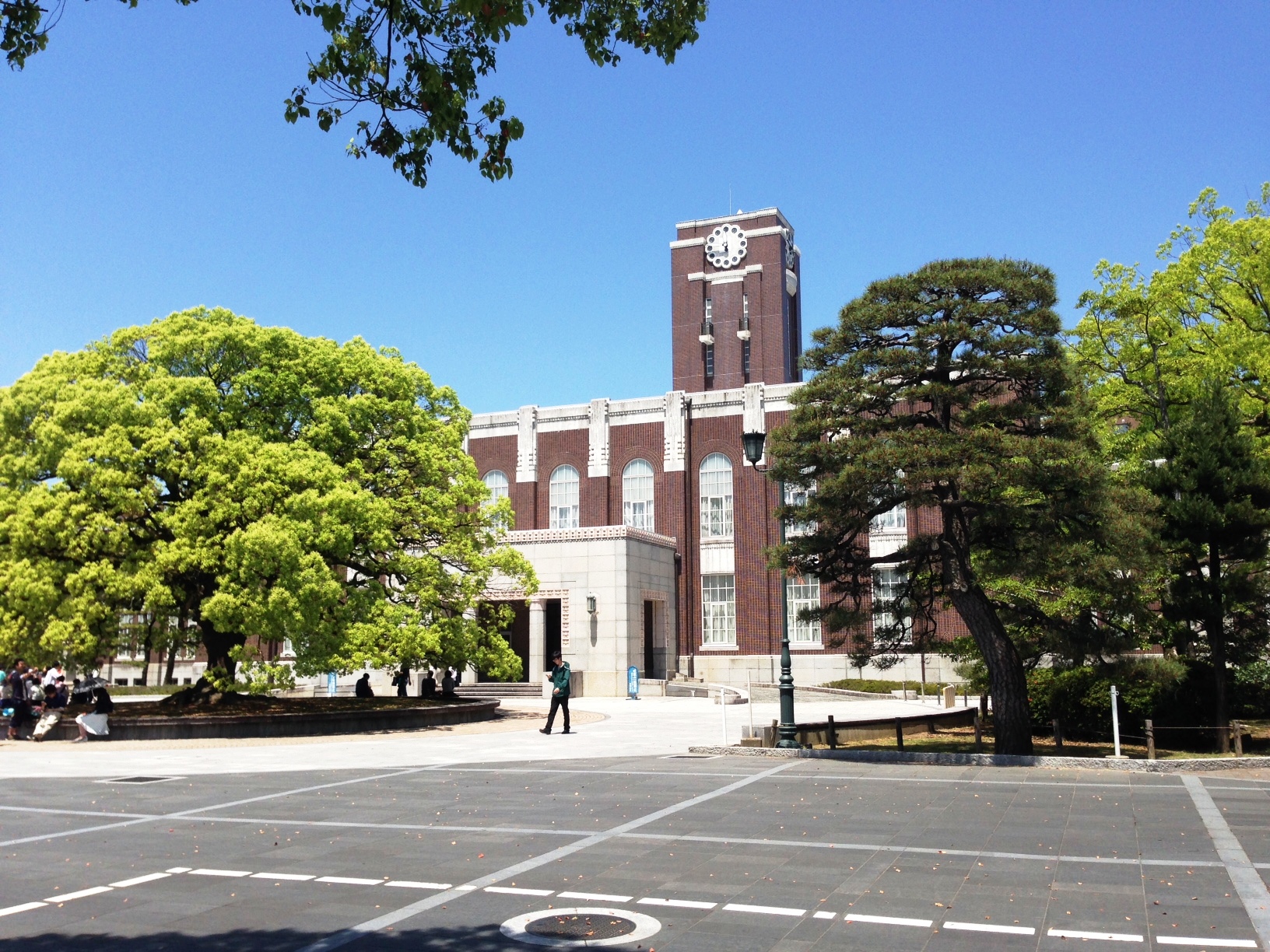
Kyoto University
 Japan
Japan"Japan's second-oldest Imperial University, a global leader in research and Nobel Prize recipients"
About
Kyoto University, known in Japanese as Kyōto daigaku or Kyōdai, stands as one of Japan's most prestigious institutions of higher learning. Founded in 1897, it holds the distinction of being the country's second-oldest university and one of the original Imperial Universities, a group that once represented the pinnacle of academic achievement in the empire. Today, it operates as a national research university, blending a deep historical legacy with a forward-looking approach to education and discovery.
The university's sprawling academic enterprise includes ten undergraduate faculties, eighteen graduate schools, and thirteen research institutes, covering everything from humanities and law to engineering and medicine. Its activities are spread across three main campuses in Kyoto: Yoshida, the historic heart; Uji, known for its research facilities; and Katsura, a hub for engineering and technology. The Kyoto University Library Network, a consortium of campus libraries, supports students and faculty with vast collections. Over the years, KyotoU has produced a remarkable number of Nobel laureates and groundbreaking researchers, cementing its reputation as a global center for intellectual excellence.
As of 2026, the university is certified as a University for International Research Excellence, a designation that brings enhanced state aid and underscores its commitment to pushing the boundaries of knowledge. Its research spans from fundamental physics to regenerative medicine, and its international programs, such as the Kyoto iUP, attract students from around the world.
Mission
Kyoto University's mission is to foster free and creative thinking, grounded in a spirit of academic independence. The university aims to contribute to society through world-class research and education, nurturing leaders who can address global challenges. Its guiding principles emphasize the pursuit of truth, the cultivation of intellectual curiosity, and the promotion of international collaboration.
History
Kyoto University was established in 1897 as Kyoto Imperial University, Japan's second Imperial University, during the Meiji era's push to modernize education. The founding was part of a national effort to create institutions that could rival Western universities. From its inception, the university emphasized academic freedom and independence, a spirit that has persisted through its history.
In the early 20th century, the university expanded its faculties and research institutes, becoming a hub for scientific discovery. The post-war period saw its reorganization as Kyoto University under the national university system. The late 20th century brought international recognition, with several Nobel Prizes awarded to faculty and alumni, including Hideki Yukawa in 1949 and Kenichi Fukui in 1981.
The 21st century has been marked by continued excellence, particularly in stem cell research and immunology. Shinya Yamanaka's discovery of induced pluripotent stem cells in 2006 earned the Nobel Prize in 2012, and Tasuku Honjo's work on cancer immunotherapy followed in 2018. In 2026, the university was certified as a University for International Research Excellence, securing enhanced government funding for its research initiatives.
Subdivisions
Faculty of Letters
Offers programs in philosophy, history, literature, and linguistics.
Faculty of Science
Covers mathematics, physics, chemistry, biology, and earth sciences.
Faculty of Medicine
Provides medical education and research, including the university hospital.
Faculty of Engineering
Focuses on civil, mechanical, electrical, and other engineering disciplines.
Institute for Integrated Cell-Material Sciences (iCeMS)
Interdisciplinary research institute bridging chemistry and biology.
Notable People
Hideki Yukawa
Alumnus, Professor · 1907-1981
Nobel Prize in Physics (1949) for predicting the meson
Shinichiro Tomonaga
Alumnus, Professor · 1906-1979
Nobel Prize in Physics (1965) for quantum electrodynamics
Kenichi Fukui
Alumnus, Professor · 1918-1998
Nobel Prize in Chemistry (1981) for frontier orbital theory
Susumu Tonegawa
Alumnus · 1939-2026
Nobel Prize in Physiology or Medicine (1987) for antibody diversity
Ryōji Noyori
Alumnus, Professor · 1938-
Nobel Prize in Chemistry (2001) for chirally catalyzed hydrogenation
Makoto Kobayashi
Alumnus · 1944-
Nobel Prize in Physics (2008) for CP violation
Toshihide Maskawa
Alumnus · 1940-2021
Nobel Prize in Physics (2008) for CP violation
Shinya Yamanaka
Alumnus, Professor · 1962-
Nobel Prize in Physiology or Medicine (2012) for induced pluripotent stem cells
Tasuku Honjo
Alumnus, Professor · 1942-
Nobel Prize in Physiology or Medicine (2018) for cancer immunotherapy
Milestones
1897
Founded as Kyoto Imperial University
1949
Hideki Yukawa becomes Japan's first Nobel laureate
2012
Shinya Yamanaka wins Nobel Prize for iPS cells
2018
Tasuku Honjo wins Nobel Prize for cancer immunotherapy
2026
Certified as University for International Research Excellence
Departments
Sources
Organization Info
- Founded
- 1897
- Headquarters
- Kyoto
- Country
- Japan
- President
- Nagahiro Minato
- Type
- University
- Nobel Laureates
- 11
- Campuses
- Yoshida, Uji, Katsura
Official Website
www.kyoto-u.ac.jp/en
Join the community
fans discussing