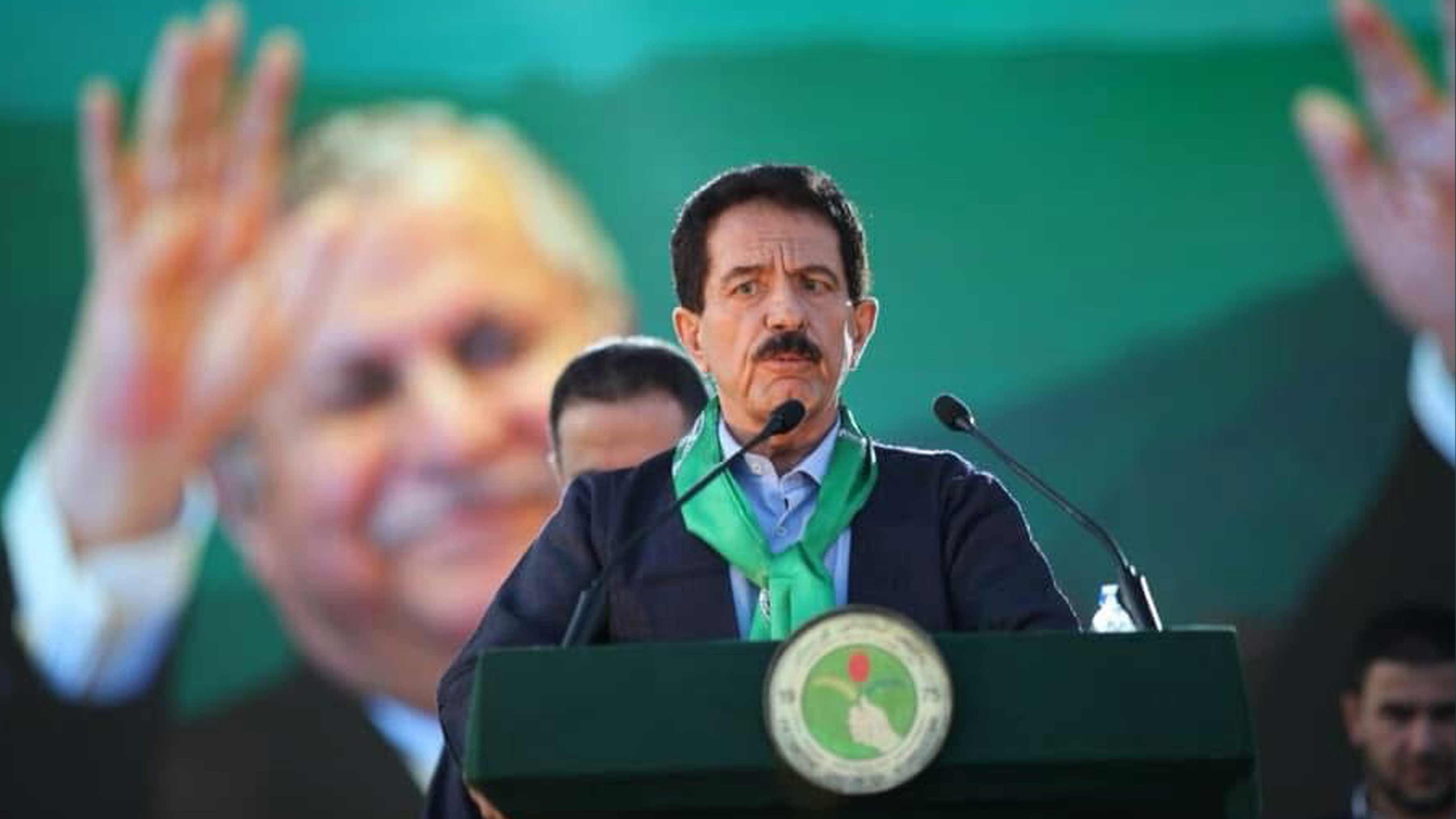
Kosrat Rasul Ali
 Iraq
IraqAlso known as: Kosret Rasoul Ali, Kosrat Rasul
Birthday
January 1, 1952
Birth Sign
Capricorn
Birthplace
Erbil, Iraqi Kurdistan
Age
74 years old
About
Kosrat Rasul Ali is an Iraqi Kurdish politician and former Peshmerga commander who has spent over five decades at the center of the Kurdish national movement. Born in Erbil in 1952, he co-founded the Patriotic Union of Kurdistan (PUK) in 1975 and went on to serve as Prime Minister of the Kurdistan Region from 2005 to 2006, then as Vice President from 2012 to 2019. Today he leads the party's Supreme Political Council, making him one of the most influential figures in Kurdish politics.
Ali's career bridges the armed struggle of the 1960s and 1970s with the era of Kurdish autonomy and state-building. He is widely respected for his role in the 1991 uprising that liberated Erbil and for his leadership in the Battle of Kore Mountain. Even as his health has declined in recent years, he remains a symbolic anchor for the PUK, issuing statements on unity and commemorating the party's milestones.
Early Life & Background
Kosrat Rasul Ali was born in Erbil in 1952, into a region that was already simmering with Kurdish nationalist aspirations. As a young man, he joined the Peshmerga, the Kurdish guerrilla forces fighting against the Iraqi government. His early years were shaped by the brutal campaigns of the Ba'athist regime, and he quickly rose through the ranks as a capable and committed fighter.
By the 1970s, Ali had become a trusted lieutenant in the Kurdish resistance. When the Kurdish movement fractured after the 1975 Algiers Agreement between Iraq and Iran, he was among those who regrouped to form a new political entity. His military experience and organizational skills made him a natural leader, and he played a key role in the March 1991 uprising that followed the Gulf War, helping to liberate Erbil from Saddam Hussein's forces.
His early life was defined by sacrifice and struggle, laying the groundwork for a political career that would see him shape the future of Iraqi Kurdistan.
Career Growth
Kosrat Rasul Ali's breakthrough came in 1975 when he co-founded the Patriotic Union of Kurdistan alongside Jalal Talabani. The PUK would become one of the two dominant Kurdish parties, and Ali was instrumental in its military wing. In April 1991, he led Peshmerga forces to a decisive victory at the Battle of Kore Mountain, a turning point in the Kurdish liberation struggle.
After the establishment of the Kurdistan Region's autonomous government, Ali transitioned to politics. He served as Prime Minister from 2005 to 2006, overseeing the region's early development. From 2012 to 2019, he was Vice President under Massoud Barzani and later Nechirvan Barzani. In 2017, he wrote a CNN op-ed advocating for Kurdish independence after the referendum, and an Iraqi court ordered his arrest for calling Iraqi troops 'occupying forces' in Kirkuk. Since the death of Jalal Talabani, Ali has headed the PUK's Supreme Political Council, guiding the party through leadership transitions and regional crises.
Career Timeline
Public Image & Style
Kosrat Rasul Ali is seen as a revolutionary elder statesman, a veteran Peshmerga who became a political leader. PUK media portrays him as a unifying figure, emphasizing his role in the party's founding and the liberation of Erbil. His public statements are formal and often focused on unity, whether marking the PUK's anniversary or offering Eid greetings.
For Kurdish nationalists, Ali embodies the endurance of the movement. He is not a celebrity in the entertainment sense, but his 'fandom' consists of PUK supporters who view him as a symbol of resilience. His image is that of a disciplined, dedicated leader who has weathered decades of conflict and political change.
Fame & Fandom (iFAMOUS Rankings)
Kosrat Rasul Ali commands a following defined not by viral trends or merchandise, but by the weight of historical endurance. His supporters are not a pop-culture fandom with chants and billboards; they are a political base rooted in the narrative of Kurdish sovereignty. The stories told about him focus on the 1986 liberation of Erbil, the formation of the second cabinet in 1993, and his unwavering alliance with Jalal Talabani. These are the moments that bind his audience to his legacy. In 2017, his op-ed for CNN declaring that Kurds had won the moral argument resonated deeply, cementing his status as an ideological pillar rather than a celebrity icon. There is no organized fanbase with a formal name, nor any documented rituals or campaigns specific to his personal brand. His interaction with the public remains strictly within the realm of political leadership and administrative duty. While he lacks the chaotic energy of entertainment stars, his influence permeates the region's identity. He represents a continuity of struggle that spans decades, from the Peshmerga trenches to the halls of government. As of August 2026, Kosrat Rasul Ali has been evaluated by iFANN's Global Fame Engine but does not currently hold a placement in the published rankings (Global Top 1,000 or a Top-100 scope list). This evaluation reflects his stature as a regional statesman whose fame is concentrated geographically and politically rather than globally distributed.
Interesting Facts and Legends
Kosrat Rasul Ali has maintained a long-standing feud with KDP leader Massoud Barzani since the civil war of the 1990s, where he reportedly planned attacks on Barzani's territory in Salahaddin. His resilience was tested by severe health crises, including a hospitalization in October 2024 and an intensive care stay in Germany later that year, yet he returned to lead the party. In 2017, he authored a rare direct appeal to Western audiences via CNN, asserting that the Kurdish people had won the moral argument for independence. His son, Darbaz, has increasingly taken on a public diplomatic role, meeting with officials in Iraq and Iran on behalf of the PUK. Beyond these facts, a central pillar of his political lore is the March 19, 1986, operation to liberate Erbil from Ba'athist rule. This military victory is frequently commemorated by the PUK as a defining moment of resistance that established the foundation of modern Kurdish autonomy. Another legendary chapter involves his appointment in 1993 to form the second cabinet, a critical move that stabilized the region during its early years of self-governance. Supporters also revere his close association with Jalal Talabani, viewing their partnership as the backbone of the independence movement. These events are not just history; they are the stories fans tell newcomers first regarding his contribution to Kurdish statehood.
Notable Quotes
“The Kurdish people have won the moral argument – the world should embrace our independence.”
“The PUK revived the revolution during the darkest times.”
“The Battle of Kore Mountain revived hope among the people of Kurdistan.”
Family & Personal Life
Kosrat Rasul Ali is a private family man, and little is known about his wife or other relatives. His son, Darbaz Kosrat Rasul, has become a public figure in his own right, serving as a member of the PUK Political Bureau and head of the party's Relations Bureau. Darbaz has represented the PUK in meetings with the Coordination Framework in Baghdad and with Iranian officials, stepping in as his father's health has declined.
The family's life is deeply intertwined with the PUK, and their loyalty to the party is a defining feature. Despite the lack of public detail, it is clear that Ali's family shares his commitment to the Kurdish cause.
Notable Connections
Kosrat Rasul Ali is closely associated with Jalal Talabani, the co-founder of the PUK, and Bafel Jalal Talabani, Talabani's son and current party leader. He also has a complex relationship with Massoud Barzani, the KDP leader, and has worked alongside Nechirvan Barzani. His son Darbaz Kosrat Rasul has become a key figure in the party's external relations.
Relationships & Dating History
Kosrat Rasul Ali has kept his personal life remarkably private, and no public information exists about his romantic relationships or marriage. He is known to have at least one son, Darbaz, who has become involved in PUK politics. As of 2026, his marital status is unknown, and there are no reports of any romantic partnerships.
Given his age and health challenges, his family has rallied around him, with his son taking on public duties. The lack of public detail is a testament to his desire for privacy in a region where political figures often keep their families out of the spotlight.
Salary, Net Worth In 2026
$10 Million
iFANN Editorial Team estimate
Kosrat Rasul Ali's net worth is not publicly documented, as is common for political figures in Iraqi Kurdistan. His income likely stems from his long tenure in high-ranking government and party positions, including Prime Minister and Vice President, as well as potential business interests. Per iFANN's editorial analysis, Kosrat Rasul Ali is estimated to have a net worth of $10 Million as of 2026. His wealth is modest compared to Western politicians, reflecting the region's economic conditions. There is no evidence of significant personal assets, and his focus has been on political and military leadership rather than personal enrichment.
Awards & Accolades
View 2 records, honours and achievementsKnown For
Prime Minister of Kurdistan Region
2005-2006 · Prime Minister
Vice President of Kurdistan Region
2012-2019 · Vice President
Head of PUK Supreme Political Council
2020-present · Leader
Battle of Kore Mountain
1991 · Peshmerga Commander
Keywords
Sources
Quick Facts
- Profession
- Politician, former Peshmerga commander
- Born
- 1952
- Birthplace
- Erbil, Iraqi Kurdistan
- Gender
- Male
- Birth Sign
- Capricorn
- Children
- Darbaz Kosrat Rasul
Personal Details
- Children
- Darbaz Kosrat Rasul
Frequently Asked Questions
Is Kosrat Rasul Ali alive?
What is Kosrat Rasul Ali's net worth in 2026?
Who is the leader of the PUK now?
Was Kosrat Rasul Ali prime minister?
Is Kosrat Rasul Ali related to Darbaz Kosrat?
Similar People
Join the community
fans discussing