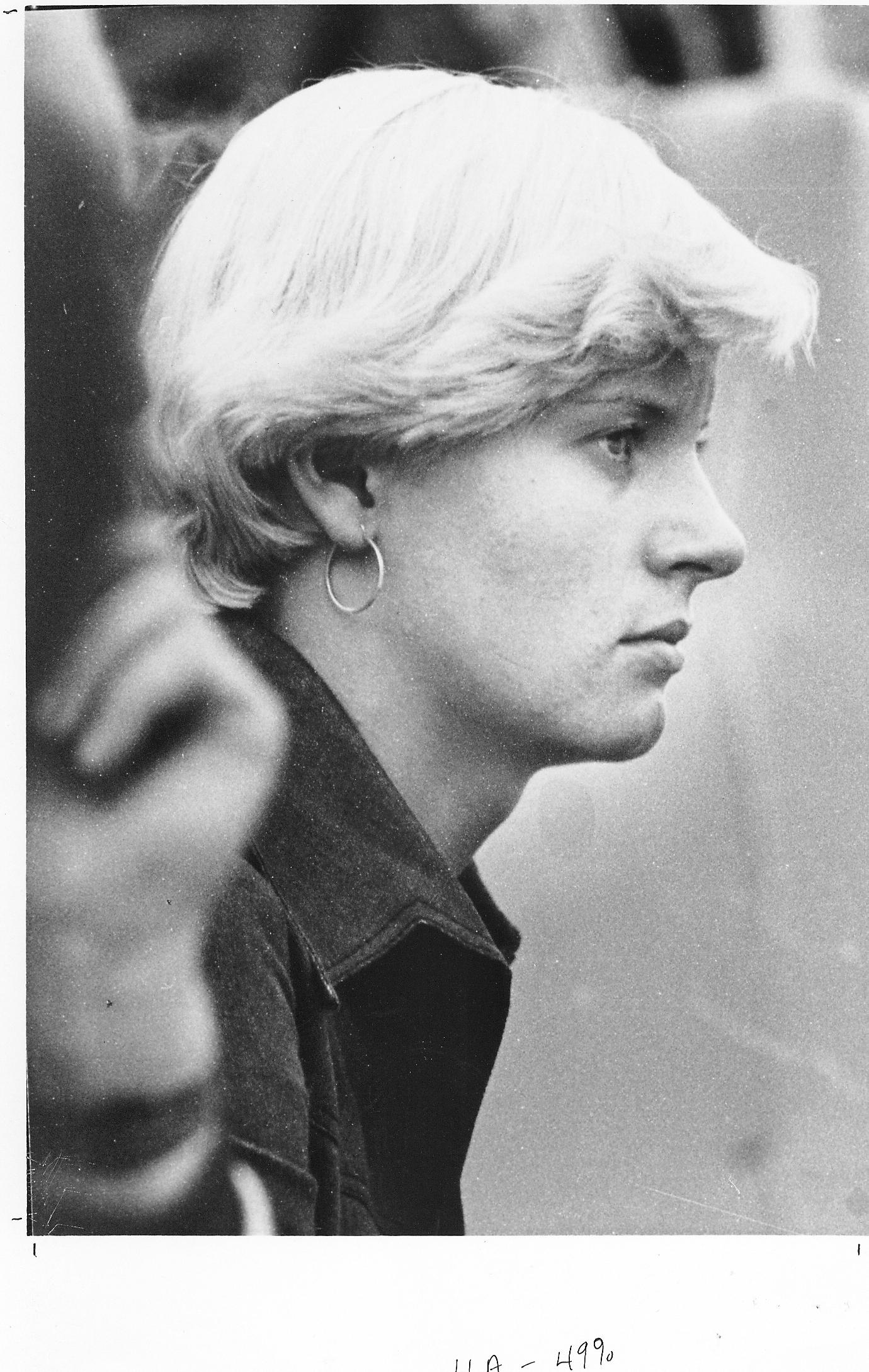
Kornelia Ender
 Germany
Also known as: Kornelia Ender, Wundermädchen
Birthday
October 25, 1958
Birth Sign
Scorpio
Birthplace
Plauen, East Germany
Age
67 years old
About
Kornelia Ender is a retired East German swimmer who became the first woman to win four gold medals at a single Olympic Games, achieving this at the 1976 Montreal Olympics. Her career, marked by extraordinary speed and record-breaking performances, was later overshadowed by revelations of state-sponsored doping in East German sports. Today, she is remembered both for her athletic brilliance and for her candid acknowledgment of the doping system that shaped her era.
Ender's achievements include setting 29 world records across freestyle and butterfly events between 1973 and 1976. She remains a significant figure in swimming history, with her Montreal quadruple gold still a benchmark for female swimmers. As of 2026, she lives in Germany with her husband, Steffen Grummt, and has largely stayed out of the public eye since retiring.
Early Life & Background
Kornelia Ender was born on October 25, 1958, in Plauen, a town in the eastern part of Germany that was then part of the German Democratic Republic. She grew up in a country where elite sports were heavily promoted as a matter of national pride, and her talent in the pool was spotted early. By age 13, she was already competing at the highest level, making her Olympic debut at the 1972 Munich Games. There, she won three silver medals, a remarkable feat for someone so young, and it was clear that she was a rising star.
Her early training was intense, part of the GDR's rigorous sports system that identified promising children and subjected them to demanding regimens. Ender's natural ability in freestyle and butterfly events soon translated into world-class times. In 1973, at just 14, she set her first world record, and over the next few years, she would go on to set a total of 29 world records, earning her the nickname "Wundermädchen" (wonder girl) in the East German press. These early successes set the stage for her historic performance in Montreal, but they also came at a cost, as the doping program that would later taint her career had already begun.
Career Growth
Ender's breakthrough came at the 1976 Montreal Olympics, where she delivered one of the most dominant performances in swimming history. She won gold in the 100-meter freestyle, 200-meter individual medley, 100-meter butterfly, and the 4x100-meter freestyle relay, setting a world record in each event. This made her the first woman to win four gold medals at a single Olympics, a feat that had never been achieved before. At 17, she was at the peak of her powers, and her times were so fast that they sparked immediate suspicion among rival swimmers, particularly American Shirley Babashoff, who later said she believed Ender and other East Germans were doping.
After Montreal, Ender continued to compete, but her career took a turn in 1977 when she refused to take a specific steroid, chlorodehydromethyltestosterone. This led to her exclusion from the national team by Manfred Ewald, the head of GDR swimming. She retired from competitive swimming shortly after, at the age of 19. In the 1990s, as the full extent of East Germany's doping program came to light, Ender spoke publicly about her experiences, confirming that she had been injected with performance-enhancing drugs without full knowledge of what they were. Her honesty about the doping has been seen as a brave act, even as it cast a shadow over her own achievements.
Career Timeline
Public Image & Style
Kornelia Ender's public image is a complex one, shaped by her athletic brilliance and the doping scandal that later engulfed her. In the 1970s, she was celebrated as a national hero in East Germany, a symbol of the GDR's sporting superiority. Her blonde hair and youthful appearance made her a favorite of the media, and she was often featured in propaganda films and magazines. Internationally, she was seen as a formidable rival, but also as a product of a suspicious system. After the fall of the Berlin Wall, her image shifted as she became a whistleblower of sorts, admitting to doping. This has led to a mixed legacy: some view her as a victim of the system, while others criticize her for not speaking out sooner. Today, she is remembered with a sense of ambivalence, her records still standing but forever questioned.
Fame & Fandom (iFAMOUS Rankings)
Kornelia Ender currently holds no placement in the iFANN Global Top 1,000 rankings or any Top-100 scope list, a status confirmed by the August 2026 evaluation of the iFANN Global Fame Engine. While her athletic feats once defined an era of sporting dominance, she does not currently command a ranked position among the world's most famous figures in the contemporary digital landscape. This absence reflects the unique trajectory of her legacy, which remains anchored in historical sports records rather than modern celebrity metrics. Unlike current stars who drive daily search traffic and social media engagement, Ender's public profile is characterized by a quiet reverence for her past achievements rather than active fandom participation. There is no documented name for a fanbase dedicated to her, nor are there organized campaigns, birthday tributes, or specific rituals associated with her name in the way modern pop culture often generates them. The lack of a formal community stems from her retirement decades ago and the political isolation of East Germany during her prime, which prevented the development of the interactive fan structures seen today. Her story is now primarily studied within the context of Olympic history and the GDR doping scandal, attracting interest from historians and sports analysts rather than a devoted following that interacts through streaming platforms or fan-funded projects. Consequently, while her name carries immense weight in swimming history, it does not translate into the measurable fame signals required for a ranking placement in the current global hierarchy.
Interesting Facts and Legends
Ender earned the nickname "Wundermädchen" (wonder girl) from East German media early in her career, a title that stuck as she dominated the pool. She was famous for a distinctive racing style, often surging forward in the final meters to snatch victory from behind. Outside the water, those who knew her noted a dry sense of humor that helped her manage the intense pressure of international competition. One lesser-known detail about her training regimen is that she was among the first swimmers to utilize pace clocks, a method that later became standard practice across the sport. She also stands as one of only three female swimmers to win a total of eight Olympic medals during the 1970s. A legendary moment in her career occurred at the 1976 Montreal Olympics, where she became the first woman in history to win four gold medals in a single Games. In a feat described as a "double" before the term was common, she equaled her own world record of 1:00.13 in the 100m freestyle just 27 minutes after winning another event. Over a span of four years starting at age 14, she set up to 29 world records across freestyle and butterfly events, cementing a legacy that is now inextricably linked to the complex history of state-sponsored doping in East German sports.
Family & Personal Life
Kornelia Ender was born to a working-class family in Plauen; her father was a factory worker, and her mother stayed home to raise Kornelia and her two siblings. The family was not particularly athletic, but they supported her early interest in swimming. Ender has spoken little about her parents publicly, but she has mentioned that they were proud of her achievements, even as they were wary of the demands of the sports system. She has one brother and one sister, who have stayed out of the spotlight. As of 2026, Ender is married to Steffen Grummt, a former East German sports official, and the couple lives in a quiet suburb of Berlin. She has no children, and the couple enjoys a private life away from the media.
Notable Connections
Kornelia Ender's career intersected with several notable figures in swimming. Her former husband, Roland Matthes, was a fellow East German Olympic champion in backstroke. Manfred Ewald, the head of GDR swimming, played a pivotal role in her exclusion from the team. American swimmer Shirley Babashoff was her chief rival in Montreal and later spoke out about the doping that she believed cost her medals. Ender's current husband, Steffen Grummt, is a former sports official who has supported her post-career life.
Relationships & Dating History
Kornelia Ender's personal life has been relatively quiet. She married fellow East German swimmer Roland Matthes in 1978, a union that was seen as a meeting of two swimming royalty. The couple divorced in 1982, and Ender later married Steffen Grummt, a former sports official, in the early 1990s. She has been with Grummt since, and they live together in Berlin. As of 2026, she is married to Grummt, and the couple has no children.
- MarriedRoland Matthes1978 - 1982Married fellow Olympic swimmer Roland Matthes; divorced in 1982.
- MarriedSteffen Grummt1993 - presentCurrentMarried former sports official Steffen Grummt; current husband.
Salary, Net Worth In 2026
$2 Million
iFANN Editorial Team estimate
iFANN currently estimates Kornelia Ender's net worth at $2 Million as of 2026. During her competitive career, she received modest stipends from the East German state, as athletes were prohibited from profiting personally from their success. After retiring from competition, she worked as a swimming coach and later held a role in sports administration, though she has largely maintained a private life since then. Her income in recent years has been generated through speaking engagements and appearances at swimming events, where she is frequently invited to share her personal story. She also receives a small pension from the German government for her athletic achievements, though this amount is not lavish. The figure of $2 Million reflects her modest lifestyle and the absence of commercial endorsements that were unavailable to her during her active years.
Awards Won (6)
Kornelia Ender's competitive career brought her numerous honors, most notably her four Olympic gold medals in 1976. She also won multiple gold medals at the World Aquatics Championships, cementing her status as one of the greatest swimmers of her era. While she did not receive formal awards like Oscars or Grammys, her sporting achievements were recognized with national distinctions in East Germany, including being named Sportswoman of the Year.
1976 · 100m Freestyle
1976 Montreal Olympics
1976 · 200m Individual Medley
1976 Montreal Olympics
1976 · 100m Butterfly
1976 Montreal Olympics
1976 · 4x100m Freestyle Relay
1976 Montreal Olympics
1975 · Multiple events
1975 World Aquatics Championships
1973 · Multiple events
1973 World Aquatics Championships
Known For
1976 Montreal Olympics
1976 · Won four gold medals
World Records
1973 · Set 29 world records
Keywords
Sources
Quick Facts
- Profession
- Swimmer
- Born
- October 25, 1958
- Birthplace
- Plauen, East Germany
- Gender
- Female
- Spouse
- Steffen Grummt
- Birth Sign
- Scorpio
Personal Details
- Full Name
- Kornelia Ender
- Spouse
- Steffen Grummt
Frequently Asked Questions
Who is Kornelia Ender?
What is Kornelia Ender's net worth in 2026?
Is Kornelia Ender still alive?
Why is Kornelia Ender famous?
How did Kornelia Ender's doping involvement affect her legacy?
Similar People
Join the community
fans discussing