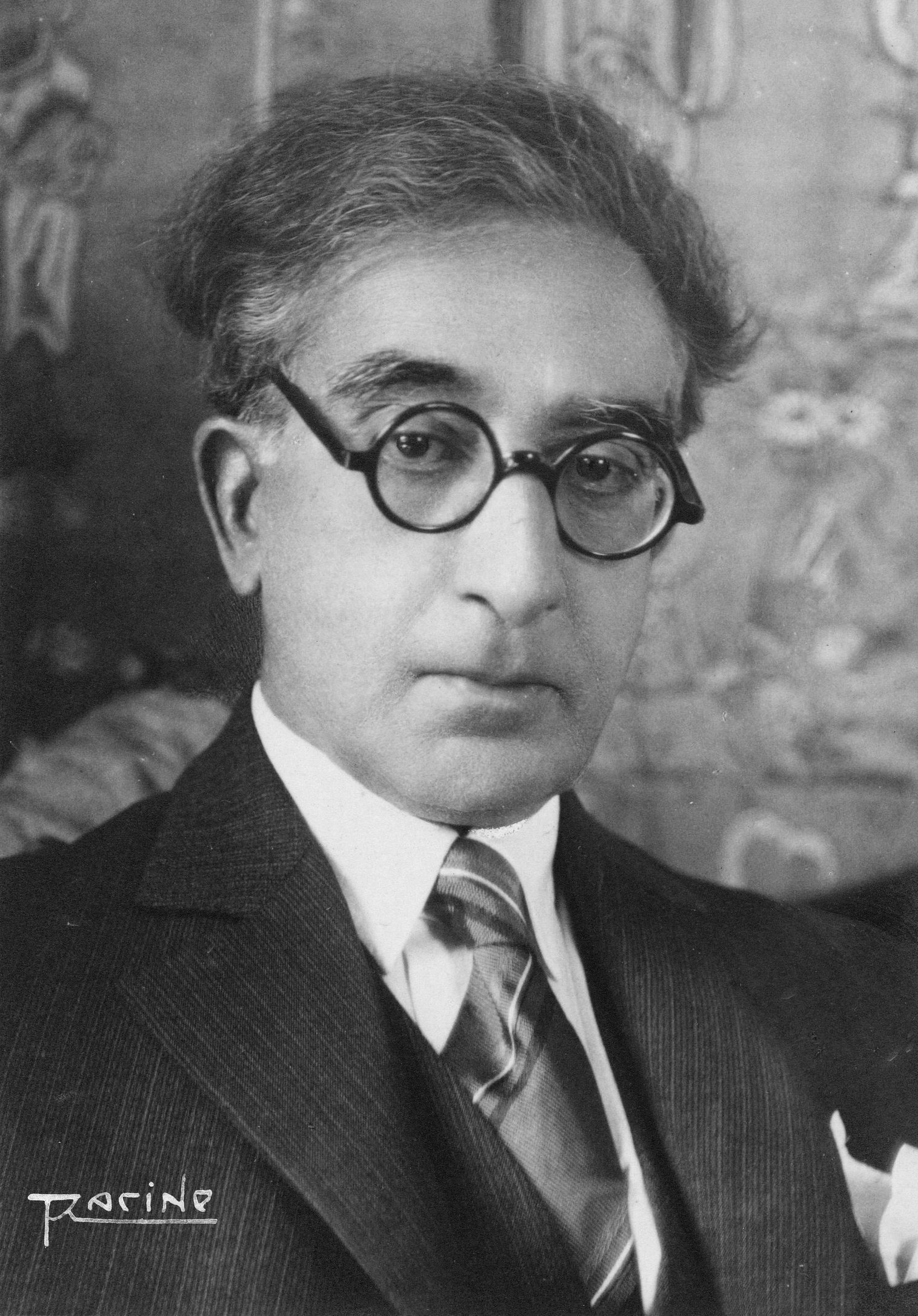
Konstantinos P. Cavafy
 Egypt
EgyptBirthday
+1863-04-29
Birth Sign
Sagittarius
Birthplace
Alexandria
Age
Died at 70
About
Constantine P. Cavafy, born Konstantinos Petrou Kavafis on April 29, 1863, in Alexandria, Egypt, was a Greek poet, journalist, and civil servant. He is widely regarded as one of the most significant figures in modern Greek literature, often hailed as the finest Greek poet of the 20th century. Cavafy's unique voice, blending historical themes with personal and erotic introspection, set him apart from his contemporaries. His work, while deeply rooted in Greek culture, resonates universally, earning him a place among the most influential poets in Western literature. Cavafy passed away on his 70th birthday, April 29, 1933, in his native Alexandria. Cavafy's poetic output was modest yet powerful. His canonical body of work consists of 154 poems, with many more left incomplete or in sketch form, only published posthumously. He famously avoided book publication, preferring to circulate his poems through local newspapers, magazines, and self-printed broadsheets distributed to interested readers. Most of his major poems were written after he turned 40, and his collected poems appeared in print two years after his death. His poetry often revisits historical moments, especially from the Hellenistic and Byzantine eras, and interweaves them with themes of desire, loss, and the passage of time. Cavafy's reputation grew steadily after his death, thanks in part to his friend E. M. Forster, who introduced his work to English-speaking audiences in 1923. Forster famously described Cavafy as "a Greek gentleman in a straw hat, standing absolutely motionless at a slight angle to the universe." His poems, as one translator noted, "hold the historical and the erotic in a single embrace." Works like "Ithaka," "Waiting for the Barbarians," and "The City" have become touchstones of modern poetry, translated into numerous languages and studied worldwide. Cavafy's legacy endures not only in Greek letters but as a vital voice in the broader canon of world literature.
Fame & Fandom
Cavafy never knew a fanbase. He died in 1933, three decades before the first fan club newsletters, decades more before the internet could rally a hashtag. His readers were, and remain, an unorganized, fiercely devoted constellation of poets, translators, and scholars who keep his work alive in university syllabi and slim, well-thumbed editions. There is no formal fandom name; no one calls themselves a 'Cavafian' with any institutional backing. The devotion shows up differently: in the 2023 Athens exhibition of his archive, in the annual April 29 tributes that mark the eerie symmetry of his birth and death on the same date. Leonard Cohen turned 'The God Abandons Antony' into 'Anthem', a quiet, enormous act of fan tribute that outlasted any social media campaign.
That enduring cultural gravity has not gone unnoticed by the systems that track global attention across media coverage, search, and consumption signals. In the iFANN Global Fame Rankings, Cavafy currently stands as the 40th most famous person from Egypt, a placement that slipped one spot from the previous cycle. For a poet who published barely two hundred poems in his lifetime, from a city that no longer holds the empire it once did, that rank speaks to a legacy that refuses to fade.
Interesting Facts and Legends
Cavafy was born on April 29, 1863, and died on April 29, 1933, a coincidence of dates that has become part of his lore, as if his life were bookended by the same line of fate.
He worked for decades as a quiet civil servant in the Egyptian Ministry of Public Works, a job that seemed to contradict the radically homoerotic and historically charged poems he circulated privately among friends. He published little in his lifetime, preferring to hand out manuscripts like secrets.
His poem 'The God Abandons Antony', written in 1911, found a second life when Leonard Cohen adapted it into the song 'Anthem,' a bridge between ancient Alexandria and modern folk music that fans still cite as a touchstone.
Critics have called him 'the bard of a lost age,' and his Alexandria, multicultural, decaying, glorious, has become as much a character in his work as any historical figure. The Poetry Foundation noted he was 'not a poet of his time but the bard of a lost age, or an age still to come.'
Death & Aftermath
Died
+1933-04-29 (aged 70)
Death Place
Alexandria, Egypt
Cause of Death
Throat cancer
Konstantinos P. Cavafy died on April 29, 1933, in his home at 25 Tsimiski Street in Alexandria, Egypt. The poet passed away at the age of 70 after a long decline caused by throat cancer that had left him bedridden in his final days. Medical observation and family confirmation established the cause, as the death occurred naturally within a private residence. At the time of his passing, Cavafy remained known only to a small circle of literary friends and intellectuals rather than the general public. Tributes were limited to personal letters and quiet gatherings among peers like E.M.
Forster and Philip Sherrard, who would later champion his work. The true scale of his influence emerged decades later through the efforts of his nephew and executor, George Kavafis, who managed the estate and published the collected poems that brought international fame. His legacy grew from these posthumous releases into critical editions translated into dozens of languages, eventually earning him statues, dedicated museums, and streets named after him in Athens. By 2024, commemorations marked the anniversary of his birth and death.
Awards & Accolades
Keywords
Quick Facts
- Profession
- poet, writer, civil servant
- Born
- +1863-04-29
- Birthplace
- Alexandria
- Died
- +1933-04-29
- Death Place
- Alexandria
- Gender
- Male
- Birth Sign
- Sagittarius
Join the community
fans discussing