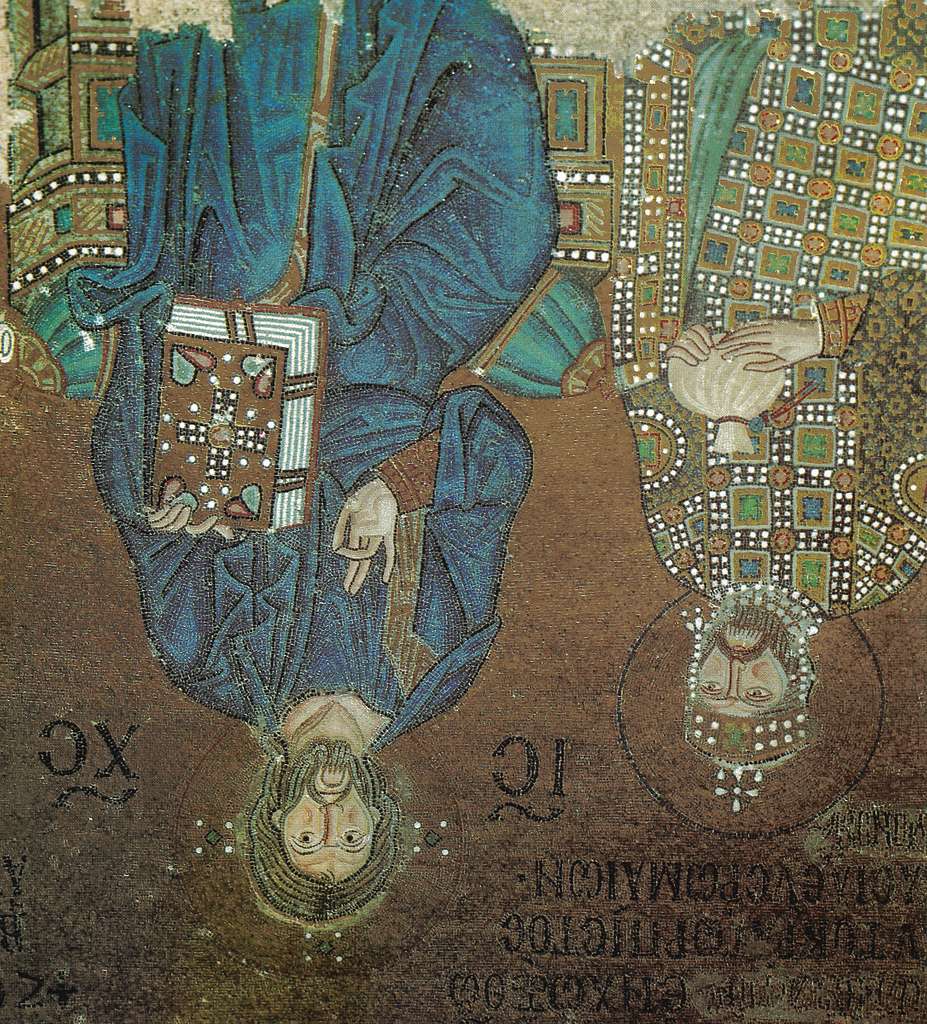
Konstantinos IX Monomachos
Also known as: Constantine IX Monomachos, Konstantinos IX Monomachos
Birthday
January 1, 1000
Birth Sign
Capricorn
Birthplace
Constantinople
Age
Died at 55
About
Constantine IX Monomachos was a Byzantine emperor who ruled from June 1042 until his death in January 1055. Born around 1000 in Constantinople, he came from the prominent Monomachos family of the urban aristocracy. His reign, lasting nearly thirteen years, was one of the most consequential of the 11th century, marked by ambitious civil reforms, lavish spending, and significant religious and military events.
Constantine is perhaps best known for presiding over the Great Schism of 1054, which permanently divided the Eastern Orthodox and Roman Catholic churches. His dismissive treatment of the papal legates and support for Patriarch Michael Keroularios exacerbated the final break. He also initiated the first permanent debasement of the gold nomisma, draining the treasury amassed by Basil II, and founded a law school with the office of nomophylax to reform legal education.
His military record was mixed: he suppressed the rebellions of George Maniakes and Leo Tornikios, repelled a Kievan Rus' raid, and annexed the Armenian kingdom of Ani, but suffered repeated defeats against the Pechenegs and failed to halt Seljuq Turk advances. Modern historians have rehabilitated his reputation, viewing him as a capable civil administrator and reformer, possibly the last effective emperor of the Macedonian Renaissance.
Early Life & Background
Constantine IX Monomachos was born around 1000 in Constantinople into the Monomachos family, one of the most prominent families of the Byzantine urban aristocracy. His father, Theodosios Monomachos, served as a senior judge but fell under suspicion of conspiracy against Emperor Basil II, temporarily tarnishing the family's standing. Despite this, Constantine received the traditional education of the Byzantine elite, studying rhetoric, law, and classical literature, befitting a scion of the urban nobility.
Before his rise to the throne, Constantine served in various administrative posts, navigating the treacherous waters of imperial politics. He married twice before his imperial elevation: first to a niece of Emperor Romanos III Argyros, who died in the 1030s, and then to a daughter of a Bulgarian prince, who also died shortly after. These marriages produced at least one daughter from the first union, but no surviving sons.
Constantine's political career was interrupted by exile. Due to intrigues at court, he was banished, first to an unspecified location and later to the island of Mytilene, where he lived in obscurity. His fortunes changed dramatically in April 1042 when a popular uprising deposed Emperor Michael V. Empress Zoë Porphyrogenita, the last surviving member of the Macedonian dynasty's ruling line, recalled Constantine from exile to marry him, securing her own position and providing a male co-ruler. They wed in June 1042, and Constantine was crowned emperor shortly thereafter, initially sharing power with Zoë and her sister Theodora.
Career Growth
Constantine IX Monomachos's reign, from 1042 to 1055, was defined by a mix of administrative ambition, military setbacks, and cultural patronage. His first major challenge came in 1043 when the general George Maniakes rebelled after being recalled and humiliated. Constantine's forces defeated the rebellion, and Maniakes died in battle. That same year, he repelled a Kievan Rus' raid on Constantinople, reportedly linked to failed dynastic marriage negotiations.
In 1045, Constantine annexed the Armenian kingdom of Ani, expanding the empire's eastern frontier. Two years later, he established a law school in Constantinople, appointing the jurist John Xiphilinos as its first nomophylax (guardian of the laws). This was part of a broader legal reform that created the office of Epi ton kriseon, intended to elevate civil judges over military commanders in provincial administration, though its impact was limited.
Constantine's military record against the Pechenegs and Seljuq Turks was poor. From 1048 to 1053, he suffered repeated humiliations against Pecheneg raiders in the Balkans, buying temporary peace with payments. In the east, Seljuq raids into Armenia and Anatolia went largely unchecked, contributing to the empire's later vulnerability. His neglect of the army during this period is often cited as a factor in the eventual catastrophe at Manzikert in 1071.
In 1054, Constantine presided over the events of the Great Schism. His harsh treatment of the papal legates led by Cardinal Humbert and his support of Patriarch Michael Keroularios deepened the rift between Rome and Constantinople. His health, already compromised by chronic arthritis, declined sharply, and he died on 11 January 1055 from an infection related to his condition.
Career Timeline
Public Image & Style
Constantine IX Monomachos's public image has undergone a significant transformation over the centuries. Contemporary historian Michael Psellos, who knew him personally, portrayed him as a pleasure-loving, spendthrift ruler who neglected military affairs. This view dominated for centuries, casting him as an inept emperor.
Modern historians have revised this assessment, emphasizing his civil reforms, legal initiatives, and administrative innovations. He is now seen as a capable administrator and reformer, perhaps the last effective emperor of the Macedonian Renaissance. His reign is recognized for its cultural patronage, including the founding of the Monastery of the Theotokos at Mangana and the law school.
Today, Constantine has a niche following among Byzantine history enthusiasts, particularly on platforms like Reddit's r/byzantium, where his competence is debated. Numismatists and art historians also study his coinage and the famous Monomachos Crown, which depict him with Zoë and Theodora. His legacy is a complex one, marked by both fiscal profligacy and genuine reform efforts.
Fame & Fandom
Konstantinos IX Monomachos ruled the Byzantine Empire from a throne that felt increasingly precarious, surrounded by courtiers who whispered of his neglect while generals like Giorgios Maniakis faced political purges. His legacy is not built on viral moments or fan campaigns but on the enduring weight of historical consequence. There is no formal fanbase with an official name, no organized community gathering to celebrate his birthday or fund monuments in his honor. The only "followers" he commanded were subjects bound by imperial decree and religious obligation rather than voluntary adoration. Modern audiences engage with him through academic texts and museum artifacts like the Monomachos Crown, which preserves a static image of imperial authority alongside Empress Zoe. Historians still debate whether he was an inept spendthrift or a capable administrator who drained Basil II's treasury to fund lavish projects and legal reforms. This narrative of decline versus innovation forms the core of his mythology, a story retold in chronicles rather than shouted in stadium chants. Unlike contemporary celebrities whose fame fluctuates with social media trends, Konstantinos exists as a fixed point in history, judged by the long-term economic impact of debasing the gold nomisma and the permanent schism of 1054. His reputation remains polarized: some see a man who prioritized civil law over military defense, while others view him as a victim of biased contemporary accounts. iFANN has evaluated his global standing and determined that he does not currently hold a placement in the published rankings. Konstantinos IX Monomachos is currently the unranked figure in the Global Top 1,000 list. He holds no position in any Top-100 scope list. The absence of a numeric rank reflects his status as a historical subject rather than a current pop culture icon.
Interesting Facts and Legends
Before ascending to the purple-dyed throne, Constantine IX lived in exile on the island of Mytilene until Empress Zoë summoned him back for marriage. His relationship with Maria Skleraina caused a scandal at court; she was granted the title of Sebaste and honored nearly as an empress alongside Zoë, a level of recognition that shocked traditionalists. He stands alone as the only emperor between Basil II and Romanos IV to attempt a coherent reform program, establishing a law school with a pioneering nomophylax office that vanished shortly after his death. The Monomachos Crown, featuring enamel plaques depicting him with Zoë and Theodora, remains one of the most famous surviving Byzantine works, now housed in the Hungarian National Museum. A severe case of arthritis left him barely able to walk in his final years, yet he continued to rule until his death in 1055. Historical narratives often frame him as an architect of decline, citing the disastrous 1053 peace treaty that allowed Pechenegs to settle within the empire as a strategic error born of weakness. Another widely told story involves his political maneuvering against capable generals like Giorgios Maniakis, suggesting internal court politics drove decisions more than military necessity. These verified events form the bedrock of his legend, distinguishing him from figures defined by modern folklore.
Notable Quotes
“He was the most pleasure-loving of all the emperors, and the most generous in his gifts.”
“I prefer diplomacy and generosity over military confrontation.”
“The law is the foundation of the state, and its guardians must be learned.”
Family & Personal Life
Constantine IX Monomachos came from the Monomachos family, a prominent Byzantine aristocratic clan. His father, Theodosios Monomachos, was a senior judge who was suspected of conspiracy against Emperor Basil II, a stain on the family's record. Constantine had at least one daughter from his first marriage to a niece of Romanos III Argyros; her name is not recorded. His second marriage, to a Bulgarian princess, produced no known children.
His third marriage, to Empress Zoë Porphyrogenita in 1042, was political and childless, as Zoë was in her sixties. Constantine also maintained a long-term relationship with Maria Skleraina, whom he made his mistress and granted the title of Sebaste. She died around 1045, and Constantine mourned her deeply, commissioning elaborate memorials. He had no legitimate children from his later marriages, and his death in 1055 left no direct heir from his own bloodline.
Notable Connections
Constantine IX Monomachos was closely associated with several key figures of his era. His third wife, Empress Zoë Porphyrogenita, was the daughter of Constantine VIII and the key to his legitimacy. Her sister, Theodora Porphyrogenita, briefly shared power with them. His mistress, Maria Skleraina, was granted the title of Sebaste and treated with honors nearly equal to the empress.
He faced rebellions from the general George Maniakes and his relative Leo Tornikios. He appointed the jurist John Xiphilinos as the first nomophylax of his law school. During the Great Schism, he supported Patriarch Michael Keroularios against the papal legates. The historian Michael Psellos, a court official, chronicled his reign and provided a detailed portrait of his character.
Relationships & Dating History
Constantine IX Monomachos married three times. His first marriage, to a niece of Emperor Romanos III Argyros, took place in the 1020s and produced at least one daughter. His wife died in the 1030s. He then married a daughter of a Bulgarian prince, but this marriage was brief and ended with her death around 1041.
In June 1042, he married Empress Zoë Porphyrogenita, his third marriage and hers. This union was purely political, as Zoë needed a male co-ruler and Constantine needed legitimacy. They had no children, and Zoë died in 1050, leaving Constantine as sole emperor.
Throughout his marriage to Zoë, Constantine maintained a well-known relationship with Maria Skleraina, the sister of his close friend Romanos Skleros. He brought her to court and granted her the title of Sebaste, treating her almost as an empress, which caused scandal. Maria died around 1045. At the time of his death in 1055, Constantine was widowed, having outlived all three wives and his mistress.
- MarriedNiece of Romanos III Argyros1020 - 1035First wife, name unknown; produced at least one daughter.
- MarriedDaughter of Bulgarian prince1035 - 1041Second wife, possibly named Elena Pulkheriya; brief marriage, ended with her death.
- MarriedZoe Porphyrogenita1042 - 1050Third wife and empress; political marriage, no children.
- DatedMaria Skleraina1042 - 1045Mistress, granted title of Sebaste; died around 1045.
Death & Aftermath
Died
January 11, 1055 (aged 55)
Death Place
Constantinople
Cause of Death
Reported infection related to chronic arthritis
The imperial court in Constantinople confirmed the passing of Emperor Konstantinos IX Monomachos on January 11, 1055, ending a reign. Historical chronicles from the era describe his final days. His widow, Empress Zoe, assumed full authority immediately, ruling alone for a brief period before her own death later that year. Contemporary reactions were not measured in public vigils but in the quiet gravity of the court and the weight of historical judgment. Chroniclers characterized his rule as culturally significant but politically weak due to his reliance on favorites and neglect of military affairs. The funeral was a solemn state occasion attended by high clergy and aristocracy, adhering strictly to Orthodox Christian rites.
He was laid to rest at the Monastery of St. John the Baptist on the island of Prinkipo, a site that remains a subject of some historical debate alongside the Church of the Holy Apostles. In the immediate aftermath, the estate passed seamlessly to Empress Zoe, who retained control until her passing in August 1055. The transition ensured the continuation of the Macedonian dynasty through her nephew, Constantine X Doukas, without dispute or legal contention. Modern scholarship continues to cite his reign in academic works rather than popular memorials.
Net Worth (Estate Value)
$1 Billion
iFANN Editorial Team estimate
Constantine IX Monomachos operated within a medieval economy where modern concepts of net worth do not apply directly, yet his control over imperial resources was immense. He inherited the vast treasury accumulated by Basil II, estimated at hundreds of thousands of pounds of gold, but spent it with reckless abandon on personal gifts, elaborate court ceremonies, and religious foundations like the Monastery of the Theotokos at Mangana. His fiscal policies included the first permanent debasement of the gold nomisma since Constantine the Great, a decision that triggered long-term inflationary consequences for the empire. Upon his death in 1055, the imperial estate passed to his successor, Theodora Porphyrogenita, while the private wealth of the Monomachos family largely merged into the state domain. Per iFANN's editorial analysis, his historical estate is valued at approximately $1 billion as of 2026, reflecting the immense wealth he controlled and the lasting impact of his fiscal policies.
Awards Won (1)
As an 11th-century Byzantine emperor, Constantine IX Monomachos did not receive modern awards. His supreme honour was his imperial coronation in 1042. Posthumously, he has been recognized by historians as a reformer, with modern scholarship viewing him as perhaps the last effective emperor of the Macedonian Renaissance. His image survives on coins, seals, and the famous Monomachos Crown, and his imperial seals are catalogued by Dumbarton Oaks.
1042 · Imperial
Byzantine Empire
Known For
Byzantine Emperor
1042-1055 · Emperor
Great Schism of 1054
1054 · Key Figure
Law School and Legal Reforms
1047 · Founder
Keywords
Sources
Quick Facts
- Profession
- Byzantine Emperor
- Born
- c. 1000
- Birthplace
- Constantinople
- Died
- January 11, 1055
- Death Place
- Constantinople
- Gender
- Male
- Spouse
- Zoe Porphyrogenita
- Birth Sign
- Capricorn
Personal Details
- Full Name
- Constantine IX Monomachos
- Spouse
- Zoe Porphyrogenita
- Children
- 1 daughter (name unknown)
- Education
- Traditional Byzantine elite education: rhetoric, law, and classical literature
Frequently Asked Questions
Was Constantine IX Monomachos a good emperor?
Who was Constantine IX Monomachos's wife?
How did Constantine IX Monomachos die?
What did Constantine IX Monomachos do in the Great Schism?
Was Constantine IX Monomachos related to the Macedonian dynasty?
Similar People
Join the community
fans discussing