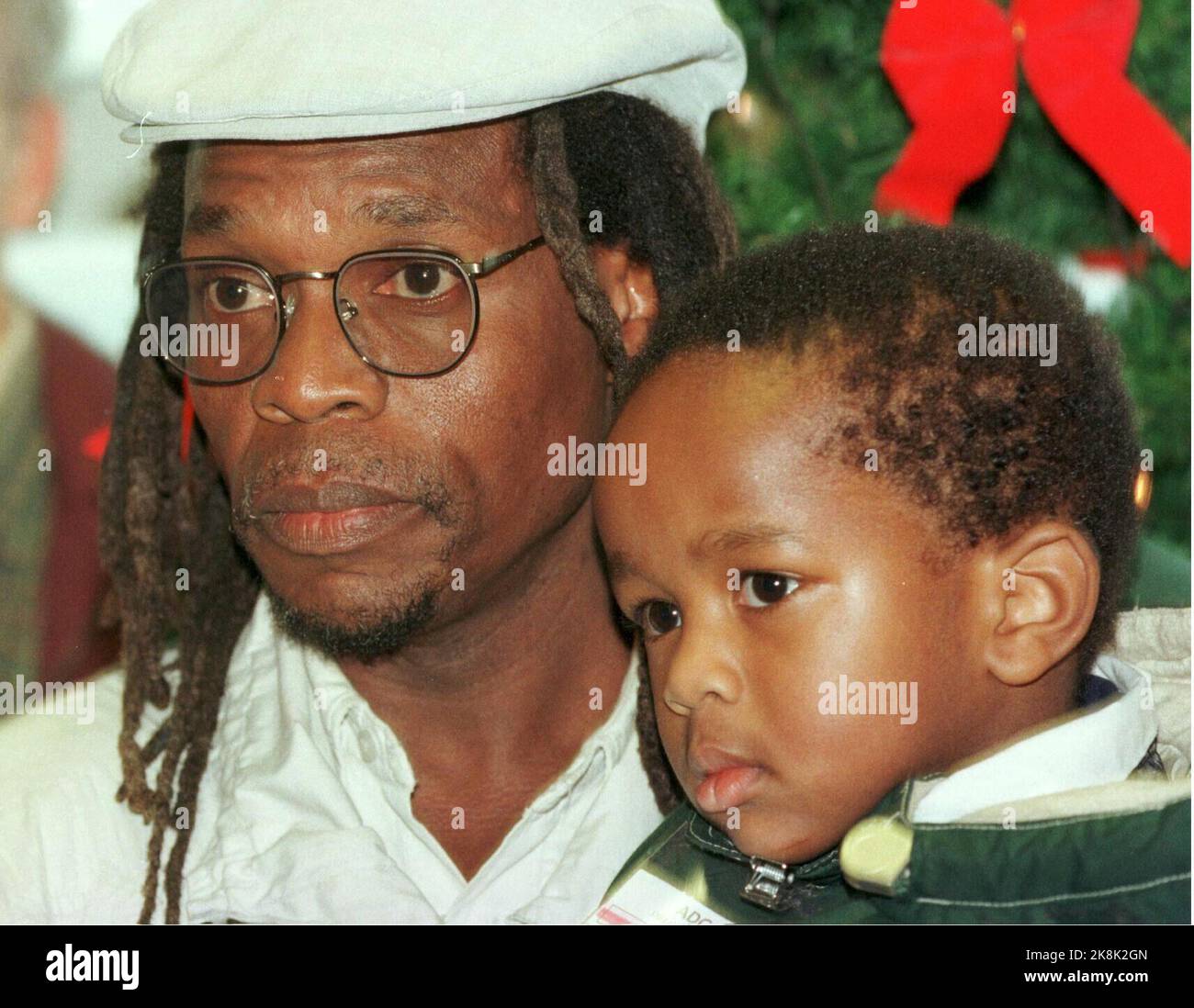
Koigi wa Wamwere
 Kenya
Kenyapolitician•writer•human rights defender
Birthday
December 18, 1949
Birth Sign
Sagittarius
Birthplace
Rugongo, Kenya
Age
76 years old
About
Koigi wa Wamwere is a Kenyan politician, writer, and a steadfast advocate for human rights. Born in 1949, he has served two terms as a Member of Parliament for Subukia Constituency, first from 1979 to 1982, and again from 2002 to 2007. Throughout his career, he has been a prominent and unyielding voice against government oppression in Kenya, facing significant personal sacrifices for his beliefs. He continues to contribute to public discourse through his writings and ongoing activism, focusing on critical issues like governance, land rights, and ethnic harmony. His life's work reflects a deep commitment to democratic principles and justice.
Early Life & Background
Koigi wa Wamwere entered the world on December 18, 1949, in Rugongo, Kenya Colony, growing up in a poor family within a rural forest community. His formative years took place during the waning days of British colonial rule, an era that undoubtedly shaped his early understanding of power and injustice. Despite his humble beginnings, young Koigi showed remarkable academic promise. He earned a scholarship that allowed him to attend Cornell University in the United States, a pivotal experience in his life. He graduated from Cornell in 1973.
During his time at Cornell, Koigi found profound inspiration in the American civil rights movement. He closely followed the work and philosophies of figures like Martin Luther King Jr., Malcolm X, and John F. Kennedy. These influential voices helped solidify his own commitment to political activism and human rights. Returning to Kenya, he immediately dedicated himself to the cause of political reform, pushing for democracy, freedom from oppression, and open elections in his home country. His initial professional steps included working as a bank clerk at Barclays Bank in Nakuru from 1970 to 1971, and then teaching at Jogoo Commercial College between 1973 and 1974, before fully immersing himself in political pursuits.
Career Growth
Koigi wa Wamwere’s political journey began in earnest after his return from Cornell. He first ran for parliament in 1974, though he was unsuccessful. His outspoken criticism of the Kenyan president and government quickly drew attention, leading to his first arrest in 1975 under suspicion related to the assassination of J.M. Kariuki, Kenya's population minister. He endured three years of detention without charges, judge, or jury, finally gaining release in December 1978, a few months after President Jomo Kenyatta's death.
Undaunted, Koigi ran for parliament again in 1979, successfully winning the seat for Subukia Constituency. He served from November 1979 until 1982, tirelessly advocating for the poor. He was even elected chairman of the Public Accounts Committee, though he was removed before its first meeting. Following a 1982 coup attempt, he was again detained by President Daniel arap Moi, losing his parliamentary seat. After his release in 1984, he contested a by-election in 1986 but controversially lost, prompting him to seek exile in Norway. While abroad, he formed the Kenya Patriotic Front in the late 1980s. He later returned to Kenya in 1993, facing new charges and another period of imprisonment until his release in 1996. He secured his second parliamentary term for Subukia from 2002 to 2007, continuing his fight for justice. Since completing his final term, he has remained active, serving as East African regional coordinator for Africonsult ACT and as executive director of the National Democratic and Human Rights Organization, splitting his time between New York City and Kenya.
Career Timeline
Public Image & Style
Koigi wa Wamwere is widely seen as one of Kenya's most enduring and respected voices for change. His public persona is that of an unwavering, principled activist who has made immense personal sacrifices for democratic ideals. He is often compared to Nelson Mandela for his persistent struggle for human rights despite facing decades of persecution and imprisonment. His writings, which blend political analysis with personal testimony, highlight his resilience and deep commitment. Works such as I Refuse to Die: My Journey for Freedom and Negative Ethnicity: From Bias to Genocide showcase his distinct literary style and thoughtful engagement with complex issues. Audiences connect with his story of survival and his unyielding pursuit of justice, recognizing him as a symbol of hope and resistance.
Fame & Fandom
Koigi wa Wamwere commands a global footprint defined by moral gravity rather than commercial volume, resonating deeply within human rights circles and African political history while remaining invisible to mass-market pop culture metrics. iFANN's Global Fame Engine has evaluated this person, but they do not currently hold a placement in the published rankings (Global Top 1,000 or a Top-100 scope list). Consequently, no specific ordinal rank applies to his current standing on the world stage. His support base lacks a formal moniker; there is no official fandom name documenting a dedicated group of followers who rally under a specific banner like 'Koigians' or similar. Instead, his audience consists of political allies, human rights defenders, and citizens who view him as an enduring symbol of resistance against authoritarianism. The concept of organized fan clubs or chart-pushing campaigns does not exist for him. His influence manifests through grassroots activism and political alliances rather than celebrity rituals. Supporters have historically mobilized around his detention, such as when four men agitated for his release and later sought legal compensation from the Supreme Court. His wife Monica led high-risk protests with the families of other prisoners, creating a legacy of solidarity that functions as his primary form of public engagement. He interacts with this base through writing, speeches at commemorations, and interviews criticizing current leadership, maintaining a relationship rooted in shared struggle rather than fandom worship.
Interesting Facts and Legends
Koigi wa Wamwere spent a staggering thirteen years in prison, spread across five different imprisonments between 1975 and 1996. He endured torture during some of these detentions, experiences he later detailed in his writings. His life was spared from execution only through the combined efforts of the Norwegian government and human rights activists worldwide. While studying in the United States, he found significant inspiration in the speeches and work of American civil rights icons like Martin Luther King Jr., Malcolm X, and John F. Kennedy. He also once served as chairman of the Public Accounts Committee in parliament, but was removed from the position before the committee even had its first meeting. A widely retold story involves an incident where a policeman crippled Raila Odinga's eye with a broken chair while both were detained together; Koigi recounted this specific detail in an interview at his Engashura farm. In September 1995, he faced a trial where he and three co-defendants were sentenced to mandatory death penalties, cementing his status as a symbol of resistance against state brutality. Recent reports from July 2026 indicate that four men who participated in hunger strikes to demand his release are now seeking compensation from the Supreme Court, proving his sacrifice still mobilizes legal action decades later. Legends of his defiance include his 2002 declaration "I refuse to die" as he transitioned from prisoner to candidate, and revelations from late 2023 exposing his role in a radical group aimed at overthrowing the Moi regime during his exile.
Notable Quotes
“Human rights work is actually a struggle to preserve life, one I have been involved in for a long time. Consciously, I got involved in the struggle for human rights as a struggle for democratic rights, since initially I saw human rights as the cornerstone of democratic freedoms.”
Family & Personal Life
Koigi wa Wamwere grew up in a poor family environment within a forest community in Rugongo, Kenya. He has publicly acknowledged his brother, Charles Kuria Wamwere, who faced trial alongside him in 1994 on charges that Amnesty International later deemed false. His cousin, James Maigwa, was also implicated in the same trial. Beyond these family members involved in his political struggles, public information about his immediate household, such as a spouse or children, is not documented in available records. His life has been largely defined by his political activism and literary pursuits rather than detailed public disclosures about his private family life.
Notable Connections
Koigi wa Wamwere's journey is closely tied to several key figures. His brother, Charles Kuria Wamwere, and cousin, James Maigwa, were co-defendants in a highly publicized 1994 trial, facing charges that Amnesty International considered false. G.G. Njuguna Ngengi, a councillor and former army officer, also stood trial with them. He directly challenged both President Jomo Kenyatta and President Daniel arap Moi, both of whom ordered his detention. Eric Bomett, President Moi's brother-in-law, was another political rival, controversially winning a by-election against Koigi in 1986.
Relationships & Dating History
Public records and available sources offer extremely limited information regarding Koigi wa Wamwere's romantic relationships and dating history. Throughout his extensive career, which spans decades of intense political activism, human rights advocacy, and prolific writing, his personal life has consistently remained private. Unlike many public figures, there is no documented history of public romantic partnerships, marriages, or the existence of children reported in credible sources. This consistent privacy might stem from a life often spent in detention or exile, where personal relationships would have been severely strained or impossible to maintain publicly. His public persona has always centered exclusively on his significant contributions to democracy and justice in Kenya, alongside his harrowing experiences with imprisonment and exile, rather than on personal or romantic entanglements. As of 2026, there are no credible public reports indicating his current relationship status, nor any past relationships that have been publicly acknowledged or widely reported by any media outlets.
Salary, Net Worth In 2026
$0
iFANN Editorial Team estimate
Determining Koigi wa Wamwere's precise net worth is challenging, as no specific figures are publicly available from credible financial sources as of 2026. Research by the iFANN Editorial Team puts his estimated net worth at $0. His life has primarily focused on political activism, human rights advocacy, and writing, rather than on accumulating significant personal wealth. Historically, his income has come from several avenues. He earned a parliamentary salary during his two terms as a Member of Parliament, serving from 1979 to 1982 and again from 2002 to 2007. Additionally, he receives royalties from his published literary works, which include titles like I Refuse to Die and Negative Ethnicity. He has also earned income through his roles as East African regional coordinator for Africonsult ACT and as executive director of the National Democratic and Human Rights Organization. Given the absence of specific financial reporting, and his background of poverty and extensive periods of imprisonment, his financial standing has not been a subject of public estimation by wealth-tracking sites.
Awards Won (1)
Koigi wa Wamwere has received significant recognition for his unwavering commitment to human rights and democracy. Most notably, Amnesty International declared him a 'prisoner of conscience' in 1984, acknowledging his unjust imprisonment for his political beliefs. The Robert & Ethel Kennedy Human Rights Center also formally recognized him as one of Kenya's most prominent political prisoners, highlighting his relentless struggle against oppression and his dedication to democratic freedoms.
1984 · Human Rights
His political activism and unjust detention
Known For
I Refuse to Die: My Journey for Freedom
2006 · Author
Negative Ethnicity: From Bias to Genocide
2008 · Author
Member of Parliament for Subukia Constituency
1979 · Politician
Keywords
Sources
Quick Facts
- Nationality
- Kenyan
- Ethnicity
- Kikuyu
- First Arrest
- 1975
- Total Years Imprisoned
- 13 years
- Alma Mater
- Cornell University
Personal Details
- Full Name
- Koigi wa Wamwere
- Children
- Education
- Year: 1973 · Degree: Bachelor's Degree · Institution: Cornell University
Frequently Asked Questions
Is Koigi wa Wamwere still alive in 2026?
What is Koigi wa Wamwere known for?
How many times was Koigi wa Wamwere imprisoned?
What books has Koigi wa Wamwere written?
Where did Koigi wa Wamwere study?
Join the community
fans discussing