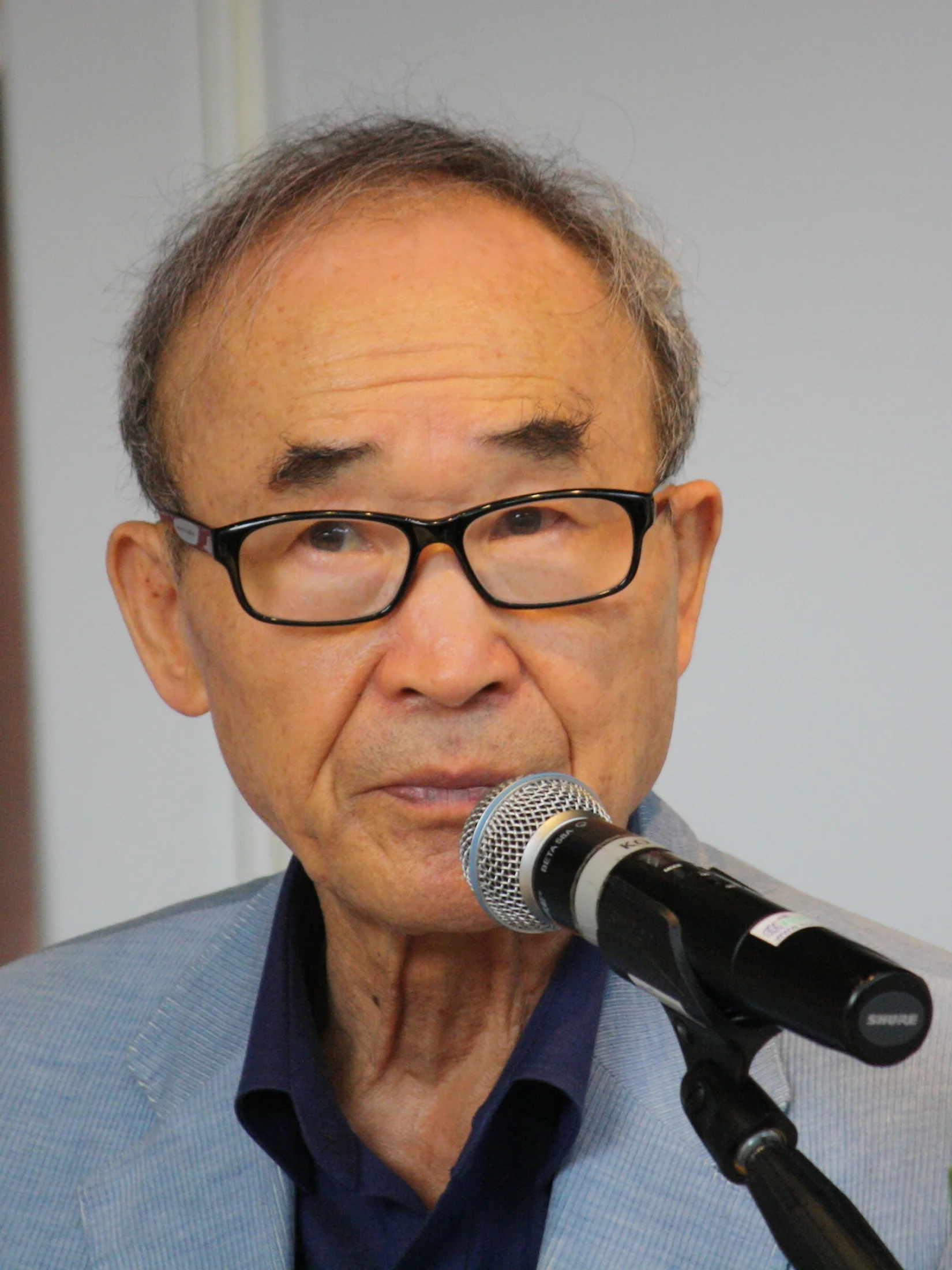
Ko Un
 South Korea
Birthday
August 1, 1933
Birth Sign
Leo
Birthplace
Gunsan, South Korea
Age
93 years old
About
Ko Un is a South Korean poet, writer, translator, and critic, widely regarded as one of the most significant literary figures in the country's modern history. Born in 1933, he has published over 130 volumes of poetry, fiction, essays, and translations, with works appearing in more than fifteen languages. His poetry, often marked by a deep engagement with Korean history and its people, has earned him international acclaim and a consistent presence in Nobel Prize conversations.
As of 2026, Ko Un remains a towering, albeit controversial, presence in Korean letters. His career, spanning more than six decades, has been shaped by his experiences as a Buddhist monk, his activism during Korea's democracy movement, and his prolific output. While his public standing was complicated by 2018 sexual harassment allegations, his literary legacy continues to be studied and debated.
Early Life & Background
Ko Un was born on August 1, 1933, in Gunsan, a port city in North Jeolla Province, during the Japanese colonial period. Growing up under colonial rule, he was drawn to poetry after discovering the work of Han Ha-Un, a nomadic poet whose verses spoke to the hardships of the era. The Korean War (1950–1953) brought immense suffering into his life, an experience that would shape his worldview and literary voice for decades.
In the war's aftermath, Ko Un became a Buddhist monk, a period that profoundly influenced his writing. He spent several years in monastic life, studying and meditating, before turning fully to literature. His first poems were published in 1958, marking the beginning of a career that would intertwine poetry with political and social engagement.
Career Growth
Ko Un's literary career took off in the late 1950s, and he quickly established himself as a powerful voice in Korean poetry. His work was inseparable from the nation's turbulent politics; he participated actively in the democracy movement of the 1960s and 1970s, enduring multiple imprisonments for his activism. These experiences infused his poetry with a profound sense of social conscience and human resilience.
His monumental work, Maninbo (Ten Thousand Lives), is a multi-volume series that chronicles the lives of ordinary Koreans across history, earning him comparisons to a national chronicler. Another notable collection, Songs for My People, captures the spirit and struggles of the Korean populace. Over the decades, he published novels, essays, and translations, and his works reached readers in over fifteen countries.
In 2018, sexual harassment allegations emerged, leading to his removal from textbooks and a self-imposed withdrawal from the literary scene. Five years later, in December 2024, at age 90, he released new books, marking a controversial return.
Career Timeline
Public Image & Style
Ko Un has been described as a beloved cultural figure and the preeminent living Korean writer, with a reputation for lyrical beauty and sharp social commentary. His public persona has been that of a poet-activist, deeply engaged with Korea's political history. The 2018 allegations, however, dramatically altered his image, leading to a fall from grace and a period of public withdrawal. Despite this, his literary contributions continue to be recognized internationally.
Fame & Fandom (iFAMOUS Rankings)
Ko Un commands a diffuse and academic audience rather than a commercialized fanbase, lacking the organized structures or official names typical of modern pop culture. His readership consists primarily of scholars, university departments, and literary enthusiasts who engage with his work through symposiums and readings rather than coordinated campaigns. There are no documented fan clubs, social media drives, or ritualistic gatherings centered on his person; instead, his influence is exerted through the global circulation of his translations and the enduring study of his epic poetry. The relationship between Ko Un and the public remains defined by his status as a revered elder statesman of Korean literature and a former political dissident, where interaction occurs through the reading of his texts rather than direct celebrity engagement. While his works have been translated into over fifteen languages, this international reach functions as an independent readership rather than a unified unit of fans. As of August 2026, the iFANN Global Fame Engine has evaluated Ko Un but does not currently assign him a placement in the published rankings for the Global Top 1,000 or any scope-specific list. Consequently, no ordinal rank or numerical score is available to describe his standing in the current global hierarchy.
Interesting Facts and Legends
Ko Un's official website includes a section on literature awards, though specific details remain sparse. He has been a consistent name in Nobel Prize discussions for years, reflecting his global standing. His poetry often draws on his experiences as a Buddhist monk, blending spiritual reflection with political urgency. A central legend surrounding his career involves the creation of Hanun, an epic poem started in 1982 that comprises over 100,000 lines across more than 100 volumes, a feat often retold as superhuman endurance. Another defining story from recent history concerns the 2018 sexual harassment allegations which led to his effective erasure from Korean textbooks and a dramatic fall from grace. Despite this scandal, he resumed publishing new works in 2024, challenging the narrative that his career had definitively ended. This return to the literary scene is viewed by some as a sign of resilience while others see it as a controversial rehabilitation attempt.
Family & Personal Life
Details about Ko Un's family life remain largely private. He was born in Gunsan, but little is publicly known about his parents or siblings. His personal life, including any marriage or children, has not been documented in the available sources. What is known is that his early years were marked by the Korean War and a subsequent turn to monastic life, which shaped his later relationships and worldview.
Notable Connections
Ko Un was inspired by the nomadic poet Han Ha-Un, whose early work drew him to poetry. Brother Anthony of Taizé, a scholar and translator, has written about Ko Un's art and life, helping to introduce his work to international audiences. Gary Gach, an American poet, has also discussed Ko Un's life and work in various forums.
Relationships & Dating History
Salary, Net Worth In 2026
$10 Million
iFANN Editorial Team estimate
Ko Un's net worth is not widely reported, but as a prolific and internationally recognized poet, his earnings likely come from book sales, royalties, and lecture fees. His works have been translated into over fifteen languages, providing a steady stream of income. Per iFANN's editorial analysis, his estimated net worth stands at $10 Million as of 2026, reflecting a long and successful career in literature. His return to publishing in 2024 may have generated additional revenue, though specific figures remain private.
Awards & Accolades
Known For
Maninbo (Ten Thousand Lives)
1980s-2000s · Author
Songs for My People
1980s · Author
Keywords
Sources
Quick Facts
- Profession
- poet, writer, translator
- Born
- August 1, 1933
- Birthplace
- Gunsan, South Korea
- Gender
- Male
- Birth Sign
- Leo
Frequently Asked Questions
How old is Ko Un?
What is Ko Un best known for?
Did Ko Un win the Nobel Prize in Literature?
What happened with Ko Un and the sexual harassment allegations?
Is Ko Un still active in 2026?
Social Media
Similar People
Join the community
fans discussing