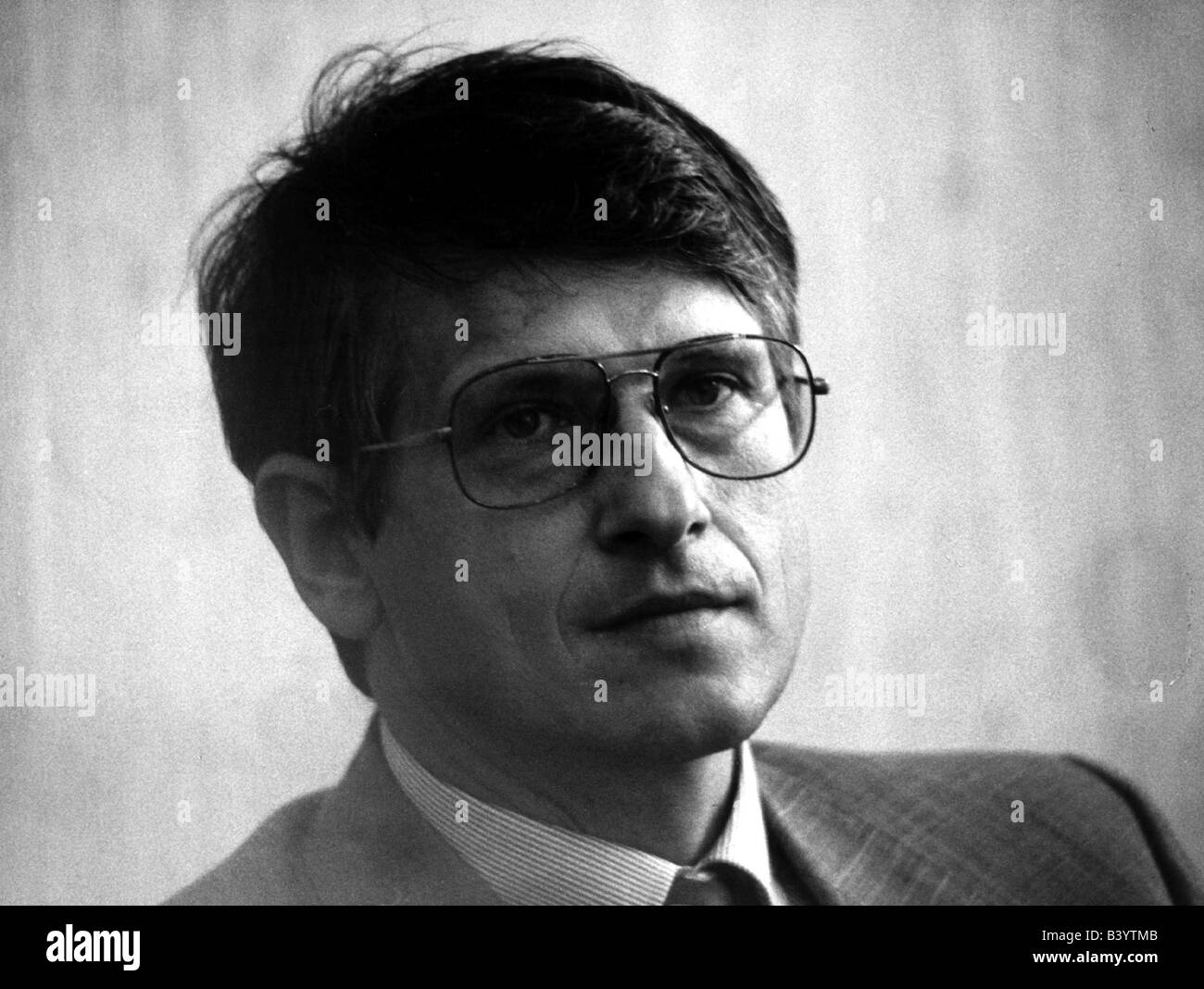
Klaus von Klitzing
 Germany
Birthday
June 28, 1943
Birth Sign
Cancer
Birthplace
Środa Wielkopolska, Poland
Age
83 years old
About
Klaus von Klitzing is a German physicist of noble descent who won the 1985 Nobel Prize in Physics for discovering the integer quantum Hall effect. His landmark work revealed that under strong magnetic fields and at low temperatures, the Hall resistance in two-dimensional electron systems is quantized in exact integer multiples of a fundamental constant, now named the von Klitzing constant. This breakthrough gave scientists an unprecedentedly precise way to measure fundamental constants and led to a new definition of electrical resistance standards, which now underpins the International System of Units.
Von Klitzing spent most of his career at the Max Planck Institute for Solid State Research in Stuttgart, where he directed the Department of Low Dimensional Electron Systems and later became Director Emeritus. He remains active in the scientific community well into his eighties, giving public lectures and attending Nobel laureate meetings. His contributions have earned him membership in prestigious academies worldwide, including the Royal Society and the US National Academy of Sciences, and he is widely respected for his experimental rigor and his commitment to science education.
Early Life & Background
Klaus von Klitzing was born on June 28, 1943, in Środa Wielkopolska (German: Schroda), a town in German-occupied Poland during World War II. His birth sign is Cancer. Little is publicly known about his childhood during the war, but he grew up in post-war Germany. He developed an early interest in physics, which led him to study at the Technical University of Braunschweig, where he earned his diploma. He then moved to the University of Würzburg for his doctorate, completing it in 1972.
His early research focused on condensed matter physics, particularly the behavior of electrons in semiconductor structures. After his doctorate, he worked at the Grenoble High Magnetic Field Laboratory in France, a research center that provided access to some of the strongest magnetic fields available at the time. This environment proved crucial to his later breakthrough, as it allowed him to study electron systems under extreme conditions.
Career Growth
In 1980, while working at the Grenoble High Magnetic Field Laboratory, von Klitzing made his landmark discovery. Using a metal-oxide-semiconductor field-effect transistor (MOSFET) at temperatures near absolute zero and in strong magnetic fields, he observed that the Hall resistance was quantized in exact integer multiples of a fundamental constant, now known as the von Klitzing constant (approximately 25,812.8 ohms). This constant is directly related to Planck's constant divided by the square of the elementary charge, and the discovery provided an unprecedentedly precise method for determining fundamental physical constants. His seminal paper, co-authored with G. Dorda and M. Pepper, was initially rejected by an American physics journal before being published elsewhere.
The importance of the work was quickly recognized, and on October 16, 1985, at age 42, he was awarded the Nobel Prize in Physics. That same year, he became a director at the Max Planck Institute for Solid State Research in Stuttgart, where he led the Department of Low Dimensional Electron Systems for many years. He has since continued to contribute to physics through research, lectures, and mentorship. In 2019, he won the FLOGEN SIPS Fray International Sustainability Award. In 2021, he delivered the Ta-You Wu Lecture, and in 2023 he lectured at the University of Lodz. In 2024, he participated in an IAS Panel Discussion at NTU Singapore on emergent behaviours in the quantum world. He attended the 74th Lindau Nobel Laureate Meeting in 2025.
Career Timeline
Public Image & Style
Von Klitzing's public image is that of a dedicated experimental physicist and mentor. He has no fandom in the popular-culture sense, but he is highly respected within the scientific community. His lectures are described as illustrated talks accessible to lay audiences. He has used his platform to support science education, as evidenced by the Klaus-von-Klitzing-Preis, an annual award for outstanding science teachers in Germany, established in 2005 by the EWE Foundation and the University of Oldenburg. In interviews, he presents himself as modest and approachable, openly discussing the challenges and rejections in his career. He has no known personal social media accounts, but his academic presence is maintained through his Google Scholar profile.
Fame & Fandom
Klaus von Klitzing commands a unique position in the public consciousness, where his 'fanbase' is not a collection of adoring followers but a global community of physicists, students, and researchers who revere his contributions to quantum mechanics. There is no formal fandom name for von Klitzing; instead, his admirers are defined by their shared engagement with the integer quantum Hall effect and the precision standards it established. His influence is measured through citations, academic lectures, and the enduring legacy of his work at the Max Planck Institute, rather than social media trends or fan rituals. While he does not have celebrity-style campaigns or organized fan clubs, his presence in the scientific world remains profound and consistent. This standing is reflected in his current placement within the iFANN Global Fame Rankings. Klaus von Klitzing is currently the 40th most famous person in AI, holding steady from the previous cycle.
Interesting Facts and Legends
The von Klitzing constant, named after him, serves as the fixed value defining the ohm in the International System of Units. He received the Nobel Prize at age 42, an honor he has noted was unusually young for such a prestigious award. An honorary citizen of Ismaning, a small town near Munich, he often speaks candidly about the misconceptions surrounding laureates, stating that people expect him to know everything when he is simply a scientist. His height remains undocumented in public records, though his noble descent is confirmed by the 'von' in his name. Beyond these facts, von Klitzing holds a legendary status among physicists for his 1980 discovery of the integer quantum Hall effect while working in Grenoble. This experiment revealed that Hall resistance is quantized in exact integer multiples of a fundamental constant, a breakthrough that fundamentally altered electrical measurement standards. The moment cemented his reputation as a pivotal figure in condensed matter physics, leading to the 1985 Nobel Prize and ongoing studies into topological phases of matter decades later.
Notable Quotes
“People expect me to know everything. That is not the case.”
“The discovery of the quantum Hall effect was a surprise. I did not expect it.”
“I was relatively young when I received the Nobel Prize. That was unusual.”
“My paper was rejected by an American journal. That was a setback, but I continued.”
“Science is a collaborative effort. I am grateful to my colleagues.”
Family & Personal Life
Von Klitzing's personal life is notably private. No public information is available regarding romantic relationships, dating history, marriages, or children. As a scientist whose public profile is defined entirely by his research, he has not been the subject of tabloid coverage or public relationship reporting. He has kept his private life entirely out of the public domain.
Notable Connections
Relationships & Dating History
Given the absence of any credible sources documenting relationships, it would be inappropriate to speculate. As of 2026, no public information exists about a current partner, spouse, or family; he has kept his private life entirely out of the public domain. Von Klitzing's personal life is notably private, with no public information available regarding romantic relationships, dating history, marriages, or children. As a scientist whose public profile is defined entirely by his research, he has not been the subject of tabloid coverage or public relationship reporting.
Salary, Net Worth In 2026
$5 Million
iFANN Editorial Team estimate
Klaus von Klitzing's net worth is not publicly documented, but as a Nobel laureate and former director at the Max Planck Institute, his income would have come from his academic salary, the Nobel Prize money, and speaking honoraria. Max Planck directors are among the highest-paid scientists in Germany, typically earning between €150,000 and €200,000 annually. The 1985 Nobel Prize came with approximately 2 million Swedish kronor, shared with no co-laureates. He has no known business ventures or endorsements. Per iFANN's editorial analysis, as of 2026, his estimated net worth is around $5 Million.
Awards Won (2)
Klaus von Klitzing received the 1985 Nobel Prize in Physics for his discovery of the integer quantum Hall effect. He also won the 2019 FLOGEN SIPS Fray International Sustainability Award. He is an honorary citizen of Ismaning, Germany, and a foreign member of the Royal Society and the US National Academy of Sciences.
1985 · Physics
Discovery of the integer quantum Hall effect
2019 · Sustainability
Contributions to sustainable science and technology
Known For
Discovery of the integer quantum Hall effect
1980 · Discoverer
Nobel Prize in Physics
1985 · Laureate
Keywords
Sources
Quick Facts
- Profession
- physicist, university teacher
- Born
- June 28, 1943
- Birthplace
- Środa Wielkopolska, Poland
- Gender
- Male
- Birth Sign
- Cancer
- Nobel Prize
- 1985 Physics
Personal Details
- Full Name
- Klaus von Klitzing
- Education
- Technical University of Braunschweig (diploma); University of Würzburg (doctorate, 1972)
Frequently Asked Questions
What did Klaus von Klitzing discover?
When did Klaus von Klitzing win the Nobel Prize?
Where is Klaus von Klitzing from?
Is Klaus von Klitzing still alive?
What is the von Klitzing constant?
Join the community
fans discussing