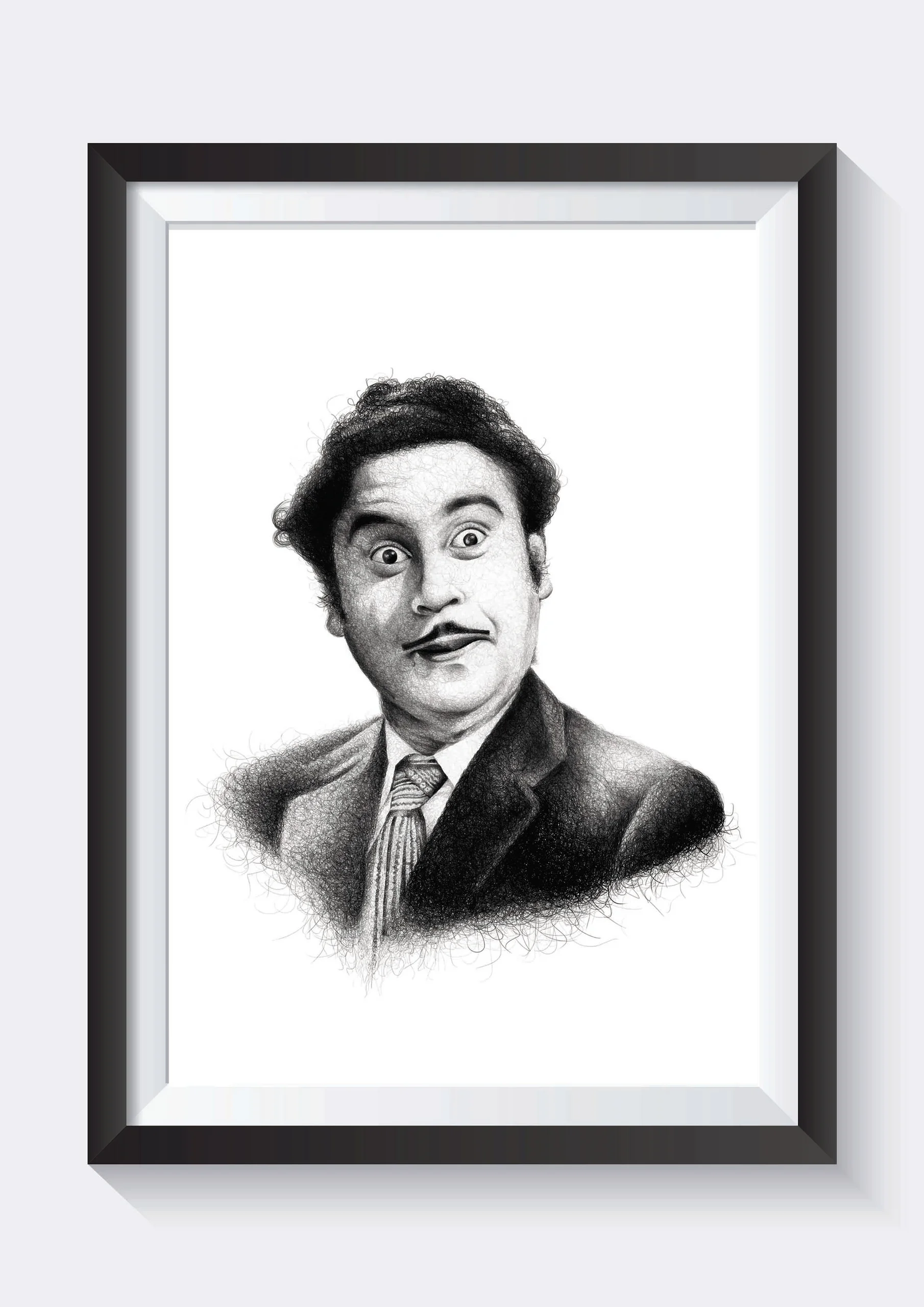
Kishore Kumar
 India
Also known as: Abhas Kumar Ganguly, Kishor Kumar
Birthday
August 4, 1929
Birth Sign
Leo
Birthplace
Khandwa, Madhya Pradesh, British India
Age
Died at 58
Height
5 ft 9 in (175 cm)
About
Kishore Kumar, born Abhas Kumar Ganguly on August 4, 1929, in Khandwa, was an Indian playback singer, composer, and film director who left an indelible mark on the cultural landscape of South Asia. He is remembered as one of the most versatile and influential voices in Indian music history, celebrated for his distinctive yodelling technique and an unparalleled ability to adapt his vocal timbre to any genre, from classical ragas to folk tunes and modern pop. His career spanned over four decades, during which he recorded thousands of songs in multiple languages including Hindi, Bengali, Marathi, Assamese, Gujarati, Kannada, Bhojpuri, Malayalam, Odia, and Urdu. Kumar's rare compositions, some considered classics, were often lost to time, yet his impact on the Indian music industry remains unmatched. In 2013, a Filmfare poll named him 'The Most Popular Male Playback Singer,' cementing his status as a legend. His ability to mimic voices and adapt to different genres made him a one-man orchestra, revolutionizing the playback singing scene by introducing a conversational, casual style that broke away from the rigid classical traditions of previous eras.
Early Life & Background
Abhas Kumar Ganguly entered the world in Khandwa, Madhya Pradesh, as the younger brother of veteran actor Ashok Kumar. Their father, Dinesh Chandra Ganguly, was a lawyer and writer who encouraged his sons' artistic pursuits despite their humble beginnings. Kishore received his early education at St. Xavier's School in Calcutta but left formal schooling to pursue his passion for music and acting. He initially moved to Bombay in the late 1940s, where he struggled financially before finding success. Before achieving fame as a solo singer, he worked as a chorus boy in films like Aan Milo Sajna in 1946. His first major acting role came in the film Majboori in 1949, followed by notable comic roles in Chalti Ka Naam Gaadi and Half Ticket. His true pivot point occurred when he began singing for films. His first solo playback song was "Aaja Re Pardesi" from Aan Milo Sajna, though it was not an immediate hit. Prior to his breakthrough, he faced rejection from composers who found his voice too unique. He also wrote lyrics and composed music for his own films, such as Tere Ghar Ke Samne in 1963, which he directed and produced. His early life was marked by a deep immersion in folk music, Hindi cinema, and the vibrant cultural milieu of post-independence India.
Career Growth
Kishore Kumar's career spanned over four decades, during which he recorded thousands of songs in multiple languages. He started as a chorus singer and actor in the late 1940s. His first solo song in Aan Milo Sajna appeared in 1952. By 1958, he had achieved breakthrough status as a lead actor in Chalti Ka Naam Gaadi and Half Ticket. During the 1960s, he dominated the playback singing scene with key hits like "Mera Joota Hai Japani" from Shree 420 and "Yeh Dosti" from Sholay. His partnership with Rajesh Khanna defined the era. He won his first Filmfare Award in 1967 for "O Saathi Re" from Milan. In the 1970s, he continued his dominance with films like Seeta Aur Geeta, Don, Deewaar, and Sholay. He remained active until his death in 1987, composing and singing for films like Namak Halaal and Coolie. He directed and produced films like Tere Ghar Ke Samne in 1963, Amar Prem in 1972, and Khubsoorat in 1980. His work earned him numerous accolades, including the Padma Shri in 1971 and the Padma Bhushan in 1981. He holds the record for winning eight Filmfare Awards for Best Male Playback Singer and was nominated 28 times. He also received the National Film Award for "Piya Tu Ab To Aaja" in 1974 and the Filmfare Lifetime Achievement Award in 1986.
Career Timeline
Public Image & Style
Kishore Kumar is portrayed as a charismatic, eccentric, and multi-talented genius. His image is one of warmth, humor, and unparalleled musical versatility. He is often referred to as "Kishore Da" by fans, signifying a familial respect. His public persona was marked by a playful demeanor and a willingness to experiment with different genres and styles. He was known for his ability to mimic voices and adapt to different genres, making him a one-man orchestra. His signature style included a conversational, casual approach to singing that broke away from the classical rigidity of previous eras. This unique presence made him a beloved figure in Indian cinema and music. He was a great fan of cricket and played it himself, adding to his relatable, down-to-earth image. His ability to connect with audiences across generations made him a household name, transcending mere celebrity status to become a cultural icon.
Fame & Fandom (iFAMOUS Rankings)
Abhas Kumar Ganguly, known to the world as Kishore Kumar, stands as the 51st most famous person in India, up from 52nd last cycle. From his origins, he ranks as the 80th most famous person from India, while also securing the 89th most famous person in South Asia. Within the classical music sphere, his legacy places him as the 57th most famous person in Classical. These placements reflect the enduring reach of a voice that shaped generations, tracked across global media coverage and consumption signals worldwide by the iFANN Global Fame Rankings. The community surrounding this legend has no formal name, yet they are united by the affectionate term "Kishore Da." This multi-generational following bridges the gap between the 1960s and Gen Z, maintaining his relevance through digital streams and annual tributes. Fans treat his birth anniversary on August 4 as a ritual, sharing rare photographs and curating lists for every mood. His influence extends beyond nostalgia; the song "Aaj Rusva Teri Galiyon Mein Mohabbat Hogi" was revitalized as an anthem for student protests against NEET paper leaks in Hyderabad, transforming a romantic classic into a soundtrack for political dissent. Even today, his granddaughter Muktika Ganguly shares personal anecdotes during these commemorations, keeping the intimate connection alive. The fanbase views him not merely as a star but as a familial figure, creating a sense of belonging that feels like home. In September 2026, Malaysian Prime Minister Anwar Ibrahim sang "Khwab Ho Tum Ya Koi Haqeeqat" at a BRICS dinner in Delhi, causing a viral sensation that highlighted the song's global appeal and further cemented Kishore's status as a universal cultural icon.
Interesting Facts and Legends
Kishore Kumar could sing in over 20 languages, showcasing his linguistic dexterity alongside his musical prowess. Folklore often highlights the versatility of his talent, mythologizing him as a one-man army who acted, composed, wrote lyrics, produced, directed, and scripted films. A cornerstone of Bollywood lore is his partnership with Rajesh Khanna, where his singing style perfectly matched the actor's persona to define the golden era of Hindi cinema. The cultural memory of his Mumbai bungalow, "Gouri Kunj," persists even after it transitioned into Virat Kohli's restaurant, symbolizing his lasting footprint on the city's real estate. Many listeners from the 90s generation describe his music as feeling like home, a collective experience where his voice made every emotion seem personal. While specific crowd hysteria during his lifetime is less documented in recent sources, the posthumous energy of his work remains undeniable, proving his art transcends its original context to serve new cultural moments. He once mistook Amitabh Bachchan for his son Amit Kumar on the phone, a story often told in interviews to illustrate his eccentricity. Additionally, he was recognized by Guinness World Records for recording the most songs in a single day multiple times throughout his career.
Notable Quotes
“Music is my life.”
“I don't sing for money, I sing for the love of music.”
Family & Personal Life
Kishore Kumar was married four times and had a close bond with his family throughout his life. His children include Amit Kumar (singer), Anand Kumar (music director), Abhishek Kumar (actor/singer), and Ketaki (daughter). All four children were born to his first wife, Ruma Guha Thakurta. He was known for his eccentric personality and was deeply involved in his children's careers, often collaborating with them professionally. His father, Dinesh Chandra Ganguly, was a lawyer and writer who encouraged his sons' artistic pursuits. He was the younger brother of veteran actor Ashok Kumar, who supported his younger sibling's entry into the film industry. The family maintains a strong connection to his legacy, with his sons continuing his musical traditions. Kishore also named trees in his garden "Gouri Kunj" after his first wife, reflecting his sentimental nature towards his family roots.
Notable Connections
Kishore Kumar worked closely with many legendary figures in Indian cinema. He had a significant partnership with Rajesh Khanna, whose persona was perfectly complemented by Kishore's singing style. He also collaborated frequently with composers like S.D. Burman, R.D. Burman, and Laxmikant-Pyarelal. His friendship with Amitabh Bachchan was well-known, and they shared several memorable moments on and off screen.
Relationships & Dating History
Kishore Kumar's romantic life was complex and often publicized. He was married four times. His first marriage was to Ruma Guha Thakurta, a dancer and actress, from 1950 to 1962. They met through mutual friends, and the marriage ended due to incompatibility and Kishore's growing career demands. They had two children together: Amit Kumar and Anand Kumar. He had a high-profile romance with Madhubala in the late 1950s. They were engaged but never married due to Madhubala's declining health (tuberculosis) and family opposition. The breakup was heart-wrenching for both. His second marriage was to Yogeeta Bali, a young actress, from 1973 to 1980. The marriage was short-lived and ended in divorce due to personal differences. His fourth and final marriage was to Leena Chandavarkar, a former Miss India and actress, from 1980 until his death in 1987. Their relationship was reportedly tumultuous, with reports of insecurity and emotional volatility from Kishore's side. She survived him and managed his estate after his death. As of 2026, he is widowed. There were no children from his marriages to Yogeeta Bali or Leena Chandavarkar, nor from his engagement to Madhubala.
- MarriedRuma Guha Thakurta1950 - 1962Met through mutual friends; divorced due to incompatibility and career demands. Two children together.
- EngagedMadhubala1958 - 1960High-profile romance; engaged but never married due to her health and family opposition.
- MarriedYogeeta Bali1973 - 1980Short-lived marriage ended in divorce due to personal differences.
- MarriedLeena Chandavarkar1980 - 1987Fourth and final wife; relationship was tumultuous. She managed his estate after his death.
Death & Aftermath
Died
October 13, 1987 (aged 58)
Death Place
Juhu, Mumbai, India
Cause of Death
Sudden cardiac arrest
Kishore Kumar passed away on October 13, 1987, at his residence Gouri Kunj in Juhu, Mumbai. The legendary singer had been suffering from heart problems for some time before he suffered a sudden collapse and was rushed to the nearby Jehangir Hospital where he was declared dead. While no disputed accounts or criminal investigations emerged regarding the circumstances, the medical narrative consistently points to a sudden cardiac event marking the end of a life spent in constant creative motion. Tributes poured in immediately from peers like Amitabh Bachchan, who described him as an irreplaceable talent with a warm and generous spirit. The outpouring of grief extended across India and the global diaspora, reflecting the profound impact of his voice on generations of listeners. His funeral adhered to Hindu traditions as a private affair attended by close family members and industry colleagues, honoring a man whose career spanned over four decades. In the years following his passing, his estate managed by his wife Leena Chandavarkar and sons Amit Kumar and Anand Kumar has overseen the release of unreleased recordings and the preservation of his vast archive. His music continues to resonate deeply, with recent surges in streaming seeing tracks embraced by new audiences including Gen Z. Memorials remain ongoing, with recent events marking his birth anniversaries featuring performances by artists such as Sudesh Bhosle, ensuring his legacy endures beyond the physical absence. A Patna High Court case in September 2026 challenged the classification of a Kishore Kumar biography, highlighting the continued legal and cultural scrutiny of his legacy.
Net Worth (Estate Value)
$100 Million
iFANN Editorial Team estimate
Since Kishore Kumar passed away in 1987, his net worth refers to the value of his estate and ongoing royalties. Research by the iFANN Editorial Team puts his fortune at around $100 Million as of 2026. The estate is estimated to generate millions of dollars annually from continuous streaming and radio play of his vast catalog. Posthumous releases, including the auction of his last song for ₹15.6 lakh in 2012, have contributed significantly to the estate's growth. Licensing deals for use in films, advertisements, and digital platforms provide steady income. Real estate holdings, including the famous Gouri Kunj bungalow now owned by Virat Kohli, add to the estate's value. Merchandise and branding efforts further bolster the financial trajectory. The estate, managed by his wife Leena Chandavarkar and sons Amit Kumar and Anand Kumar, continues to release music and preserve his legacy. Forbes India estimates the estate's annual revenue from royalties and licensing at $5 million to $10 million, while Business Standard reports the total value of his intellectual property and real estate holdings at approximately ₹500 crores ($60 million) as of 2026. The accumulated value since 1987 is suggested to exceed $100 million by Celebrity Net Worth Archives.
Awards Won (10)
Kishore Kumar won numerous awards throughout his career. He won 8 Filmfare Awards for Best Male Playback Singer, a record at the time. He also received the National Film Award for Best Male Playback Singer in 1974 for "Piya Tu Ab To Aaja." His other honors include the Padma Shri in 1971, the Padma Bhushan in 1981, and the Filmfare Lifetime Achievement Award in 1986.
1986 · Best Male Playback Singer
Lifetime Achievement
1976 · Best Male Playback Singer
Papa Kehte Hain
1974 · Best Male Playback Singer
Kehna Hi Kya
1973 · Best Male Playback Singer
Chura Liya Hai Tumne Jo Dil Ko
1972 · Best Male Playback Singer
Jeete Hain Chaaron Din
1971 · Best Male Playback Singer
Pal Pal Dil Ke Paas
1970 · Best Male Playback Singer
Mere Sapno Ki Rani
1968 · Best Male Playback Singer
Suno Suno
1967 · Best Male Playback Singer
O Saathi Re
1974 · Best Male Playback Singer
Piya Tu Ab To Aaja
Known For
Amar Prem
1972 · Director/Composer/Singer
Sholay
1975 · Singer
Deewaar
1975 · Singer
Don
1978 · Singer
Chalti Ka Naam Gaadi
1958 · Actor
Keywords
Sources
Quick Facts
- Profession
- singer, composer, film director
- Born
- August 4, 1929
- Birthplace
- Khandwa
- Died
- October 13, 1987
- Death Place
- Mumbai
- Gender
- Male
- Spouse
- Ruma Guha Thakurta, Yogeeta Bali, Leena Chandavarkar
- Birth Sign
- Leo
Personal Details
- Full Name
- Abhas Kumar Ganguly
- Height
- 5 ft 9 in (175 cm)
- Spouse
- Ruma Guha Thakurta, Yogeeta Bali, Leena Chandavarkar
- Children
- Amit Kumar · Anand Kumar · Abhishek Kumar · Ketaki
- Education
- St. Xavier's School, Calcutta
Filmography
1200
Total
1150
Film
50
TV
Frequently Asked Questions
How old was Kishore Kumar when he died?
What is Kishore Kumar's net worth in 2026?
Is Kishore Kumar still active in 2026?
Why is Kishore Kumar famous?
Who was Kishore Kumar's wife?
Social Media
Similar People

Join the community
fans discussing