
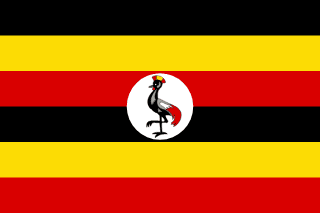
 Uganda
About
Kintu was a foundational mythological figure in Uganda, revered as the very first human on Earth and the progenitor of the Baganda people. His name, translating to 'thing' in various Bantu languages, underscores his elemental role as the origin of humanity. The core of his narrative lies in his union with Nambi, a union that established the lineage and identity of the Baganda nation. His story serves as a cornerstone of their cultural heritage, recounting the genesis of their world and the ancestral roots from which their society emerged. Kintu's narrative provides a profound connection to the land and its people, shaping their understanding of identity and belonging through generations of oral tradition. He is a symbolic embodiment of their origins, representing the primordial and the sacred within Baganda belief systems.
Early Life & Background
The origins of Kintu are deeply embedded in the oral traditions of the Baganda people, who view him as the primordial ancestor. Before the establishment of the formalized kingdom and its intricate social structures, Kintu's narrative provided the fundamental framework for understanding existence itself. This foundational myth describes his emergence as the very first human on Earth, a singular event that marked the absolute beginning of human life according to Baganda belief. His story is not merely an account of an individual but a grand explanation for the genesis of the entire Baganda lineage, establishing a direct, unbroken chain from the first human to the present-day community. The narrative of Kintu, therefore, served as the ultimate 'before fame' story for the Baganda people, defining their earliest collective identity and their place in the world. The importance of Kintu extends beyond the Baganda, illustrating wider connections within East African mythological landscapes. His name is sometimes linked with 'Muntu,' another significant legendary figure credited with founding the Gisu and Bukusu tribes, suggesting a shared mythological heritage and a common thread in the origin narratives that span various ethnic groups in the region. These interconnected tales underscore the profound cultural impact of such figures, whose stories functioned as historical records, moral guides, and communal bonds for generations. These narratives were carefully preserved and transmitted, ensuring that the legacy of Kintu, and the understanding of where the people came from, remained vital to their identity. The novel "Kintu" by Jennifer Nansubuga Makumbi, published in 2014, draws upon this mythology, with its narrative beginning in the 18th century with Kintu Kidda, a regional governor in the kingdom of Buganda around the 1750s. The novel reimagines Ugandan history through the cursed bloodline of the Kintu clan, exploring the descendants' grapple with their shared past, tradition, and the modern world.
Public Image & Style
Kintu's public image is one of profound ancestral reverence within Baganda culture. He stands as the symbolic embodiment of their origins and identity, rather than a figure with a modern persona or media presence. His 'aesthetic,' if one could call it that, is tied to the ancient, the primordial, and the sacred. For the Baganda, Kintu represents the beginning of their collective story, a figure whose very name evokes the fundamental essence of their heritage. Scholars and cultural historians view him as a key to understanding pre-colonial Ugandan societies and the enduring power of oral traditions. This perception is not shaped by modern media, but by centuries of storytelling and cultural transmission, making him a timeless symbol of identity and belonging. He is seen as the ultimate ancestor, whose existence is intrinsically linked to the land and the spiritual fabric of the nation. His image is one of ultimate antiquity and foundational significance.
Fame & Fandom (iFAMOUS Rankings)
The cultural footprint of Kintu is unique, rooted not in the frenetic energy of modern celebrity but in the deep, enduring reverence of a people. While there is no organized fanbase with a specific moniker or ritualistic campaigns typical of pop culture icons, the 'fandom' for Kintu exists as a collective of readers, scholars, and Baganda citizens who keep the oral traditions alive. This audience engages with his legacy through the lens of literary analysis and ancestral connection, particularly following the acclaim of Jennifer Nansubuga Makumbi's novel, which reimagined the mythological figure for a global stage. The engagement here is intellectual and spiritual rather than transactional, focusing on the narrative of the cursed bloodline and the foundational creation myths that define the region's identity. There are no birthday billboards or fan-funded projects; instead, the devotion manifests in the continued retelling of stories that have shaped the nation for centuries. Despite this profound cultural significance, iFANN has evaluated Kintu within its Global Fame Engine and determined that he does not currently hold a placement in the published rankings. He is not listed in the Global Top 1,000 nor any Top-100 scope list, reflecting his status as a mythological ancestor rather than a contemporary public figure competing for fame metrics.
Interesting Facts and Legends
The mythological figure Kintu remains a cornerstone of oral tradition without any known physical artifacts or historical records to anchor his existence in material reality. His narratives serve as a vital framework for Baganda cultural values, conveying moral lessons long before formal written history existed in the region. While his name translates to 'thing' across various Bantu languages, applying it to the first human underscores his elemental role in creation. The 2014 novel "Kintu" by Jennifer Nansubuga Makumbi, initially titled "The Kintu Saga," won the Kwani? Manuscript Project in 2013 and explores the descendants grappling with a shared past and a cursed bloodline. Beyond the text, ancient legends describe Kintu as the very first person on Earth, arriving to become the progenitor of humanity in Buganda mythology. A central story from these traditions involves Kintu Kidda, who in the literary retelling sets out to pledge allegiance to a new leader but inadvertently unleashes a generational curse due to a transgression involving an identical twin named Nnakato. These tales are not merely fiction but form the bedrock of the kingdom's lineage, linking the current Kabakas back to this primordial ancestor over centuries of rule.
Family & Personal Life
Kintu's family life, as depicted in Baganda mythology, centers around his union with Nambi, who became his primary consort and the mother of the first Baganda. Together, they are considered the foundational couple from whom the Baganda people descended, establishing the lineage for all future generations. While specific details about Kintu's parents or siblings are not extensively elaborated in the primary myths, his role as the first human naturally positions him at the very beginning of the Baganda family tree. The mythological accounts emphasize the importance of this original family unit in shaping the cultural identity and ancestral heritage of the entire community. The narrative highlights the creation of their household and the establishment of the first human family, setting a precedent for societal structures and interpersonal bonds within the Baganda culture.
Notable Connections
Kintu is primarily associated with the Baganda people of Uganda, serving as their ancestral figure. His name is also linked to the novel Kintu by Jennifer Nansubuga Makumbi, which reimagines Ugandan history through his mythological lineage. This literary work highlights the enduring cultural impact of the Kintu myth in contemporary contexts. Additionally, he shares mythological connections with the figure 'Muntu,' who is associated with the founding of the Gisu and Bukusu tribes, indicating a broader East African mythological resonance.
Relationships & Dating History
Kintu's primary relationship, as depicted in the foundational myths of the Baganda people, was with Nambi. Their union is central to the creation story, with Nambi often portrayed as the daughter of Ggulu, the sky god, who descends to Earth to marry Kintu. This mythological pairing is not a typical dating history but a narrative cornerstone that explains the origins of humanity and the Baganda lineage. The stories recount the various trials and conditions set by Nambi's family, particularly her brother Walumbe, which Kintu had to overcome to secure their marriage. These narratives are rich with symbolism, illustrating themes of divine connection, earthly challenges, and the establishment of a primordial family. Their marriage is depicted as the very first union, setting the precedent for all human relationships and the continuation of the Baganda people. The mythological accounts detail how Nambi brought various elements of civilization to Kintu's earthly existence, further solidifying their role as the progenitors of culture and society. In the novel "Kintu" by Jennifer Nansubuga Makumbi, Kintu Kidda falls in love with Nnakato, but her family insists he marry her twin sister Babirye first, a condition he refuses. This adds a layer of complexity to the traditional narrative, exploring themes of love, duty, and societal expectations within the context of the Kintu clan's lineage.
- MarriedNambiKintu was married to Nambi in Baganda mythology, and their union is central to the creation story of the Baganda people.
Death & Aftermath
Cause of Death
Mysterious disappearance
In the twilight of his legendary reign, Kintu and his Katikkiro, Kisolo, prepared to depart from the mortal sphere after thirty years of guiding the Baganda people. Tradition holds that around 1230 AD, rather than succumbing to a recorded illness or violence, the first human and his prime minister simply vanished from the earth in an event described as mysterious. This disappearance marked the end of their earthly journey and solidified the transition from the age of direct divine interaction to the era of ancestral lineage. The reaction within the Baganda tradition was not one of mourning a tragedy but of accepting a sacred departure that established the boundary between the living and the ancestors. The narrative of their leaving serves as a perpetual reminder of mortality and the origin of the world, with their story retold by generations to explain the roots of the nation., the legacy they left behind is treated as a spiritual inheritance far more valuable than material wealth.
Net Worth (Estate Value)
$0
iFANN Editorial Team estimate
Per iFANN's editorial analysis, Kintu holds a net worth of $0. As a mythological figure, he did not accumulate wealth or possess a financial estate in the conventional sense. His existence resides entirely within the realm of ancient Baganda oral traditions and spiritual beliefs rather than historical or economic reality. Discussions of career earnings, estate value, revenue streams, or financial trajectory are not applicable to his narrative. The concept of net worth, as understood for historical or living individuals, does not extend to figures of mythology. There are no records of income, assets, or an estate for Kintu, as he is not a person who engaged in economic activities. His legacy is measured in stories, cultural continuity, and the enduring identity of the Baganda, rather than in monetary terms. Any attempt to assign a monetary value to a figure like Kintu would fundamentally misunderstand his significance within the cultural fabric of Uganda. The stories and traditions associated with him are priceless cultural assets passed down through generations, but these do not translate into a conventional financial net worth. His influence remains in the collective memory and identity of a nation, a form of wealth that transcends monetary valuation.
Awards & Accolades
Keywords
Sources
Quick Facts
- Profession
- Mythological figure
- Birthplace
- Uganda
- Gender
- Male
- Spouse
- Nambi
- Relationship Status
- Married
Personal Details
- Spouse
- Nambi
- Children
Frequently Asked Questions
Who was Kintu?
What is the significance of the Kintu myth?
Was Kintu a real historical person?
Who was Kintu's mythological spouse?
Is there a novel about Kintu?
Join the community
fans discussing