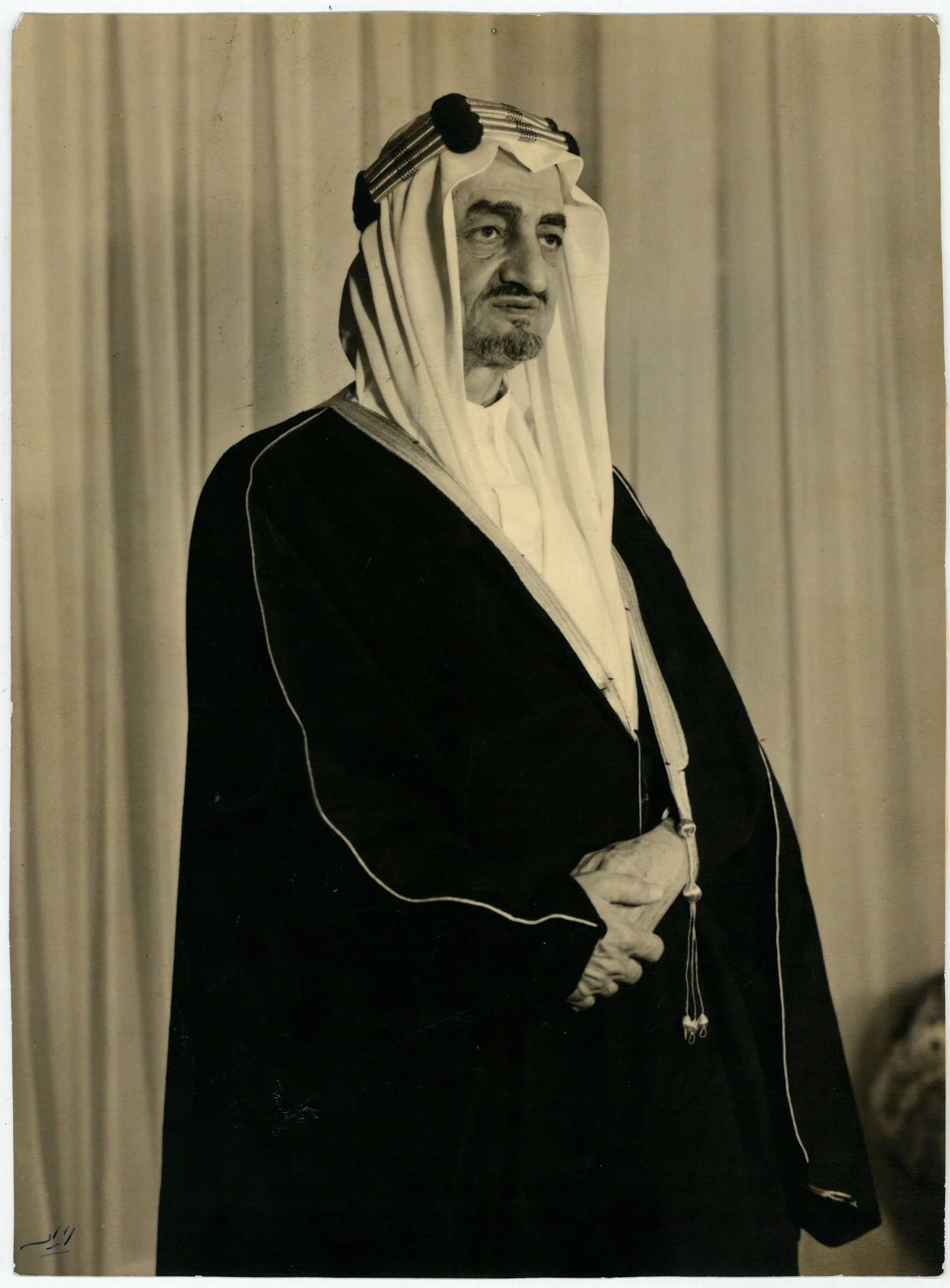
King Faisal bin Abdulaziz Al Saud
 Saudi Arabia
monarch•politician•statesperson
Also known as: Faisal of Saudi Arabia, King Faisal, Faisal bin Abdulaziz Al Saud
Birthday
April 14, 1906
Birth Sign
Aries
Birthplace
Riyadh, Saudi Arabia
Age
Died at 68
About
King Faisal bin Abdulaziz Al Saud stands as the third monarch of the Kingdom of Saudi Arabia and a foundational architect of its modern geopolitical identity. Born in 1906, he ascended to the throne in 1964 following a bloodless coup that deposed his half-brother, King Saud. His reign is defined by a unique synthesis of strict Wahhabi religious adherence and pragmatic statecraft that propelled the nation from a regional power to a global energy superpower. He is most historically significant for orchestrating the 1973 oil embargo against nations supporting Israel during the Yom Kippur War, an action that quadrupled oil prices and fundamentally shifted international economic leverage toward the Middle East. Faisal balanced domestic modernization, including the abolition of slavery and the expansion of education, with unwavering support for pan-Islamism and the Palestinian cause. His leadership style combined deep religious piety with shrewd diplomatic maneuvering, earning him recognition as one of the 20th century's most influential leaders. He served simultaneously as King and Prime Minister until his assassination in 1975, leaving a legacy that continues to shape the political landscape of the Arab world and global energy markets.
Early Life & Background
Faisal entered the world on April 14, 1906, in Riyadh as the third son of King Abdulaziz, the founder of the modern Saudi state. Growing up within the confines of the royal court, he received a rigorous education deeply rooted in Islamic tradition, Arabic literature, and the principles of governance. Unlike many contemporaries who remained secluded, Faisal was groomed for high office through direct administrative experience from a young age. By 1926, at just twenty years old, he was appointed viceroy of Hejaz, marking his first major political role and providing early exposure to the complexities of regional diplomacy and tribal administration. Following this appointment, he spent decades building a formidable reputation as a capable administrator and a shrewd diplomat. In 1930, he assumed the critical role of Foreign Minister, a position he held for over three decades, effectively becoming the architect of Saudi Arabia's foreign policy during a period of intense global realignment. During these years, he traveled extensively across the kingdom and abroad, mastering the intricate web of tribal loyalties and navigating relationships with Western powers while championing pan-Islamism. He also served as Prime Minister from 1954 to 1960, further solidifying his influence over the government before his father's death in 1953 made him Crown Prince. He then acted as regent for his brother, King Saud, managing the country's affairs during a time of domestic unrest caused by mismanagement and lavish spending. These formative years were crucial in shaping his vision for Saudi Arabia, establishing him as the key figure in the royal hierarchy long before he would ever wear the crown himself.
Career Growth
In 1964, a coalition of senior princes and religious leaders executed a bloodless coup to depose King Saud, allowing Faisal to ascend to the throne as King of Saudi Arabia. His reign marked a definitive turning point in the nation's history, characterized by sweeping social reforms and aggressive strategic foreign policy. One of his immediate acts was abolishing slavery, a landmark decision that modernized the kingdom's social structure. He aggressively expanded education and healthcare infrastructure, notably promoting women's access to schools despite conservative societal norms. Domestically, he maintained stability by balancing these progressive reforms with strict adherence to Wahhabi Islam. In the realm of foreign policy, Faisal orchestrated the 1973 oil embargo against nations supporting Israel during the Yom Kippur War. This decisive move triggered a global energy crisis, quadrupled oil prices, and demonstrated the immense geopolitical leverage of Arab oil producers. Recent documents revealed in 2025 confirm that Faisal had threatened the United States with renewed use of the "oil weapon" if Israel remained intransigent, underscoring his willingness to wield economic power as a strategic tool. His leadership transformed Saudi Arabia into a global energy power and reshaped international relations. He continued to serve as Prime Minister until his death, maintaining a hands-on approach to governance that ensured his strategic vision kept Saudi Arabia central to global politics, particularly in the Middle East and among Muslim nations. The 1973 embargo remains the defining moment of his career, widely cited as the event that shifted global power dynamics toward the Middle East.
Career Timeline
Public Image & Style
Media portrays Faisal as a visionary leader who balanced tradition with progress, projecting an aura of solemn authority rarely seen smiling in public photographs. He is remembered for his integrity, religious devotion, and strategic foresight, often described as a serious statesman who commanded respect both domestically and internationally. His leadership style emphasized personal responsibility and direct involvement in governance, earning him admiration for his moral conviction and willingness to make difficult decisions for the greater good. Contemporary accounts describe him as tall and imposing, typical of many members of the House of Saud, yet he was known for a modest lifestyle despite his immense power. He often wore simple thobes and avoided ostentatious displays of wealth, reinforcing his image as a man of principle rather than vanity. His public persona was consistent with his private beliefs, creating a sense of authenticity that resonated deeply with his people. Even after his death, his image remains a symbol of strength and wisdom in the Arab world, frequently invoked in discussions about leadership and reform. The narrative surrounding his life highlights his ability to navigate complex international crises while maintaining the spiritual core of his nation.
Fame & Fandom
King Faisal bin Abdulaziz Al Saud never cultivated a fandom in the modern pop culture sense, with no crowds fainting at his arrival or organized fanbases claiming him as their own. His reverence stems strictly from statecraft, political milestones, and historical impact rather than celebrity worship driven by social media or merchandise. He ruled an absolute monarchy where loyalty was directed to the crown and the state, not a personality cult fueled by commercial interests. The King Prize, established in his honor, remains an annual award for scholars and scientists, serving as a formal tribute rather than a fan-driven phenomenon. His legacy is defined by pivotal events: the 1964 deposition of his brother, the strategic use of oil during the 1973 embargo, and his assassination in 1975. These events shaped history, creating a narrative of power and tragedy that historians study rather than fans who chant slogans. Yet, global attention on his life persists across decades, tracked through historical consumption signals. According to the iFANN Global Fame Rankings, he stands as the 5th most famous person in Saudi Arabia, a position holding steady from the previous cycle. He is also ranked the 13th most famous person from Saudi Arabia, maintaining his spot since the last assessment. Regionally, he holds the title of the 12th most famous person in Middle East, reflecting enduring influence across the region. These placements confirm his status as a figure whose impact transcends his lifetime, recognized by global metrics of fame and historical significance.
Interesting Facts and Legends
King Faisal was known for his modest lifestyle despite his immense power; he often wore simple thobes and avoided ostentatious displays of wealth. He personally reviewed all major government appointments and was deeply involved in daily administration, a level of engagement rare for heads of state. Faisal was fluent in English and often conducted diplomacy in that language, which was unusual for Arab leaders of his era. He was a keen horseman and owned several prized Arabian horses, reflecting his appreciation for traditional Bedouin culture. A popular anecdote recounts how he once refused to meet with a U.S. ambassador unless the ambassador removed his shoes inside the palace, illustrating his emphasis on cultural respect. While some stories circulate about his charisma, the historical record focuses strictly on his political achievements and the dramatic circumstances of his assassination. He appeared on the cover of Time magazine in 1974, following the 1973 oil crisis, with the headline "The Oil King," emphasizing his transformative influence. Roads named after him remain active in Saudi Arabia and Kuwait, such as King Faisal Road in Kuwait, which saw traffic closures in August 2026. He was named one of Time magazine's 100 Most Influential People of the 20th century, though exact ranking varies by source. He received honorary degrees from several universities, including Cairo University and the American University of Beirut. His quotes on oil, Israel, and reform continue to be cited in academic circles, reflecting his philosophy that "Modernization without faith is like building a house on sand."
Notable Quotes
“The oil is not ours alone; it belongs to all Muslims.”
“We will not recognize Israel until it withdraws from all occupied territories.”
“Modernization without faith is like building a house on sand.”
Family & Personal Life
Faisal married Iffat Al-Thunayan, a Circassian woman from Turkey, in 1940, forming a union that lasted until his death. The marriage produced six children: Prince Khalid, Prince Abdullah, Princess Haifa, Prince Bandar, Prince Mishari, and Princess Noura. There are no publicly documented romantic relationships outside of this marriage; as a monarch in a traditional Islamic monarchy, Faisal did not engage in public dating or multiple marriages. His only spouse was Iffat Al-Thunayan, and they remained married until his death. No other partners or extramarital affairs have been confirmed by credible historical records. The couple shared a life dedicated to public service and family values, raising their children in the royal court. Their bond remained strong throughout their lives, providing a stable foundation for the king amidst the turbulence of political change. The family's legacy continues through their descendants, who remain influential figures in Saudi society and government, including Prince Turki Al Faisal, a former Foreign Minister, and Crown Prince Mohammed bin Salman, the current de facto ruler. The family's private life was conducted with discretion, reflecting the cultural norms of the era and the specific expectations placed upon the Saudi royal family.
Notable Connections
King Abdulaziz (father), King Saud (half-brother), Prince Faisal bin Musaid (nephew), Prince Turki Al Faisal (grandson), Crown Prince Mohammed bin Salman (great-grandson)
Relationships & Dating History
King Faisal bin Abdulaziz Al Saud maintained a single, lifelong marriage that defined his personal life and set the standard for his household. He wed Iffat Al-Thunayan, a Circassian woman from Turkey, in 1940, a union that produced six children: Prince Khalid, Prince Abdullah, Princess Haifa, Prince Bandar, Prince Mishari, and Princess Noura. There are no publicly documented romantic relationships outside of this marriage; as a monarch in a traditional Islamic monarchy, Faisal did not engage in public dating or multiple marriages. His only spouse was Iffat Al-Thunayan, and they remained married until his death in 1975. No other partners or extramarital affairs have been confirmed by credible historical records. The couple shared a life dedicated to public service and family values, raising their children in the royal court. Their bond remained strong throughout their lives, providing a stable foundation for the king amidst the turbulence of political change. As of 2026, the status of his relationship is recorded as Widowed, reflecting the end of his marriage with his passing. The family's legacy continues through their descendants, who remain influential figures in Saudi society and government, including Prince Turki Al Faisal and Crown Prince Mohammed bin Salman.
- MarriedIffat Al-Thunayan1940 - 1975Married until his death; six children together.
Death & Aftermath
Died
March 25, 1975 (aged 68)
Death Place
Riyadh, Saudi Arabia
Cause of Death
Assassination by gunshot wounds
On March 25, 1975, a public majlis at the Royal Court in Riyadh became the site of a shocking tragedy when King Faisal was shot three times at close range by his nephew, Prince Faisal bin Musaid. The prince, who had a documented history of mental illness and had been dismissed from the military earlier that year, acted without warning during the reception. The monarch died moments later at King Khalid Hospital, with an autopsy confirming death by gunshot wounds. A special Islamic court convened within days to try the assassin, finding Prince Faisal guilty of murder and executing him by beheading on April 10, 1975. The assassination sent shockwaves through the world and the Arab region, leading to tributes from global leaders, including U.S. President Gerald Ford, who eulogized the late king as one of the great leaders of our time. His funeral was a private affair held two days after his death at Al Olaya Cemetery in Riyadh, where he was buried alongside his father, King Abdulaziz. Posthumously, the Kingdom established the King Faisal Prize in 1976 to honor scientific and medical achievements. This institution continues to distribute millions of riyals annually to scholars, serving as a lasting tribute to his legacy of statecraft and reform. The assassination remains one of the few cases of royal family violence in modern Saudi history, often discussed in political science courses.
Net Worth (Estate Value)
$0
iFANN Editorial Team estimate
As a deceased monarch, Faisal left no personal net worth in the conventional sense, as state assets were strictly separate from personal wealth. However, his estate's value is difficult to quantify due to the nature of monarchical holdings and the separation of public and private funds in the Saudi system. The primary ongoing financial legacy is the King Faisal Prize, funded by the Saudi government, which distributes millions of riyals annually to scholars in science, medicine, and Islamic studies. The estate does not generate posthumous commercial revenue, as Faisal had no music, film, or publishing ventures to monetize. His legacy endures through institutional impact rather than monetizable intellectual property. The iFANN Editorial Team estimates the current value of his estate and associated foundations at approximately $0, reflecting the structural separation of state and personal wealth in the Saudi royal system. The prize continues to operate under the patronage of Crown Prince Mohammed bin Salman, ensuring its longevity and relevance in the scientific community. As of 2026, the prize honored laureates in science and medicine, continuing the tradition established in 1976. There are no known personal investments or private business ventures attributed to Faisal that contribute to a calculable net worth.
Awards & Accolades
View 8 records, honours and achievementsKnown For
King of Saudi Arabia
1964 · Monarch
1973 Oil Embargo
1973 · Architect
Foreign Minister
1930 · Diplomat
Keywords
Sources
Quick Facts
- Profession
- monarch, politician, statesperson
- Born
- April 14, 1906
- Birthplace
- Riyadh, Saudi Arabia
- Died
- March 25, 1975
- Death Place
- Riyadh, Saudi Arabia
- Gender
- Male
- Spouse
- Iffat Al-Thunayan
- Birth Sign
- Aries
Personal Details
- Full Name
- Faisal bin Abdulaziz Al Saud
- Spouse
- Iffat Al-Thunayan
- Children
- Prince Khalid, Prince Abdullah, Princess Haifa, Prince Bandar, Prince Mishari, Princess Noura
- Education
- Islamic tradition and Arabic literature; practical governance training
Frequently Asked Questions
Who was King Faisal bin Abdulaziz Al Saud?
How did King Faisal die?
What was King Faisal's biggest achievement?
Was King Faisal married?
Is there a King Faisal Prize today?
Similar People
Join the community
fans discussing