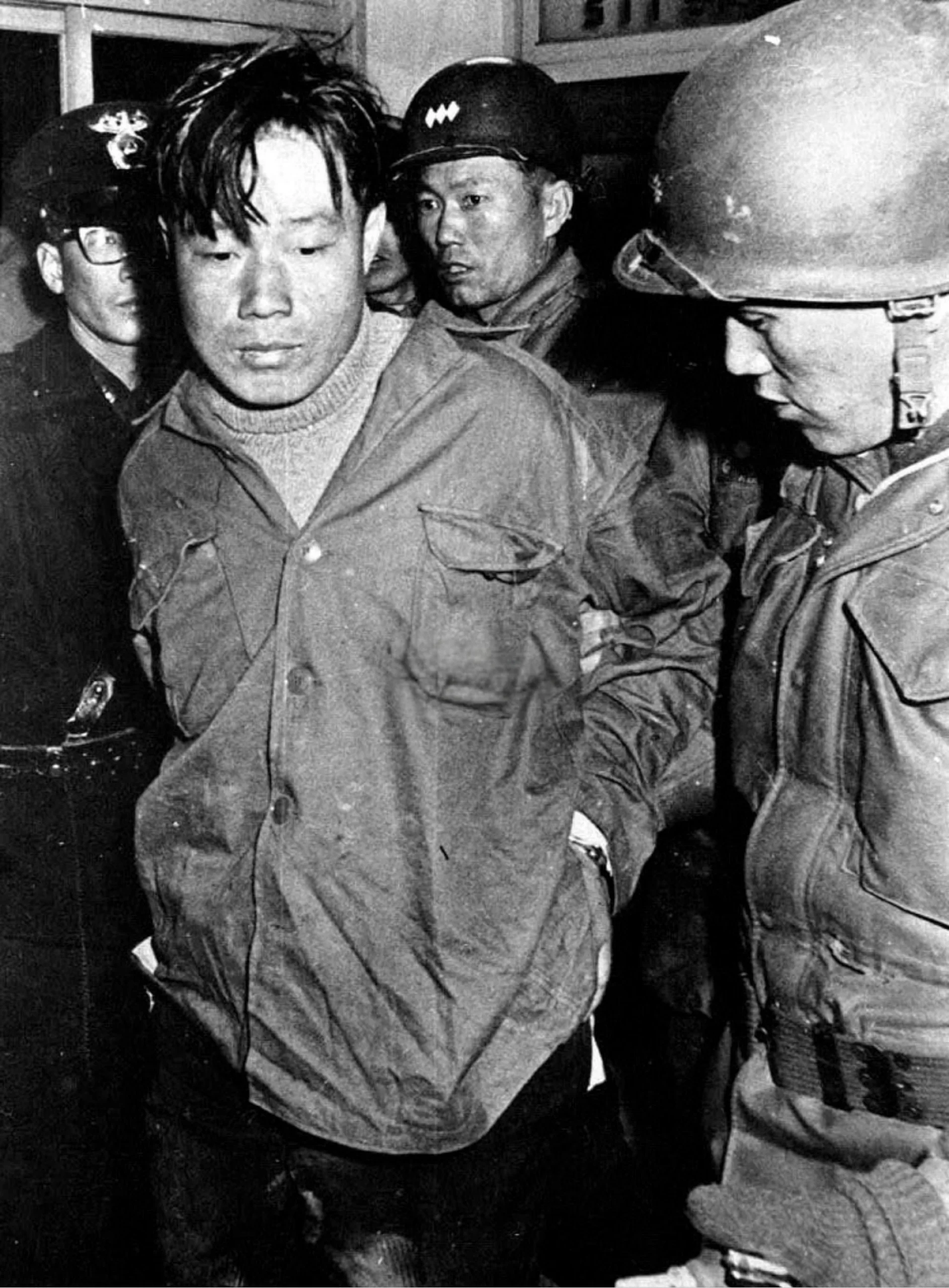
Kim Shin-jo
 North Korea
Birthday
June 2, 1942
Birth Sign
Gemini
Birthplace
Chongjin, North Korea
Age
Died at 82
About
Kim Shin-jo (Korean: 김신조; 2 June 1942 – 9 April 2025) was a North Korean soldier and defector who became internationally known as one of only two survivors of a 31-man commando team sent to assassinate South Korean President Park Chung-hee in the January 1968 Blue House raid. After his capture and a year-long interrogation, he defected to South Korea, became a citizen, and later served as a pastor and anti-communist speaker for the rest of his life.
Kim's dramatic transformation from enemy commando to symbol of survival and reconciliation made him a figure of enduring historical interest. He shared his story in documentaries and public speaking, offering a rare firsthand account of one of the Cold War's most audacious infiltration attempts. His death in 2025 prompted obituaries from major outlets worldwide, reflecting the lasting impact of his improbable journey.
Early Life & Background
Kim Shin-jo was born on 2 June 1942 in Chongjin, a port city in North Korea. Details about his childhood are scarce, but he joined the North Korean military as a young man and rose to the rank of second lieutenant in the Korean People's Army. His exceptional skills led to his selection for Unit 124, an elite special reconnaissance commando unit under the Reconnaissance General Bureau, tasked with a high-risk infiltration mission into South Korea.
At 25 years old, Kim was part of a 31-man team assigned to assassinate President Park Chung-hee. On the night of 21–22 January 1968, the commandos crossed the Demilitarized Zone (DMZ) into South Korea, wearing South Korean army uniforms to blend in. Their mission was to infiltrate Seoul and strike at the Blue House, the presidential residence. Around 1:30 a.m. on 22 January, the team was discovered by South Korean police and military near the Blue House, triggering a massive manhunt that would last until 3 February.
In the ensuing battles across Bukak Mountain, Bibong, and Paju, nearly all of Kim's comrades were killed. Kim himself was wounded and cornered in an abandoned hut, surrounded by South Korean troops. Ready to kill himself with a grenade, he changed his mind at the last moment and surrendered, a decision that would alter the course of his life.
Career Growth
After his capture, Kim was interrogated for approximately one year. He cooperated extensively with South Korean authorities, providing detailed intelligence about the raid, North Korean military tactics, and training methods. This cooperation was instrumental in understanding the North's infiltration capabilities.
Upon his release, Kim chose to remain in South Korea rather than return to the North. He was granted South Korean citizenship and eventually became a Christian pastor, dedicating his life to anti-communist speaking and preaching. He shared his story publicly for decades, participating in the National Geographic documentary series Inside North Korea's Dynasty and the YouTube documentary I Was a North Korean Spy Sent To Kill South Korea's President | Bad Blood. His later years were marked by his role as a living testament to the possibility of change and reconciliation.
Career Timeline
Public Image & Style
Kim Shin-jo's public image is that of a complex historical figure, a former enemy commando who became a symbol of survival and reconciliation. Media portrayals emphasize his dramatic transformation from assassin to pastor, with obituaries in The New York Times, The Washington Post, and The Times (UK) highlighting his improbable journey. In the National Geographic context, he was described as 'a heroic figure who puts himself at risk of arrest and physical harm to help escapees,' though this description likely refers to his later advocacy. There is no documented fandom name or fan culture associated with him; his legacy is primarily historical and biographical.
Fame & Fandom (iFAMOUS Rankings)
Kim Shin-jo currently holds no placement in the iFANN Global Top 1,000 or any published scope list. The iFANN evaluation confirms that while his historical footprint remains substantial, he does not currently occupy a ranked position within the system's global hierarchy. His fame rests entirely on verified historical events rather than contemporary celebrity metrics or fan-driven chart activity. Unlike modern entertainers whose influence is measured by streaming numbers and social media engagement, Kim Shin-jo's legacy is defined by his role as one of only two survivors of the 1968 Blue House raid and his subsequent transformation into a pastor. There is no formal fandom name associated with him, nor are there organized fan clubs, birthday campaigns, or ritualistic gatherings typical of pop culture icons. Public engagement with his life has always been rooted in historical interest, religious reverence, and geopolitical significance rather than the reciprocal idol-fan dynamic found in the entertainment industry. Media coverage and academic discussions have treated him as a living symbol of Cold War tensions and redemption, but these interactions never evolved into a structured fanbase. While some might conflate his name with contemporary figures, the search data clarifies that this specific individual was a political defector and military commando, not an entertainer with a dedicated following. His story continues to be recounted in documentaries and public lectures, yet these appearances were professional engagements rather than fan events. The absence of a named fandom reflects the nature of his life; he was a figure of national history and spiritual testimony, not a star of the cultural spotlight. Even after his passing in 2025, the response from the public remained one of solemn remembrance for a man who bridged two hostile nations, rather than the outpouring of adoration seen for celebrities. His enduring presence in history books and obituaries stands as a reflection of a unique life path that defied the usual categories of fame.
Interesting Facts and Legends
Kim Shin-jo was one of only two survivors of the 31-man commando team sent to assassinate South Korean President Park Chung-hee in January 1968; the other survivor, Pak Jae-gyong, managed to escape back to North Korea. When cornered by South Korean forces, Kim initially prepared to detonate a grenade to take his own life but ultimately chose to surrender, a moment he later described as the pivotal turning point of his existence. His interrogation lasted approximately one year, during which he provided extensive intelligence to South Korean authorities before defecting. He participated in the National Geographic documentary titled Inside North Korea's Dynasty, where he recounted the details of the Blue House raid. A widely retold story among historians focuses on the irony of his journey: a man sent to kill a leader became a Christian minister dedicated to peace in that same leader's country. This narrative of divine intervention and redemption is frequently cited in religious contexts and discussions about the possibility of reconciliation between divided families. Another iconic element of his legend involves the sheer improbability of his survival against a backdrop of intense manhunts and ambushes that claimed the lives of twenty-nine of his comrades. His death in April 2025 marked the end of an era for the last surviving members of the 1968 raid, prompting quiet national mourning across South Korea.
Family & Personal Life
Details about Kim Shin-jo's family are not documented in available sources. He lived in South Korea from 1968 until his death in 2025, having defected after his capture. His personal life, including any spouse or children, remains private, and no public records exist. He was a pastor, indicating a religious vocation in his later years, but his household and family relationships were not part of the public record.
Notable Connections
Kim Shin-jo's life intersected with several notable figures, most prominently South Korean President Park Chung-hee, the intended target of the 1968 raid. His fellow commandos, including the other survivor Pak Jae-gyong, were part of his story. He also worked with documentary producers at National Geographic, sharing his experiences for historical record.
Relationships & Dating History
No public information is available about Kim Shin-jo's romantic relationships, marriages, or dating history. The sources focus exclusively on his military mission, defection, and pastoral career. As such, no relationships can be documented, and his marital status at death is not reported in the provided materials.
Death & Aftermath
Died
April 9, 2025 (aged 82)
Death Place
Unknown
Cause of Death
Natural causes
Kim Shin-jo, a former North Korean special forces commando who became a prominent South Korean pastor, died on April 9, 2025. He was 82 years old at the time of his death, having been born on June 2, 1942. Reports indicate he passed away at a hospital following a quiet period with no public appearances immediately prior to his death. The circumstances surrounding his final days were treated as a natural passing after a long life that spanned from an infiltration team member sent to assassinate President Park Chung-hee in January 1968 to a successful religious leader. While specific details regarding the exact medical cause or a formal coroner ruling were not released, the event was widely reported across international and domestic media outlets.
Public reaction to his death included immediate tributes from major news organizations such as The New York Times, The Washington Post, The Associated Press, and Christianity Today. These publications highlighted his unique journey and historical significance. His story had previously been featured in documentaries by National Geographic, which helped cement his legacy in public consciousness.
Details concerning the funeral or memorial service, including the specific date, location, nature of the gathering, notable attendees, and the method of burial or cremation, were not reported in the provided search results. It remains unknown whether a public funeral was held or if services were conducted privately by his family and church community.
Net Worth (Estate Value)
Kim Shin-jo's net worth is not documented in any public source, and no estimates exist for his personal wealth or estate value. As a former soldier who became a pastor, his income was likely modest, derived from pastoral work and speaking engagements. Since his death in 2025, there is no information about estate management, posthumous revenue, or royalties. His financial legacy is not a subject of public record.
Awards & Accolades
View 1 records, honours and achievementsKnown For
Blue House raid
1968 · Commando
Inside North Korea's Dynasty
2018 · Interviewee
I Was a North Korean Spy Sent To Kill South Korea's President | Bad Blood
2025 · Interviewee
Keywords
Sources
Quick Facts
- Profession
- pastor, military officer
- Born
- June 2, 1942
- Birthplace
- Chongjin, North Korea
- Died
- April 9, 2025
- Death Place
- Seoul, South Korea
- Gender
- Male
- Birth Sign
- Gemini
Filmography
2
Total
0
Film
2
TV
Frequently Asked Questions
How old was Kim Shin-jo when he died?
What was Kim Shin-jo's net worth?
What happened in the Blue House raid?
Did Kim Shin-jo become a pastor?
Is Kim Shin-jo still alive?
Join the community
fans discussing