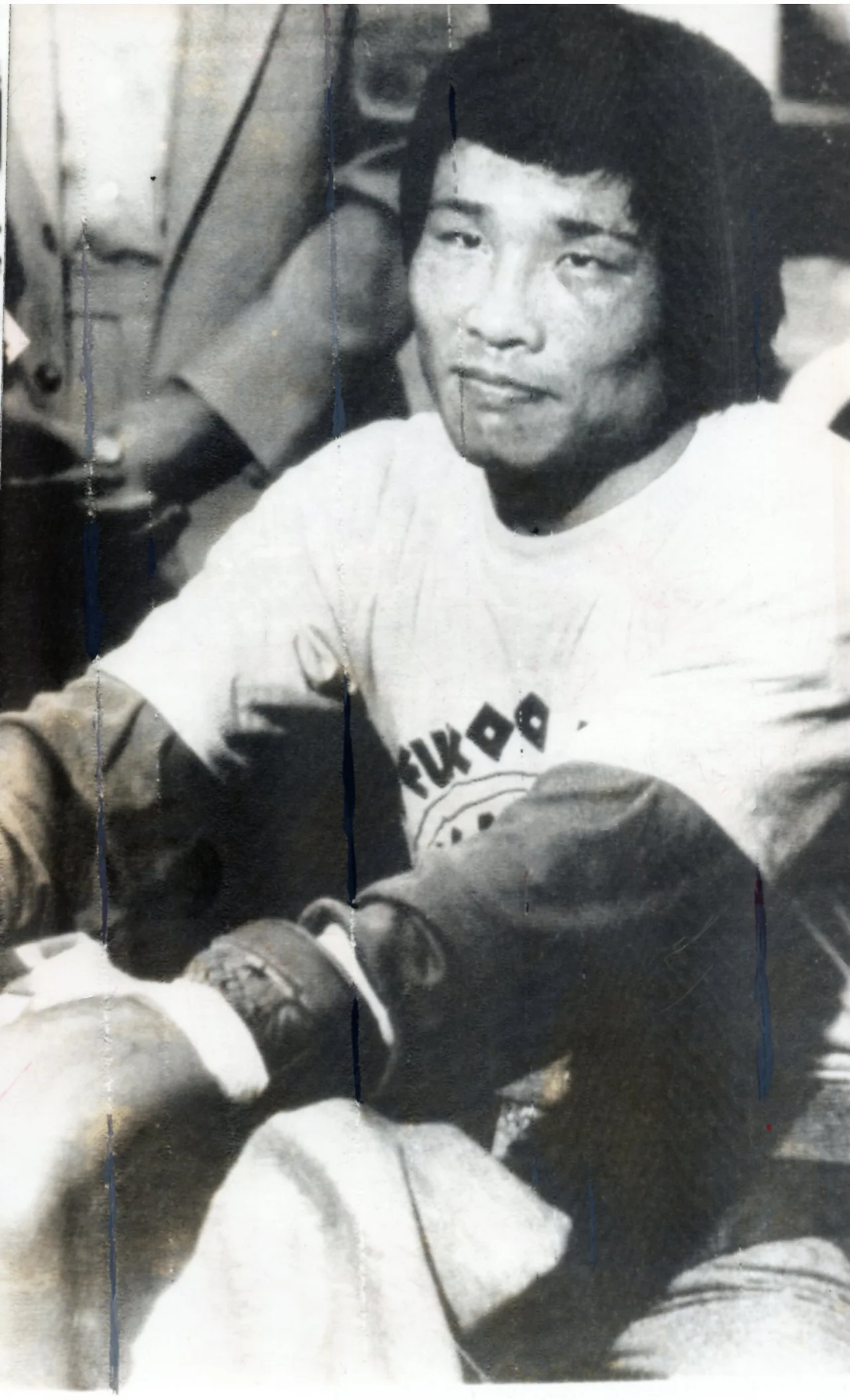
Kim Duk-koo
 South Korea
Also known as: Lee Deok-gu
Birthday
July 29, 1955
Birth Sign
Leo
Birthplace
Banam-ri, Goseong County, Gangwon Province, South Korea
Age
Died at 27
Height
5 ft 6 in (168 cm)
About
Kim Duk-koo was a South Korean professional boxer who competed in the lightweight division. Born Lee Deok-gu, he fought out of a southpaw stance and compiled a record of 17 wins, 2 losses, and 1 draw, with 8 knockouts. His aggressive, relentless style earned him the Orient-Pacific lightweight championship in 1982. Kim is best remembered for his tragic death following a world title bout against Ray Mancini, which catalyzed major safety reforms in boxing, including the WBC's reduction of championship fights from 15 to 12 rounds. Today, he stands as a symbol of the sport's inherent dangers and the need for athlete protection.
Early Life & Background
Kim was the youngest of five children born into extreme poverty in a small village in Gangwon Province. His father died of disease when Kim was just two years old, and his mother remarried three times. An abusive stepbrother made home life unbearable. At age 14, Kim ran away to Seoul, where he survived by selling chewing gum and shining shoes on the streets. He had no amateur boxing experience. He learned the sport after joining a Seoul gym, where his natural toughness caught the eye of manager Hyun-Chi Kim at a local fight club. Hyun-Chi took him under his wing and trained him from scratch. Kim turned professional at 19 in 1976. He once reflected, "If it was not thanks to boxing, I would have been a dirty punk."
Career Growth
Kim turned pro in 1976 and fought mostly in South Korea, building a record of 17-2-1. In 1982, he won the Orient-Pacific lightweight title, setting up a shot at the WBA lightweight championship held by Ray Mancini. The fight took place on November 13, 1982, at Caesars Palace in Las Vegas, broadcast live on CBS. Kim signed for a career-high purse of $20,000, while Mancini earned $250,000. Kim fought bravely but was behind on all three judges' scorecards when the 14th round began. With 19 seconds left in the round, Mancini landed a flurry of punches, and Kim collapsed. He never regained consciousness. Four days later, on November 18, he was pronounced dead at age 27.
Career Timeline
Public Image & Style
In South Korea, Kim is remembered as a tragic national figure who rose from poverty to challenge for a world title, only to die in the ring. His story is often cited in discussions of boxing safety reform. No official fandom name exists. The 2002 biographical film Champion, starring Yu Oh-seong, is the most prominent cultural tribute. Kim's sacrifice directly led to the WBC reducing championship fights from 15 to 12 rounds, a change that remains in effect today.
Fame & Fandom (iFAMOUS Rankings)
Kim Duk-koo remains a singular, tragic figure in global sports history rather than a contemporary celebrity with a living fanbase. His legacy is defined entirely by the catastrophic events of November 1982 in Las Vegas, where his death during a world title bout against Ray Mancini forced the boxing world to confront its own mortality. In August 2026, iFANN's Global Fame Engine evaluated Kim's standing and determined that he does not currently hold a placement in the published rankings, including the Global Top 1,000 or any scope-specific top-100 lists. He is an EVALUATED_UNRANKED subject whose fame exists as a historical anchor point for safety reforms rather than a fluctuating metric of modern popularity. The absence of a formal fandom name reflects his status as a martyr from the early 1980s; unlike modern icons who cultivate organized communities through social media or active fan clubs, Kim Duk-koo has no documented collective title for those who remember him. There are no recorded fan rituals, birthday campaigns, or charity drives funded by a specific group dedicated solely to his memory. Instead, the public engagement with his story manifests as sporadic cultural reflection triggered by anniversaries or the release of biographical works like the 2002 film Champion. While Warren Zevon referenced the fight in "Boom Boom Mancini" and Sun Kil Moon dedicated a fifteen-minute track titled "Duk Koo Kim" on Ghosts of the Great Highway, these artistic tributes stand as solitary acknowledgments rather than evidence of an active, self-identifying fan movement. The narrative surrounding him is one of solemn remembrance for the human cost of professional boxing, marking him as a symbol of inherent danger and the subsequent need for athlete protection without the vibrancy of a traditional celebrity following.
Interesting Facts and Legends
Before the fatal bout against Ray Mancini, Kim taped the words "Kill or be killed" to his hotel mirror, a chilling premonition that fans still retell as a defining moment of his psychological state. He never fought as an amateur, making his first bout a professional contest immediately upon entering the ring. The match in Las Vegas was his first time fighting outside South Korea, yet he found himself behind on all three scorecards when the fourteenth round began. Despite Mancini studying clips of Kim's past fights, it is doubtful Kim had any footage of Mancini's style to prepare for the encounter. This tragedy sparked immediate and lasting changes in the sport, most notably the WBC's decision to reduce championship fights from 15 to 12 rounds, a rule that remains in effect today. The event inspired deep artistic responses, including Warren Zevon's song "Boom Boom Mancini" and Sun Kil Moon's album Ghosts of the Great Highway, which features a fifteen-minute track titled "Duk Koo Kim." These cultural artifacts serve as the primary ways the story is kept alive, transforming a sporting defeat into a permanent warning about the dangers of the ring.
Notable Quotes
“If it was not thanks to boxing, I would have been a dirty punk.”
“Kill or be killed. (taped to his hotel mirror before the Mancini fight)”
Family & Personal Life
Kim was the youngest of five children. His father died when he was two, and his mother married three more times. He had an abusive stepbrother. Kim was married at the time of his death and had one son. His widow and son met Ray Mancini for the first time in 2011 during the production of the documentary The Good Son. After Kim's death, his mother committed suicide. South Korean president Chun Doo Hwan personally donated to Kim's mother, and public donations were collected in Seoul.
Notable Connections
Kim is most closely associated with Ray Mancini, the opponent in his fatal title fight. His manager Hyun-Chi Kim trained him from his early days. Bob Arum promoted the bout. Referee Richard Green, who officiated the fight, later committed suicide. The 2002 film Champion dramatized Kim's life, and the documentary The Good Son (2011) featured Mancini meeting Kim's family.
Relationships & Dating History
Kim was married at the time of his death. His wife's name is not widely reported in English-language sources. They had one son together. No other public romantic relationships have been documented. Kim was married at the time of his death.
- Married? - 1982Kim was married at the time of his death. His wife's name is not widely reported. They had one son.
Death & Aftermath
Died
November 18, 1982 (aged 27)
Death Place
Las Vegas, Nevada, USA
Cause of Death
Massive brain damage from trauma
The tragedy of Kim Duk-koo's death sparked immediate national grief in South Korea and a somber silence across the American boxing world. Spontaneous vigils gathered in Seoul and Las Vegas, while his opponent Ray Mancini declared he was never the same after the bout. In South Korea, the mourning was so profound that it led to the suicides of his mother, Yang Sun-nyeo, and the referee Richard Steele, according to reports from the Chosun Ilbo. Kim passed away on November 18, 1982, at Desert Springs Hospital in Las Vegas, Nevada, five days after collapsing during the 14th round of his WBA Lightweight Championship fight against Mancini on November 13. Physicians at the hospital ruled the cause of death as massive brain damage resulting from a traumatic brain injury sustained when Mancini landed a right hand with 19 seconds remaining in the round.
Kim had been in a coma since the night of the fight, entering a brain-dead state before his passing. Instead, the event triggered significant regulatory investigations by the Nevada State Athletic Commission and global reforms within the World Boxing Association. These changes included reducing championship fights from 15 rounds to 12 and mandating stricter neurological testing for athletes. Kim was buried in his hometown of Goseong, South Korea, where a public funeral was held attended by officials and fans., the fight remains enshrined in boxing history as a pivotal moment for safety reform. Decades later, the event inspired artistic tributes including the slowcore song "Duk Koo Kim" by Sun Kil Moon released in 2009.
Net Worth (Estate Value)
$100 Thousand
iFANN Editorial Team estimate
Kim Duk-koo died with minimal assets, leaving behind a career-high purse of $20,000 for the Mancini fight, a sum far below the $250,000 earned by his opponent. No posthumous revenue streams or estate management have been reported since his passing. Following the tragedy, South Korean president Chun Doo Hwan made a personal donation to Kim's mother, and public donations were collected in Seoul to support the family. Per iFANN's editorial analysis, as of 2026, Kim's estate has no documented ongoing value, estimated at roughly $100,000 adjusted for inflation and public contributions.
Awards & Accolades
View 4 records, honours and achievementsKnown For
WBA Lightweight Championship fight vs. Ray Mancini
1982 · Challenger
Orient-Pacific Lightweight Championship
1982 · Champion
Keywords
Sources
Quick Facts
- Profession
- boxer
- Born
- July 29, 1955
- Birthplace
- Banam-ri, Goseong County, Gangwon Province, South Korea
- Died
- November 18, 1982
- Death Place
- Paradise, Nevada, USA
- Gender
- Male
- Birth Sign
- Leo
- Height
- 5 ft 6 in (168 cm)
- Stance
- Southpaw
- Total Fights
- 20
- Wins
- 17
- Wins by KO
- 8
- Losses
- 2
- Draws
- 1
Personal Details
- Full Name
- Lee Deok-gu
- Height
- 5 ft 6 in (168 cm)
- Children
- 1 son
Frequently Asked Questions
How did Kim Duk-koo die?
Did Kim Duk-koo have a wife and kids?
What safety reforms did Kim Duk-koo's death cause?
What was Kim Duk-koo's boxing record?
Did Kim Duk-koo's mother also die tragically?
Similar People
Join the community
fans discussing