“Radcliffe delivers a performance that is both vulnerable and fierce, capturing the essence of a young man torn between duty and desire.”
A.O. Scott
The New York Times
 United States
"Obsession turned deadly for four poets in 1944."
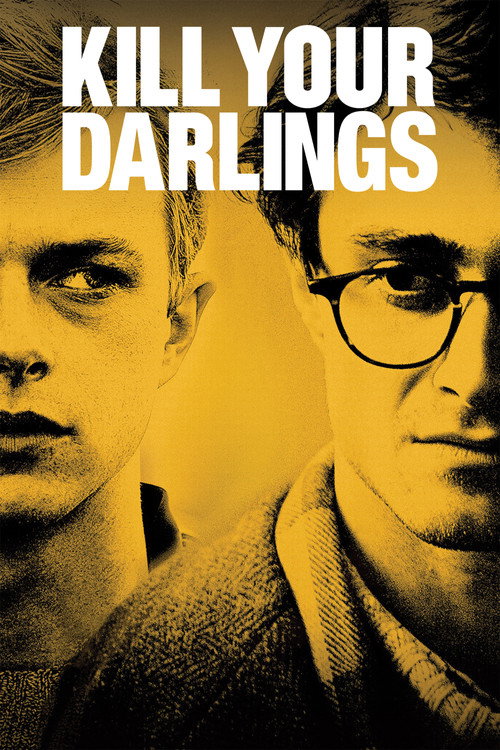
The sweltering summer of 1944 at Columbia University serves as the backdrop for a collision between academic propriety and bohemian rebellion. Kill Your Darlings traces the volatile friendship between Allen Ginsberg, a shy freshman from a conservative family, and Lucien Carr, a charismatic senior who pulls him into a world of poetry, drugs, and danger. This period drama focuses on the formative years of the Beat Generation before they became literary icons.
Director John Krokidas constructs a tense atmosphere where intellectual curiosity quickly curdles into paranoia. The narrative centers on the escalating harassment by David Kammerer, an older man obsessed with Lucien. As the group attempts to evade his threats, their loyalty is tested against the law. The film explores how these young men navigated their identities and the violent consequences of unchecked obsession.
Availability and pricing can change. Confirm on the provider's site before purchasing.
Allen Ginsberg arrives at Columbia University in New York City carrying the weight of his parents' expectations and his own confusion about his sexuality. He meets Lucien Carr, a senior student who lives with a freedom Allen finds intoxicating. Carr introduces Allen to Jack Kerouac and William Burroughs, forming a tight-knit circle that spends their days drinking cheap beer and reading poetry in the shadow of the Upper West Side. Their bond deepens through shared artistic ambitions and late-night conversations about literature and life.
The dynamic shifts when David Kammerer enters the picture. An older, wealthy man who has pursued Lucien for years, Kammerer refuses to accept rejection. His stalking becomes aggressive, involving public confrontations and physical intimidation that terrify the group. The friends find themselves trapped in a cycle of fear, constantly looking over their shoulders as Kammerer closes in. The tension rises as the summer heat intensifies, mirroring the growing desperation within the group.
Lucien struggles to maintain his independence while protecting his new friends from Kammerer's wrath. Allen watches helplessly as the situation deteriorates, forced to choose between his safety and his loyalty to Lucien. The group plans various schemes to escape or confront the stalker, but each attempt only seems to provoke Kammerer further. The atmosphere grows thick with anxiety as the boundaries between reality and nightmare blur for the young poets.
The narrative builds toward a breaking point where the characters must face the ultimate consequence of their actions. The summer ends not with a resolution, but with a crisis that leaves them reeling. The film captures the psychological toll of living in constant fear and the moral ambiguity of trying to protect a friend who may be beyond saving. The events of that fateful summer leave an indelible mark on their lives, shaping the trajectory of their future careers and personal relationships.
Official Trailer
Teaser Trailer
Critical Consensus
Critics praised the film for its strong performances and atmospheric direction. Daniel Radcliffe received particular acclaim for his portrayal of Allen Ginsberg. Some reviewers felt the pacing dragged in the middle, but the overall impact of the story remained powerful.
“Radcliffe delivers a performance that is both vulnerable and fierce, capturing the essence of a young man torn between duty and desire.”
A.O. Scott
The New York Times
“Krokidas crafts a visually stunning period piece that feels authentic to the era without getting lost in nostalgia.”
Peter Travers
Rolling Stone
“The chemistry between the cast members brings the Beat Generation to life with a raw energy that is both captivating and unsettling.”
Manohla Dargis
The New York Times
Daniel Radcliffe
Allen Ginsberg
Dane DeHaan
Lucien Carr
Michael C. Hall
David Kammerer
Jack Huston
Jack Kerouac
Ben Foster
William S. Burroughs
Elizabeth Olsen
Edie Parker
Jennifer Jason Leigh
Naomi Ginsberg
David Cross
Louis Ginsberg
Director
John Krokidas
Writer
Austin Bunn
Composer
Nico Muhly
Cinematographer
Reed Morano
Producers
Michael Benaroya, John Krokidas, Rose Ganguzza, Christine Vachon
Sundance Film Festival (2013)
U.S. Dramatic Directing Award: Won
Toronto International Film Festival (2013)
People's Choice Award: Nominated
Join the community
fans discussing