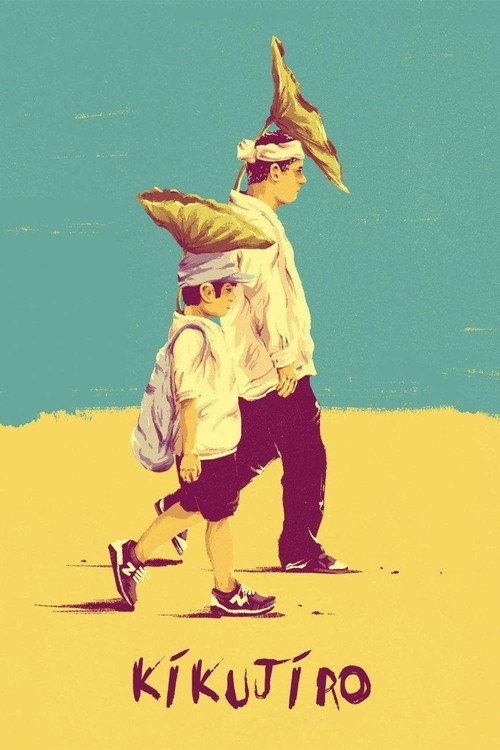
In the summer of 1999, Takeshi Kitano traded his trademark yakuza violence for something far gentler. Kikujiro opens on a lonely nine-year-old boy, Masao (Yusuke Sekiguchi), who lives with his grandmother in a quiet Tokyo suburb. His friends have all left for the holidays, and he spends his days idly, until he discovers a photograph and an address that suggest his mother lives in Toyohashi. Determined to meet her, he sets out alone, but his plan quickly unravels when a gang of older boys steals his money. Enter Kikujiro's sharp-tongued wife (Kayoko Kishimoto), who orders her husband, a blustering small-time hustler, to accompany the boy on his quest. It's a reluctant partnership that will define their summer.
Kitano, who also wrote and directed, plays Kikujiro with a perfect blend of gruffness and immaturity. He's a man who gambles away the travel money, schemes his way through situations, and often behaves more childishly than the boy he's supposed to protect. Yet as the pair hitchhikes across the Japanese countryside, encountering a parade of oddballs, two bikers nicknamed Fatso and Baldy, a gentle traveler named An-chan, a juggling girl, Kikujiro's rough exterior slowly cracks. Joe Hisaishi's lush, melancholic score, one of his most beloved outside Studio Ghibli, underscores every moment of warmth and longing.
The film's episodic structure, with chapter-like title cards, gives it the feel of a photo album, a deliberate choice by Kitano. It's a road movie that meanders, but that's exactly its charm. Kikujiro was a modest hit in Japan and later gained cult status internationally, proving Kitano's range as a filmmaker who could move from brutal crime dramas to tender childhood whimsy with equal mastery.
Availability and pricing can change. Confirm on the provider's site before purchasing.
PlotSpoiler-free
It's summer vacation in a Tokyo suburb, and nine-year-old Masao is bored and lonely. All his friends have left the city, and he lives with his grandmother, who works long hours. One day, he discovers a photograph and an address that suggest his mother lives in Toyohashi, a city several hours away. Desperate to meet her, he stuffs a few belongings into a backpack and sets off on his own. But his journey is cut short when a group of older boys steals his money, leaving him stranded and in tears.
Fortunately, Kikujiro's wife, the boy's former neighbor, spots him and takes pity. She decides that her husband must accompany Masao on the journey. Kikujiro is a middle-aged, loudmouthed hustler with yakuza connections, a man who has never shouldered serious responsibility. He's a reluctant and frankly terrible guardian: he gambles away the travel money at a bicycle race, bluffs his way through situations, and generally acts more childishly than the boy he's supposed to protect.
What follows is a meandering, episodic road trip across the Japanese countryside. The pair encounters a colorful cast of strangers: a perverted old man at a bus stop, two bikers named Fatso and Baldy who befriend them, a gentle traveler named An-chan, and a juggling girl. Along the way, Kikujiro's gruff exterior begins to crack, revealing a wounded, childlike man who finds himself reconnecting with his own lost innocence through the boy. The film's visual language is striking, with dreamlike fantasy sequences punctuating the narrative, and Joe Hisaishi's score elevates every scene with warmth and longing.
As they finally approach Toyohashi, the emotional stakes sharpen. Kikujiro's motivations become increasingly complex, and the story builds toward a revelation about Masao's mother that neither the boy nor the audience is fully prepared for. The journey has been about more than just finding a parent; it's about two lost souls finding something in each other. The film's title card at the end reveals the true meaning of the summer.
Kikujiro is a tender, whimsical road movie that showcases Takeshi Kitano's range beyond yakuza thrillers. The unlikely chemistry between Kitano and young Yusuke Sekiguchi, along with Joe Hisaishi's luminous score, creates a bittersweet journey that lingers long after the credits roll.
 Japan
Japan