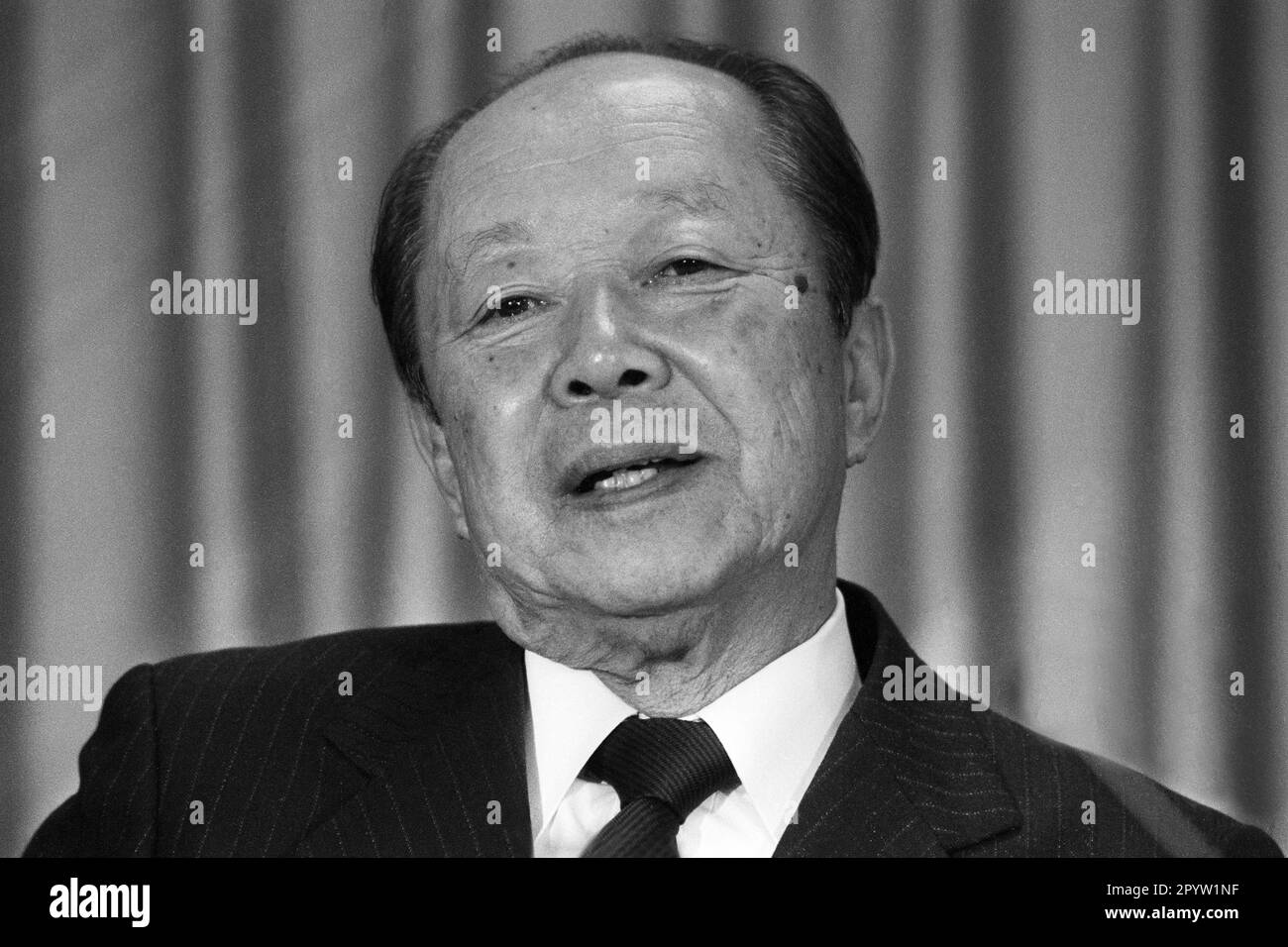
Kiichi Miyazawa
 Japan
JapanBirthday
+1919-10-08
Birth Sign
Libra
Birthplace
Tokyo
Age
Died at 87
About
Kiichi Miyazawa was a pivotal figure in Japan's postwar political landscape, renowned for his extensive experience and intellectual approach to governance. He served as Prime Minister of Japan from 1991 to 1993, a period marked by significant attempts at political reform. Throughout his illustrious career, Miyazawa held numerous critical cabinet positions across four decades, demonstrating a deep understanding of economic and foreign policy. His early education at Tokyo Imperial University, where he earned a law degree, and his subsequent tenure in the Ministry of Finance laid the groundwork for his transition into politics in 1953.
Miyazawa's premiership, though brief, represented a significant moment in Japanese political history, ending with the Liberal Democratic Party's first loss of majority since 1955. He later returned to the forefront of economic management as Finance Minister from 1999 to 2001, navigating Japan through a period of economic stagnation. His death on June 28, 2007, at the age of 87, marked the end of an era for a statesman who was a consistent presence in national and international affairs. He was a key figure in discussions on economic policy and Japan's role in the world.
Early Life & Background
Kiichi Miyazawa's journey into public service began long before his national prominence. Born in Tokyo on October 8, 1919, he hailed from a family with established political connections, as his father was a member of the Diet. This early exposure to the world of governance likely influenced his academic and professional path. He pursued higher education at the prestigious Tokyo Imperial University, graduating with a law degree in 1941. The following year, in 1942, Miyazawa commenced his career as a bureaucrat within the Ministry of Finance, a foundational role that provided him with intimate knowledge of Japan's economic machinery.
His early career included a posting to Manchuria during World War II, where he gained practical experience in wartime administration. Following the war, Miyazawa steadily ascended the ranks within the Ministry of Finance, building a reputation for his sharp economic acumen. The pivotal moment of his career transition arrived in 1953 when he decided to leave the civil service and enter the political arena. He successfully ran for and won a seat in the National Diet, marking the official beginning of his long and impactful political life. Early in his political career, he aligned himself with the influential faction led by Hayato Ikeda, who would later become Prime Minister.
Career Growth
Miyazawa's ascent through the political ranks was characterized by a series of significant leadership roles. His initial cabinet appointment came in 1962 as the Director of the Economic Planning Agency. This was followed by crucial tenures as Minister of International Trade and Industry from 1970 to 1971 and as Foreign Minister from 1974 to 1976, where he played a key role in shaping Japan's international relations. He further solidified his position in 1986 as Chief Cabinet Secretary, a role requiring extensive coordination and communication. Towards the end of the 1980s, he took on the significant portfolio of Finance Minister under Prime Minister Noboru Takeshita, demonstrating his recognized expertise in fiscal matters.
The pinnacle of his career arrived in 1991 when Kiichi Miyazawa assumed the office of Prime Minister of Japan. His administration focused on enacting political reforms, though these efforts ultimately fell short of securing sufficient legislative backing. The year 1993 proved to be a turning point, as the Liberal Democratic Party lost its parliamentary majority, leading to Miyazawa's resignation. Undeterred, he re-entered government service in 1999 as the Minister of Finance, serving under Prime Ministers Keizō Obuchi and Yoshirō Mori until 2001. In this capacity, he was instrumental in steering Japan's economy through a period of considerable stagnation and uncertainty.
Career Timeline
Public Image & Style
Miyazawa was widely perceived as a statesman of considerable intellect and a deep understanding of policy, often distinguished from his more charismatic political peers. His profound knowledge of economics and adeptness in diplomacy earned him widespread respect, though some observers noted a tendency towards indecisiveness. His fluency in English and a broad international perspective made him a highly valued counterpart for leaders on the global stage. Within Japan, his analytical and methodical approach to governance led to him being nicknamed 'the computer.'
His public persona was that of a serious, dedicated politician focused on the substantive issues facing the nation. While respected for his experience, his premiership was ultimately too brief to fully implement his policy agenda. His return as Finance Minister demonstrated his enduring commitment to public service and his recognized ability to manage complex economic challenges. His public image was one of a seasoned and capable leader, albeit one whose style was more analytical than flamboyant.
Fame & Fandom
Kiichi Miyazawa stands as a figure of profound historical weight rather than contemporary viral stardom. The iFANN Global Fame Engine evaluated his standing in August 2026 and determined that he is currently unranked within the published Global Top 1,000 or any Top-100 scope list. While his name carries immense gravity in diplomatic archives and political science curricula, it does not currently register on the specific popularity metrics that drive the engine's tiered rankings. This absence from the leaderboard reflects the nature of his legacy: one built on statecraft and policy shifts rather than the mass-market consumption signals that define modern celebrity fame.
Unlike pop icons who command organized tribes with specific names and rituals, Miyazawa never cultivated a formal fandom. There is no documented fanbase name, no subreddit dedicated to his tenure, and no fan-funded projects arising from his death. His supporters were voters, colleagues, and historians who viewed him as a statesman of considerable intellect rather than an entertainer. The public engagement surrounding him was limited to serious political discourse regarding economic theory, arms export policies, and international relations. While some might argue for a 'Miyazawa Appreciation Society' based on admiration for his analytical approach, no such group exists with official recognition or organized activities. His audience remains the global community of political observers who study the postwar era, a diffuse collective united by academic interest rather than shared fan culture.
Interesting Facts and Legends
Kiichi Miyazawa commanded the English language with notable fluency, frequently employing it during high-stakes international diplomatic engagements. He possessed a keen interest in history and economic theory, often found engrossed in reading material that informed his analytical approach to governance. A memorable event during his premiership occurred in 1992 when he hosted U.S. President George H.W. Bush; during a state banquet, President Bush experienced a sudden illness and vomited onto Miyazawa's lap, a moment that became widely publicized and remains one of the most famous diplomatic gaffes in modern history. Miyazawa was also recognized as a skilled orator, though his speeches occasionally drew criticism for their length. He participated in the Interaction Council, an international forum comprising former world leaders, further highlighting his global engagement. Additionally, Miyazawa issued a formal public apology in January 1992 concerning Japan's wartime actions, specifically addressing the issue of forced sexual servitude of Korean women during the war. His career spanned numerous critical junctures in Japanese history, and he was a consistent voice in policy debates. He was quoted in relation to arms exports, with a statement from 1976 being referenced in March 2026, underscoring the long-term relevance of his views. The incident involving President Bush stands out as the singular legendary moment due to its viral nature and enduring place in international political lore. Beyond politics, he appeared in the highly successful TV drama titled "Kishibe no Arubamu" (Riverbank Album) in the 1970s, which is occasionally referenced in cultural discussions about how media handled weapons export topics.
Notable Quotes
“I am not a man of great courage, but I have a sense of duty.”
“The economy is not a matter of ideology; it is a matter of management.”
“We must work together to build a peaceful and prosperous Asia.”
Family & Personal Life
Kiichi Miyazawa's family life was anchored by his marriage to Yōko Miyazawa. Their union produced a son, Hiroshi Miyazawa, who followed in his father's footsteps by entering politics. The influence of his father, a Diet member, was a significant factor in Miyazawa's own political trajectory. The family resided in Tokyo, maintaining a stable home environment throughout his demanding career. Miyazawa remained married to Yōko until his passing in 2007.
Notable Connections
Relationships & Dating History
Kiichi Miyazawa's personal life was marked by a long and stable marriage to Yōko Miyazawa. The couple exchanged vows in the early 1950s, embarking on a partnership that would last for over five decades, until Miyazawa's death in 2007. Yōko provided steadfast support throughout his demanding political career, frequently accompanying him on official duties and representing a stable home front. Their enduring union resulted in one child, a son named Hiroshi, who later pursued his own career in politics.
Miyazawa was known to be deeply devoted to his wife, and their marriage was widely regarded as a harmonious and strong bond. There were no public indications or reports of any extramarital relationships during their long marriage. The stability of their relationship was a quiet but significant aspect of his public life, providing a consistent personal foundation during his decades of service. At the time of his passing, Yōko remained his wife, a testament to their enduring commitment.
- MarriedYōko Miyazawa1952 - 2007Married for over 50 years, had one son.
Death & Aftermath
Died
+2007-06-28 (aged 87)
Death Place
Tokyo, Japan
Cause of Death
Complications from pneumonia
Kiichi Miyazawa, the 78th Prime Minister of Japan who served from August 1991 to April 1993, died on Thursday, June 28, 2007, at a hospital in Tokyo at the age of 87. He had been receiving treatment for pneumonia, and his health reportedly declined leading up to the end of June. Official statements from his family and aides confirmed that he succumbed to complications from the illness. Public reaction was marked by widespread tributes from Japanese political peers and international leaders. The Japanese government and opposition parties alike honored his long career, which spanned from the post-WWII reconstruction era through the economic lost decade of the 1990s. Former Prime Minister Junichiro Koizumi and other LDP officials expressed deep sorrow, highlighting his role in stabilizing Japan's economy and his diplomatic efforts with the United States. Moments of silence were observed in the National Diet, and his contributions were featured prominently in obituary sections across major Japanese newspapers like The Asahi Shimbun and The Yomiuri Shimbun.
A private funeral ceremony featuring traditional Buddhist rites was held shortly after his death, attended by high-ranking members of the Liberal Democratic Party and former cabinet colleagues. He was cremated, and his ashes were interred according to family wishes, though the specific cemetery location was not made public. Posthumously, Kiichi Miyazawa remains frequently cited in academic works regarding Japan's economic policy and U.S.-Japan relations, particularly concerning the 1992 summit where he witnessed President George H.W. Bush vomit during a state dinner. His memoirs and speeches remain available for study. The handling of his estate was kept strictly within the family and was never made public.
Net Worth (Estate Value)
$5 Million
iFANN Editorial Team estimate
iFANN currently estimates the estate of Kiichi Miyazawa at $5 Million. This financial standing was primarily a result of his extensive and distinguished career in Japanese politics, which included substantial salaries and pension benefits associated with holding high office, including the premiership and various cabinet positions. Beyond his public service, Miyazawa also supplemented his income through writing and public speaking engagements, activities that leveraged his expertise and reputation. He was not known for a lavish lifestyle, reportedly living modestly in Tokyo. His financial affairs were managed by his family following his passing. While specific details about his investments or business ventures are scarce, his estate's value has remained relatively consistent. As of the current year, the estimated value of his estate is approximately $5 Million, reflecting a stable financial legacy built over a lifetime dedicated to public service and intellectual pursuits.
Awards & Accolades
Known For
Prime Minister of Japan
1991 · Prime Minister
Minister of Finance
1988 · Minister
Foreign Minister
1974 · Minister
Keywords
Sources
Quick Facts
- Profession
- politician
- Born
- October 8, 1919
- Birthplace
- Tokyo
- Died
- June 28, 2007
- Death Place
- Tokyo
- Gender
- Male
- Spouse
- Yōko Miyazawa
- Birth Sign
- Libra
- Education
- Tokyo Imperial University
Personal Details
- Spouse
- Yōko Miyazawa
- Education
- Tokyo Imperial University, law degree
Frequently Asked Questions
How old was Kiichi Miyazawa when he died?
What was Kiichi Miyazawa's net worth?
Is Kiichi Miyazawa still active in politics?
What is Kiichi Miyazawa best known for?
How did Kiichi Miyazawa die?
Join the community
fans discussing