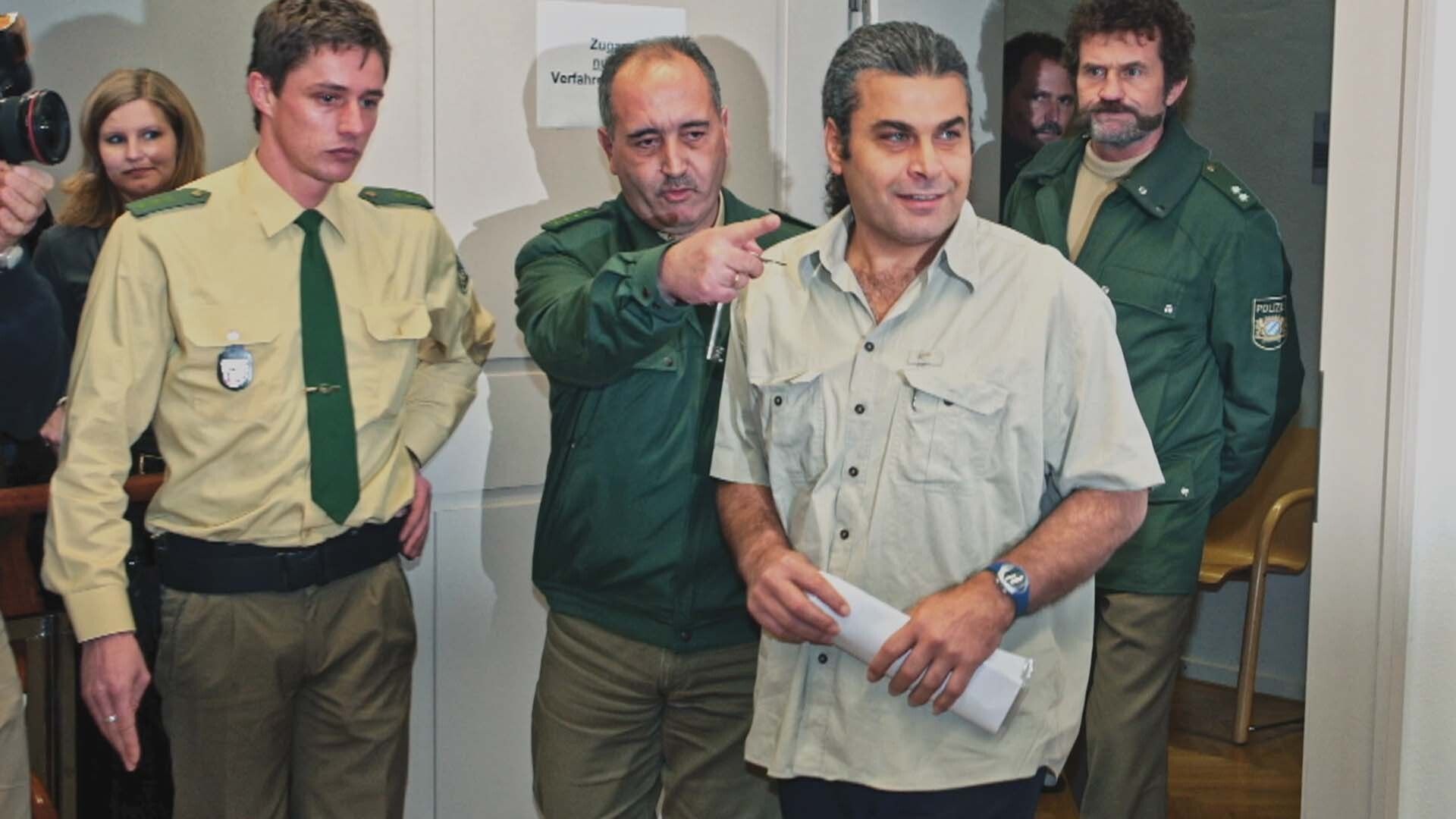
Khalid El-Masri
 Lebanon
political activist and human rights advocate
Also known as: Khaled El-Masri
Birthday
June 29, 1963
Birth Sign
Cancer
Birthplace
Kuwait
Age
63 years old
About
Khalid El-Masri is a German-Lebanese-French citizen and human rights advocate whose name became synonymous with the fight against the CIA's extraordinary rendition program. Born in Kuwait in 1963, he was a private businessman until December 2003, when he was mistakenly abducted by Macedonian authorities and handed over to the CIA. He was flown to a black site in Afghanistan known as the Salt Pit, where he endured four months of torture and sexual abuse before being released in Albania in May 2004. His case exposed the systemic failures of the post-9/11 intelligence apparatus and led to a landmark ruling by the European Court of Human Rights in 2012, which declared that his treatment constituted torture. Today, El-Masri lives quietly in Europe, his story a stark reminder of the human cost of the war on terror.
Early Life & Background
Khalid El-Masri was born on June 29, 1963, in Kuwait to Lebanese parents. He spent his early years in Lebanon before moving to Germany, where he acquired citizenship in 1995. By the early 2000s, he was a car salesman living in Neu-Ulm, a small town in southern Germany, with his wife and children. He was a frequent traveler, often visiting Lebanon and other countries for business and family reasons. Nothing about his life suggested any connection to terrorism. He was known to friends and neighbors as a hardworking family man, and his only brush with the law had been a minor traffic violation. On December 31, 2003, he was on a family vacation in Skopje, Macedonia, when he was stopped at a border crossing. The police, acting on a tip from the CIA, suspected he was a member of al-Qaeda with a name similar to a known terrorist. They detained him, interrogated him for hours, and then handed him over to CIA operatives, setting off the nightmare that would define the rest of his life.
Career Growth
El-Masri's career as an activist began after his release in May 2004. He returned to Germany, physically and psychologically scarred, and sought legal recourse. In 2005, with the help of the American Civil Liberties Union, he filed a lawsuit against the CIA, El Masri v. Tenet. The case was dismissed in 2006 on state secrets grounds, and the Supreme Court declined to hear it in 2007. Undeterred, he took his case to the European Court of Human Rights, which on December 13, 2012, ruled that Macedonia had violated his rights by abusing him and transferring him to the CIA. The court awarded him €60,000 in compensation and ordered Germany to pay €20,000 for failing to investigate. This was the first time a court explicitly labeled CIA interrogation methods as torture. In 2022, Macedonia issued a formal apology and paid compensation, complying with the court's order. El-Masri has since become a sought-after speaker on human rights, though he prefers to stay out of the limelight. He has given interviews to major outlets, including The Washington Post in 2015 and Der Spiegel in 2023, marking the 20th anniversary of his abduction.
Career Timeline
Public Image & Style
In the public eye, Khalid El-Masri is a symbol of the fight against unlawful rendition and torture. He is often described as an ordinary man caught in an extraordinary nightmare. Media portrayals emphasize his innocence and the brutality of his treatment. He is respected by human rights organizations such as Amnesty International and the ACLU, which cite his case as a prime example of the excesses of the war on terror. He rarely speaks publicly, but when he does, his words carry weight. He has said he does not want revenge, only accountability and justice for all victims. His quiet dignity has made him a credible and powerful advocate, even though he shuns the spotlight.
Fame & Fandom
Khalid El-Masri commands a unique form of global attention defined not by adoration or fandom rituals, but by the weight of his status as a primary case study in human rights law. There is no organized fanbase with a specific name, nor are there campaigns driven by fans seeking to elevate his celebrity; instead, his presence is sustained by legal advocates, journalists, and activists who view him as a symbol of the dangers inherent in unchecked state power. His legacy is carried forward through documentaries, court rulings, and the relentless work of organizations like the ACLU and Amnesty International, rather than chart-topping singles or viral social media moments. While he has no formal following, the intensity of the global sympathy for his ordeal creates a distinct, albeit silent, community of observers who track his legal battles and historical significance. This absence of traditional fame structures underscores the tragic reality of his situation: he is remembered not for what he created, but for what was done to him. The iFANN Global Fame Engine has evaluated his standing in the current cultural landscape, yet the data reveals that Khalid El-Masri does not currently hold a placement in the published rankings, including the Global Top 1,000 or any Top-100 scope list. He remains outside the numerical hierarchy of contemporary celebrity metrics because his influence operates within the realm of historical justice rather than popular culture consumption.
Interesting Facts and Legends
During his captivity at the Salt Pit, El-Masri endured forced nudity, beatings, and sexual abuse, including rape, while kept in a windowless cell where loud music played constantly to disorient him. Upon his release in Albania, he was left on a roadside without a passport, money, or explanation, forcing him to rely on local authorities for help. After returning home, he struggled with severe post-traumatic stress disorder and found it difficult to reintegrate into normal life, eventually stating that he sees himself as a symbol of the dangers of unchecked government power. Known for avoiding social media entirely, he prefers to communicate strictly through his lawyers. His case has been featured in documentaries by Al Jazeera and DW, inspiring a book by investigative journalist Darian Pavli. A widely retold story describes his ordeal as "Kafka-esque," highlighting the surreal nightmare of an innocent man erased by bureaucratic error and state violence. Another iconic moment involves his dramatic dumping in a forest in January 2004, stripped of identification and clothes, which became a harrowing detail referenced in global discussions about rendition. The landmark European Court of Human Rights ruling in December 2012 confirmed that his treatment amounted to torture, serving as a definitive legal rebuke to the CIA's extraordinary rendition program.
Notable Quotes
“I am an innocent man. I was tortured for four months.”
“It was a Kafka-esque nightmare.”
“My life was irreparably damaged.”
Family & Personal Life
El-Masri was married and had children at the time of his abduction. He has kept his family out of the public eye to protect them from the trauma and harassment that followed his case. His wife and children were present during his initial detention in Macedonia, and they were released without him. After his return to Germany, he and his family have lived quietly, though the strain of his ordeal has been documented in interviews. He has not publicly discussed the current status of his marriage or his children's lives, respecting their privacy. In a rare 2023 interview with Der Spiegel, he mentioned that his family has been his anchor, but he did not elaborate further.
Notable Connections
El-Masri's legal team included the American Civil Liberties Union, with lawyers like Steven Watt and Jameel Jaffer representing him. His case was covered extensively by journalist Darian Pavli. The European Court of Human Rights judges who ruled in his favor included Dean Spielmann and others. He is often mentioned alongside other rendition victims like Maher Arar and Abu Zubaydah. His ordeal was part of the broader CIA rendition program, which was authorized by officials such as George Tenet and John Bolton.
Relationships & Dating History
Khalid El-Masri has kept his personal relationships intensely private. He was married with children at the time of his abduction in 2003. His wife and children were present during his detention in Macedonia, but they were released without him. After his return to Germany, he has not publicly discussed the status of his marriage. There are no credible reports of any subsequent relationships, engagements, or marriages. As of 2026, he is believed to be living alone or with his family, but no current partner has been identified. His focus remains on his advocacy work and personal recovery.
Salary, Net Worth In 2026
As a private individual, Khalid El-Masri does not have a public net worth. He does not earn income from entertainment or endorsements. His financial situation is tied to the compensation he received from the European Court of Human Rights and the subsequent settlement with Macedonia. In 2012, the court awarded him €60,000, and Macedonia later paid an undisclosed amount as part of the apology. He has also received €20,000 from Germany for its failure to investigate. These amounts are modest compared to the damages he suffered, and he has described his life as irreparably damaged. He lives a modest lifestyle, likely in Germany, and does not have significant assets. As of 2026, no reliable estimates of his total net worth exist, and any figures online are speculative.
Awards & Accolades
View 1 records, honours and achievementsKnown For
Victim of CIA extraordinary rendition
2003 · Subject
Landmark ECHR ruling on torture
2012 · Plaintiff
Keywords
Sources
Quick Facts
- Profession
- political activist
- Born
- June 29, 1963
- Birthplace
- Kuwait
- Gender
- Male
- Citizenship
- German, Lebanese, French
Personal Details
- Full Name
- Khalid El-Masri
Frequently Asked Questions
Who is Khalid El-Masri?
What happened to Khalid El-Masri?
Did Khalid El-Masri win his lawsuit?
Is Khalid El-Masri still alive in 2026?
Why was Khalid El-Masri kidnapped?
Similar People
Join the community
fans discussing