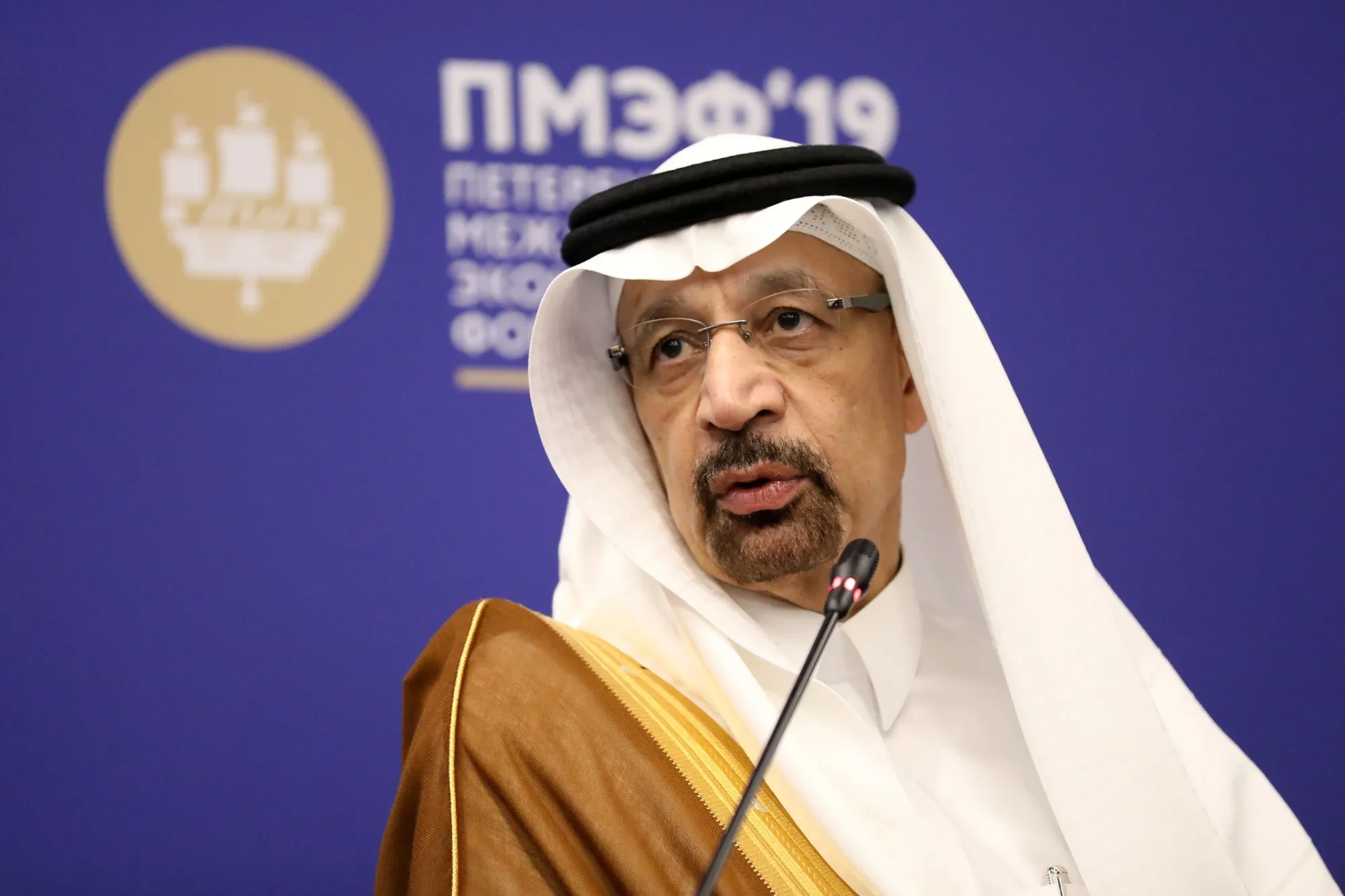
Khalid A. Al-Falih
 Saudi Arabia
Also known as: Eng. Khalid Bin Abdulaziz Al-Falih, H.E. Khaled Al-Falih, Khalid bin Abdulaziz Al-Falih, Khalid Al Falih, HE Khalid Al Falih
Birthday
January 1, 1960
Birth Sign
Capricorn
Birthplace
Riyadh, Saudi Arabia
Age
66 years old
About
Khalid bin Abdulaziz Al-Falih is a distinguished Saudi statesman and former energy executive who has fundamentally shaped the kingdom's economic and industrial policies for decades. Born in Riyadh in 1960, he represents a rare archetype of technical expertise rising to the highest levels of government without relying on traditional political lineage. His career uniquely bridges the private sector's massive corporate leadership with the public sector's strategic governance, most notably through his tenure as CEO and Chairman of Saudi Aramco and his subsequent role as Minister of Investment. As a key architect of Vision 2030, Al-Falih has been instrumental in driving Saudi Arabia's diversification away from oil dependence toward sectors like technology, tourism, and entertainment. He currently serves as a Minister of State within the Council of Ministers, continuing to influence national strategy while maintaining a low-profile personal life that contrasts with his high-visibility professional impact. His legacy is defined by the successful preparation of Aramco for its historic IPO and his diplomatic efforts in stabilizing global energy markets through OPEC+ negotiations.
Early Life & Background
Khalid bin Abdulaziz Al-Falih was born in 1960 in Riyadh, the capital of Saudi Arabia, during a period of significant national transformation. Public records regarding his specific birth date, childhood upbringing, or early schooling remain scarce, as is common for many senior Saudi officials whose biographies focus on professional milestones rather than personal history. He pursued higher education in engineering, earning a Bachelor of Science degree in Chemical Engineering from King Fahd University of Petroleum and Minerals (KFUPM) in Dhahran. This academic foundation laid the technical groundwork for a career that would eventually dominate the country's hydrocarbon sector. Before entering the highest echelons of power, Al-Falih spent decades rising through the ranks of the Saudi petroleum industry. He leveraged his engineering expertise to understand the complexities of hydrocarbon production and refining, moving steadily up the corporate ladder within the national oil giant. His early career was defined by technical proficiency and operational management rather than public visibility. He worked within the system that would eventually become Saudi Aramco, gaining deep institutional knowledge before being tapped for leadership roles that would reshape the company and the broader economy. Unlike figures who rely on viral moments or cultural myths, his ascent was built on the quiet mechanics of engineering competence and operational excellence.
Career Growth
Al-Falih's career is defined by a seamless transition between the private and public sectors, marked by several critical appointments. He began his rise to prominence as CEO of Saudi Aramco, serving from 2009 to 2015. During this period, he oversaw massive expansion projects and prepared the company for its historic Initial Public Offering. In May 2015, he was appointed Chairman of the Board of Directors of Saudi Aramco, succeeding his role as CEO. This move was part of a broader strategy to separate operational management from strategic oversight. In May 2016, he was appointed Minister of Energy, Industry and Mineral Resources, becoming a central figure in global energy diplomacy. He played a crucial role in OPEC+ negotiations, managing oil supply adjustments to stabilize global markets. A notable moment occurred in June 2018 in Vienna, where he addressed journalists regarding supply cuts that helped support oil prices. In 2019, he briefly held the portfolio of Minister of Health before being reassigned. On February 25, 2020, a royal decree established the Ministry of Investment, and Al-Falih was appointed as its first minister. In this role, he was the primary architect of attracting foreign direct investment into Saudi Arabia, focusing on sectors like entertainment, tourism, technology, and mining to reduce reliance on oil. He frequently represented the Kingdom at international forums, including the World Economic Forum and meetings with foreign dignitaries from India, China, Greece, and Uzbekistan. On February 12, 2026, a royal decree dismissed Al-Falih from his position as Minister of Investment ahead of updates to the Vision 2030 plan. Reports indicated this move signaled a strategic pivot toward emerging sectors like artificial intelligence and a restructuring of funding mechanisms for the Public Investment Fund. Following his dismissal, he was appointed as a Minister of State and remains a member of the Council of Ministers, though no longer heading the Investment portfolio. As of late September 2026, he continues to serve in an advisory capacity and participates in high-level diplomatic missions, such as a recent delegation visit to Uzbekistan and engagements with Greek investors. He also participated in discussions at MIT regarding the Kingdom's long-term future and technological advancement.
Career Timeline
Public Image & Style
Al-Falih is portrayed as a technocrat and a pragmatic leader, known for his calm demeanor during high-stakes OPEC negotiations. Media coverage focuses on his expertise in energy economics and his role as a bridge between traditional oil interests and modern diversification goals. He is known for wearing traditional Saudi attire, specifically the thobe and ghutra, in official settings, projecting an image of cultural pride and stability. His social media presence on X (Twitter) under the handle @Khalid_AlFalih is modest compared to global celebrities, reflecting his niche audience of investors and policymakers. He shares updates on ministry activities, diplomatic visits, and statements on economic policy rather than personal content. While he lacks the viral fame of pop stars, his reputation is built on reliability and strategic foresight. He is frequently cited by Forbes and other financial outlets as one of the most influential figures in the global energy industry. His public persona is one of quiet authority, avoiding the theatrics often associated with political leaders in favor of substantive policy implementation.
Fame & Fandom (iFAMOUS Rankings)
Khalid A. Al-Falih is currently evaluated by the iFANN Global Fame Engine but holds no placement in the published rankings. The system has processed his digital footprint, yet he does not crack the Global Top 1,000 or any scope-specific list as of August 2026. This absence reflects a profile defined by statecraft rather than pop-culture ubiquity. While global headlines track oil prices and investment shifts, they rarely generate the viral momentum required to vault a figure into celebrity charts. His influence remains potent within boardrooms and diplomatic corridors, but it lacks the mass-market resonance that drives fame metrics. Consequently, the data confirms his status as an unranked entity in the current iteration of the global hierarchy. No organized fanbase exists for Khalid A. Al-Falih. There is no moniker for his supporters, no dedicated subreddits, and no ritualistic celebrations marking his birthday or career milestones. The public engagement surrounding him is strictly professional, limited to interactions with foreign dignitaries at forums like the World Economic Forum or meetings with ministers from nations like India. These are exchanges of policy and capital, not the adoration found in entertainment circles. He does not command subway ads, nor do crowds gather to see him sign autographs. His legacy is built on the quiet mechanics of economic reform and corporate leadership, leaving no room for the mythology that typically fuels fandom culture.
Interesting Facts and Legends
Khalid bin Abdulaziz Al-Falih was one of the few Saudi engineers to rise to the top of the country's most powerful corporation, Saudi Aramco, without a political lineage. His tenure as Minister of Investment lasted until February 2026, when he was replaced ahead of updates to the Vision 2030 plan. This removal marked the end of one of the kingdom's longest-serving ministerial tenures and signaled a strategic pivot toward emerging sectors like artificial intelligence and tourism. Prior to his dismissal, Al-Falih was widely recognized for his leadership during critical OPEC meetings. A notable moment occurred in June 2018 in Vienna, where he addressed journalists regarding supply cuts that helped support oil prices. His career bridges the private sector's massive expansion strategies with the public sector's ambitious industrial policies. Unlike figures who rely on viral moments or cultural myths, his impact is measured in the structural changes he implemented across the kingdom's energy and investment landscapes. He was awarded 'Petroleum Executive of the Year' by Energy Intelligence in 2017 for his leadership in stabilizing the oil market. He has served as a board member of the International Energy Agency (IEA) and held key positions on sovereign economic councils. A paraphrased quote from his interviews between 2020 and 2025 captures his vision: 'We are not just talking about oil anymore; we are talking about a diversified economy.' His 'lore' consists of the structural changes he implemented, such as the preparation of Aramco for the IPO, which is often cited in business case studies.
Notable Quotes
“We are not just talking about oil anymore; we are talking about a diversified economy.”
“Saudi Arabia is open for business and ready to welcome international partners.”
Family & Personal Life
Khalid Al-Falih maintains a strictly private personal life, deliberately keeping his family affairs out of the media spotlight. There are no publicly confirmed details regarding his marital status, romantic relationships, or children. No credible sources report on spouses, partners, or extended family members beyond general references to his role as a Saudi national. Unlike entertainment figures, he does not engage in public dating history, and there is no information on marriages, divorces, or family stories available to the public. As of 2026, his relationship status is officially unconfirmed in the public domain, and he is generally regarded as a private individual who prioritizes professional duties over personal exposure. This discretion extends to his household and daily life, ensuring that his family remains shielded from the intense scrutiny often faced by high-ranking government officials. Consequently, any speculation about his domestic arrangements remains purely conjecture without factual basis.
Notable Connections
Relationships & Dating History
Khalid Al-Falih maintains a strictly private personal life, ensuring that his romantic history remains entirely out of the public eye. There are no publicly confirmed details regarding his marital status, romantic relationships, or children. Unlike entertainment figures, he does not engage in public dating history, and no credible sources report on spouses or partners. Consequently, there is no information on marriages, divorces, or family members beyond general references to his role as a Saudi national. As of 2026, his relationship status is officially unconfirmed in the public domain, and he is generally regarded as a private individual who keeps his family life out of the media spotlight. This strict adherence to privacy means that any inquiries into his personal connections yield no results, distinguishing him from public figures who share intimate details with fans. His approach to relationships is one of total confidentiality, shielding his loved ones from the glare of the press.
Salary, Net Worth In 2026
$100 Million
iFANN Editorial Team estimate
iFANN Editorial Team analysis of Khalid bin Abdulaziz Al-Falih's earnings, ventures, and assets points to a net worth ranging between $50 million and $100 million USD. Specific net worth figures for government ministers in Saudi Arabia are rarely disclosed due to the nature of their compensation, which includes salaries, allowances, and housing provided by the state, alongside potential investments. However, based on his long-standing executive roles at Saudi Aramco and subsequent ministerial positions, credible estimates place his liquid and investable assets in the tens of millions. His wealth sources include high earnings as CEO and Chairman of Saudi Aramco, including stock options and performance bonuses tied to the company's IPO and expansion. His ministerial salary and allowances also contribute significantly. He likely holds real estate and private equity investments typical for senior Saudi officials, though specific assets are not public. Unlike celebrities, he does not earn from commercial endorsements. Some speculative online lists may inflate his wealth to over $200 million, but these lack verified documentation and should be considered outliers. The consensus among financial analysts aligns with the lower estimate, consistent with top-tier global executives who prioritize asset accumulation over public display.
Awards Won (2)
While Al-Falih has not received pop-culture awards, he has been recognized for his contributions to the global energy sector and business leadership. He was awarded Petroleum Executive of the Year by Energy Intelligence in 2017 for his leadership in stabilizing the oil market and guiding Aramco through its IPO process. He has also received Global Leadership Awards from various international business councils for his role in Saudi Arabia's economic transformation.
2017 · Energy Leadership
Saudi Aramco Leadership
2019 · Business Leadership
Economic Transformation
Known For
Saudi Aramco CEO
2009 · Chief Executive Officer
Minister of Investment
2020 · Government Official
Vision 2030 Architect
2020 · Policy Maker
Keywords
Sources
Quick Facts
- Profession
- entrepreneur, politician
- Born
- 1960
- Birthplace
- Riyadh
- Gender
- Male
- Birth Sign
- Capricorn
Personal Details
- Full Name
- Khalid bin Abdulaziz Al-Falih
- Children
- Education
- King Fahd University of Petroleum and Minerals (B.S. Chemical Engineering)
Frequently Asked Questions
Who is Khalid Al-Falih?
What happened to Khalid Al-Falih in 2026?
Is Khalid Al-Falih still working?
How much is Khalid Al-Falih worth?
Did Khalid Al-Falih get married?
Social Media
Similar People
Join the community
fans discussing