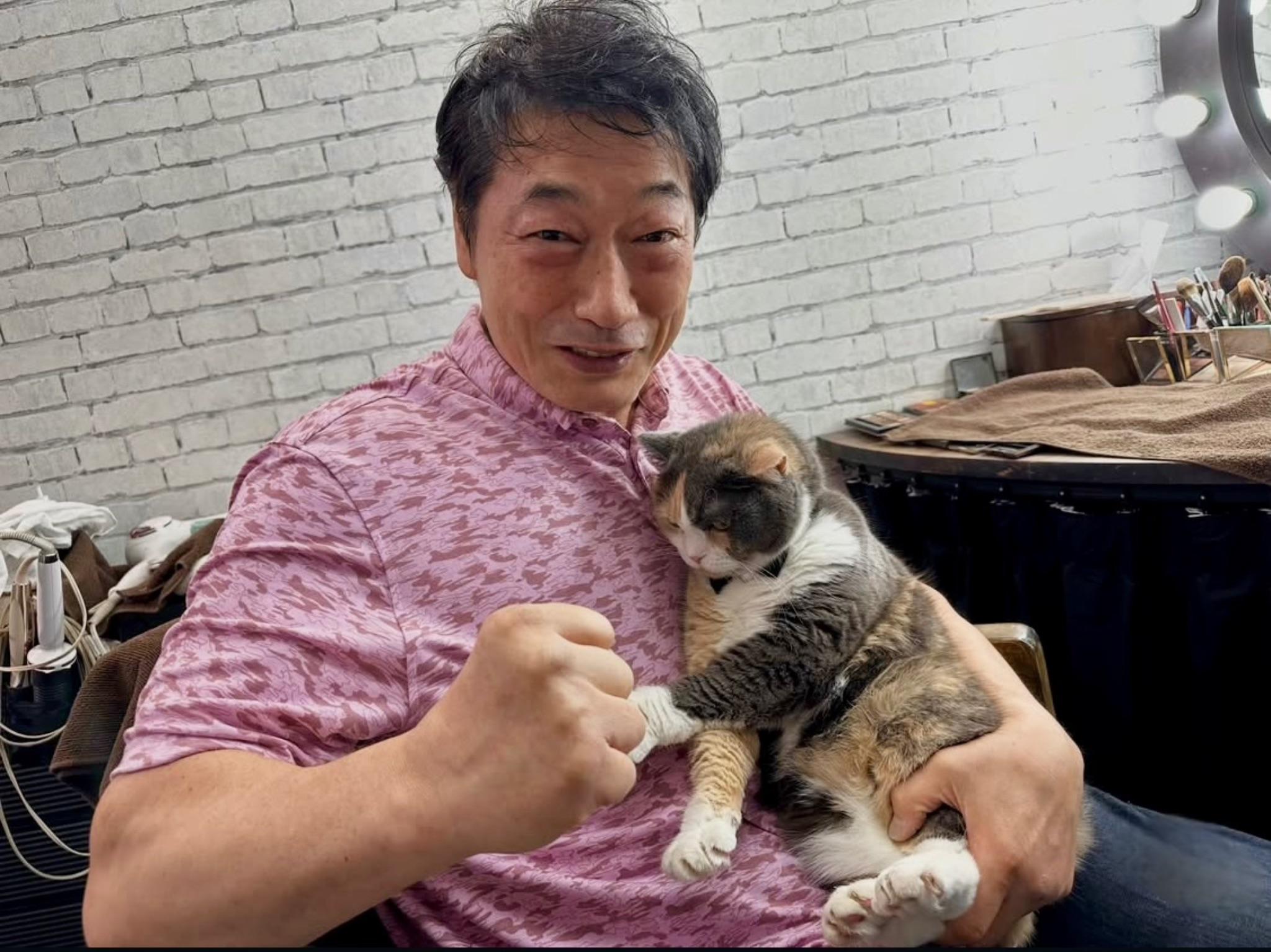
Kenta Kobashi
 Japan
retired professional wrestler•promoter
Also known as: Tetsujin, Iron Man, The Burning Hammer
Birthday
March 27, 1967
Birth Sign
Aries
Birthplace
Fukuchiyama, Kyoto Prefecture, Japan
Age
59 years old
About
Kenta Kobashi is a retired Japanese professional wrestler and current promoter, known through a 25-year in-ring career as one of the most punishing and emotionally direct performers the sport has produced. He wrestled for All Japan Pro Wrestling and then Pro Wrestling Noah, where his 735-day reign as GHC Heavyweight Champion remains the longest single run in the title's history. His nickname, Tetsujin, translates as Iron Man, and it was earned rather than assigned: he took extraordinary damage, absorbed it, and returned it in kind.
Kobashi holds a place in the sport's canon that few Japanese wrestlers outside the very top rank share. He was one of All Japan's Four Heavenly Kings, a four-time world champion and a 17-time titleholder across major promotions, and he won the Champion Carnival tournament in 2000. He now runs his own promoted events under the Fortune Dream banner and appears as a special guest at cards staged by other companies. His audience is the international puroresu community, which treats his match archive as required viewing.
Early Life & Background
Fukuchiyama, in the north of Kyoto Prefecture, is not a wrestling town in any obvious sense, and Kobashi did not arrive at the sport through the usual route of a fan who talked his way into a dojo. He was an amateur athlete first, competing in judo and rugby union, and the physical baseline those sports gave him, grip strength, balance under load, tolerance for being thrown and hit, shaped everything he later did in a ring.
He entered the All Japan Pro Wrestling dojo and debuted in 1988. All Japan at that point was built around Giant Baba's vision of heavyweight wrestling as a serious athletic contest, and the dojo system was unforgiving: trainees lived on site, trained twice a day, and served the established roster. Kobashi came through that system alongside a generation that would shortly redefine the promotion.
Baba's booking of the young Kobashi is the detail that matters most for understanding what followed. Rather than protecting him, Baba put him in matches where he lost, and lost badly, but did so while taking visible punishment and refusing to stay down. The audience learned to read him as the wrestler who would not quit, and that reading stuck to him for the rest of his career. It was a slow build rather than a push, and it meant that when he finally began winning, the crowd had years of investment behind the result.
By the early 1990s he had moved from promising newcomer to core roster member, a transition helped along when older stars departed for the Super World of Sports promotion and left room at the top of the card. The last stretch before the breakthrough was spent in tag matches and tournament blocks, learning the pacing of long main events under the men he would eventually be booked against as an equal.
Career Growth
The breakthrough arrived in 1993, when Kobashi was named one of All Japan's Four Heavenly Kings alongside Mitsuharu Misawa, Toshiaki Kawada and Akira Taue. The four worked against each other and against imported heavyweights through the decade, and the resulting body of matches is the reason his name circulates in greatest-of-all-time arguments. Teaming with Misawa in the Super Generation Army, he was part of tag-team wrestling that critics ranked with the best of the 1990s.
His singles record built more slowly. He reached the Champion Carnival final in 1997 and again in 1999, then won the tournament outright in 2000. He captured the Triple Crown Heavyweight Championship three times, and across his career held 17 major championships, making him a four-time world champion. In 2000 he joined the second exodus from All Japan that produced Pro Wrestling Noah.
The defining night came on March 1, 2003, when he defeated Misawa for the GHC Heavyweight Championship. He held the belt for 735 days, the longest single reign in the title's history, and defended it thirteen times. Every Noah card where he put the title on the line sold out. Takeshi Rikio finally took it from him on March 5, 2005. Later that year, on October 1, 2005, he wrestled Samoa Joe for Ring of Honor in a match that carried him to an American audience that had mostly known him secondhand.
Repeated arm and leg surgeries slowed him through the mid-2000s and he worked a reduced schedule in his final years before retiring from in-ring competition in May 2013. He has stayed in the business since, promoting Fortune Dream events, appearing for Noah and DDT Pro-Wrestling, and working as a special guest at independent cards.
Career Timeline
Public Image & Style
Kobashi's public presence rests on a single, consistent image: the wrestler who could take more than anyone else and still be standing at the end. Tetsujin, Iron Man, is not a marketing invention so much as a description the audience arrived at on its own, and he has worn it without embellishment for three decades.
His in-ring style carried into his persona. He worked stiff, he sold honestly, and he let emotion show on his face rather than hiding it, which is why his biggest matches read as personal even when nothing was at stake beyond a belt. In retirement he presents as a calm, slightly formal elder of the business, the sort of figure who appears at a card, says a few words, and lends it weight simply by being there. His social media output is promotional and sparse, run largely through his Fortune office accounts rather than a personal feed.
Fame & Fandom (iFAMOUS Rankings)
iFANN has not yet collected fame data for Kenta Kobashi, so no placement in the Global Fame Rankings is available for him. That reflects the reach of the measurement rather than the reach of the man: his reputation is concentrated inside professional wrestling, where it is close to unassailable, and the fame engine's signals skew toward mass-audience attention. He is also not on the September 2026 iFAMOUS Rankings flagship list.
The fanbase has no formal name. Followers of Kobashi organise the way the wider puroresu community does, through forums such as r/SquaredCircle and r/njpw, fan-maintained wikis, and match-tracking databases like Cagematch, rather than through a branded supporter group. What that audience does, consistently, is archive. Video compilations of his title defences and of his finisher history circulate continuously, and a first-time viewer is usually handed a specific match rather than a general recommendation.
The Joe vs. Kobashi match from October 2005 functions as the entry point for American fans, and it is still the bout most often cited when someone asks where to start. Tributes and anniversary posts bring the community back to him at regular intervals, and his occasional special-guest appearances at independent cards reliably draw attention well beyond the size of the show. He engages with this audience lightly, through guest spots and promotional announcements, and the relationship is one of long familiarity rather than active cultivation.
Interesting Facts and Legends
Kobashi's finisher, the Burning Hammer, was used seven times in a 25-year career. The restraint is the point, and the move's scarcity is what fans still retell first.
He was a genuine judoka and rugby player before wrestling, and the grip and base from those sports show up in how he worked holds.
The 1992 tag match teaming with Giant Baba against Stan Hansen and Johnny Ace is a documented All Japan classic, and it put the young Kobashi across the ring from the promotion's founder as a partner rather than a student.
A widely shared clip of him returning from a battle with cancer to a roaring crowd circulates among fans as a favourite moment, and it is usually passed around without commentary.
His name is often confused with Kenta Kobayashi, the wrestler known in WWE as Hideo Itami, who is associated with the GTS. The two are unrelated, and the confusion is common enough that it comes up in almost every casual search about him.
Family & Personal Life
Kobashi is married to Mai Mizuki. The marriage is documented in public records but has been kept almost entirely out of the wrestling press, and neither has discussed it at length in interviews. He has not made his home life a subject of his public work in the way some wrestlers of his generation did, and details of children, household and daily routine do not appear in the available sources. Readers should treat any tabloid claim about his family beyond the marriage itself as unconfirmed.
Notable Connections
Kobashi's career is inseparable from Mitsuharu Misawa, his tag partner in the Super Generation Army and the man he beat for the GHC Heavyweight Championship in 2003. Toshiaki Kawada and Akira Taue completed the Four Heavenly Kings. Jun Akiyama, Stan Hansen, Steve Williams and Terry Gordy fill out the opponents who defined his best work, and Samoa Joe is the name most associated with his crossover into American wrestling.
Relationships & Dating History
Kobashi's public romantic history amounts to one documented relationship. He is married to Mai Mizuki, and the marriage has been recorded in public sources without the accompanying narrative that usually surrounds a celebrity union. No courtship timeline, engagement announcement or wedding date has been reported in credible Japanese or international outlets.
Beyond that, there is nothing confirmed. Kobashi came up through a promotion that kept its performers' private lives private, and he has not discussed past relationships in interviews or on his promotional channels. Tabloid speculation about other partners has appeared from time to time, as it does for most famous athletes in Japan, but none of it has been corroborated by a second source and it should not be treated as fact.
As of 2026, Kobashi remains married to Mai Mizuki. The couple has kept their household out of the public eye, and he has given no indication of any change in his personal circumstances in the years since his 2013 retirement.
- MarriedMai MizukiCurrentKobashi's spouse, documented in public records but kept almost entirely out of the wrestling press.
Salary, Net Worth In 2026
$2 Million
iFANN Editorial Team estimate
Japanese professional wrestling does not publish salaries, and Kobashi's earnings have never been itemised in the way an American television performer's would be. What can be said is that his income across the 1990s and 2000s came from three main sources: base pay and bonus structures at All Japan and later Noah, a share of gate receipts on cards he headlined, and endorsement and appearance work in a market where a top puroresu name carries real commercial weight.
The 735-day GHC reign was the most financially productive stretch of his career. Thirteen successful title defences, each on a sold-out Noah card, made him the promotion's central drawing card during its strongest years, and main-eventers in that position typically commanded a percentage arrangement rather than a flat fee. His 2005 Ring of Honor appearance added a modest American payday and, more usefully, opened a licensing and appearance market overseas that continued after his retirement.
Since 2013 his income has shifted to promotion. Fortune Dream events, which he runs himself, generate revenue through ticket sales and broadcast arrangements, and he takes paid special-guest bookings for cards staged by Noah, DDT and independent promoters. Japanese wrestlers of his era did not accumulate the asset portfolios their American contemporaries did, and there is no record of a major real estate holding or a catalogue sale.
Estimates of his wealth vary widely and none is well sourced. iFANN's editorial team places Kenta Kobashi's net worth at approximately $2 Million as of 2026, a figure that reflects a long career at the top of a domestic market rather than an international one. Treat any substantially higher number circulating online with caution.
Awards Won (5)
Kobashi won the Champion Carnival tournament in 2000 and captured the Triple Crown Heavyweight Championship three times. He held the GHC Heavyweight Championship for 735 days, the longest reign in the title's history, and finished his career with 17 major championships across All Japan and Pro Wrestling Noah, making him a four-time world champion.
2003 · GHC Heavyweight Championship
Defeated Mitsuharu Misawa on March 1, 2003
2000 · Champion Carnival
Champion Carnival tournament
2000 · Triple Crown Heavyweight Championship
Third Triple Crown reign
1998 · Triple Crown Heavyweight Championship
Triple Crown Heavyweight Championship
1996 · Triple Crown Heavyweight Championship
Triple Crown Heavyweight Championship
Known For
GHC Heavyweight Championship reign
2003 · Champion for 735 days, the longest single reign in the title's history
Four Heavenly Kings of All Japan
1993 · Named alongside Misawa, Kawada and Taue
ROH: Joe vs. Kobashi
2005 · Wrestled Samoa Joe in a crossover match that reached American audiences
Fortune Dream
2013 · Founder and promoter of his own event series
Keywords
Sources
Quick Facts
- Profession
- professional wrestler, promoter
- Born
- March 27, 1967
- Birthplace
- Fukuchiyama, Kyoto Prefecture, Japan
- Gender
- Male
- Spouse
- Mai Mizuki
- Birth Sign
- Aries
- Nickname
- Tetsujin (Iron Man)
- Major Championships
- 17
Personal Details
- Spouse
- Mai Mizuki
Frequently Asked Questions
Why did Kenta Kobashi retire?
Was Kenta Kobashi ever in WWE?
What was Kenta Kobashi's finisher?
Did Kenta Kobashi invent the GTS?
What is Kenta Kobashi's net worth in 2026?
Similar People
Join the community
fans discussing