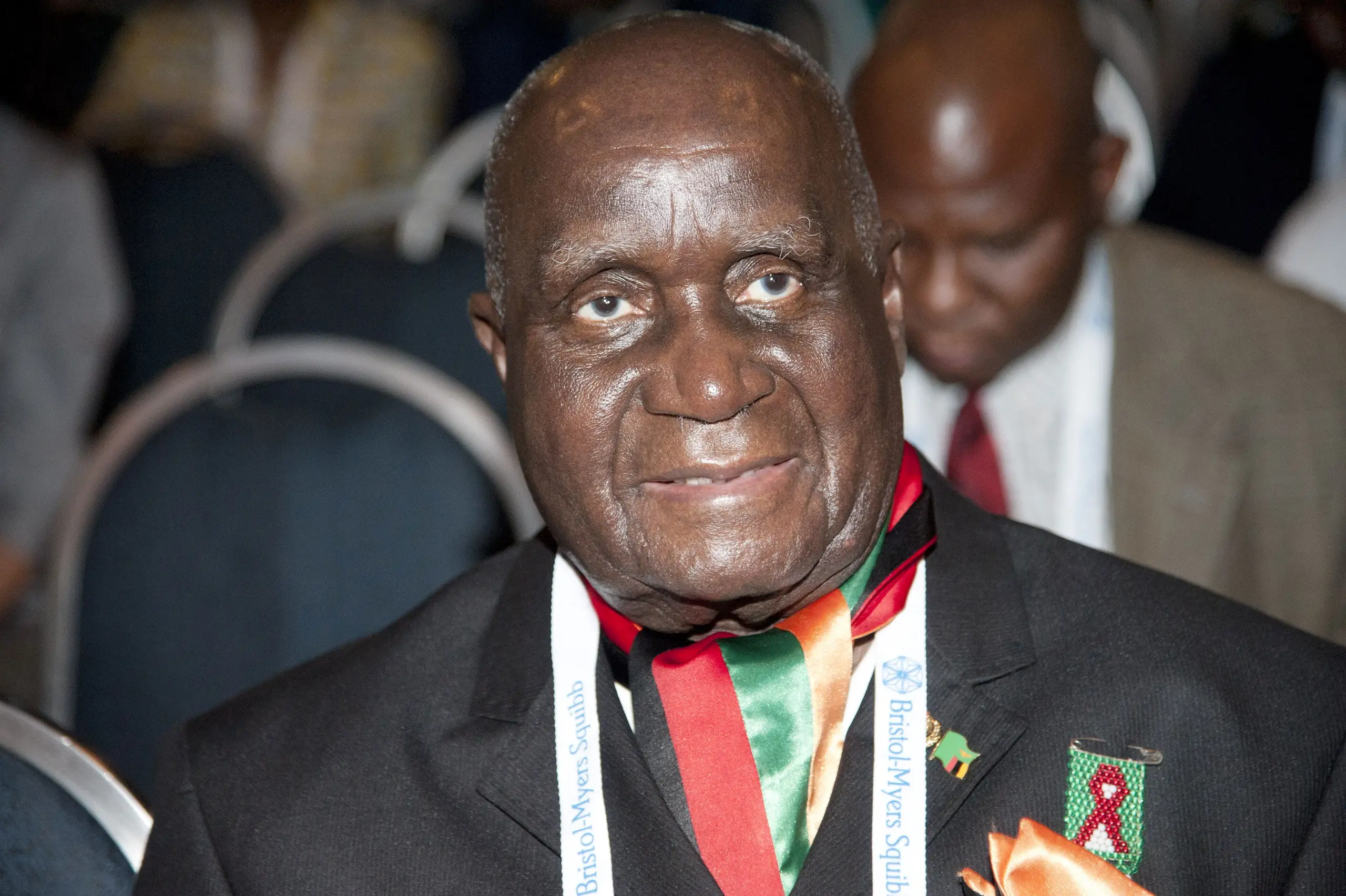
Kenneth Kaunda
 Zambia
politician•teacher•freedom fighter
Also known as: KK, Kenneth David Kaunda
Birthday
April 28, 1924
Birth Sign
Taurus
Birthplace
Chinsali, Northern Rhodesia (now Zambia)
Age
Died at 97
About
Kenneth Kaunda was a Zambian politician and teacher who served as the first President of Zambia from 1964 to 1991. Known universally as KK, he led the country to independence from British colonial rule and then governed for 27 years, first as a pluralist leader and later under a one-party system. His standing rests on two things: the peaceful transfer of power he eventually accepted after losing the 1991 election, and his willingness to host and support liberation movements fighting white-minority rule across southern Africa, a stance that brought repeated raids and economic pressure on Zambia.
He was, at his death, the last surviving member of the founding generation of post-colonial African leaders. His public manner was distinctive and disciplined: a teetotaller and fitness enthusiast who favoured a safari suit and carried a white handkerchief, he framed politics in moral terms drawn from his missionary upbringing. Zambia's international airport, a South African district and a peace-training centre all carry his name.
Early Life & Background
Kenneth David Kaunda was born on 28 April 1924 at Lubwa Mission in Chinsali, in what was then Northern Rhodesia. His father was a Church of Scotland missionary and teacher, and Kaunda trained as a teacher himself, an early career that shaped the disciplined, moralistic style he later brought to politics. He taught at mission schools before moving into political organising.
His political awakening came through frustration with the moderate leadership of Harry Nkumbula's Northern Rhodesian African National Congress. Kaunda broke away and founded the Zambian African National Congress, which the colonial authorities promptly banned. He then took charge of the socialist United National Independence Party (UNIP) and led the campaign that dismantled British colonial rule. The effort culminated in independence on 24 October 1964, when he became the country's first president.
Career Growth
Kaunda's early presidency was marked by nation-building and by his role as a frontline supporter of liberation movements across southern Africa. He backed the fight against apartheid and gave sanctuary to movements fighting white-minority rule, a stance that made Zambia a target of repeated raids and economic pressure. His rule turned authoritarian: after tribal and inter-party violence, his government amended the constitution in 1973 to ban all parties except UNIP, a move sealed by the Choma Declaration. He also pushed through the acquisition of majority stakes in key foreign-owned companies, bringing large parts of the economy under state control.
The 1973 oil crisis and a collapse in copper export revenues then drove Zambia into a deep economic crisis that defined much of his later tenure. Growing unrest forced him to loosen the rules, and multi-party elections in 1991 saw Frederick Chiluba of the Movement for Multi-Party Democracy defeat him at the polls. Kaunda stepped down, but in 1998 he was briefly stripped of Zambian citizenship, a decision reversed in 2000.
Career Timeline
Public Image & Style
Kaunda's public image was that of a moralist and a statesman, a teacher who carried the manner of the mission station into the presidency. His safari suit and white handkerchief became visual signatures, and his rhetoric drew on Christian ethics and pan-African solidarity. Media coverage at his death framed him as an idealist and a visionary, while also noting the authoritarian turn of his later rule.
Fame & Fandom (iFAMOUS Rankings)
iFANN has not yet collected fame data for Kenneth Kaunda, so no ranking is available. He does not appear on the September 2026 iFAMOUS Rankings flagship list.
His following is civic rather than celebrity-based. Zambians and pan-Africanists commemorate him through named institutions, commemorative days, and archival tributes circulated by figures such as Emmanuel Mwamba. There is no formal fandom name or organised fan campaign in the conventional sense.
Interesting Facts and Legends
Kaunda was a teetotaller and fitness enthusiast who was known for his trademark safari suit and white handkerchief. He was the last surviving member of the founding generation of post-colonial African leaders. A 1965 clip resurfaced in 2026 in which he said he saw no reason to practice or become a dictatorship. A photograph of Fidel Castro alongside Kaunda became the centerpiece of Zambia's display at the Cuban Pavilion in Lusaka. He was born at a mission station to a missionary-teacher father.
Notable Quotes
“I see no reason to practice or become a dictatorship.”
Family & Personal Life
Kaunda married Betty Kaunda (née Betty Banda) in 1946; she was his wife for 66 years until her death in 2012, and the couple had eight children. He was a committed family man, and no credible source documents other partners. Among his children, a daughter died in 2026, announced by her son Mwenya Mwanza, with mourners gathering in Windhoek where a book of condolences was opened.
Notable Connections
Relationships & Dating History
Kaunda married Betty Kaunda (née Betty Banda) in 1946. The marriage lasted 66 years, until her death in 2012, and produced eight children. No other romantic relationships are documented in credible sources; he was widowed from 2012 until his own death on 17 June 2021. As of 2026 he is deceased, and there is no current partner.
- MarriedBetty Kaunda1946 - 2012Married for 66 years until her death in 2012; they had eight children.
Death & Aftermath
Died
June 17, 2021 (aged 97)
Death Place
Lusaka, Zambia
Cause of Death
Not publicly disclosed
Kenneth Kaunda died on 17 June 2021 at the age of 97. He had been born on 28 April 1924 at Lubwa Mission in Chinsali, then Northern Rhodesia, and the age given in the South African government's official notice of his passing, 97, is consistent with that birth date. The place of death and the officially stated cause were not made public in the accounts available; nothing in the record suggests the death was treated as anything other than a natural death at an advanced age.
The tributes that followed were institutional and measured. Chatham House issued a substantial appreciation in July 2021, describing him as an idealist and a visionary who had played a key role in supporting liberation movements. The Review of African Political Economy published a retrospective in February 2024 that called the death the end of an era and Kaunda the last of the generation of anti-colonial leaders. The BBC produced a documentary podcast on his life. Commemorative activity continued years afterwards: a photograph of Fidel Castro alongside Kaunda became the centerpiece of Zambia's display at the Cuban Pavilion in Lusaka, and the Zambian media figure Emmanuel Mwamba circulated archival footage, among it a 1965 clip in which Kaunda said he saw no reason to become a dictatorship and a video of him introducing Nelson Mandela's daughter Zindzi to President Samora Machel.
Institutions bearing his name remained active. The Kenneth Kaunda Peace Training Center, which for more than 30 years had prepared Zambian peacekeepers, was the subject of a handover ceremony reported by the U.S. Embassy in Zambia on 16 June 2026. The African Union's Economic, Social and Cultural Council ran the Kenneth Kaunda Graduate Immersion Programme for Zambian graduates, with applications opening around 13 June 2026. In South Africa, the Dr Kenneth Kaunda District in North West Province held its Dr Kenneth Kaunda Farmers Day on 30 September 2026, awarding fertiliser, seed and mentorship to two farmers. On 5 August 2026 New Era reported that a daughter of Kaunda had died, announced by her son Mwenya Mwanza, with mourners gathering in Windhoek where a book of condolences was opened.
Net Worth (Estate Value)
$1 Million
iFANN Editorial Team estimate
Kenneth Kaunda's personal wealth was modest by the standards of later African heads of state. He drew a presidential salary during his 27 years in office and, after 1991, lived on a pension and the proceeds of his farm. iFANN's editorial research, drawing on the limited public record of his salary, property and post-presidential income, puts the value of his estate at approximately $1 million as of 2026.
The figure reflects a lifetime of public service rather than private accumulation. Kaunda was not known to hold major business interests, and the state monopolies created under his rule were public assets, not personal ones. His later years were financed largely by his pension and by the goodwill of the state, which maintained an office and security detail for him. The institutions that bear his name, including the Kenneth Kaunda Peace Training Center and the Dr Kenneth Kaunda District in South Africa, are publicly funded and do not form part of the estate.
Awards & Accolades
View 5 records, honours and achievementsKnown For
First President of Zambia
1964-1991 · Head of State
Leader of UNIP
1960-1991 · Party President
Zambian independence
1964 · Freedom fighter
Keywords
Sources
Quick Facts
- Profession
- politician, teacher, freedom fighter
- Born
- April 28, 1924
- Birthplace
- Chinsali, Northern Rhodesia
- Died
- June 17, 2021
- Death Place
- Lusaka, Zambia
- Gender
- Male
- Spouse
- Betty Kaunda
- Birth Sign
- Taurus
Personal Details
- Full Name
- Kenneth David Kaunda
- Spouse
- Betty Kaunda
- Children
- 8
- Education
- Teacher training at Lubwa Mission
Frequently Asked Questions
How did Kenneth Kaunda die?
What was Kenneth Kaunda known for?
Who was Kenneth Kaunda's wife?
How many children did Kenneth Kaunda have?
What is Kenneth Kaunda's net worth in 2026?
Join the community
fans discussing