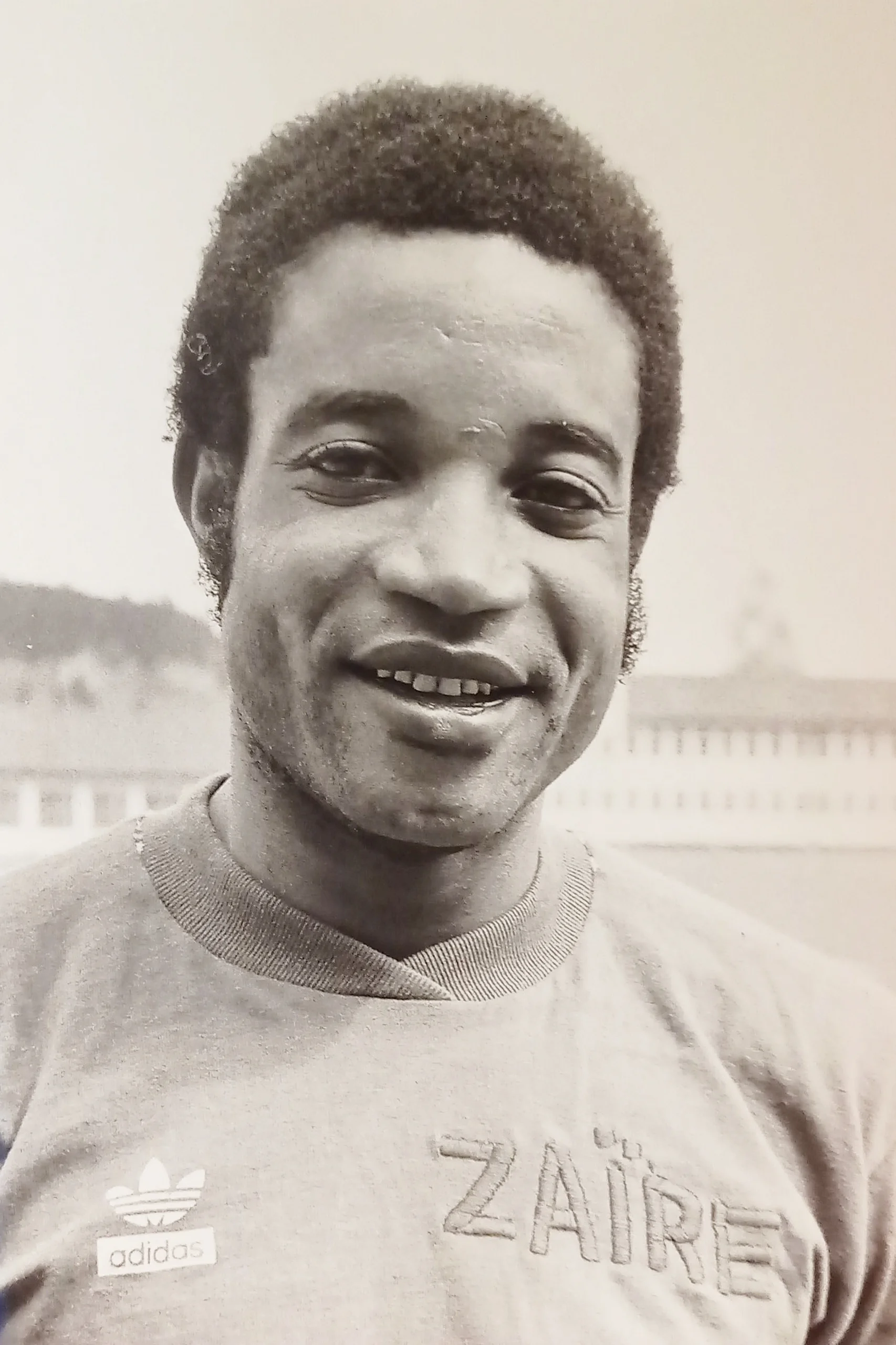
Kembo Uba Kembo
 DR Congo
Also known as: Jean Kembo Uba-Kembo
Birthday
December 27, 1947
Birth Sign
Sagittarius
Birthplace
Matete, Belgian Congo
Age
Died at 59
Height
5 ft 4.5 in (164 cm)
About
Kembo Uba Kembo was a Congolese football midfielder who made history as part of Zaire's squad at the 1974 FIFA World Cup, the first World Cup appearance by a sub-Saharan African team. He spent his club career at AS Vita Club, where his playmaking skills made him a standout. Kembo was a regular for the national team, appearing in the 1968 and 1974 Africa Cup of Nations finals. His most memorable moment came in the World Cup qualifiers when he scored twice in a 3-0 win over Morocco, securing Zaire's place in the tournament. He died on 26 March 2007, but his contributions to African football are still remembered.
Beyond the pitch, Kembo's legacy lives on through his son, Jirès Kembo Ekoko, who became a professional forward and later gained attention as the adopted brother of Kylian Mbappé. This family connection links a 1974 World Cup pioneer to one of the modern era's greatest players. Kembo's role in taking Zaire to the world stage remains a source of pride for Congolese football fans, and his story continues to be told in multiple languages across the globe.
Early Life & Background
Kembo Uba Kembo was born Jean Kembo Uba-Kembo on 27 December 1947 in Matete, a commune of Kinshasa in the Belgian Congo. Growing up in the local football culture, he developed his skills in the streets and youth teams of the city. His compact frame, standing 164 cm, suited his role as a playmaking midfielder, where his vision and technical ability stood out early.
He joined AS Vita Club, one of the country's most prominent clubs, and quickly rose through the ranks. His performances at club level caught the attention of national team selectors, earning him his first call-up to the Zaire national team in the late 1960s. His international debut came in time for the 1968 African Cup of Nations, marking his first major tournament appearance and setting the stage for a historic career.
Career Growth
Kembo's breakthrough came in the qualifying campaign for the 1974 FIFA World Cup. He scored two goals in a decisive 3-0 victory over Morocco, clinching Zaire's historic qualification as the first sub-Saharan African team to reach the tournament. At the finals in West Germany, he played all three group matches against Scotland, Yugoslavia, and Brazil. Although Zaire lost all three, their participation was a landmark moment for African football.
His club career remained anchored at AS Vita Club, where he was a key playmaker throughout his professional life. In 1976, he was named National Player of the Year with the club, and in 1979 he won the championship with AS Vita Club. He also appeared at the 1974 African Cup of Nations finals, his second time at the tournament. After retiring, he stayed connected to football until his death in 2007.
Career Timeline
Public Image & Style
Kembo is remembered as a national hero in the Democratic Republic of the Congo and a pioneer of African football. His legacy is defined by his role in Zaire's historic 1974 World Cup campaign, the first by a sub-Saharan African nation. He is portrayed in the historical record as a skilled playmaker whose vision and technical ability made him a standout at AS Vita Club and on the international stage. His Wikipedia article receives steady traffic, indicating continued interest in his life and career.
Fame & Fandom
Kembo Uba Kembo commands a steady, respectful following among football historians and African sports enthusiasts, yet he remains absent from the global spotlight that defines modern superstars. As of August 2026, the iFANN Global Fame Engine has evaluated his profile, but he does not currently hold a placement in the published rankings or any Top-100 scope list. His name appears in encyclopedic databases across thirteen languages, signaling enduring academic and historical interest rather than viral celebrity status. While his son Jirès Kembo Ekoko and connection to Kylian Mbappé generate periodic news cycles, these moments do not translate into a formalized movement around the elder Kembo himself. No organized fanbase exists under a specific moniker, nor are there documented rituals, campaigns, or inside jokes dedicated to his memory. The audience for his legacy is fragmented, consisting mostly of those researching the history of Zaire's 1974 World Cup campaign or tracing the lineage of Congolese football talent. Without a named fandom or active community driving engagement, his digital footprint reflects a static reverence for a pioneer rather than the dynamic energy of a living icon. He is remembered as a national hero in the Democratic Republic of the Congo, but globally, he occupies a niche space between historical figure and forgotten athlete. The lack of a ranking does not diminish his impact on the pitch, but it confirms that his fame has plateaued at the level of archival importance rather than contemporary cultural dominance.
Interesting Facts and Legends
Kembo Uba Kembo was part of the first sub-Saharan African team to ever qualify for and play in a FIFA World Cup, a feat that remains a source of national pride in the Democratic Republic of the Congo. His son, Jirès Kembo Ekoko, became the adopted brother of Kylian Mbappé, creating an unusual family connection between a 1974 World Cup pioneer and a modern football superstar. Transfermarkt lists his position as centre-forward, while ESPN and FBref classify him as a midfielder, reflecting his versatile attacking midfield role. Some sources list his birth date as 26 December 1947 rather than 27 December, a minor discrepancy in the historical record. Born in Matete, a commune of Kinshasa, he was part of the Belgian Congo at the time. His Wikipedia article exists in 13 languages, reflecting his global recognition. A story often retold by older fans involves his brace against Morocco during the qualifiers, a performance that single-handedly secured Zaire's ticket to Germany and cemented his status as a clutch performer when it mattered most. While no viral folklore surrounds his playing days, his role as the grandfather of a modern global phenomenon keeps his name relevant in current football discourse.
Family & Personal Life
Kembo was the father of Jirès Kembo Ekoko, a professional footballer who played for Rennes in France and later for Turkish clubs including Bursaspor. Jirès is also known as the adopted brother of Kylian Mbappé, as the Mbappé family took him in during his youth. Details about Kembo's spouse are not recorded in available sources, but his son's career and connection to Mbappé have kept the family in the public eye.
Notable Connections
Kembo's son, Jirès Kembo Ekoko, followed in his footsteps as a professional forward, playing for Rennes and Bursaspor. Through Jirès, Kembo is connected to Kylian Mbappé, as Jirès was adopted into the Mbappé family. Kembo's lifelong club, AS Vita Club, remains a key part of his legacy, where he was a key playmaker.
Relationships & Dating History
No public records exist of Kembo Uba Kembo's romantic relationships or dating history. As a footballer who died in 2007, and given the limited media coverage of Congolese footballers of his era, no credible sources document any romantic partners, marriages beyond the implied relationship with the mother of his son, divorces, or flings. The only confirmed familial relationship is his son Jirès Kembo Ekoko. His marital status at the time of his death is not documented in available sources.
Death & Aftermath
Died
March 26, 2007 (aged 59)
Death Place
Unknown
Cause of Death
Unknown
Jean Kembo Uba-Kembo passed away on March 26, 2007, at the age of 59. His passing marked the end of a life that had already secured a permanent place in African football history as a key member of the Zaire squad at the 1974 FIFA World Cup. The available records confirm his death date but do not specify the location where he died or the medical cause that led to his passing.
While confusion sometimes arises between him and contemporary players like Jirès Kembo Ekoko, the historical record maintains Jean Kembo Uba-Kembo as a distinct figure from the 1974 era. His son, Jirès Kembo Ekoko, continued to build a profile in European football, keeping the family name visible in the sport. Discussions today focus primarily on his playing career rather than the circumstances surrounding his final days.
Net Worth (Estate Value)
$1 Million
iFANN Editorial Team estimate
As a footballer active in the 1960s and 1970s in the Democratic Republic of the Congo, his earnings would have been modest by modern standards, and no financial data has been published. Since his death in 2007, no estate value, posthumous earnings, licensing deals, or estate management information has been reported in any available source. His legacy is primarily commemorated through his place in African football history. Per iFANN's editorial analysis, the total net worth attributed to Kembo Uba Kembo stands at $1 Million.
Awards Won (2)
Kembo's achievements include being named National Player of the Year with AS Vita Club in 1976 and winning the championship with the club in 1979. These honours reflect his standing as one of the top players in Congolese football during his era.
1976 · National
AS Vita Club
1979 · League
AS Vita Club
Known For
1974 FIFA World Cup
1974 · Midfielder for Zaire
AS Vita Club
1970 · Playmaker
Keywords
Sources
Quick Facts
- Profession
- association football player
- Born
- +1947-12-27
- Birthplace
- Matete, Belgian Congo
- Died
- +2007-03-26
- Death Place
- Kinshasa
- Gender
- Male
- Birth Sign
- Sagittarius
- Height
- 5 ft 4.5 in (164 cm)
- Son
- Jirès Kembo Ekoko
Personal Details
- Full Name
- Jean Kembo Uba-Kembo
- Height
- 5 ft 4.5 in (164 cm)
- Children
- Jirès Kembo Ekoko
Frequently Asked Questions
Who is Kembo Uba Kembo?
How old was Kembo Uba Kembo when he died?
Who is Jirès Kembo Ekoko's father?
What did Kembo Uba Kembo achieve in football?
Is Kembo Uba Kembo related to Kylian Mbappé?
Similar People
Join the community
fans discussing