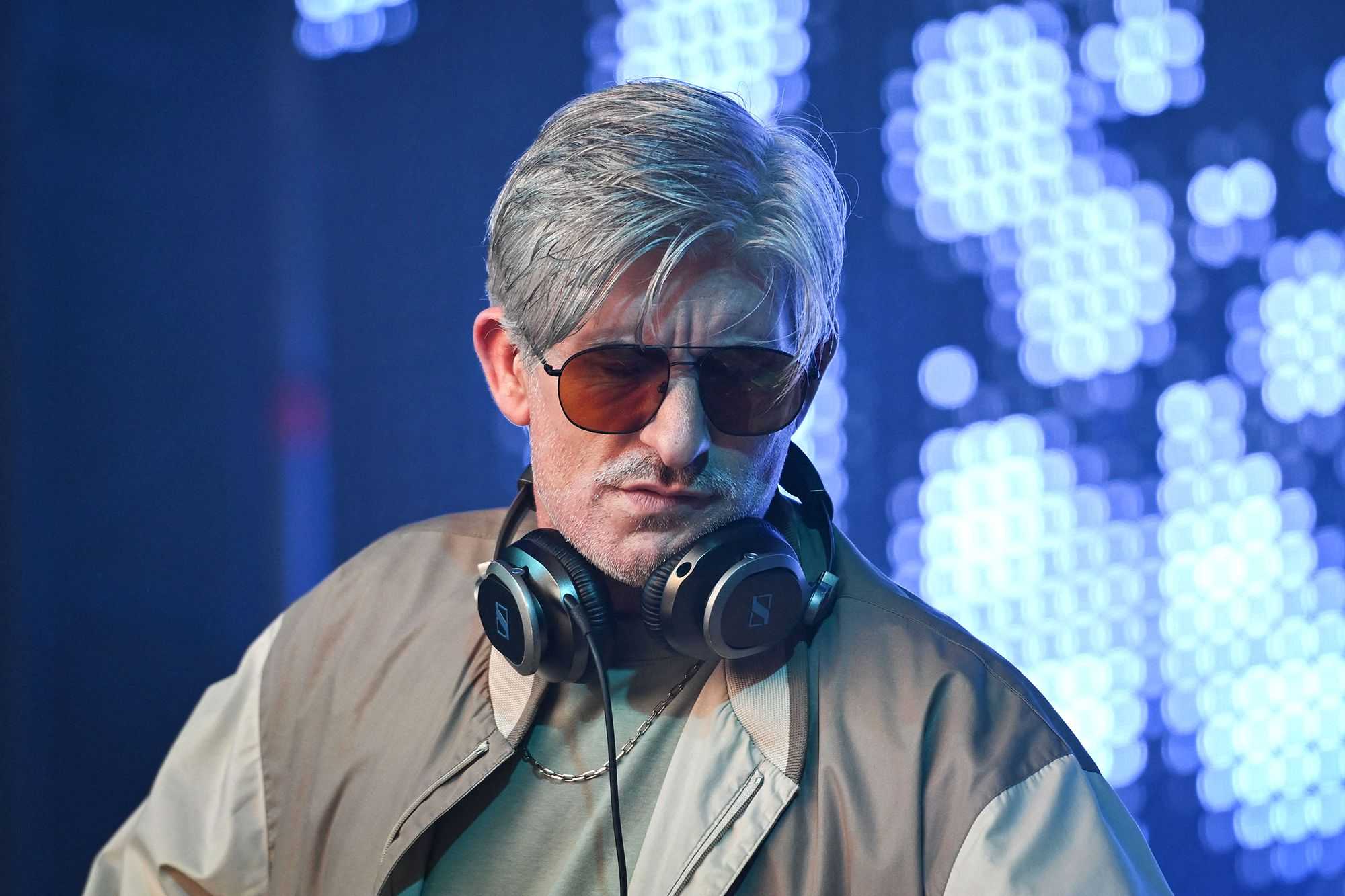
Kavinsky
 France
Birthday
July 31, 1975
Birth Sign
Leo
Birthplace
Seine-Saint-Denis, France
Age
Died at 50
Height
6 ft 1 in (185 cm)
About
Vincent Belorgey, better known as Kavinsky, was a French musician, record producer, DJ, and actor. He crafted a sound that echoed the synth-heavy electropop film scores of the 1980s, drawing comparisons to artists like Daft Punk and Danger. His style was distinctly retro-futuristic, evoking dark highways, vintage sports cars, and pulsing cityscapes. Kavinsky's music was cinematic, melancholic yet driving, often described as a neon-lit concept born from thousands of movies he absorbed as a child. He became a cult figure after his 2010 track "Nightcall" was featured in the 2011 film Drive, propelling him to global fame. He released two studio albums, OutRun (2013) and Reborn (2022), and performed at major events including the Paris 2024 Olympic and Paralympic closing ceremonies. Kavinsky also appeared in films by Quentin Dupieux and a Netflix original. He passed away on July 28, 2026, just days before his 51st birthday, leaving behind a legacy of pulsing synthwave that defined a genre. His music continues to be streamed and licensed widely, cementing his status as a key figure in French touch.
Early Life & Background
Kavinsky was born at Lariboisière Hospital in Barbès, where his mother worked as a nurse. He was the eldest of three children. His father sold photocopiers and socks. After his parents divorced, he moved with his mother to Pantin. "I wasn't born with a silver spoon in my mouth," he said in a 2022 interview. "My father sold photocopiers and socks. I first lived in Pre-Saint-Gervais, on Place du Marché, and when my parents divorced, my mother and I moved to Pantin. She did all the work. And I got up to petty mischief." As a young boy, Kavinsky watched thousands of movies, cherry-picking the best parts and blending them into a single concept that later fueled his music. Before his music career took off, he appeared in several films by his friend Quentin Dupieux (the electro musician known as Mr. Oizo), including Nonfilm (2001) and Steak (2007). These early acting gigs were his first steps into the entertainment industry. He began making music in 2005, releasing early EPs on the Record Makers label that established his signature synthwave sound. His stage persona was inspired by a fictional character he created, a ghost-like figure who died in a car crash in 1986 and returned as a revenant to make electronic music, reflected in his early music videos.
Career Growth
Kavinsky's breakthrough came in 2010 with the single "Nightcall," produced by Daft Punk's Guy-Manuel de Homem-Christo and featuring vocals from Lovefoxxx of CSS. The track was featured prominently in Nicolas Winding Refn's 2011 film Drive starring Ryan Gosling. The song became inseparable from the film and catapulted Kavinsky to global fame. He released his debut album OutRun on February 25, 2013, through Record Makers and Universal Music France. The album was a full-throttle homage to arcade racing games and 1980s action movies. After OutRun, Kavinsky took an extended break from releasing music, remaining largely out of the public eye for nearly a decade. He returned in 2022 with his second studio album Reborn, released on March 11, 2022. The album was influenced by 1980s video games, cop shows like Miami Vice, and the films of Dario Argento. Kavinsky performed "Nightcall" alongside Belgian singer Angèle and the band Phoenix at the closing ceremony of the Paris 2024 Olympic Games. He also performed at the Paris 2024 Paralympic Games Closing Ceremony at the Stade de France on September 8, 2024. In 2026, he made a cameo appearance in the Netflix French-language original film Banger opposite Vincent Cassel, playing a jaded DJ. He also released notable singles including "Protovision" (with SebastiAn) in 2007, "Testarossa Autodrive" in 2006, "Odd Look" (with SebastiAn) in 2012, and "Renegade" in 2022.
Career Timeline
Public Image & Style
Kavinsky cultivated a retro-futuristic persona heavily inspired by 1980s synthwave culture, neon lights, vintage sports cars (particularly Testarossas), dark highways, and pulsing cityscapes. His music videos and album artwork featured heavy use of pink and purple neon, CRT screen effects, and VHS-era visual artifacts. Media portrayed Kavinsky as a cult figure, a mysterious, reclusive artist who let his music speak for itself. He was seen as a key figure in the French touch movement alongside Daft Punk, Justice, and Cassius. His music was cinematic, melancholic yet driving, evoking nighttime drives and 1980s action movie aesthetics. Kavinsky maintained a relatively low-key social media presence, primarily posting about new releases and performances. He was often compared to Daft Punk and Danger, but his sound was distinctly retro-futuristic synthwave. Following his death, French President Emmanuel Macron posted a tribute on Instagram, and the French touch music community mourned his passing, noting it came 15 years after the accidental death of DJ Mehdi and seven years after the passing of Philippe Zdar of Cassius.
Fame & Fandom
Vincent Belorgey, the enigmatic soul behind Kavinsky, holds a steady position as the 70th most famous person in Electronic / EDM within the iFANN Global Fame Rankings. This placement reflects a career defined by atmospheric precision rather than chart-topping volatility, cementing his status as a cult icon whose influence spans decades. His legacy is built on a singular, defining sonic moment that resonates far beyond traditional metrics of celebrity. While the artist maintained a deliberate distance from the public eye, rarely engaging in direct fan interactions or revealing personal details, his audience has grown into a dedicated community of synthwave enthusiasts. Unlike artists with organized, named tribes, Kavinsky's fanbase operates without a formal collective identity, united instead by a shared appreciation for his retro-futuristic aesthetic and cinematic soundscapes. There are no documented campaigns, birthday billboards, or specific rituals attributed to this group; their devotion is expressed through the enduring streaming numbers of his catalog and the continued reverence for his visual style. The immediate reaction to his passing in July 2026 was one of widespread mourning across the industry, yet it lacked the organized fervor seen in other musical movements. Fans mourned the loss of a mysterious figure who let his music speak for itself, preserving the mythos he carefully constructed around the fictional driver who died in 1986. This silence and mystery remain central to his appeal, ensuring that even after his death, the focus remains entirely on the art rather than the man.
Interesting Facts and Legends
Kavinsky crafted a sound that echoed the synth-heavy electropop film scores of the 1980s, drawing comparisons to Daft Punk and Danger while evoking dark highways and pulsing cityscapes. His stage persona was inspired by a fictional character, a ghost-like figure who died in a car crash in 1986 and returned as a revenant to make electronic music, a backstory reflected in his album OutRun and early videos. "Nightcall" was produced by Guy-Manuel de Homem-Christo of Daft Punk, making him one of the few artists directly produced by a Daft Punk member. He was a close friend of filmmaker Quentin Dupieux (Mr. Oizo), who cast him in multiple films before his music career took off. Despite global fame, Kavinsky released only two studio albums in a career spanning nearly 20 years. His music drew heavy influence from Dario Argento's horror films, Miami Vice, and 1980s arcade racing games like OutRun. Standing approximately 6 feet 1 inch tall, his real name was Vincent Pierre Claude Belorgey, born July 31, 1975, in Seine-Saint-Denis, France. A widely retold story anchors his legend: the opening sequence of Nicolas Winding Refn's 2011 film Drive, featuring "Nightcall," became a cinematic masterpiece that cemented the song's iconic status. The track achieved massive viral longevity, remaining a cultural touchstone decades later, including mentions at the Paris 2024 Olympic Games. Another key element of his lore involves the "Dead Cruiser," a 1974 Pontiac Trans Am featured in Drive, which merged the visual mythology of the character with the artist's identity, leading to collaborations like a 1/6 vinyl figure of the car.
Notable Quotes
“I wasn't born with a silver spoon in my mouth. My father sold photocopiers and socks. I first lived in Pre-Saint-Gervais, on Place du Marché, and when my parents divorced, my mother and I moved to Pantin. She did all the work. And I got up to petty mischief.”
“My music comes from thousands of movies I watched as a young boy. I cherry-picked the best parts from them, consolidating them into one concept.”
“Reborn was influenced by 1980s video games, cop shows such as Miami Vice, and the films of Dario Argento.”
Family & Personal Life
Kavinsky was the eldest of three children. His mother worked as a nurse at Lariboisière Hospital in Barbès, while his father sold photocopiers and socks. His parents divorced when he was young, and he moved with his mother to Pantin. He described his mother as someone who "did all the work" raising him. No further details about his siblings or other family members have been made public. He was never married and had no known children.
Notable Connections
Kavinsky collaborated closely with Guy-Manuel de Homem-Christo of Daft Punk, who produced Nightcall. He was a longtime friend of filmmaker and musician Quentin Dupieux (Mr. Oizo), who cast him in several films. He worked with SebastiAn on tracks like Protovision and Odd Look. Lovefoxxx of CSS provided vocals on Nightcall. He performed with Belgian singer Angèle and the band Phoenix at the Paris 2024 Olympics. He co-starred with Vincent Cassel in the Netflix film Banger.
Relationships & Dating History
Kavinsky kept his personal life extremely private. There are no public records of any romantic relationships, marriages, or children. Throughout his career, he was never publicly linked to any romantic partners and was not reported as being in a relationship at the time of his death. Media coverage focused exclusively on his music career and public persona.
Death & Aftermath
Died
July 28, 2026 (aged 50)
Death Place
Paris, France
Cause of Death
Sudden natural event (suspected stroke)
Vincent Belorgey, known professionally as Kavinsky, died on July 28, 2026, at his residence in Paris, France. He was discovered the following day after failing to appear for a scheduled engagement, prompting French authorities to confirm that no suspicious elements were involved in his passing. While initial reports from Pitchfork suggested a suspected stroke, official medical documentation regarding the specific cause remains undisclosed, with major outlets agreeing only on a sudden natural event at home. The music industry reacted swiftly with tributes across social media and traditional press. DJ David Guetta led the wave of condolences, while Nicolas Winding Refn, director of the film Drive, described Nightcall as like whipped cream floating over steel. Streaming platforms recorded immediate surges in plays for Nightcall and tracks from his discography including OutRun and Odd Look shortly after the announcement.
Fan vigils and moments of silence were organized globally, particularly in Paris, though specific details on memorial murals or large-scale physical gatherings were not widely reported. Details regarding the funeral or memorial service have not been made public, as the family kept arrangements private with no disclosed burial location or cremation details. Posthumously, the estate released a new album titled Reborn available in vinyl and digital formats, alongside a collaboration with Artoyz featuring a 1/6 scale vinyl figure of his iconic Dead Cruiser character. Awards and hall-of-fame inductions have not yet been announced as of late August 2026.
Net Worth (Estate Value)
$6 Million
iFANN Editorial Team estimate
At the time of his passing in July 2026, per iFANN's editorial analysis, Kavinsky's net worth was estimated at $6 Million. The primary source of this wealth was music royalties, particularly from his signature track "Nightcall," which accumulated hundreds of millions of streams and numerous sync licenses for films, TV shows, commercials, and video games following its 2011 placement in Drive. His two studio albums, OutRun (2013) and Reborn (2022), generated moderate sales and streaming revenue over the years. Live DJ performances at festivals and events globally contributed significantly to his income, alongside the licensing of his extensive catalog. He also earned minor income from acting roles in independent and Netflix productions. Following his death, his music catalog and intellectual property rights are expected to be managed by his estate, likely through his record labels Record Makers and Universal Music France, ensuring continued revenue from streaming and licensing. He did not win any major industry awards during his career, and his impact was primarily cultural and commercial.
Awards & Accolades
View 1 records, honours and achievementsKnown For
Nightcall
2010 · Producer, performer
OutRun
2013 · Album artist
Reborn
2022 · Album artist
Keywords
Sources
Quick Facts
- Profession
- disc jockey, actor, singer
- Born
- July 31, 1975
- Birthplace
- Seine-Saint-Denis, France
- Died
- July 28, 2026
- Death Place
- 18th arrondissement of Paris, France
- Gender
- Male
- Birth Sign
- Leo
Personal Details
- Full Name
- Vincent Pierre Claude Belorgey
- Height
- 6 ft 1 in (185 cm)
Filmography
3
Total
3
Film
0
TV
Frequently Asked Questions
How did Kavinsky die?
What was Kavinsky's real name?
Was Kavinsky married or dating anyone?
What is Kavinsky's net worth?
How many albums did Kavinsky release?
Similar People

Join the community
fans discussing