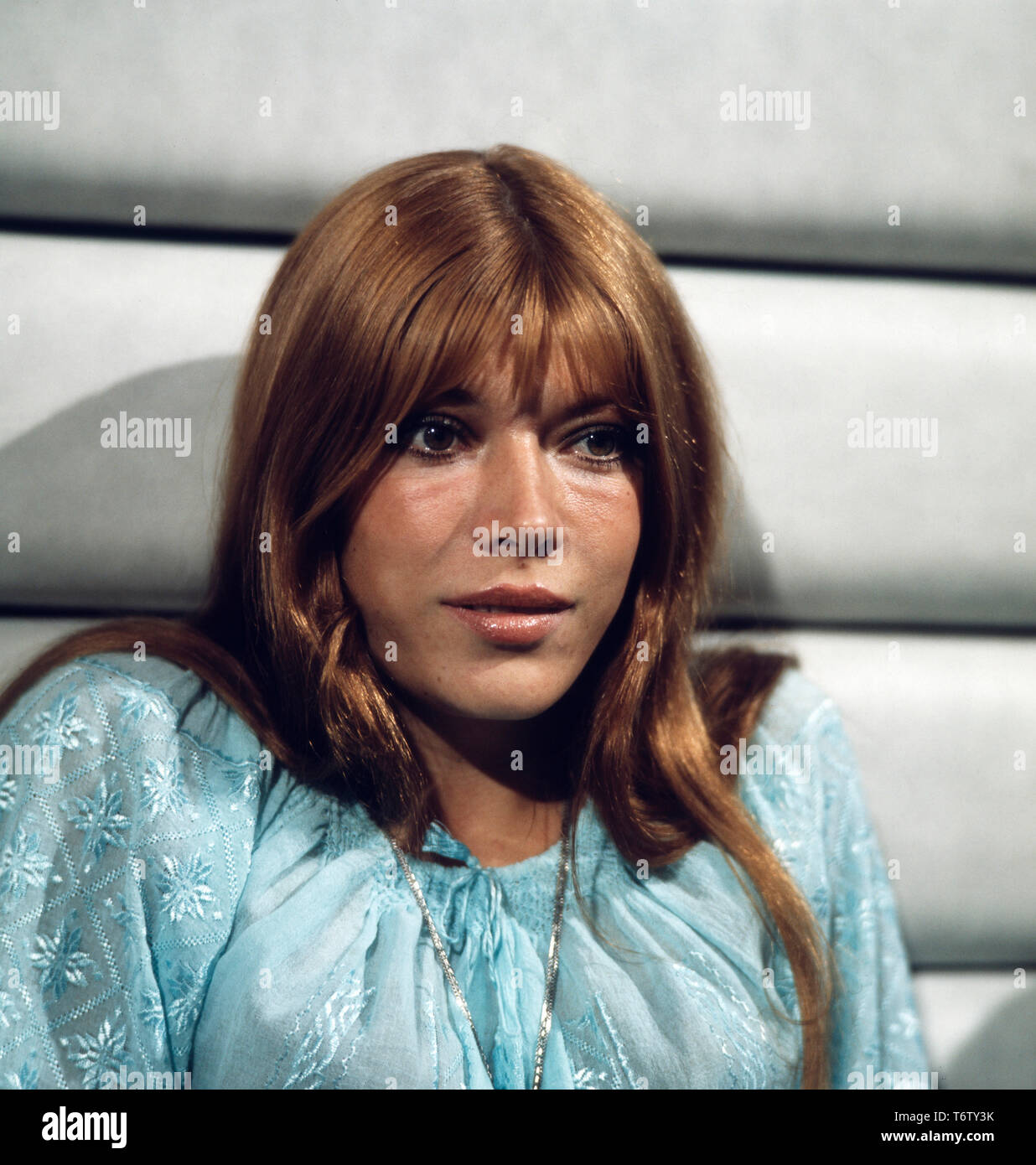
Katja Ebstein
 Germany
Also known as: Karin Witkiewicz
Birthday
March 9, 1945
Birth Sign
Pisces
Birthplace
Gilów, Lower Silesian Voivodeship, Poland
Age
81 years old
Height
5 ft 7 in (170 cm)
About
Katja Ebstein, born Karin Witkiewicz on March 9, 1945, in Gilów, Poland, is a distinguished German singer and actress whose artistic journey has spanned over five decades. She is celebrated as a pivotal figure in German schlager music, renowned for her deeply emotional performances and a distinctive musical style that artfully blends folk melodies with contemporary pop elements. Ebstein's remarkable record at the Eurovision Song Contest, where she represented Germany three times and secured a top-three finish on each occasion, is a unique achievement in the contest's history, making her the only performer to accomplish this feat without ever winning. This consistent success, coupled with her distinctive vocal delivery in a Berliner dialect, has cultivated a devoted following across German-speaking Europe.
Beyond her iconic Eurovision performances, Ebstein has amassed an impressive discography, releasing thirty-four studio albums and twenty-four singles since commencing her career in 1969. Her music, often exploring poignant themes, has resonated with audiences, with songs like "Theater" and "Es war einmal ein Jäger" becoming enduring classics. In addition to her prolific music career, she has graced the screen in various film and television productions, including an appearance in the 2015 film "Look Who's Back." Ebstein continues to engage with her audience through live performances and regular appearances on German television programs such as "ZDF-Fernsehgarten" and "Wer weiß denn sowas?" Her autobiography, "Das ganze Leben ist Begegnung," published in November 2020, offers further insight into her life and career. As of 2026, she remains a vibrant presence in German entertainment, cherished for her artistic integrity, political engagement, and enduring legacy.
Early Life & Background
Katja Ebstein was born Karin Witkiewicz in Gilów, a small town in Silesia that was then part of Germany and is now located in Poland. During the final years of World War II, her family, like many others, was displaced and eventually settled in West Germany. Growing up in the post-war era, Ebstein harbored an early passion for music and the performing arts. Her initial steps toward a professional career in the mid-1960s involved singing in local venues and participating in talent competitions. She pursued formal training in acting and singing, which led to her involvement in musical theater productions.
A pivotal moment in her burgeoning career occurred when she met the composer Christian Bruhn. Bruhn recognized the unique qualities of her voice and began crafting songs that highlighted her signature folk-influenced style. Their collaboration proved highly successful, yielding her first hit singles in the late 1960s. By 1969, Ebstein had officially launched her recording career. It was in this same year that she adopted the stage name Katja Ebstein, a name that would soon become synonymous with a new era of German popular music. She stands 1.70 meters tall.
Career Growth
Katja Ebstein's career trajectory soared following her representation of Germany at the Eurovision Song Contest in 1970 with the song "Wunder gibt es immer wieder." Though she placed third, the performance served as her major breakthrough, propelling her to national prominence. She returned to the Eurovision stage in 1971 with "Diese Welt," once again achieving a third-place finish. Her third and final appearance in the contest was in 1980 with the powerful ballad "Theater," which earned her second place. This remarkable achievement of three top-three finishes without a victory remains an unparalleled record in the history of the Eurovision Song Contest.
The 1970s and 1980s saw Ebstein release a consistent stream of successful albums and charting singles, including popular tracks like "Es war einmal ein Jäger" and "Der Stern von Mykonos." Her artistic endeavors extended to film and television, with notable roles and appearances. In 2015, she was featured in the film "Look Who's Back." Her autobiography, "Das ganze Leben ist Begegnung," was released in 2020, offering a comprehensive look at her life and career. Ebstein continues to connect with her fans through live concerts, with performances documented in 2021 at venues such as the Bürgerhaus and Burg Waldeck. The enduring popularity of her song "Theater" is evidenced by its cover versions, such as the one released by artist Marleen in 2025. She has accumulated thirty-four studio albums and twenty-four singles throughout her career, and her music garners over 110,000 monthly listeners on platforms like Spotify. Her official Instagram account, @katjaebstein_official, has amassed over 800 followers.
Career Timeline
Public Image & Style
Katja Ebstein is widely recognized as a significant and enduring figure in German schlager music. She is celebrated for her deeply emotional vocal performances and a unique musical style that masterfully fuses folk traditions with contemporary pop sensibilities. Her public persona is that of a thoughtful and serious artist who infuses popular music with profound depth, often exploring complex societal and political themes within her work. Ebstein is also distinguished by the remarkable longevity of her career, having maintained a prominent presence in the entertainment industry for over fifty years.
Her fanbase, characterized by its loyalty, deeply appreciates her artistic integrity and craft. In recent years, she has continued to engage with her audience through various platforms, including a modest but active presence on Instagram and regular appearances on German television shows. These appearances have helped to endear her to both her long-standing admirers and newer generations of viewers. Her music is often noted for its blend of folk and pop, and her performances are consistently praised for their emotional impact. The media frequently portrays her as a multifaceted entertainer whose work sometimes touches upon societal issues, reflecting her engagement with the world around her.
Fame & Fandom
Katja Ebstein commands a legacy defined by historical endurance rather than the mobilized, ritualistic communities typical of modern pop stardom. Her audience consists primarily of dedicated Eurovision enthusiasts and listeners who appreciate her distinctive Berliner dialect and emotional depth, yet no formal fandom name or organized group has ever emerged to claim her as their own. Unlike contemporary artists who cultivate specific branding or fan-led campaigns, Ebstein's supporters remain a diffuse collection of individuals drawn to her five-decade career in music and film. The absence of documented fan rituals, streaming drives, or interactive projects underscores a relationship built on passive appreciation for her artistic output rather than active participation in a celebrity ecosystem. This lack of structured organization aligns with her status as a veteran performer whose public image remains rooted in serious artistry and political engagement rather than viral mythology. While her presence on streaming platforms indicates a steady listener base of approximately 114,000 monthly users, there is no evidence of the chaotic adoration or street-shutting crowds that characterize other legends. iFANN has evaluated this profile extensively to determine her standing among global cultural figures. Katja Ebstein is currently the unranked individual in the Global Top 1,000 scope list, meaning she does not hold a placement in the published rankings. She holds no position within any Top-100 scope list either. Consequently, she is not listed in the Global Top 1,000 ranking page, nor does she appear in the Top-100 scope list page. These placements reflect an evaluation where her fame, while significant within specific historical contexts, does not translate to a current numerical rank in the iFANN Global Fame Engine.
Interesting Facts and Legends
Katja Ebstein holds a unique distinction in the history of the Eurovision Song Contest: she is the only performer to have achieved three top-three finishes without ever winning the competition. This remarkable feat was accomplished with her entries in 1970 (third place), 1971 (third place), and 1980 (second place). Adding to her distinctiveness, she sings with a characteristic Berliner dialect, a vocal trait that sets her apart from many of her contemporaries in the German music scene. Her 1980 song "Theater" has achieved the status of a classic within her repertoire and is widely recognized. Beyond her Eurovision successes, Ebstein has built an extensive discography, having recorded over thirty-four studio albums. Her versatility is further demonstrated by her appearances in several films, including a notable role in the 2015 movie "Look Who's Back." Ebstein is also known for her active political engagement, frequently using her platform and music to address and highlight social themes, adding another layer to her public image as an artist with a conscience. In 1971, her performance of "Die Welt dreht sich verkehrt" in Dublin cemented her reputation as a serious international act, often cited as a definitive moment in her career. The 1980 return to the contest with "Theater" remains a frequent subject of retrospective discussion regarding her enduring influence on German popular culture.
Family & Personal Life
Katja Ebstein's family life has been marked by significant events, including her family's displacement from Silesia during World War II. She grew up in West Germany following the war. While she has largely maintained a private personal life, it is known that her marriage to composer Christian Bruhn, who was instrumental in shaping her early musical career, eventually ended in divorce. Subsequently, she married Klaus Überall, who remains her husband. Public records do not extensively detail information regarding children or other family members, as Ebstein has chosen to keep these aspects of her life out of the public spotlight, preferring to focus attention on her professional achievements.
Notable Connections
Katja Ebstein is closely associated with composer Christian Bruhn, her former husband, who wrote many of her defining songs. She is also connected to Klaus Überall, her current spouse. In the music industry, she is recognized alongside other German schlager artists of her era, and her Eurovision appearances link her to the broader European music community.
Relationships & Dating History
Katja Ebstein's romantic history includes two notable marriages. Her first marriage was to composer Christian Bruhn, a significant figure in her early career, as he was responsible for writing many of her initial hit songs. This union, however, eventually concluded in divorce. Following this, she married Klaus Überall, who has remained her spouse. While the exact timeline and details surrounding the beginning and end of these relationships are not extensively documented in public records, sources confirm that she is currently married to Überall. Ebstein has generally maintained a degree of privacy regarding her personal relationships, preferring to keep the focus on her professional life.
- MarriedChristian BruhnFormer husband and composer who wrote many of her early hits.
- MarriedKlaus ÜberallCurrentCurrent spouse.
Salary, Net Worth In 2026
$5 Million
iFANN Editorial Team estimate
Katja Ebstein's financial standing is primarily a reflection of her extensive and sustained career in the music and entertainment industries. Research by the iFANN Editorial Team puts her net worth at $5 Million, a figure derived from her decades of professional activity. Her income streams have historically been generated from a combination of sources: her prolific recording output, which includes over thirty-four studio albums and numerous charting singles, has provided a steady flow of royalties throughout her career. Live performances and concert tours have also been a significant contributor to her earnings over the years. Furthermore, Ebstein has derived income from her acting roles in film and television productions, as well as from her television appearances. The 2020 release of her autobiography, "Das ganze Leben ist Begegnung," also represented a commercial venture that added to her financial portfolio. Unlike many modern celebrities who engage in extensive brand endorsements and commercial partnerships, Ebstein's wealth is predominantly built upon her artistic output and performance career, showcasing a career grounded in music and acting rather than extensive brand ambassadorships.
Awards & Accolades
View 1 records, honours and achievementsKnown For
Wunder gibt es immer wieder
1970 · Performer
Diese Welt
1971 · Performer
Theater
1980 · Performer
Look Who's Back
2015 · Actress
Keywords
Sources
Quick Facts
- Profession
- Singer, Actress
- Born
- March 9, 1945
- Birthplace
- Gilów, Lower Silesian Voivodeship, Poland
- Gender
- Female
- Spouse
- Klaus Überall
- Height
- 5 ft 7 in (170 cm)
Personal Details
- Full Name
- Karin Witkiewicz
- Height
- 5 ft 7 in (170 cm)
- Spouse
- Klaus Überall
Frequently Asked Questions
How old is Katja Ebstein?
What is Katja Ebstein's net worth in 2026?
Is Katja Ebstein still active in 2026?
How many times did Katja Ebstein participate in Eurovision?
Why is Katja Ebstein famous?
Similar People

Join the community
fans discussing